Mastering Bead Earring Patterns: A Material & Weight Guide
Discover how bead material properties like weight, hardness, and hole size dictate the success of your bead earring patterns and wire choices.

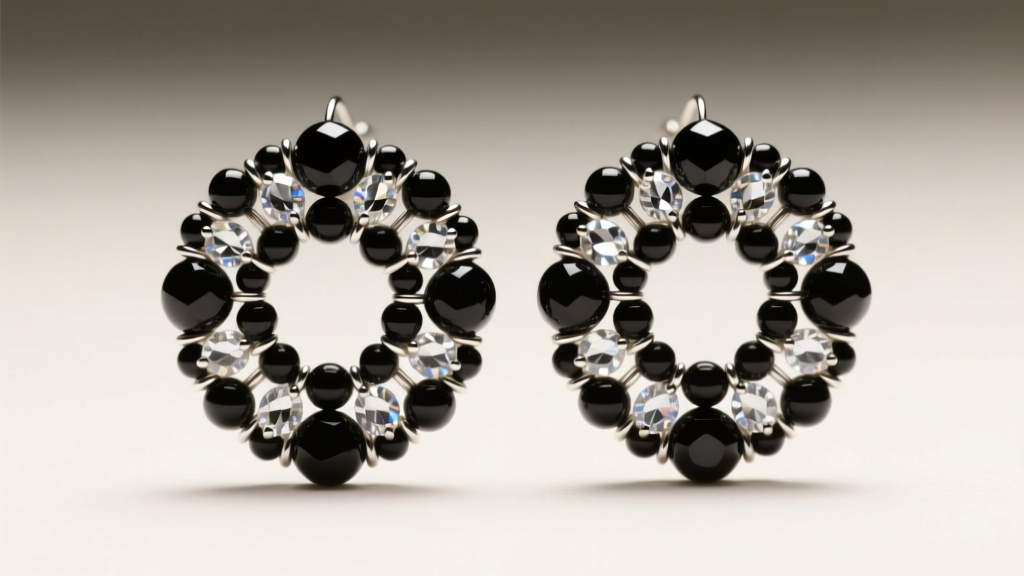
The Physics of Bead Earring Patterns: Why Material Dictates Design
Creating intricate bead earring patterns is often viewed purely through an aesthetic lens—focusing on color palettes, geometric symmetry, and visual rhythm. However, from an engineering perspective, every beaded earring is a suspended kinetic structure. The success of any complex pattern, from a cascading fringe to a tightly woven rosette, relies entirely on the physical properties of the materials chosen. Ignoring the specific gravity, Mohs hardness, and hole tolerances of your beads will inevitably lead to structural failure, distorted patterns, or earlobe fatigue.
When designing bead earring patterns, a jeweler must calculate the cumulative weight of the components and match them with the appropriate armature (wire or thread). A 6mm round bead can weigh anywhere from 0.2 grams (acrylic) to over 1.5 grams (hematite or high-lead crystal). When multiplied across a 40-bead fringe pattern, this variance fundamentally alters the drape, the required wire gauge, and the long-term wearability of the earring.
Material Comparison Matrix: Weight, Hardness, and Tolerances
To design durable bead earring patterns, you must understand the lapidary and metallurgical properties of your components. The GIA Gem Encyclopedia provides extensive data on mineral hardness and specific gravity, which directly impact how beads interact with metal wire over time. Below is a functional comparison matrix for common beading materials.
| Material | Mohs Hardness | Specific Gravity (Weight) | Avg Hole Size | Recommended Wire Gauge |
|---|---|---|---|---|
| Lampwork Glass | 5.5 - 6.5 | 2.50 | 1.0 - 1.5mm | 20g - 18g (0.81 - 1.02mm) |
| Hematite | 5.5 - 6.5 | 5.10 | 0.8 - 1.0mm | 22g - 20g (0.64 - 0.81mm) |
| Sterling Silver Beads | 2.5 - 3.0 | 10.40 | 0.5 - 0.8mm | 24g - 22g (0.51 - 0.64mm) |
| Hardwood (e.g., Ebony) | 2.0 - 3.0 | 0.60 - 0.90 | 1.0 - 2.0mm | 18g - 16g (1.02 - 1.29mm) |
| Lucite / Acrylic | 2.0 - 3.0 | 1.18 | 0.8 - 1.5mm | 22g - 20g (0.64 - 0.81mm) |
| Agate / Quartz | 7.0 | 2.65 | 0.6 - 0.8mm | 24g - 22g (Hardened) |
Notice the critical relationship between Mohs hardness and wire selection. Quartz and agate (Mohs 7) are harder than most standard jewelry wires. If the bead holes are not professionally polished with a diamond reamer, the sharp inner edges will act as a saw, eventually severing copper, brass, or fine silver wire through friction and movement.
Wire and Thread Selection Based on Bead Properties
The armature you choose to execute your bead earring patterns must be matched to both the hole size and the tensile load of the beads. According to the Rio Grande metallurgical guides, wire temper (hardness) is just as important as gauge thickness.
Matching Gauge to Hole Size and Weight
For lightweight, large-hole materials like wood or acrylic, you can use thicker, more rigid wires (18g or 16g) to create structural, self-supporting geometric bead earring patterns. Conversely, for heavy, small-hole gemstones like faceted hematite or metallic silver beads, you are forced into finer gauges (24g or 22g).
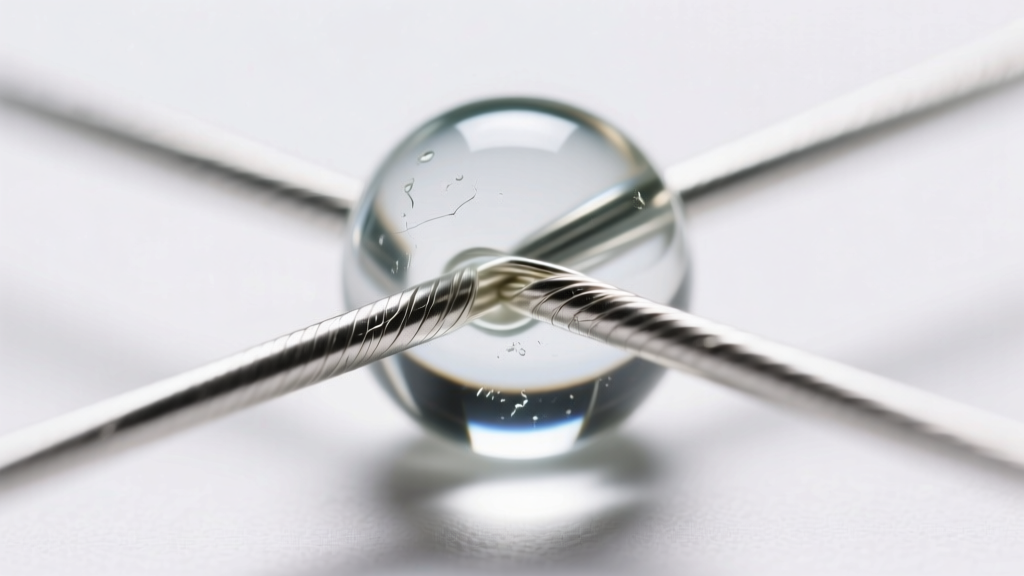
When using fine gauges to support heavy beads, you must compensate for the lack of structural rigidity by utilizing half-hard or spring-hard wire temper rather than dead-soft. Dead-soft wire will stretch and deform under the specific gravity of heavy stone beads, causing your carefully planned patterns to sag and lose their geometric integrity.
Flexible Wire vs. Solid Wire
For fluid, draping bead earring patterns like fringe or waterfall designs, solid wire is inappropriate. Instead, multi-strand beading wire (such as 49-strand stainless steel coated in nylon) is required. A 0.018-inch 49-strand wire offers a high tensile strength (often exceeding 20 lbs) while maintaining the flexibility of thread, allowing heavy gemstone beads to cascade naturally without kinking or suffering from metal fatigue at the stress points.
Designing for Drape: How Specific Gravity Impacts Pattern Movement
The specific gravity (SG) of your chosen beads dictates the center of mass in your earring design. A common mistake in designing elongated bead earring patterns is placing high-SG materials (like hematite, SG 5.1, or cubic zirconia, SG 5.6) at the extreme bottom of a long fringe without adequate support.
- The Pendulum Effect: Heavy beads at the end of a long, flexible wire will swing aggressively with head movements, creating a pendulum effect that can tangle the pattern and cause blunt-force impacts against the wearer's neck or collarbone.
- Earlobe Stretching: The human earlobe can comfortably support approximately 7 to 10 grams of static weight before experiencing discomfort or long-term tissue stretching. A complex rosette pattern utilizing 30 solid glass beads can easily exceed 15 grams. To mitigate this, designers must integrate low-SG spacer beads (like seed beads or Lucite) to reduce the overall mass while maintaining the visual volume of the pattern.
- Center of Gravity Adjustments: For heavy, oversized bead earring patterns, incorporating a rigid structural spine (such as a 20g titanium or stainless steel core wire) distributes the weight vertically rather than allowing it to pull horizontally on the ear piercing.

Structural Failure Points in Complex Bead Earring Patterns
Even the most visually stunning bead earring patterns will fail if the material interactions are not properly managed. Understanding these failure modes is what separates amateur crafters from master jewelry designers.
1. Work Hardening and Metal Fatigue
When you bend wire to create loops, jump rings, or eye pins to connect your bead patterns, the metal undergoes work hardening. If you repeatedly bend a sterling silver or brass eye pin to adjust a bead's alignment, the crystalline structure of the metal becomes brittle. Over time, the vibration of walking will cause the wire to snap exactly at the bend point. Always use nylon-jaw pliers to make precise, single-motion bends.
2. Chemical Tarnishing and Bead Coatings
Many bead earring patterns utilize dyed or coated materials. Copper and brass wires are highly reactive and will oxidize when exposed to the moisture and salts of human skin. If your pattern places reactive wire directly against porous beads like turquoise, lapis lazuli, or dyed howlite, the metallic salts from the tarnishing wire will permanently stain the bead matrix. Always use a physical barrier (like a tiny seed bead or a nylon washer) between reactive metals and porous stones.
3. UV and Thermal Degradation
Acrylic, resin, and certain dyed wooden beads are susceptible to UV degradation and thermal expansion. If your bead earring patterns are designed for festival or outdoor summer wear, prolonged UV exposure will cause acrylic beads to yellow and become brittle, while extreme heat can cause the nylon coating on flexible beading wire to degrade, exposing the steel core to rust.
Sourcing and Quality Grading for Pattern Consistency
To execute precise, symmetrical bead earring patterns, material consistency is paramount. Mass-produced glass and stone beads often suffer from poor calibration. A strand labeled as '6mm round' may contain beads ranging from 5.5mm to 6.8mm, with off-center drill holes that cause the beads to sit at awkward angles when strung.
When sourcing materials for high-end patterns, look for suppliers that guarantee calibration tolerances of +/- 0.2mm. For gemstones, verify that the beads are center-drilled rather than top-drilled, unless a specific teardrop fringe effect is desired. Reputable suppliers like Fire Mountain Gems often provide detailed specifications regarding bead hole sizes and material treatments, allowing you to plan your wire gauges and pattern layouts before the materials even arrive.
Final Thoughts on Material Mastery
Mastering bead earring patterns requires a dual mindset: the eye of an artist and the pragmatism of a structural engineer. By deeply understanding the Mohs hardness, specific gravity, and dimensional tolerances of your materials, you can predict how a pattern will behave in the real world. Select your wire gauges not just by what fits through the hole, but by what can support the dynamic load of the bead's weight. When material properties and design intent are perfectly aligned, the resulting earrings are not only visually captivating but structurally enduring.


