Bead Earrings Tutorial & Buying Guide: What to Look For
Master our bead earrings tutorial and buying guide. Learn to select premium glass, gemstone, and seed beads, plus essential hardware for sensitive ears.

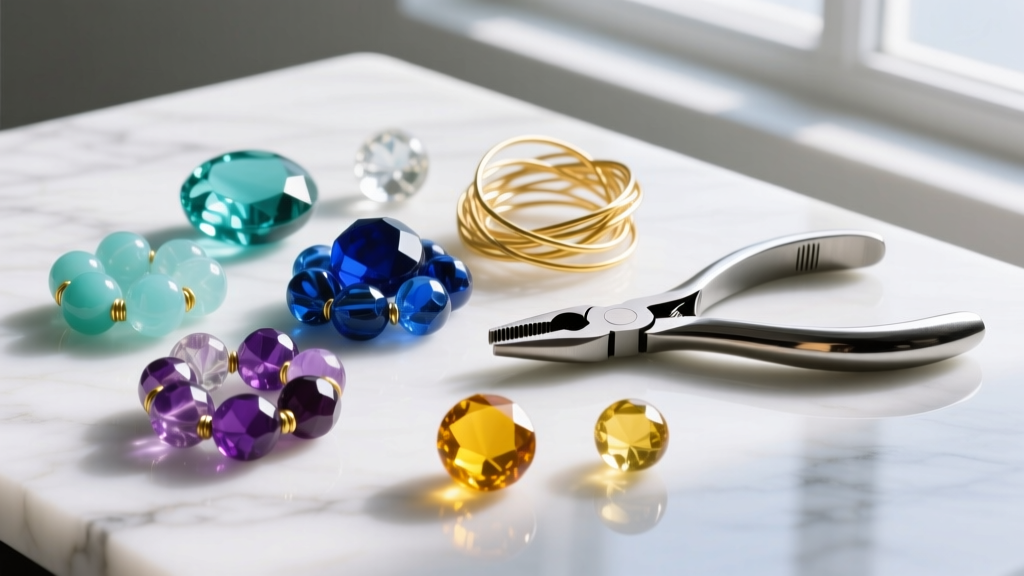
The Intersection of Buying and Crafting Bead Earrings
Whether you are sourcing finished artisan pieces or embarking on a DIY earrings tutorial beads project, understanding the anatomy of beaded jewelry is critical. The market is flooded with mass-produced beaded earrings that use inferior wire and synthetic stones, leading to tarnished metal and broken loops within weeks. This guide bridges the gap between a comprehensive buying guide and a practical bead earrings tutorial, equipping you with the material science and hardware knowledge needed to evaluate quality.
In 2026, the shift toward sustainable, slow-fashion jewelry means consumers and crafters alike are demanding traceable gemstones and hypoallergenic metals. According to the Gemological Institute of America (GIA), the rise of lab-grown and ethically sourced natural beads has changed how we evaluate color saturation and clarity in smaller calibrated stones.
Evaluating Bead Materials: Glass, Gemstone, and Seed
The core of any bead earrings tutorial starts with selecting the right focal and accent beads. Not all beads are drilled equally, and the material dictates the wire gauge you must use.
1. Lampwork and Borosilicate Glass
High-end glass beads, particularly Venetian lampwork or borosilicate (boro) glass, offer incredible durability. When buying, look for beads that have been properly annealed in a kiln. Unannealed glass beads harbor internal stress and will shatter if dropped or squeezed with pliers during assembly. Boro glass has a coefficient of expansion (COE) of 33, making it highly resistant to thermal shock and physical impact compared to standard soft glass (COE 104).
2. Natural vs. Dyed Gemstones
When sourcing gemstone beads like lapis lazuli, turquoise, or agate, beware of color-enhanced or dyed stones. A quick buying test: rub the bead with a cotton swab dipped in acetone. If color transfers, it is dyed. For a premium bead earrings tutorial project, always opt for natural, unheated stones or clearly disclosed stabilized turquoise, which uses resin to harden the stone without faking the color.

3. Japanese Seed Beads (Miyuki and Toho)
For intricate weaving or fringe earrings, uniformity is paramount. Japanese cylinder beads (like Miyuki Delicas) offer a precise 0.3mm hole size and uniform shape, unlike cheaper, irregular Czech seed beads. This uniformity ensures your tension remains consistent, preventing the warped dangles that plague amateur beaded earrings.
Hardware Guide: Wire, Headpins, and Ear Wires
The most common point of failure in beaded earrings is the hardware. If you are following a bead earrings tutorial, skipping cheap base-metal headpins is non-negotiable.
Wire Gauge and Hardness Explained
Wire is measured in gauge (AWG); the higher the number, the thinner the wire. Furthermore, wire comes in different hardness levels: dead soft, half-hard, and full-hard.
| Wire Gauge | Diameter (mm) | Best Application in Bead Earrings | Recommended Hardness |
|---|---|---|---|
| 24-Gauge | 0.51mm | Standard headpins for most glass and gemstone beads (0.6mm+ holes) | Half-Hard |
| 26-Gauge | 0.40mm | Wire-wrapping small briolettes, pearls, and seed bead weaving | Dead Soft |
| 28-Gauge | 0.32mm | Micro-macrame, fine pearls with tiny drill holes | Dead Soft |
| 22-Gauge | 0.64mm | Forging custom ear wires, structural jump rings | Half-Hard / Full-Hard |
The Ear Wire: Navigating Metal Allergies
According to the American Academy of Dermatology, nickel allergy is the leading cause of contact dermatitis from jewelry. When buying finished beaded earrings or sourcing ear wires for your tutorial, strictly avoid 'surgical steel' or 'Tibetan silver,' which often contain hidden nickel.
- Niobium: The gold standard for hyper-sensitive ears. It is a reactive metal that can be anodized into vibrant colors and contains zero nickel.
- 14k/18k Gold-Filled: Contains a thick outer layer of solid gold mechanically bonded to a brass core. It contains trace nickel in the core, but it is sealed. Safe for most, but not for severe allergies if the wire scratches.
- Implant-Grade Titanium (ASTM F136): Lightweight, entirely nickel-free, and highly biocompatible.
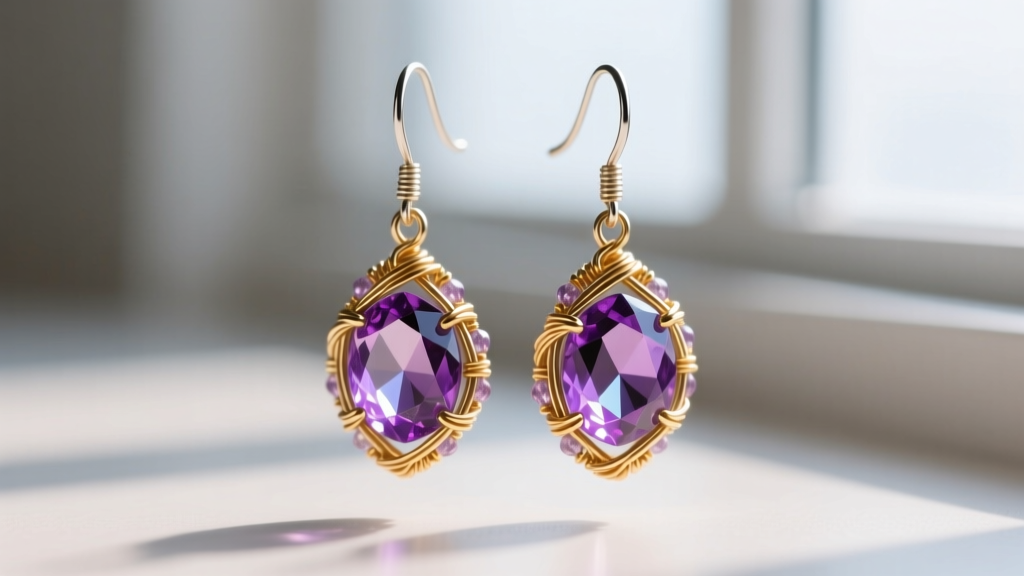
Step-by-Step: The Wrapped Loop Technique
Any high-quality bead earrings tutorial will teach the wrapped loop over the simple loop. A simple loop (bending the wire at a 90-degree angle and looping it back) can easily pull open under the weight of heavy glass or stone beads. The wrapped loop secures the wire by coiling it tightly around the stem, creating a permanent, unbreakable connection.
Execution Checklist:
- Thread the Bead: Slide your bead onto a 24-gauge half-hard headpin.
- Measure and Bend: Leave 10mm of wire above the bead. Use chain-nose pliers to bend the wire at a strict 90-degree angle directly above the bead.
- Form the Loop: Grip the very tip of the wire with round-nose pliers and roll it back toward the 90-degree bend to form a closed circle.
- Wrap the Tail: Grip the loop flat with chain-nose pliers. Use your fingers or a wrapping tool to tightly coil the remaining tail wire around the stem between the loop and the bead.
- Trim and Tuck: Snip the excess wire flush with flush cutters, and use the tip of your chain-nose pliers to 'tuck' the sharp end tightly against the coil so it won't snag on clothing or hair.
Weight Distribution and Ergonomics
When designing or buying heavy beaded dangles, consider the physics of the earlobe. An earring weighing more than 12 grams will cause the lobe to droop, stretching the piercing over time. If you are using heavy lampwork beads or large carved gemstones, incorporate a leverback ear wire or a flat-back friction post with a wide silicone or metal clutch. This distributes the weight across a broader surface area of the earlobe rather than concentrating it on the thin wire of a standard fishhook.
Final Sourcing Tips for 2026
Whether you are buying finished artisan beaded earrings on platforms like Etsy or sourcing materials from wholesale suppliers like Fire Mountain Gems, always request a metal content disclosure. Reputable vendors will explicitly state if their findings are lead-free and nickel-free. By combining the material knowledge from this buying guide with the structural integrity taught in our bead earrings tutorial, you ensure your jewelry is both beautiful and built to last a lifetime.


