Beaded Ball Earrings: A Budget and Value Assessment Guide
Discover the true value of beaded ball earrings in 2026. We break down material grades, pricing tiers, and durability to help you shop smart on any budget.

The Anatomy of Beaded Ball Earrings: What Are You Paying For?
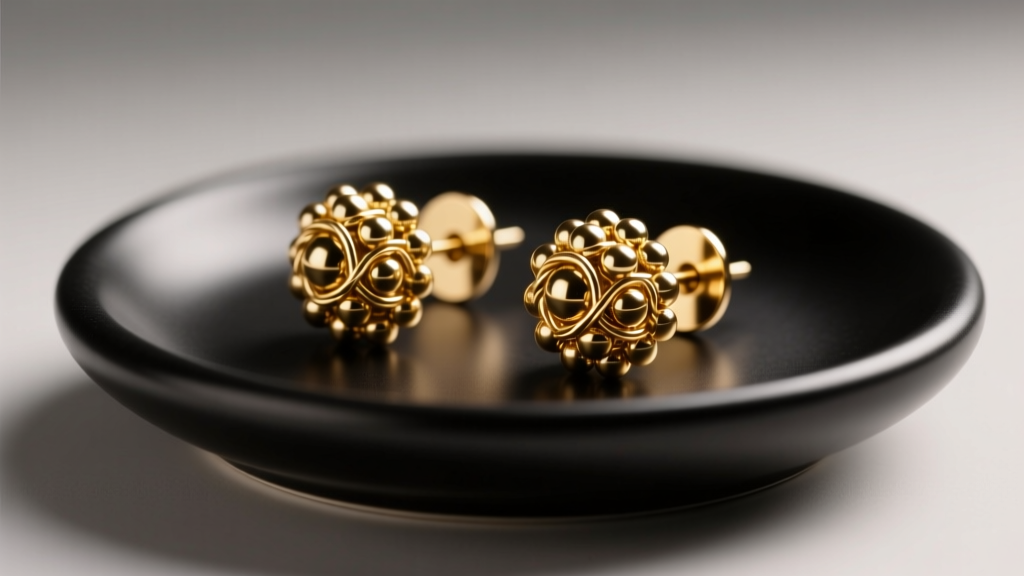
Beaded ball earrings are a staple in modern jewelry, bridging the gap between minimalist daily wear and bold statement pieces. However, the 2026 jewelry market is heavily saturated with look-alike designs that vary wildly in price. A pair of seemingly identical black onyx ball studs can cost $12 at a fast-fashion retailer or $140 from a specialized body jeweler. Understanding where your money goes requires dissecting the three core components of the earring: the post (or wire), the bead itself, and the connection mechanism. When assessing budget and value, the unseen engineering of these components matters far more than the superficial shine.
True value in beaded ball earrings is determined by biocompatibility, structural integrity, and the longevity of the finish. Cheap manufacturing shortcuts—such as glued beads, external threading, and nickel-heavy base metals—lead to rapid degradation, lost jewelry, and compromised piercings. This guide breaks down the exact material grades, engineering standards, and pricing matrices you need to make an informed purchase.
Material Grades and Their Impact on Price
The base metal dictates the baseline cost, hypoallergenic properties, and lifespan of your earrings. In 2026, with precious metal markets experiencing continued volatility, alternative high-grade metals have become the smartest value proposition for everyday wearers.
| Material | Grade/Standard | Avg. Price Range | Connection Type | Biocompatibility |
|---|---|---|---|---|
| Surgical Steel | 316L | $10 - $25 | External | Moderate (Contains Nickel) |
| Titanium | ASTM F136 | $30 - $65 | Internal / Threadless | Excellent (Hypoallergenic) |
| Gold-Filled | 14k/18k over Brass | $25 - $50 | Internal | Good (If layer is intact) |
| Solid Gold | 14k/18k Alloy | $80 - $250+ | Threadless / Internal | Excellent (Nickel-Free) |
According to the Association of Professional Piercers (APP), ASTM F136 implant-grade titanium is the gold standard for biocompatibility. While 316L surgical steel is cheaper to machine and widely available, it contains up to 10% nickel, which can cause contact dermatitis in sensitive ears. Titanium costs roughly 30% more to manufacture due to its hardness, but it offers a lifetime of wear without tarnishing or triggering allergic reactions, making it the ultimate mid-budget value play.
The Threading Debate: Where Value is Won or Lost
The most critical failure point in beaded ball earrings is the connection between the bead and the post. This is where budget brands cut corners, and where premium brands justify their price tags.
External Threading (The Budget Trap)
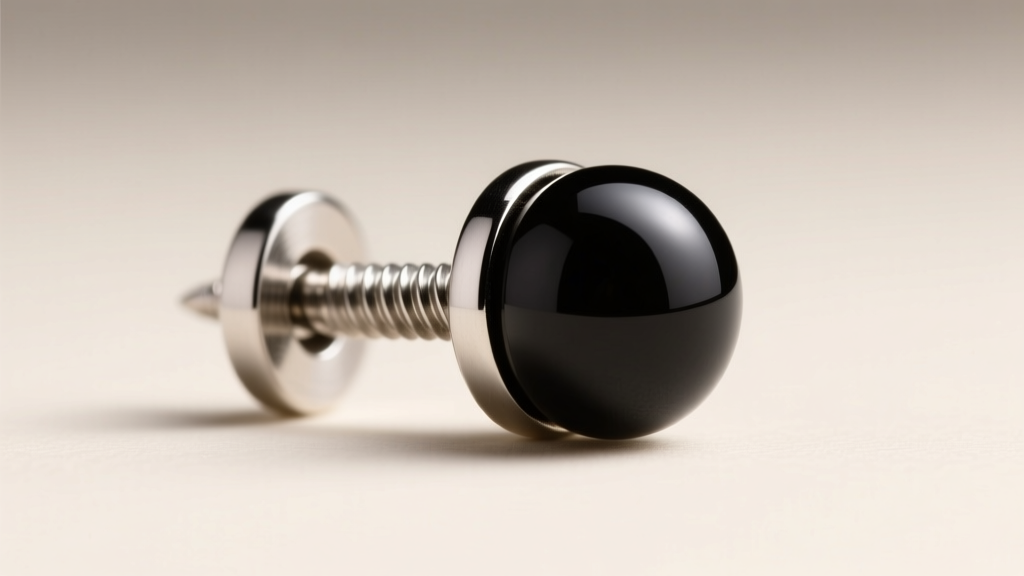
In externally threaded earrings, the screw is on the post itself, and the bead has a smooth hole. This is the cheapest manufacturing method. However, the sharp threads must pass through your piercing every time you insert the earring, causing micro-tears in the fistula. Furthermore, the thin post is prone to bending, and the threads strip easily, leading to lost beads.
Internal Threading (The Value Standard)
Internally threaded earrings feature a smooth post with a tapped hole, while the screw is attached to the bead. This requires precision CNC machining, increasing the cost. The smooth post glides through the piercing without damage, and the thicker metal at the connection point prevents bending. If you are spending over $25 on beaded ball earrings, internal threading is a non-negotiable requirement.
Threadless / Push-Pin (The Premium Choice)
Threadless jewelry uses tension to hold the bead in place. The pin on the bead is slightly bent before insertion into the hollow post, creating a secure, customizable friction fit. This eliminates cross-threading entirely and is the most secure option for heavy gemstone beads or active lifestyles.
Assessing the Bead: Acrylic vs. Glass vs. Gemstone
The "bead" in beaded ball earrings is the focal point, and its material drastically affects both aesthetics and long-term value. The Gemological Institute of America (GIA) categorizes gemstones by hardness on the Mohs scale, which directly correlates to how well a bead will resist daily scratching.
- Acrylic/Resin ($2 - $10): Lightweight and cheap, but highly porous. Acrylic beads absorb oils, cloud over time, and scratch easily. They degrade within months of daily wear and are a poor long-term investment.
- Soda-Lime Glass ($10 - $25): A massive step up from acrylic. Glass beads offer a brilliant, non-porous shine and are highly resistant to scratching. However, they are brittle and can shatter if dropped on hard surfaces.
- Genuine Gemstones ($30 - $150+): Stones like black onyx (Mohs 7), turquoise (Mohs 5-6), or lapis lazuli offer intrinsic value and unique natural variations. High-quality gemstone beads are hand-polished and bezel-set or securely pronged into the metal end, ensuring they never fall out.

The 2026 Pricing Matrix: Allocating Your Budget
To maximize value, align your budget with your intended wear scenario. Here is how the market segments in 2026:
The Budget Tier ($10 - $25)
Best for: Occasional wear, fast-fashion styling, or secondary piercings you rarely change.
What to expect: 316L stainless steel, externally threaded, glass or acrylic beads.
Value Verdict: Low long-term value. Expect to replace these annually due to tarnishing, stripped threads, or lost beads.
The Mid-Tier ($30 - $75)
Best for: Daily wearers, sensitive ears, and primary lobe or cartilage piercings.
What to expect: ASTM F136 titanium or high-quality 14k gold-filled metals, internally threaded or threadless connections, genuine semi-precious stone beads.
Value Verdict: The highest ROI. You are paying for precision engineering and hypoallergenic safety. These pieces will last a decade with proper care.
The Luxury Tier ($80 - $250+)
Best for: Heirloom quality, luxury gifting, and high-end curation.
What to expect: Solid 14k or 18k gold (nickel-free alloys), threadless connections, and premium gemstones like opals, sapphires, or diamonds.
Value Verdict: Excellent intrinsic value. Solid gold retains resale value and will never degrade, making it a true investment piece.
Common Failure Modes and How to Avoid Them
Even expensive beaded ball earrings can fail if the structural geometry is flawed. Watch out for these specific failure modes:
- The "Cheese-Cutter" Effect: Pairing a heavy, oversized metal or gemstone bead with a thin 20-gauge (0.8mm) post. The weight of the bead will cause the thin wire to slice through the bottom of your piercing over time. Solution: Always opt for 18-gauge (1.0mm) or 16-gauge (1.2mm) posts for beads larger than 5mm.
- Glued Bead Ends: Many budget brands use industrial adhesive to attach the bead to the post cap. Body heat, sweat, and ultrasonic cleaners will dissolve this glue, resulting in a lost bead. Solution: Inspect the connection. High-value earrings use mechanical settings (bezels, prongs) or are machined from a single piece of metal.
- Post Bending: Soft metals like pure 24k gold or low-karat alloys will bend under the pressure of sleeping on them. Solution: Choose 14k gold alloys or titanium, which offer the necessary tensile strength to resist warping.
Final Verdict: Are They Worth the Investment?
"Beaded ball earrings are only as valuable as their weakest component. A solid gold post is worthless if the bead is glued on, and a flawless gemstone is ruined by a nickel-heavy, externally threaded post. In 2026, the smartest buyers are bypassing the ultra-cheap and ultra-luxury tiers, focusing instead on the $40-$70 mid-tier where implant-grade titanium and precision threading offer a lifetime of wear."
When shopping for beaded ball earrings, look past the initial price tag. Demand internal threading, verify the metal grade, and ensure the bead is mechanically set. By prioritizing engineering over superficial branding, you can build a collection of high-quality, hypoallergenic earrings that offer exceptional value for every dollar spent.


