The Truth About Nickel and Suede Earrings: A Material Guide
Discover the material science behind nickel and suede earrings. Learn about allergy risks, suede care, and safe hardware alternatives.

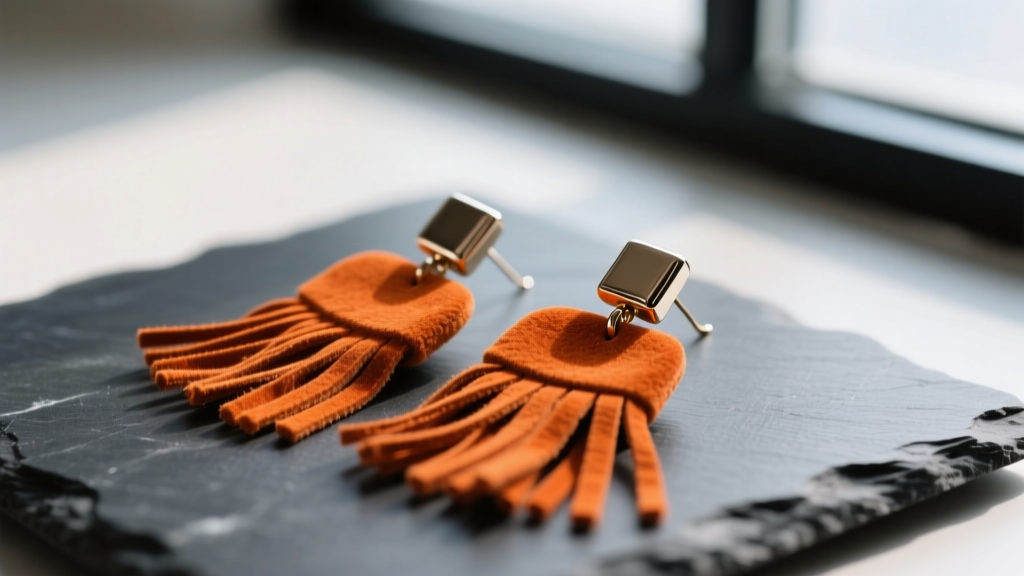
The Allure and Risk of Mixed-Media Statement Pieces
Mixed-media jewelry has dominated the accessories market, with bohemian and avant-garde styles frequently pairing soft textiles with rigid metals. Among the most visually striking yet materially problematic combinations are nickel and suede earrings. Designers often utilize suede for its lightweight drape, rich color absorption, and luxurious napped texture, while relying on nickel-based alloys for structural hardware, jump rings, and earring posts due to their low cost and high malleability.
However, from a materials science and dermatological perspective, this specific pairing presents a unique set of challenges. The porous nature of split leather interacts unpredictably with the reactive properties of base metals, creating a hidden vector for allergic contact dermatitis. This guide deconstructs the physical properties of both materials, examines their failure modes when combined, and provides actionable frameworks for safely wearing and maintaining mixed-media statement pieces.
Material Deep Dive: Suede vs. Nickel Hardware
To understand why nickel and suede earrings require specialized care, we must first isolate the physical and chemical properties of each component.
Suede: Porosity, Weight, and Drape
Suede is a type of split leather made from the underside of the animal hide, typically lamb, goat, or calf. Unlike full-grain leather, suede features a napped finish that is exceptionally soft but highly porous.
- Weight: Jewelry-grade suede typically ranges from 1.5 to 3.0 ounces per square foot, making it ideal for oversized statement earrings that won't stretch the earlobe.
- Absorbency: The open-pore structure readily absorbs ambient moisture, sebum, and hair products. This hygroscopic nature is the primary catalyst for material degradation and bacterial growth.
- Structural Integrity: Suede lacks the tensile strength to support its own weight in rigid geometric shapes without a backing or metal framing, necessitating the use of metal hardware.
Nickel Alloys: Structural Integrity vs. Contact Dermatitis
Nickel is rarely used in its pure form in jewelry. It is typically alloyed with copper and zinc (creating 'nickel silver') or mixed into stainless steel to increase hardness and corrosion resistance.
- The Sensitization Risk: According to the Mayo Clinic, nickel allergy is a Type IV delayed cell-mediated hypersensitivity reaction. Once sensitized, the immune system reacts to nickel ions that leach from the metal when exposed to sweat.
- Regulatory Limits: The EU Nickel Directive strictly limits nickel release from post-assembly jewelry to 0.5 micrograms per square centimeter per week. Many mass-market nickel and suede earrings imported from unregulated markets vastly exceed this threshold.
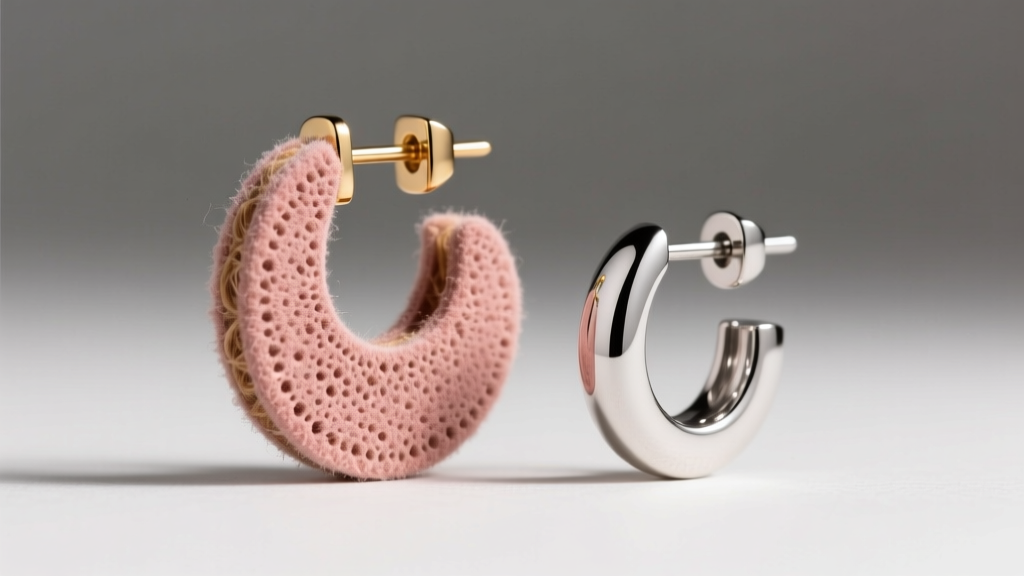
The Hidden Dangers of the 'Sweat-Transfer' Mechanism
The most critical failure mode in nickel and suede earrings is not necessarily the metal post touching the ear, but the sweat-transfer mechanism. Because suede is worn close to the neck and jawline, it absorbs perspiration and natural skin oils throughout the day.
"When a porous material like suede becomes saturated with slightly acidic sweat, it acts as a chemical bridge. If that damp suede repeatedly brushes against a nickel-containing jump ring or clasp, it accelerates the oxidation and ion-release of the metal, transferring nickel salts directly back onto the wearer's skin or earlobe."
This means you can experience severe contact dermatitis on your earlobe or neck even if the actual earring post is made of safe, hypoallergenic gold or titanium, simply because the suede body is contaminated with nickel ions from the hardware.
Comparative Data: Material Properties & Wearability
When evaluating mixed-media earrings, it is crucial to compare the baseline materials against safer, modern alternatives. The table below outlines the properties of traditional nickel and suede earrings versus upgraded material pairings.
| Material Component | Allergenic Potential | Durability & Care | Average Price Premium |
|---|---|---|---|
| Nickel Silver Hardware | High (Fails EU Directive limits) | Tarnishes quickly; reacts with sweat | Base Price ($15 - $35) |
| ASTM F136 Titanium Hardware | Zero (Biocompatible) | Impervious to sweat and corrosion | +$10 - $20 upgrade |
| Niobium Ear Wires | Zero (Inert elemental metal) | Highly durable, anodized colors | +$8 - $15 upgrade |
| PVD-Coated Brass | Low (If coating remains intact) | Scratch-resistant, but wears over time | +$5 - $12 upgrade |
| Traditional Suede | N/A (Organic material) | Requires fluoropolymer sealing | Standard |
| Microfiber 'Vegan' Suede | N/A (Synthetic) | Less absorbent, easier to clean | +$5 - $10 |
How to Safely Wear and Maintain Suede Earrings
If you own or intend to purchase nickel and suede earrings, implementing a strict maintenance protocol is non-negotiable to prevent allergic reactions and material degradation. The American Contact Dermatitis Society emphasizes that avoidance of the allergen is the only true cure for nickel sensitization, making hardware modification essential.
Step 1: Seal the Suede
Before wearing new suede earrings, treat them with a fluoropolymer-based suede protector spray. Hold the can 8 to 10 inches away and apply two light, even coats, allowing 24 hours of curing time in a low-humidity environment. This creates a hydrophobic barrier that prevents sweat absorption and stops the 'sweat-transfer' mechanism.
Step 2: Upgrade the Hardware (The 20-Gauge Swap)
Most statement earrings utilize standard 20-gauge (0.81mm) or 18-gauge (1.02mm) jump rings to attach the suede component to the ear wire. Use a pair of flat-nose jewelry pliers to carefully open the jump ring, detach the suede piece from the nickel hardware, and reattach it to a hypoallergenic ASTM F136 titanium or pure niobium ear wire. This completely eliminates the risk of nickel exposure while preserving the aesthetic of the suede.
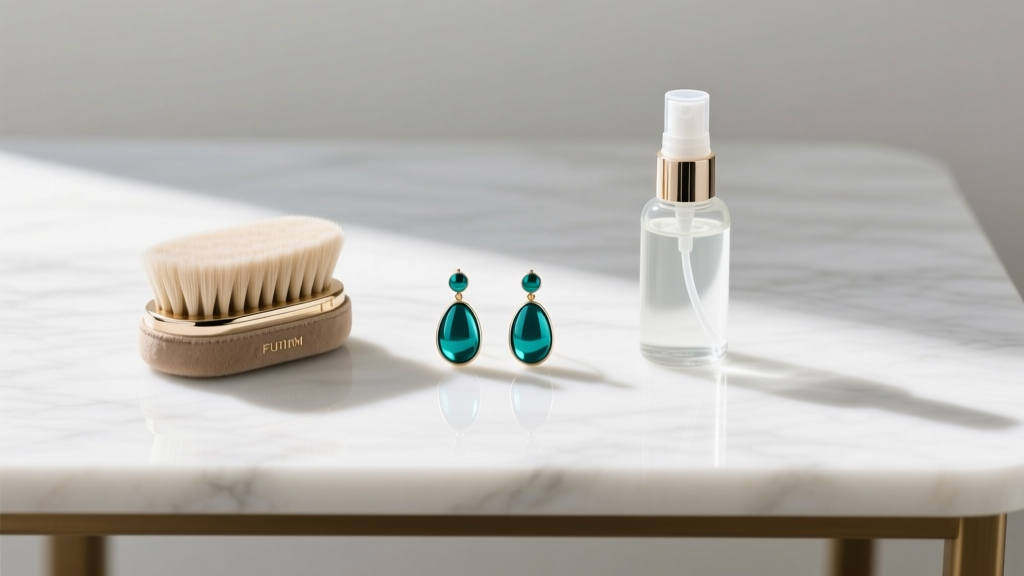
Step 3: Routine Decontamination
After every 3 to 4 wears, gently brush the suede with a natural crepe brush to lift the nap and dislodge trapped skin cells and environmental dust. If the metal hardware cannot be removed, wipe it down with an isopropyl alcohol pad to strip away accumulated sebum and nickel salts before storing.
Expert Verdict: What to Buy in 2026
While the visual contrast of nickel and suede earrings remains a staple in bohemian and festival fashion, the material incompatibility makes them a poor investment for anyone with sensitive skin or a history of metal allergies. In 2026, conscious consumers and ethical jewelers are moving toward transparent material sourcing.
When shopping for mixed-media statement pieces, always scrutinize the hardware. Look for brands that explicitly state their metal components are 'Nickel-Free,' 'Surgical Grade Titanium,' or 'Niobium.' If you are purchasing from a vintage or artisan market where nickel alloys are likely, budget an extra $15 for a pack of titanium replacement hooks and a can of suede sealer. By understanding the molecular interaction between porous leathers and reactive base metals, you can enjoy the dramatic drape of suede earrings without compromising your skin's health.


