Choosing Beaded Earring Patterns: A Buyer's Guide
Discover how to evaluate beaded earring patterns for quality, structural integrity, and material grades in our comprehensive buyer's guide.

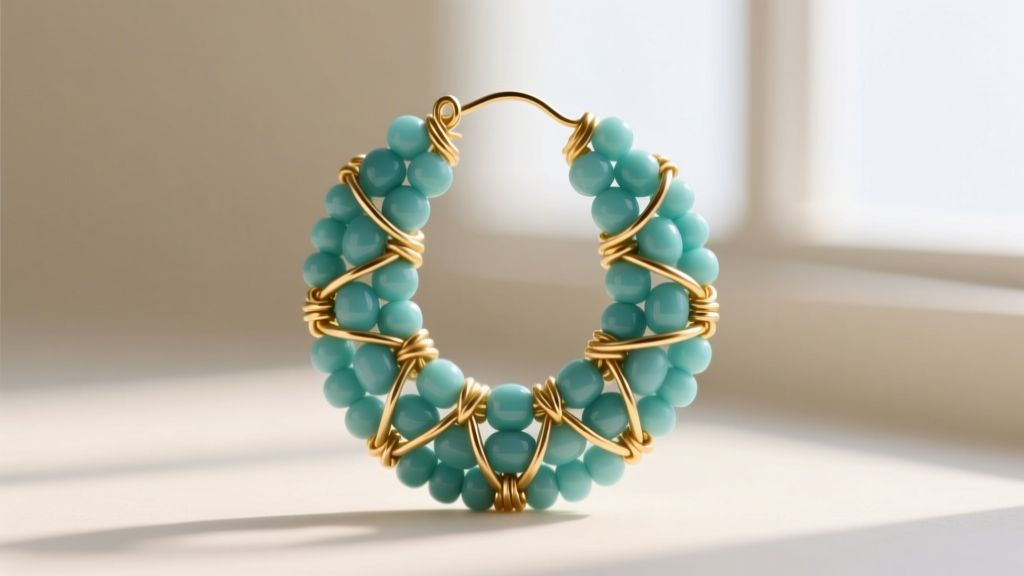
The Anatomy of Beaded Earring Patterns
When shopping for handcrafted or artisan jewelry, the visual appeal of beaded earring patterns often captures our attention first. However, as a discerning buyer in 2026, evaluating these pieces requires looking far beyond the color palette. A truly exceptional beaded earring is a masterclass in structural engineering, material science, and ergonomic design. Whether you are investing in intricate seed bead weaving, semi-precious stone dangles, or geometric crystal drops, understanding the underlying blueprint of the design is crucial. This guide will equip you with the technical knowledge to assess the quality, durability, and true value of beaded earrings before you make a purchase.
Material Grades: Beyond the Color Palette
The longevity of any beaded design hinges on the raw materials used. Mass-market beaded earrings frequently utilize coated glass or dyed howlite to mimic high-end stones, leading to rapid color fading and chipping. When evaluating beaded earring patterns, you must identify the specific grade of the beads. According to the GIA Gem Encyclopedia, natural and high-quality synthetic gems possess specific Mohs hardness ratings that dictate how well they will survive daily wear without scratching or dulling against one another.
| Bead Material | Durability (Mohs) | Best Pattern Application | Expected Price Tier |
|---|---|---|---|
| Miyuki Delica Seed Beads | 5.5 - 6.0 | Intricate loom weaving, peyote stitch, fringe | $35 - $80 |
| Preciosa Maxima Crystal | 6.5 - 7.0 | Geometric dangles, light-catching drops | $45 - $120 |
| Natural Lapis Lazuli | 5.0 - 6.0 | Statement studs, heavy wire-wrapped links | $60 - $150 |
| Czech Fire-Polished Glass | 5.5 | Multi-strand fringe, clustered hoops | $15 - $40 |
For seed bead patterns, always look for Japanese brands like Miyuki or Toho. Their cylinder and round beads offer a uniformity that cheaper alternatives lack, ensuring the tension in woven patterns remains consistent and the structural grid does not warp over time.
Structural Integrity: Wire Gauges and Failure Modes
The most common failure point in beaded dangle earrings is the wire loop connecting the bead to the ear wire. Many commercial manufacturers and amateur crafters use 'simple loops'—where the wire is merely bent into a circle. Under the kinetic stress of walking or turning your head, a simple loop will inevitably pull open, resulting in a lost bead.
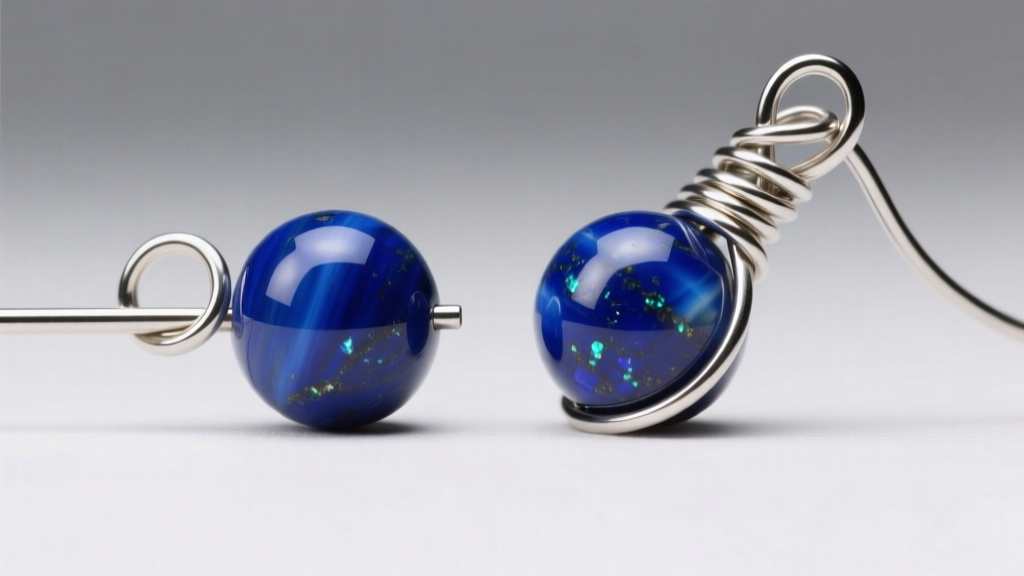
The Wrapped Loop Imperative
When inspecting beaded earring patterns that feature linked stones or heavy glass drops, demand wrapped loops. A wrapped loop involves winding the wire tightly down the stem of the headpin, creating a permanent, mechanically locked closure. Furthermore, the gauge (thickness) of the wire is critical. Suppliers like Rio Grande outline standard jewelry wire gauges, and you should apply these rules when buying:
- 24-Gauge Wire: Too soft for structural loops. Only acceptable for delicate bead weaving or coiling over a thicker core wire.
- 22-Gauge Wire: The industry sweet spot. Ideal for creating secure wrapped loops for most semi-precious stones and medium-weight glass beads.
- 20-Gauge Wire: Mandatory for heavy lampwork glass beads, large turquoise cabs, or any single bead exceeding 8 grams to prevent the stem from bending.
If you are purchasing woven seed bead earrings, check the stringing material. High-quality artisans use braided polyethylene lines (like FireLine) or pure silk thread with micro-knots between beads, rather than cheap nylon monofilament which degrades and becomes brittle when exposed to UV light and skin oils.
Hardware and Hypoallergenic Findings
The 'findings'—the ear wires, posts, and clasps that interface directly with your skin—must be scrutinized just as closely as the beads themselves. The term 'surgical steel' is largely unregulated in the jewelry industry and often contains nickel, a primary allergen. In 2026, buyers should look for specific, verifiable metal grades.
For sensitive ears, the gold standard is ASTM F136 implant-grade titanium or pure niobium. Both metals are highly biocompatible and completely nickel-free. If you prefer the look of gold, ensure the piece uses 14k or 18k gold-filled wire (which contains a thick, mechanically bonded layer of gold comprising at least 5% of the total weight) rather than 'gold-plated' or 'gold-dipped,' which will wear through to the base brass within months of friction against the earlobe.
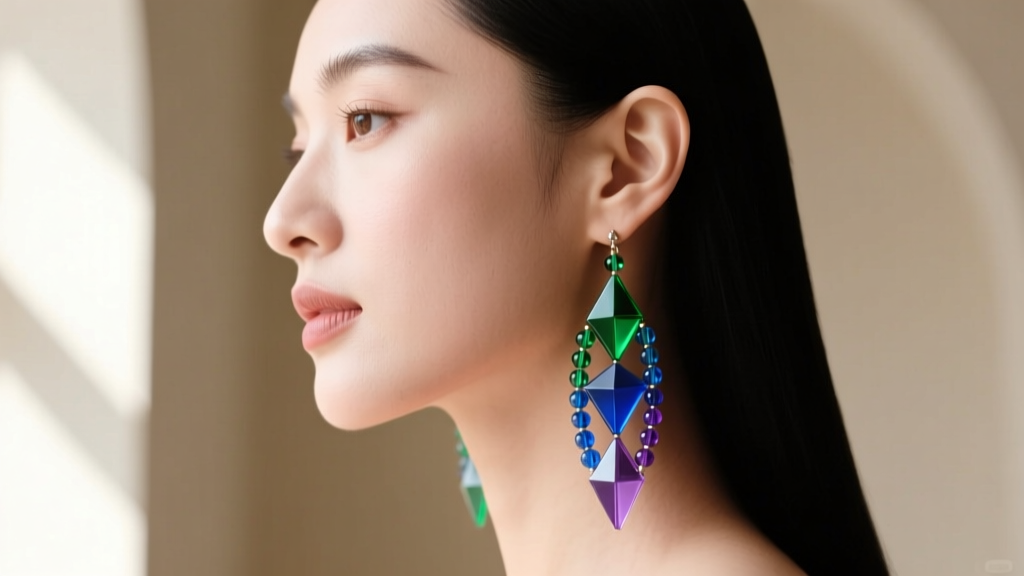
Weight Distribution and Ergonomics
A beautiful beaded earring pattern is useless if it causes physical discomfort. Heavy beaded dangles can cause earlobe fatigue, stretching the piercing over time. When evaluating a piece, consider the center of gravity.
Earrings that hang from a standard French hook tend to swing forward, pulling the earlobe outward. High-end artisans mitigate this by using kidney wires or leverback closures that secure the earring more tightly to the ear, or by incorporating a lightweight wire-wrapped 'halo' at the top of the design to shift the center of gravity closer to the piercing. If a beaded earring weighs more than 12 grams per ear, it should ideally feature a supportive ear jacket, a wide-gauge post, or a specialized silicone earring back to distribute the load across a wider surface area of the lobe.
Pricing Tiers and Value Assessment
Understanding the pricing landscape helps you identify genuine artisan craftsmanship versus overpriced mass production. Here is what you should expect to pay for quality beaded earring patterns in the current market:
- Mass-Market / Fast Fashion ($8 - $25): Expect simple loops, plated brass wire, dyed glass beads, and basic nylon stringing. High risk of allergic reactions and structural failure.
- Artisan / Independent Maker ($40 - $95): Features wrapped loops, gold-filled or sterling silver wire, genuine semi-precious stones or premium Japanese seed beads, and hypoallergenic findings.
- Masterwork / Fine Craft ($120 - $300+): Involves complex bead embroidery, custom-cut gemstones, 18k solid gold or platinum wire integration, and museum-grade archival stringing materials.
Buyer's Rule of Thumb: Always gently tug the lowest bead in a beaded dangle pattern. If the wire loop above it shifts, gaps, or feels pliable, the piece is structurally compromised and will eventually drop the stone. True craftsmanship leaves no room for mechanical slack.
Ultimately, investing in high-quality beaded earring patterns means paying for the invisible hours of technical labor—the precise wire wrapping, the meticulous tensioning of thread, and the careful selection of biocompatible metals. By applying these structural and material evaluations, you ensure your jewelry collection is built to last a lifetime.


