Beginner's Guide to Choosing Bow Earrings With Pearls
Discover how to choose, style, and care for bow earrings with pearls. Learn about pearl grades, metal types, and face-shape matching.

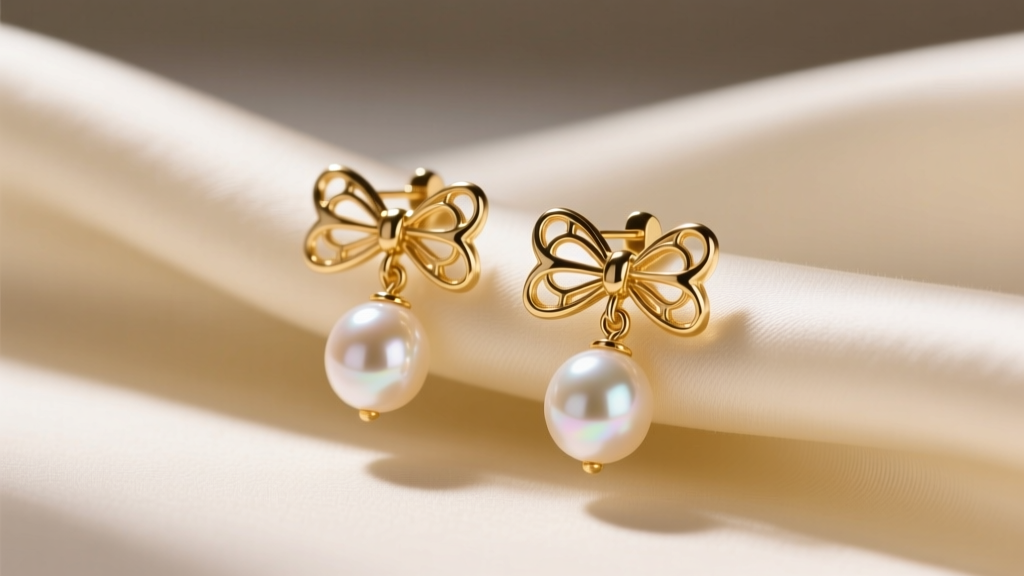
The resurgence of romantic, hyper-feminine aesthetics has cemented the bow motif as a modern jewelry staple. However, when you combine this playful shape with the timeless elegance of pearls, you get a versatile accessory that bridges the gap between trendy and classic. If you are new to fine jewelry, navigating the market for bow earrings with pearls can feel overwhelming. From deciphering pearl luster to understanding metal plating and structural integrity, this beginner-friendly explainer provides the exact frameworks needed to make an informed purchase in 2026.
Decoding the Anatomy: Bows, Pearls, and Metals
Before evaluating aesthetics, a smart buyer must understand the raw materials. The longevity and price of your earrings depend entirely on the pearl type and the metal grade used for the bow setting.
Pearl Types: Freshwater vs. Akoya vs. Shell
Not all pearls are created equal. According to the Gemological Institute of America (GIA), the market is dominated by three main categories:
- Freshwater Pearls: The best choice for beginners. They are solid nacre all the way through, making them highly durable and resistant to chipping. They range from perfectly round to organic 'baroque' shapes. Expect a soft, satiny luster.
- Akoya Pearls: The gold standard for classic round pearls. They are bead-nucleated, yielding a sharp, mirror-like luster. They are more expensive and typically range from 6mm to 8mm in stud or drop settings.
- Shell Pearls (Imitation):strong> These are glass or plastic beads coated in crushed oyster shell powder. While they look perfectly uniform and cost under $20, the coating will eventually peel and degrade with exposure to skin oils.
Metal Grades: Vermeil vs. Gold Plated
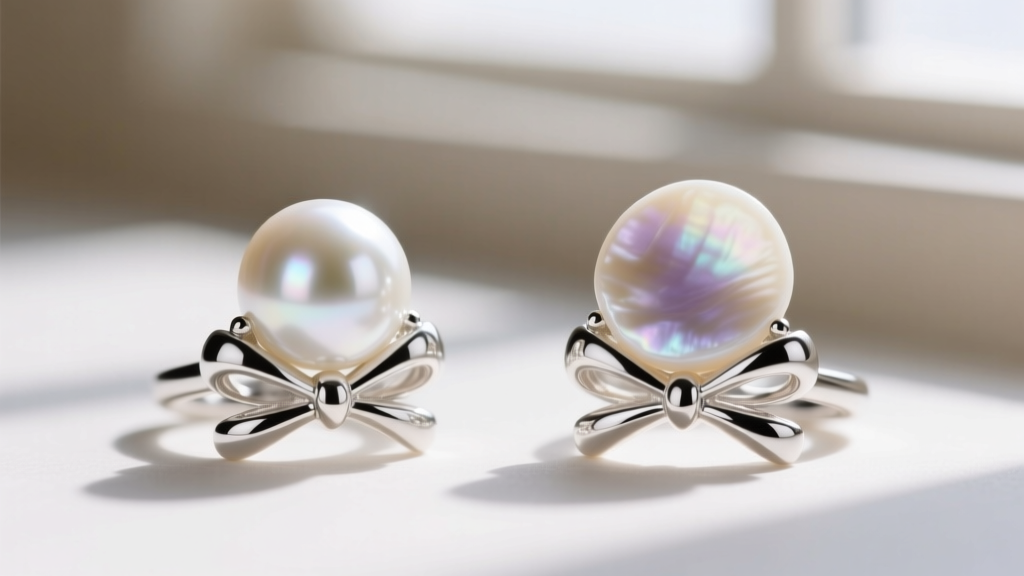
The metal forming the bow structure must withstand daily friction. Avoid standard 'gold-plated' brass, which uses a microscopic 0.5-micron layer of gold that wears off in weeks, exposing brass that reacts with sweat and turns your earlobes green. Instead, look for 14k Gold Vermeil. As defined by Jewelers of America, vermeil requires a thick layer of gold (minimum 2.5 microns) bonded over a 925 sterling silver base. This ensures hypoallergenic wear and long-term durability.
Sizing and Proportions: Matching Your Face Shape
Bow earrings with pearls come in various silhouettes, from compact studs to elongated dangles. Matching the proportion of the bow and the millimeter (mm) size of the pearl to your face shape ensures the jewelry enhances your features rather than overwhelming them.
| Face Shape | Recommended Bow Style | Ideal Pearl Size & Type | Visual Effect |
|---|---|---|---|
| Round | Elongated drop bows | 7-9mm teardrop pearls | Creates vertical lines to lengthen the face |
| Oval | Medium stud or huggie bows | 6-7mm round pearls | Maintains natural facial balance and symmetry |
| Square | Soft, curved ribbon bows | 8-10mm baroque pearls | Softens strong jawlines with organic shapes |
| Heart | Delicate, upward-sweeping bows | 5-6mm round Akoya pearls | Adds subtle width to a narrower chin area |
The Gauge and Backing Breakdown (What Beginners Miss)
The most common failure point in pearl drop earrings is mechanical, not cosmetic. Beginners rarely check the post gauge (thickness) or the backing mechanism, leading to lost earrings and bent posts.
Post Gauge and the Pendulum Effect
Standard lobe piercings are done at 20-gauge (0.81mm) or 18-gauge (1.0mm). If you are buying a simple bow stud with a tiny 4mm pearl, a 20G post is perfectly fine. However, if you are buying dangle bow earrings with pearls where the pearl hangs below the lobe, the jewelry acts as a pendulum. The leverage created by a heavy 9mm freshwater pearl swinging from a delicate bow can easily bend a 20G wire over time. For any drop or dangle style, strictly require an 18-gauge (1.0mm) post for structural integrity.
Upgrading Your Backings
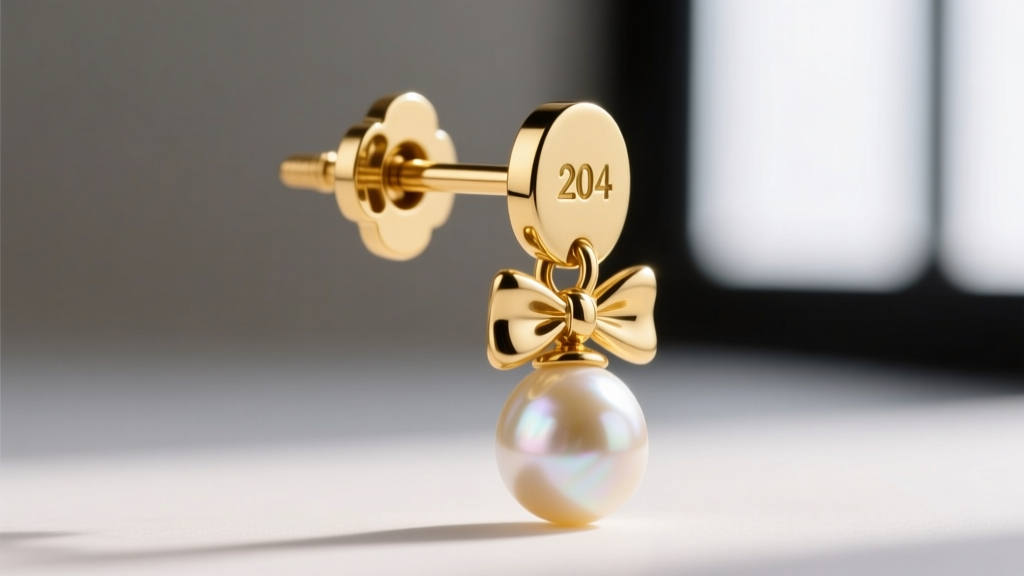
Standard 'butterfly' friction backs rely on tension. Over time, the metal clutch stretches out, and the earring slides off the post. For valuable pearl jewelry, upgrade to La Pousette backs (which feature a mechanical locking click) or screw-backs (which thread directly onto a grooved post). This simple $15 upgrade guarantees you will never lose a cherished pearl to a worn-out friction clutch.
Care and Maintenance: Keeping the Luster Alive
Pearls are organic gemstones. On the Mohs scale of hardness, they rank between 2.5 and 3.0, meaning they can be scratched by a copper coin or even harsh fabrics. Furthermore, their nacre is highly susceptible to acidic degradation.
The Golden Rule of Pearls: 'Last on, first off.' Always put your pearl earrings on after applying perfume, hairspray, and makeup. Remove them before showering or exercising. The acids in human sweat and the alcohol in cosmetics will slowly dissolve the pearl's nacre, leaving it dull and chalky.
For routine cleaning, never use ultrasonic cleaners or commercial jewelry dips. These will strip the pearl's natural orient and destroy the epoxy glue holding the pearl to the bow setting. Instead, wipe the pearls gently with a damp, lint-free microfiber cloth after wear. Store them in a breathable silk pouch; sealing pearls in airtight plastic bags dehydrates them, leading to surface cracking.
Price Tiers: What to Expect in 2026
Understanding the market pricing prevents you from overpaying for imitation materials or underestimating the cost of fine jewelry. Here is a realistic breakdown of what you should expect to pay for quality bow earrings with pearls this year:
- Budget Tier ($25 - $60): Expect gold-plated brass with freshwater 'rice' pearls or shell pearls. Acceptable for occasional wear, but high risk of metal tarnishing and pearl coating degradation.
- Mid-Range Tier ($75 - $180): The sweet spot for beginners. You will find 925 sterling silver or 14k gold vermeil bows paired with high-quality, round freshwater pearls (7-8mm). Look for brands that specify 'solid nacre' and 'rhodium flashing' for tarnish resistance.
- Fine Jewelry Tier ($250 - $800+): Solid 14k or 18k gold settings featuring genuine Akoya pearls with AAA luster grades. These pieces often include diamond melee accents on the bow and utilize secure screw-back or La Pousette mechanisms.
By focusing on material grades, structural gauge sizes, and proper organic care, you can confidently invest in bow earrings with pearls that will remain a staple in your jewelry box for decades, transcending fleeting micro-trends.


