Geode Earrings Guide: How to Choose and Style Crystal Slices
Discover everything about geode earrings in our beginner's guide. Learn to choose authentic crystal slices, pick metals, and style them.

What Exactly Are Geode Earrings?
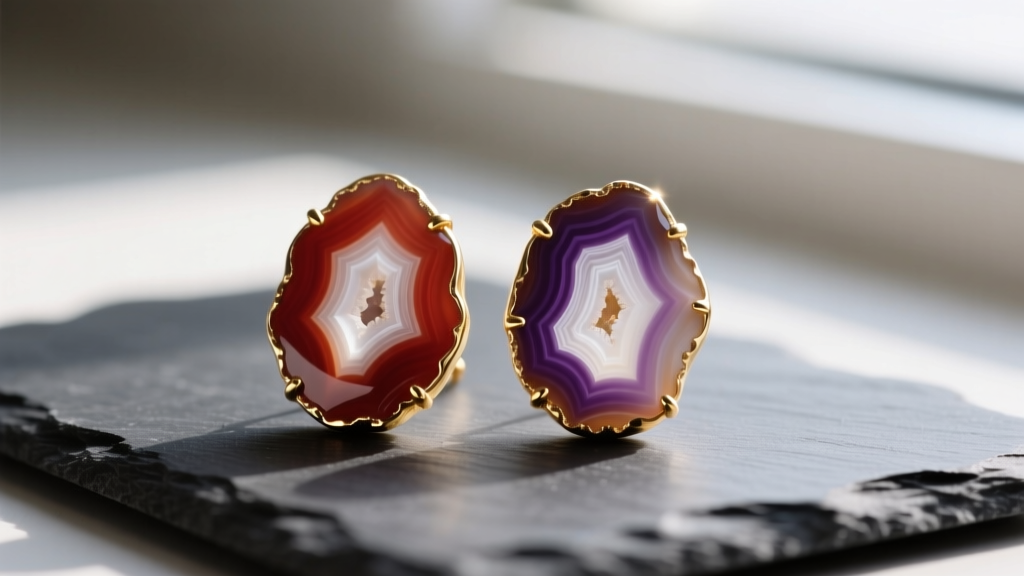
Geode earrings have surged in popularity as wearers seek out organic, earthy aesthetics that double as wearable art. But what exactly is a geode? In geological terms, a geode is a hollow, roughly spherical rock containing an internal lining of crystals or banded minerals. When lapidaries (stone cutters) slice these rocks in half and polish the edges, they reveal stunning, one-of-a-kind cross-sections. Because no two geodes are identical, every pair of geode earrings is inherently unique.
The most common mineral used for geode slice earrings is agate, a microcrystalline variety of quartz (chalcedony) known for its tight, durable concentric banding. According to the Mindat Mineralogy Database, agate forms in volcanic and metamorphic rocks, filling cavities with silica-rich fluids over millions of years. Less common but equally beautiful are druzy quartz geodes, which feature a surface covered in tiny, sparkling macro-crystals. While druzy offers incredible light refraction, it is significantly more fragile than solid agate and requires protective bezel settings to prevent the delicate crystal points from chipping during daily wear.
Real vs. Treated: How to Spot Authentic Geode Slices
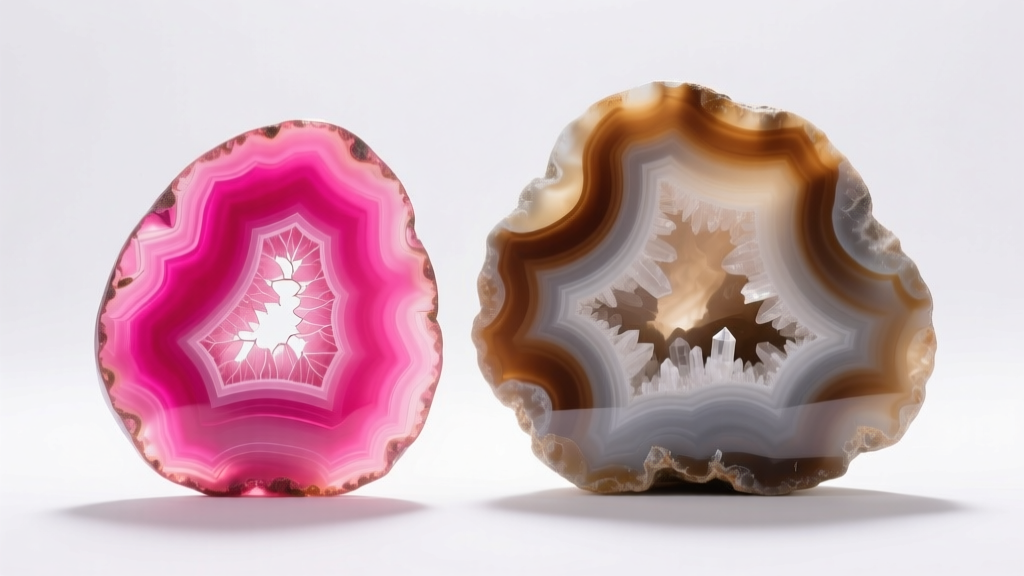
As a beginner navigating the jewelry market, understanding the difference between natural, undyed geodes and heavily treated stones is crucial. Because natural agate banding is often subtle—featuring earthy tones of grey, white, pale blue, and soft peach—many commercial manufacturers use acid dyes to create vibrant, neon pinks, electric blues, and deep purples.
The Dye Test and Visual Cues
While dyed stones are not inherently "fake" (the underlying stone is still real agate), the dyeing process alters the stone's value and care requirements. The GIA Gem Encyclopedia notes that agate is highly porous, making it exceptionally receptive to dyes. Here is how to evaluate the geodes you are buying:
- Color Concentration: Examine the stone under a jeweler's loupe or macro lens. In dyed agate, color will heavily concentrate in the microscopic fractures and crystal boundaries, creating a spiderweb or crackled appearance. Natural agate features smooth, seamless color transitions.
- The Price Indicator: Natural, undyed agate slices set in quality metals typically range from $45 to $120. Mass-produced, brightly dyed slices in base metals usually sell for $12 to $25. If you see neon colors at a bargain price, they are dyed.
- The Bleed Risk: Poorly sealed dyed geodes can leach color when exposed to sweat, humidity, or rain. This failure mode can stain your skin, clothing, and even the metal setting. Always ask the jeweler if the porous stone has been treated with a clear resin sealant.
Metal Settings and Structural Integrity
Because geode slices are dense and heavy, the metal setting must provide structural support. Flimsy settings are the number one reason geode earrings break or fall out of the ear. When evaluating a pair, pay close attention to how the stone is secured.
| Setting Type | Durability | Best For | Failure Mode |
|---|---|---|---|
| Bezel (Full Metal Rim) | Excellent | Druzy quartz, fragile edges | Very rare; metal may dent if crushed |
| Prong (Metal Claws) | Poor | Not recommended for geodes | Prongs slip off brittle agate edges |
| Glue-On Bail / Pad | Very Poor | Lightweight faux geodes only | Cyanoacrylate bond snaps under stone weight |
Always opt for a bezel setting where a rim of metal wraps entirely around the perimeter of the geode slice. Furthermore, check the metal grade. Sterling silver (925) and 14k gold-filled are excellent choices. Avoid cheap brass or nickel alloys, as the heavy weight of the stone will pull the earring against your skin, increasing the risk of contact dermatitis and allergic reactions.
Weight and Lobe Care: Preventing the "Droop"
Geode earrings are significantly heavier than standard metal or gemstone studs. A large agate drop can easily weigh between 10 to 20 grams per ear. This constant downward pull can stretch the piercing fistula over time, leading to the dreaded "earlobe droop" or, in extreme cases, tearing the tissue.

Hardware and Support Solutions
To protect your earlobes, you must upgrade your earring hardware. If your geode earrings feature a standard post, discard the cheap butterfly backs. Instead, use silicone O-ring backers or wide plastic disc backs. These distribute the weight across a wider surface area of the earlobe, providing friction and support without pinching.
If your earrings hang from French wire hooks, check the wire gauge. Standard lightweight hoops use 22-gauge (0.64mm) wire, which will easily bend and snap under the weight of a geode. Ensure your French wires are at least 20-gauge (0.81mm) or 18-gauge (1.02mm) for structural integrity. Additionally, use clear silicone ear wire stoppers (small discs that slide onto the back of the hook) to prevent the heavy earring from slipping out of your ear when you take off a sweater or brush your hair.
Styling Geode Earrings for Your Face Shape
Because geode slices command attention, their shape and scale should complement your facial structure. Here is a practical framework for styling these statement pieces:
- Round Faces: Opt for long, teardrop-shaped geode dangles or elongated rectangular slices. The vertical lines draw the eye downward, creating an elongating illusion that balances the width of the cheeks.
- Angular/Square Faces: Choose rounded, asymmetrical, or raw-edge geode slices. The organic, curved lines of the stone will soften a strong jawline and prominent cheekbones.
- Oval Faces: You have the versatility to wear almost any style. Medium-sized circular geode studs or classic half-moon slices look exceptionally balanced.
- Heart-Shaped Faces: Avoid massive, top-heavy triangle slices that mimic the width of the forehead. Instead, choose smaller, delicate geode drops that add subtle volume near the jawline.
Care, Cleaning, and Storage
Geode earrings require specific maintenance to preserve their polish and metal settings. Never place agate or druzy quartz in an ultrasonic jewelry cleaner. The high-frequency vibrations can shatter druzy crystals and shake loose the adhesive in poorly made settings.
Pro Tip: To clean your geode earrings, use a soft, dry microfiber cloth to gently wipe away skin oils and dust. If the stone is heavily soiled, use a slightly damp cotton swab with a drop of mild castile soap, but avoid soaking the stone. Always dry the metal hardware immediately to prevent oxidation, especially if the setting is sterling silver.
When storing your geode earrings, keep them in a soft pouch separate from harder gemstones like diamonds or sapphires. While agate ranks a 7 on the Mohs hardness scale, it can still be scratched by harder materials, and the polished edges can become dull if they constantly rub against other jewelry in a shared box. By understanding the geology, hardware, and care requirements of geode earrings, you can confidently invest in pieces that are as durable as they are beautiful.


