The Beginner's Guide to Styling Gold Paperclip Earrings
Discover everything you need to know about gold paperclip earrings. Learn about karats, link gauges, face shapes, and how to prevent earlobe drag.

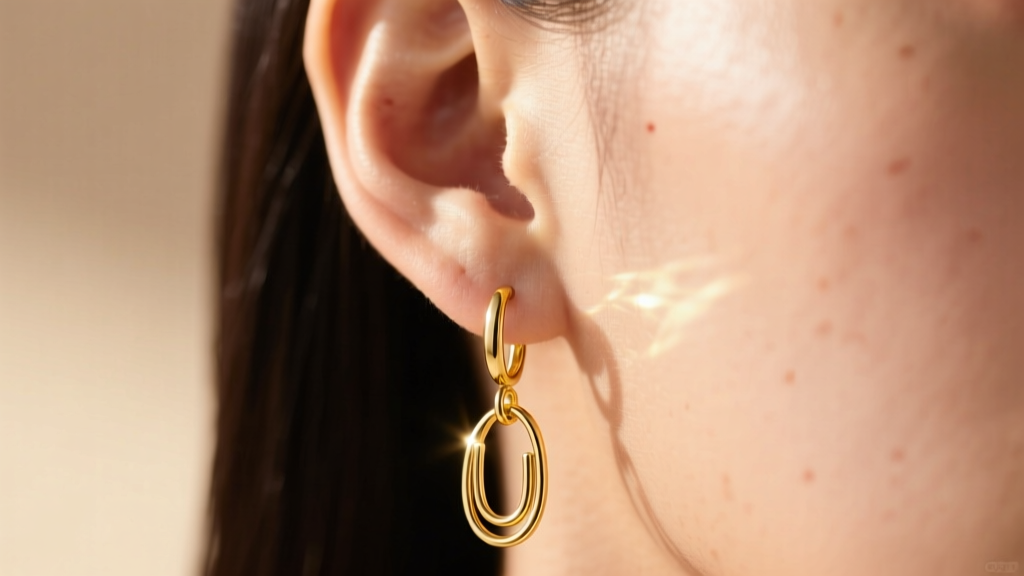
If you have browsed any jewelry feed or boutique display in recent years, you have undoubtedly encountered the paperclip chain. Characterized by its elongated, rectangular oval links that mimic the shape of an actual office paperclip, this design has become a cornerstone of modern minimalist jewelry. As we navigate the jewelry landscape in 2026, gold paperclip earrings remain a dominant trend, bridging the gap between effortless everyday wear and deliberate, high-impact styling. However, not all paperclip earrings are created equal. From wire gauge thickness to karat purity, understanding the mechanics of this specific chain style is crucial for making a purchase that lasts. This beginner-friendly explainer will break down exactly what to look for when buying your first pair.
The Anatomy of the Paperclip Link
The defining feature of gold paperclip earrings is the link itself. Unlike standard cable or curb chains, the paperclip link is elongated, typically featuring a length-to-width ratio of 2:1 or even 3:1. For fine jewelry, standard link dimensions usually range from a delicate 2mm x 5mm up to a chunky 5mm x 12mm.
The structural integrity of these earrings relies heavily on the wire gauge used to form the links. High-quality solid gold paperclip chains are typically crafted from 18-gauge to 14-gauge wire. Anything thinner than 20-gauge risks the links pulling apart or warping under the natural tension of being worn, especially in dangle or hoop formats. Furthermore, you must pay attention to whether the links are solid or hollow. Hollow links are created by wrapping gold sheet metal around a base metal core and then dissolving the core in acid. While this reduces the price and weight, hollow links are highly susceptible to crushing if dropped or slept in, and they cannot be easily repaired by a jeweler once dented.
Decoding the Gold: Karats, Plating, and Durability
When shopping for gold paperclip earrings, the metal composition dictates both the color and the lifespan of the piece. The Gemological Institute of America (GIA) notes that pure 24k gold is far too soft for chain links, as the elongated shape of the paperclip link makes it highly prone to bending and snapping under stress. Therefore, alloying is essential.
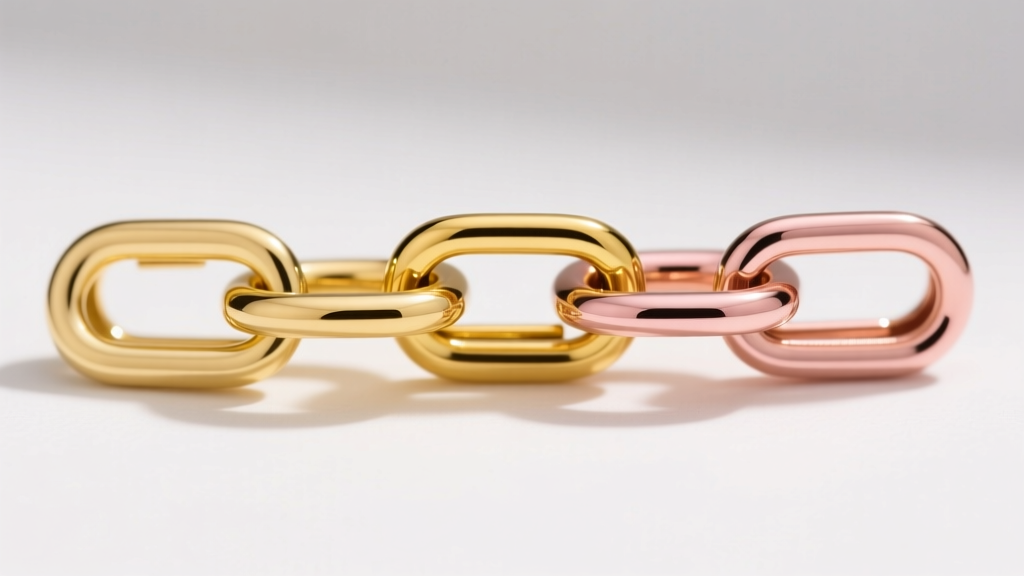
| Material Grade | Gold Content | Durability & Traits | Average Price Range |
|---|---|---|---|
| 14k Solid Gold | 58.5% Pure Gold | Highly durable, resists bending, ideal for everyday hoops and dangles. | $150 - $450+ |
| 18k Solid Gold | 75.0% Pure Gold | Rich, warm color but softer; better for lightweight studs or short drops. | $250 - $600+ |
| Gold Vermeil | 2.5 microns over Sterling Silver | Regulated by the FTC; hypoallergenic base, but plating will eventually wear off. | $45 - $120 |
| Gold-Filled | 5% (1/20th) by weight | Thick gold layer mechanically bonded to brass; highly durable for the price. | $35 - $90 |
Beginner Tip: If you want the rich, buttery color of 18k gold but need the durability of 14k for a pair of heavy paperclip hoops, look for jewelers who cast their 18k pieces with specialized hardening alloys, or opt for 14k gold that has been rhodium-plated (for white gold) or alloyed with higher copper content for extra tensile strength.
Matching Gold Paperclip Earrings to Your Face Shape
The linear geometry of the paperclip chain makes it an incredible tool for visual balancing. Because the links draw the eye vertically, they can be strategically used to complement your natural facial structure.
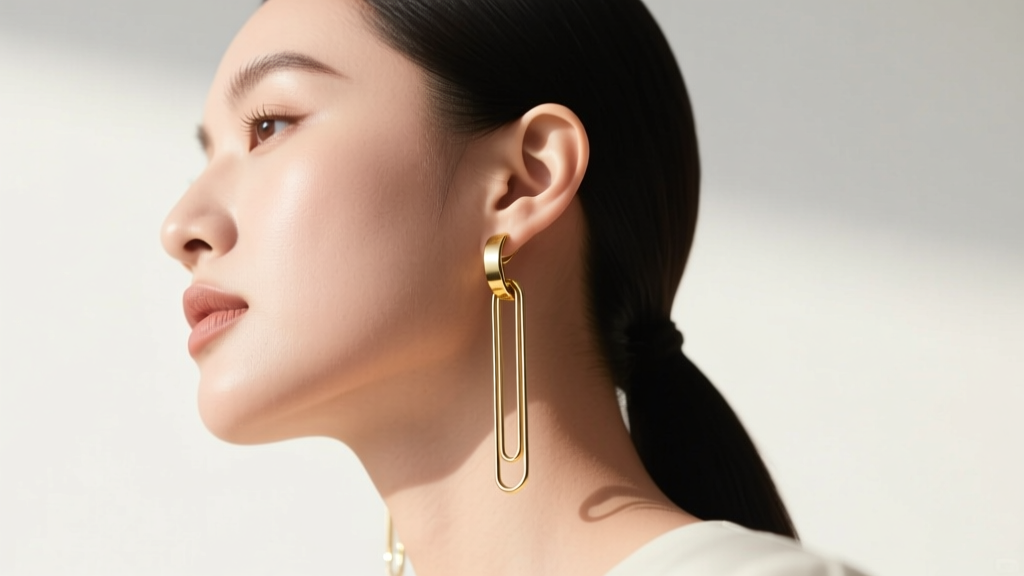
- Round Faces: Opt for long, linear paperclip dangles (2 to 3 inches in length). The sharp, elongated vertical lines contrast beautifully with soft, curved jawlines, creating a lengthening illusion. Avoid wide, chunky paperclip hoops, which can add unwanted horizontal volume.
- Square Faces: The soft, rounded corners of the oval paperclip links help soften strong, angular jawlines. Medium-sized paperclip hoops or curved drop earrings that end just below the jawline are incredibly flattering.
- Heart-Shaped Faces: Teardrop-shaped paperclip arrangements or chandelier styles that add volume at the bottom of the earlobe help balance a narrower chin.
- Oval Faces: You have the versatility to pull off almost any style. A bold, chunky 5mm paperclip huggie hoop will highlight your balanced proportions without overpowering your features.
Solving the "Earlobe Drag" Problem
One of the most common complaints among beginners buying gold paperclip earrings is "earlobe drag." Because paperclip chains are often used for long dangles, the cumulative weight of the gold links can pull the earring forward, causing the decorative part to hang awkwardly behind the earlobe rather than framing the face.
"The physics of a long chain earring means the center of gravity shifts as the links move. If your earring post is a standard 20-gauge wire, it will act as a fulcrum, causing the earring to droop."
To combat this, look for paperclip dangles that feature a flat disc backing or a leverback clasp that hugs the ear closely. If you already own a pair that droops, purchase medical-grade silicone O-rings or jumbo earring backers. These provide a wider surface area of support against the back of your earlobe, distributing the weight of the chain and keeping the gold paperclip links facing perfectly forward.
Care and Maintenance for Longevity
Maintaining the brilliance of your gold paperclip earrings requires a specific routine, primarily because of the crevices inside the elongated links where oils and lotions accumulate.
What to Avoid: Never put hollow or soldered paperclip chains into an ultrasonic jewelry cleaner. The high-frequency vibrations can easily fracture the microscopic solder joints where the links connect, causing the chain to snap. Furthermore, avoid wearing gold vermeil paperclip earrings in the shower, as the heat and sulfates in shampoo will accelerate the degradation of the gold plating over the sterling silver base.
The Ideal Cleaning Routine: Once a month, lay your earrings on a microfiber cloth. Use a soft baby toothbrush dipped in a solution of warm water and a single drop of mild, phosphate-free dish soap. Gently brush the inside of each elongated link to dislodge dead skin cells and cosmetic residue. Rinse under lukewarm tap water and immediately pat dry with a lint-free cloth to prevent water spots. Store them flat in a lined jewelry box to prevent the links from kinking or tangling with other pieces.


