A Beginner's Guide to Pearl and Crystal Drop Earrings
Discover how to choose, style, and care for pearl and crystal drop earrings. Our beginner guide covers materials, face shapes, and weight limits.

Understanding the Appeal of Pearl and Crystal Drop Earrings
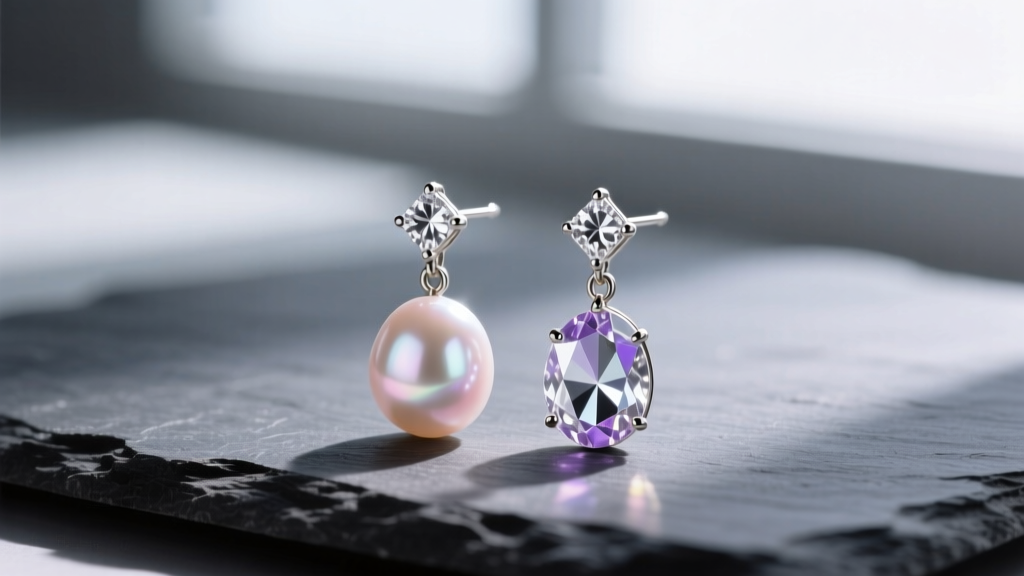
When navigating the vast world of ear adornments, pearl and crystal drop earrings stand out as a masterclass in balanced design. Unlike dangle earrings, which feature multiple articulation points and swing freely, drop earrings hang just below the earlobe and typically move as a single, cohesive unit. This structural difference makes them inherently more elegant and less prone to tangling in hair or clothing. In 2026, jewelry trends have heavily favored the juxtaposition of organic, soft-lustered pearls with the sharp, geometric brilliance of precision-cut crystals, creating a versatile aesthetic that transitions seamlessly from boardroom meetings to evening galas.
For beginners, the sheer volume of options can be overwhelming. From freshwater baroque pearls paired with cubic zirconia, to perfectly round Akoya pearls set with Swarovski Advanced Crystal, the combinations are endless. This guide will demystify the gemological properties, structural mechanics, and styling frameworks you need to make an informed purchase.
Deconstructing the Materials: Pearls and Crystals
To evaluate quality, you must first understand the distinct gemological profiles of the two primary components. Pearls are organic gemstones formed by mollusks, while crystals used in jewelry are typically inorganic, lab-created simulants or natural quartz.
Pearl Varieties and Grading
The pearl market is dominated by two main categories relevant to drop earrings:
- Freshwater Pearls: Cultivated primarily in China, these are nucleated with mantle tissue, resulting in a solid nacre composition. They are highly durable and affordable ($20–$150 per pair). However, perfectly round freshwater pearls are rare; expect slight baroque or off-round shapes.
- Saltwater Akoya Pearls: Cultivated in Japan and Vietnam, Akoya pearls are bead-nucleated. They boast a mirror-like luster due to their highly organized aragonite platelets. When buying Akoya drops, always verify the nacre thickness. According to the Gemological Institute of America (GIA), a minimum nacre thickness of 0.8mm is critical for long-term durability; thinner nacre will eventually peel or crack.
Crystal Types and Refractive Index
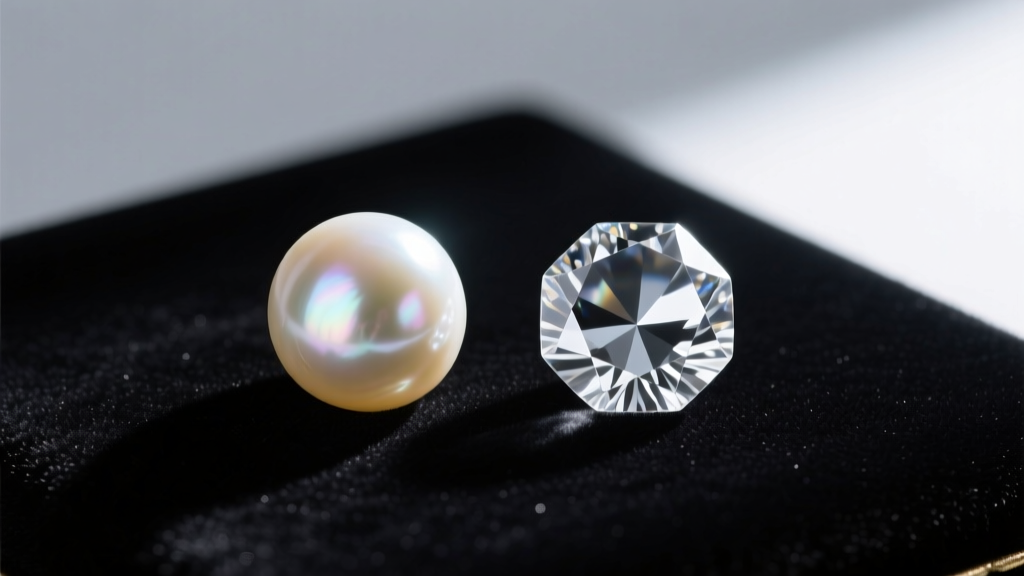
The "crystals" in modern jewelry are rarely natural quartz. They are usually high-grade glass or cubic zirconia (CZ) engineered for maximum light return.
- Cubic Zirconia (CZ): With a Mohs hardness of 8 to 8.5 and a high refractive index (2.15–2.18), CZ offers intense fire and brilliance. It is the most durable crystal simulant for everyday wear.
- Advanced Lead-Free Crystal: Brands like Swarovski use a proprietary lead-free glass formula. While softer than CZ (Mohs 6-7), precision-cutting techniques yield exceptional optical clarity and consistent color batching.
The Anatomy of a Drop Earring: Weight, Gauge, and Hardware
A common beginner mistake is ignoring the physical weight of pearl and crystal drop earrings. Heavy drops can cause lobe stretching, micro-tears in the piercing fistula, and chronic discomfort. Understanding wire gauges and weight distribution is essential for ear health.
Wire Gauge and Structural Integrity
The wire that passes through your earlobe must be thick enough to support the drop's weight without bending, yet thin enough to fit a standard piercing. Most standard lobe piercings are done at 20-gauge (0.81mm) or 18-gauge (1.0mm).
| Wire Gauge | Diameter (mm) | Max Safe Drop Weight | Best Use Case |
|---|---|---|---|
| 22-Gauge | 0.64mm | 3 - 5 grams | Lightweight freshwater pearls, small crystal studs |
| 20-Gauge | 0.81mm | 6 - 10 grams | Standard Akoya drops, medium CZ clusters |
| 18-Gauge | 1.00mm | 11 - 15+ grams | Heavy statement drops, large South Sea pearls |
Preventing Lobe Stretching
If your chosen pearl and crystal drop earrings exceed 10 grams per ear, standard butterfly friction backs will fail to provide adequate support, causing the earring to droop forward. To counteract this, utilize silicone earring support discs (often called "lobe wonders") or switch to a leverback or la pousette (locking) clutch mechanism, which distributes the weight more evenly across the back of the earlobe.
Matching Drop Lengths to Your Face Shape
Because drop earrings draw the eye vertically, they are powerful tools for facial contouring. Here is a practical framework for selecting the right drop length and crystal-to-pearl ratio based on facial geometry.
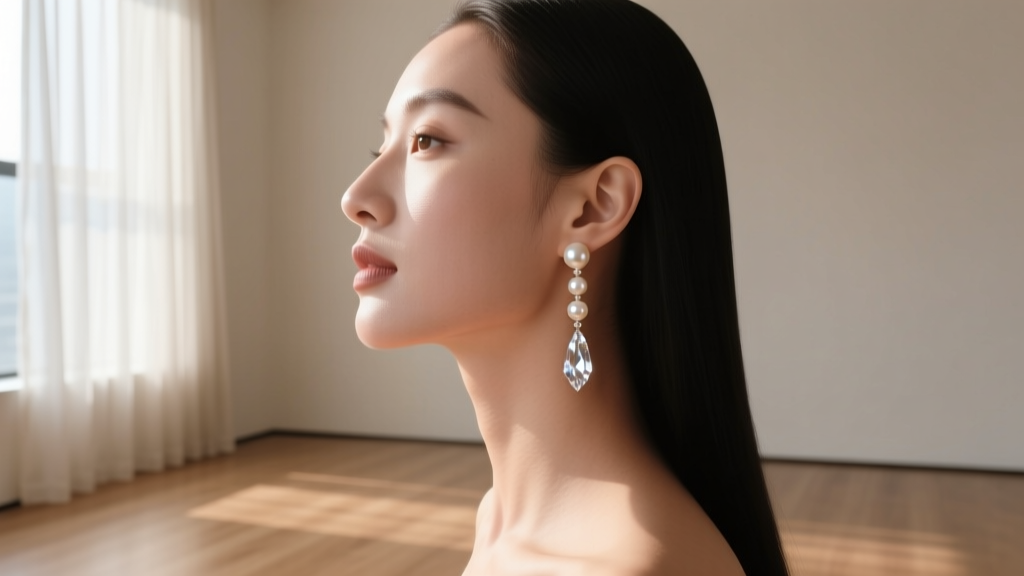
- Round Faces: Opt for long, slender drop earrings (1.5 to 2.5 inches) where the crystal element sits at the top and a single, elongated pearl hangs at the bottom. This creates a visual line that elongates the jawline and neck.
- Square Faces: Choose teardrop-shaped crystals paired with round, softer pearls. Avoid harsh geometric crystal cuts; the goal is to soften a strong, angular jawline with curved, organic silhouettes.
- Oval Faces: The most versatile shape. Medium-length drops (0.75 to 1.25 inches) with balanced pearl and crystal proportions work beautifully. Avoid extreme lengths that unnecessarily drag the face downward.
- Heart-Shaped Faces: Look for "chandelier-style" drops or inverted teardrops where the visual weight (the larger pearl or crystal cluster) sits at the very bottom of the earring. This adds width to the lower half of the face, balancing a wider forehead.
Practical Care and Maintenance Protocols
Caring for pearl and crystal drop earrings requires a bifurcated approach, as the organic pearl and the inorganic crystal have vastly different chemical vulnerabilities.
The Golden Rule of Pearl Care: Always put your pearl and crystal earrings on last when getting ready, and take them off first when you get home. Hairsprays, perfumes, and cosmetics contain alcohols and acids that will permanently dull a pearl's nacre.
Never use ultrasonic jewelry cleaners on these pieces. The high-frequency vibrations can shatter crystals with internal inclusions and will aggressively strip the delicate nacre layers right off the pearl bead. Furthermore, the heat generated by ultrasonic waves can melt the epoxy resin used to glue the pearl to the crystal setting cap.
Proper Cleaning Method: After each wear, gently wipe the pearls with a clean, slightly damp microfiber cloth to remove skin oils and sweat. Use a soft, dry jewelry polishing cloth for the crystal elements and metal hardware to restore brilliance. Store them flat in a soft pouch; hanging heavy drops can weaken the metal wire over time.
Where to Buy: Price Ranges and Material Tiers
When shopping, price is directly correlated to the origin of the pearl, the cut of the crystal, and the purity of the metal hardware. As of 2026, here is what you should expect to pay across different quality tiers:
- Entry-Level ($30 – $80): Expect commercial-grade freshwater pearls (slightly blemished, lower luster) paired with standard cubic zirconia. The hardware is usually gold vermeil (gold plated over sterling silver) or surgical steel. Great for occasional wear, but the vermeil will eventually wear off with daily use.
- Mid-Tier ($120 – $350): This is the sweet spot for most buyers. You will find high-luster, near-round Akoya pearls (6mm–8mm) set with precision-cut Swarovski or high-grade CZ. The hardware should be solid 14k gold (yellow, white, or rose), ensuring hypoallergenic properties and lifelong durability. Look for brands that provide GIA-aligned care guidelines.
- Luxury / Fine Jewelry ($500+): At this tier, you are paying for premium saltwater pearls (Hanadama-grade Akoya or White South Sea) with flawless surfaces and thick nacre. The crystals may be replaced by genuine diamond melee or proprietary high-refractive-index simulants set in 18k gold or platinum, featuring secure locking mechanisms.
By understanding the interplay between organic pearls, precision-cut crystals, and structural hardware, you can confidently select pearl and crystal drop earrings that not only flatter your unique features but also stand the test of time.


