Tinkerbell Earrings: A Technical Guide to Motif Jewelry
Explore the technical construction of Tinkerbell earrings, from center-of-gravity balance in wing drops to enamel grades and hypoallergenic metals.

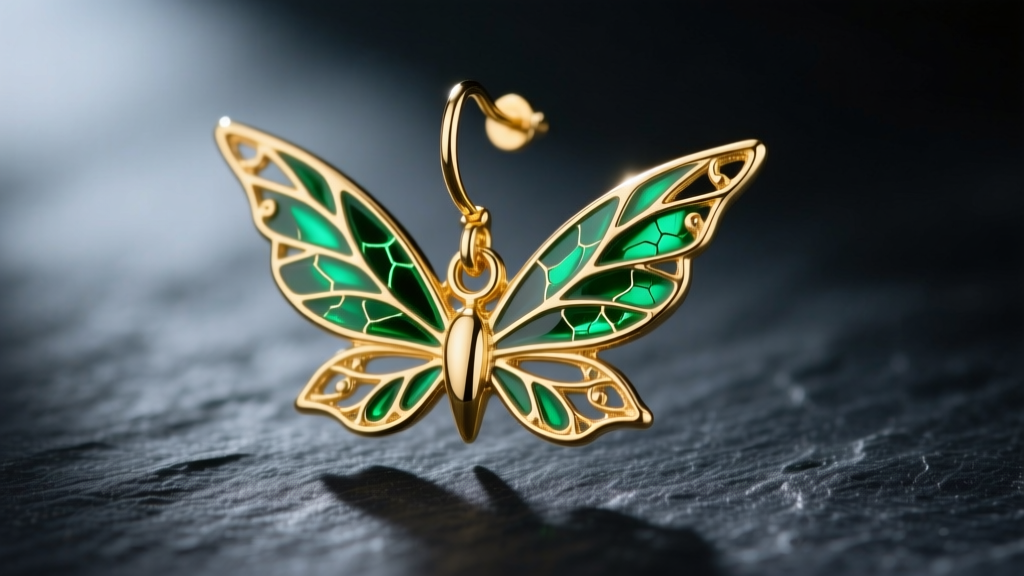
The Anatomy of Character Motif Earrings
When analyzing specialty jewelry manufacturing, character-motif pieces like Tinkerbell earrings present unique engineering challenges that transcend standard geometric studs or hoops. The intersection of licensed aesthetic requirements, intricate three-dimensional silhouettes, and daily wearability forces jewelers to make critical compromises in metallurgy and structural balance. This deep dive examines the mechanical and material realities of fairy-motif earrings, providing a technical framework for evaluating quality, longevity, and ergonomic safety.
Structural Balance: The 'Wing Drop' Center of Gravity
The most iconic Tinkerbell earring designs feature asymmetrical fairy wings or diagonal wand motifs. From a physics perspective, these shapes create an off-axis center of gravity (CoG). When suspended from a standard fishhook earwire, an asymmetrical drop will naturally rotate until its CoG aligns directly beneath the pivot point. This results in the earring resting at an awkward 30-to-45-degree angle against the jawline, rather than hanging flush.
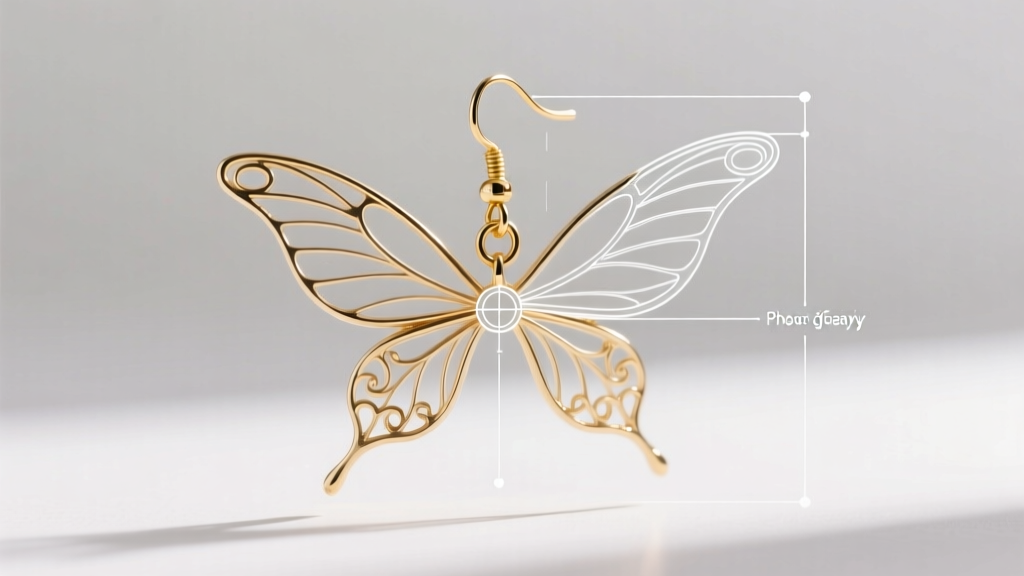
To counteract this rotational torque, expert bench jewelers employ specific counterweighting and suspension techniques:
- Bail Placement: Moving the suspension bail 2-3 millimeters toward the heavier side of the wing casting shifts the pivot point, forcing the earring to hang visually straight despite the asymmetrical mass distribution.
- Leverback Tension: Utilizing a high-tension leverback wire (typically 18-gauge or 1.02mm) introduces friction at the earlobe penetration point, resisting the rotational force of the unbalanced drop.
- Hollow-Form Construction: By casting the wings using electroforming or hollow CAD milling, the overall mass is reduced by up to 60%, minimizing the gravitational torque applied to the earlobe.
While french wires are standard for drops, they lack the structural lock required for heavy, off-balance character silhouettes. Hinged continuous hoops or locking leverbacks provide a closed circuit, preventing the earring from slipping out when the asymmetrical wing catches on hair or clothing. Furthermore, the diameter of the hoop dictates the swing arc; a 15mm hoop restricts the pendulum effect of a heavy Tinkerbell wand charm, reducing the kinetic energy transferred to the earlobe piercing during movement.
Metallurgy & Material Grading in Novelty Jewelry
The market for character earrings is heavily saturated with low-grade base metals. Understanding the exact alloy composition is critical for avoiding contact dermatitis and ensuring the piece survives daily mechanical stress. According to safety guidelines outlined by ASTM International (specifically standard F2999 for adult jewelry), nickel release rates must be strictly controlled, yet many novelty pieces bypass rigorous testing.
| Material Grade | Composition & Traits | Avg. Market Price | Best Application |
|---|---|---|---|
| Zamak-3 (Zinc Alloy) | Zinc, Aluminum, Copper. Prone to porosity. | $15 - $45 | Mass-market, heavy cast drops |
| 925 Sterling Silver | 92.5% Silver, 7.5% Copper. Excellent detail. | $85 - $250 | Fine-detail wing filigree |
| 14k Yellow Gold | 58.5% Gold, alloyed with Silver/Copper. | $450 - $1,200+ | Heirloom pieces, secure prongs |
Zamak is the industry standard for inexpensive, 3D-character pendants due to its low melting point (385°C), which allows for cheap rubber-mold casting. However, Zamak suffers from intergranular corrosion when exposed to human sweat (which has a pH of 4.5 to 7.0). If the gold or rhodium plating on a Zamak Tinkerbell earring wears through at the friction points, the underlying zinc will rapidly oxidize, creating a white, powdery residue that stains the skin.
To mitigate this, reputable manufacturers apply a minimum of 2.5 microns of gold plating (heavy gold electroplate) over a nickel-free palladium barrier layer. Anything less than 1.0 micron will wear through the high-friction contact points of the earwire within months, exposing the reactive base metal.
Enamel Techniques: Cold Resin vs. Vitreous Glass
Tinkerbell’s signature aesthetic relies heavily on vibrant, translucent greens and golds to mimic fairy wings and pixie dust. This coloration is achieved through enameling, but the chemical nature of the enamel drastically dictates the earring's lifespan.
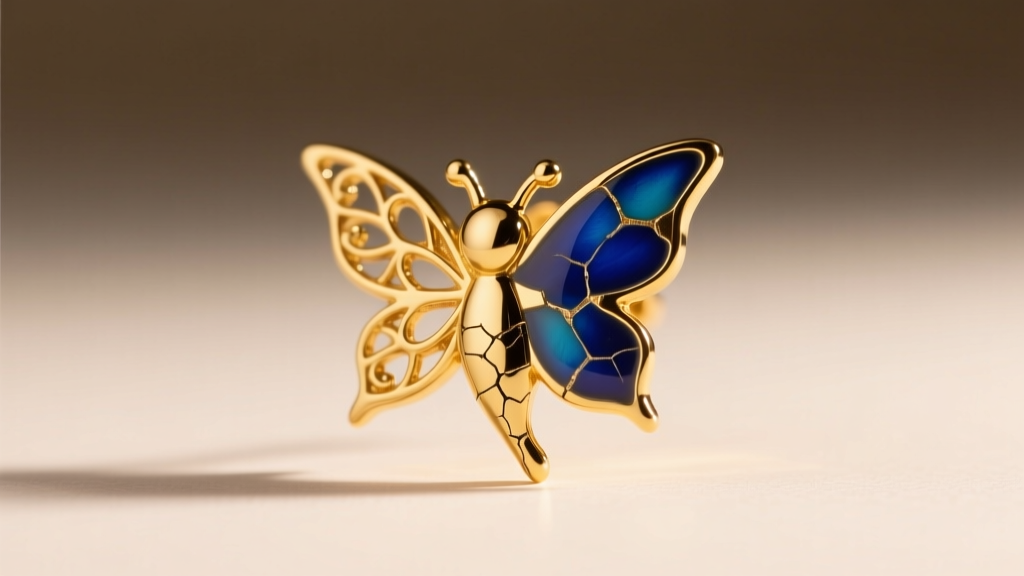
Cold Enamel (Epoxy Resin)
Used in 90% of commercial character jewelry, cold enamel is essentially a two-part pigmented epoxy. It is poured into recessed channels (champlevé style) and cured at room temperature. While initially vibrant, epoxy resins are highly susceptible to UV degradation. Within 18 to 36 months of regular sun exposure, the polymer chains break down, causing the iconic fairy-wing green to yellow and become brittle. Furthermore, epoxy has a Mohs hardness of only 2.0 to 2.5, meaning it will easily scratch if dropped on a hard surface.
Vitreous Enamel (Kiln-Fired Glass)
High-end artisan Tinkerbell earrings utilize vitreous enamel, which consists of finely ground silica, soda ash, and metallic oxides (like copper for green). This powder is packed into the metal recesses and fired in a kiln at 1400°F to 1500°F. The result is a true glass-to-metal bond with a Mohs hardness of 5.0 to 6.0. Vitreous enamel will never fade from UV exposure and retains its optical clarity indefinitely, making it the only suitable choice for heirloom-grade motif jewelry. The Gemological Institute of America (GIA) frequently notes that historical vitreous pieces retain their original luster for centuries, a stark contrast to modern resins.
Ergonomics and Gauge Sizing for Themed Drops
The physical connection between the earring and the earlobe is a frequent point of failure in novelty jewelry. Standard lobe piercings are performed at 20-gauge (0.81mm) or 18-gauge (1.02mm). However, the intricate, multi-part construction of a Tinkerbell wand or wing earring often requires a heavier chassis to prevent the metal from bending under its own weight.
Manufacturers frequently utilize 16-gauge (1.29mm) or even 14-gauge (1.63mm) wires for the earpost or french hook to ensure structural rigidity. Forcing a 16-gauge wire through an 18-gauge piercing causes micro-tears in the fistula (the healed tissue tube). Over time, the constant downward pull of a heavy, unbalanced character drop combined with a thick wire can lead to 'cheese-cutter' migration, where the jewelry slowly slices through the earlobe tissue.
Expert Recommendation: Always measure the wire thickness of novelty drops with digital calipers before purchase. If the wire exceeds 1.0mm (18G), reserve the earrings for short-term wear or consult a professional piercer to safely stretch the fistula to accommodate the heavier gauge.
A standard healed earlobe can comfortably support up to 12-15 grams of static weight before experiencing chronic fatigue and elongation. Many solid-cast Zamak character drops exceed 18 grams per earring. To circumvent this, look for 'earring support patches' or silicone o-rings that distribute the load across a wider surface area of the posterior earlobe.
Troubleshooting Common Failure Modes
When evaluating vintage or heavily worn character earrings, bench jewelers look for specific stress fractures inherent to complex silhouettes:
- Jump Ring Separation: The connection between the earwire and the wing motif relies on a soldered jump ring. In mass-produced pieces, these rings are often merely butt-cut (not soldered), meaning a simple snag on clothing will pull the ring open, dropping the earring. Always inspect the jump ring seam under a 10x loupe; a visible gap indicates a high risk of loss.
- Post Shearing at the Solder Joint: For stud-style Tinkerbell earrings, the post is typically torch-soldered to a flat pad on the back of the casting. If the casting is Zamak, it cannot be torch-soldered (it will melt). Instead, manufacturers use cyanoacrylate (superglue) or low-temperature tin paste. These adhesive bonds degrade rapidly when exposed to the heat and oils of the skin, leading to the post snapping off flush with the back plate.
- Prong Fatigue on 'Pixie Dust' Stones: Designs featuring micro-pavé cubic zirconia or diamonds to represent pixie dust often use cast-in-place prongs. Repeated impacts against hairbrushes or phones cause these micro-prongs to work-harden and snap. Ensure the setting is done via traditional bench prong-lifting, not cast-in-place, for long-term stone retention.
- Ultrasonic Degradation of Adhesives: Many novelty earrings utilize glued-in rhinestones to simulate pixie dust due to the high cost of micro-pavé setting. Submerging these pieces in an ultrasonic cleaner or chemical dip will shatter the acoustic cavitation bubbles against the brittle adhesive, causing immediate stone loss. Always clean character earrings with a soft, lint-free cloth and mild soapy water, avoiding the high-frequency vibrations that compromise structural adhesives.
By understanding the metallurgical limitations, physical balance requirements, and ergonomic realities of character jewelry, collectors and enthusiasts can distinguish between disposable novelty items and masterfully engineered Tinkerbell earrings designed to last a lifetime.


