How to Style Greek Key Earrings Gold: A Step-by-Step Guide
Master the art of wearing Greek key earrings in gold. This step-by-step guide covers karat selection, face-shape styling, and daily care.

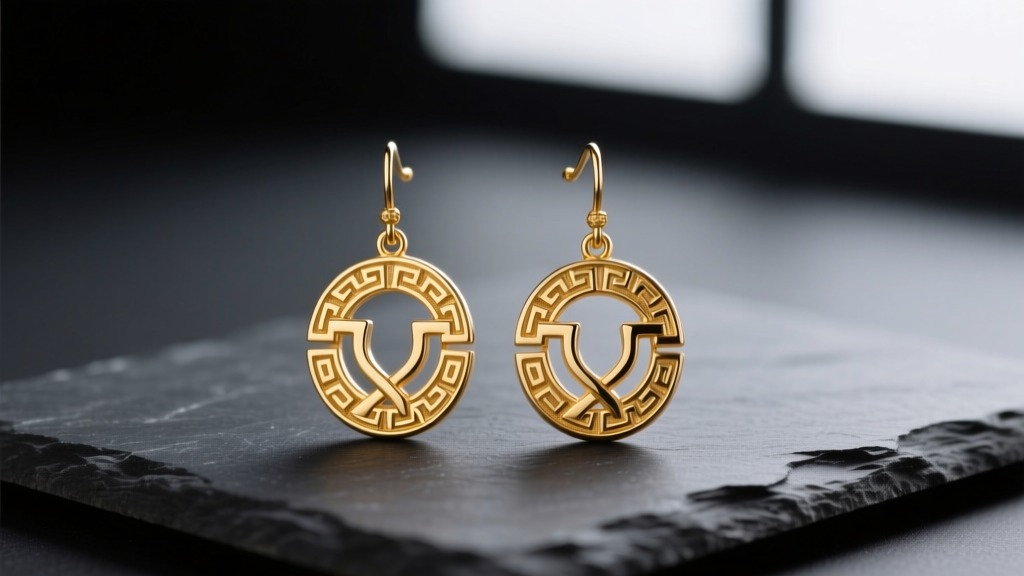
The Enduring Appeal of the Meander Motif
The Greek key, also known as the meander motif, is one of the most recognizable patterns in classical art and jewelry. Characterized by a continuous line that folds back on itself in a series of precise 90-degree angles, it symbolizes infinity and the eternal flow of life. According to Britannica's classical ornamentation archives, this geometric marvel originated in ancient Greece and has remained a staple in fine jewelry for centuries. When translating this intricate design into modern ear adornments, the choice of metal is paramount. Gold, with its warm luster and malleability, is the premier choice for capturing the sharp, labyrinthine turns of the meander pattern. However, styling and maintaining these specific pieces requires a nuanced understanding of metallurgy, facial geometry, and jewelry mechanics.
Step 1: Decoding Gold Purity and Plating Standards
When searching for high-quality greek key earrings gold options, buyers must look beyond the surface shine and scrutinize the metal's composition. The sharp 90-degree internal corners of the Greek key design are structural stress points. If the gold is too soft, these corners will warp; if the plating is too thin, the friction from daily wear will expose the base metal specifically within these deep crevices.
| Material Grade | Gold Content | Durability for Meander Cuts | Price Range (USD) |
|---|---|---|---|
| 24k Solid Gold | 99.9% | Poor (Too soft, bends at corners) | $800 - $2,500+ |
| 18k Solid Gold | 75.0% | Good (Luxurious, slight warp risk) | $450 - $1,200 |
| 14k Solid Gold | 58.3% | Excellent (Ideal structural integrity) | $250 - $700 |
| Gold Vermeil | 2.5µm over Sterling | Very Good (Core provides strength) | $80 - $200 |
| Gold Plated | Less than 0.5µm | Fair (Prone to rapid corner wear) | $25 - $75 |
As outlined by the Gemological Institute of America (GIA), 14k gold is often the superior choice for intricate, laser-cut, or cast geometric designs. The alloy metals (usually copper and zinc) provide the tensile strength needed to keep the meander lines perfectly straight over decades of wear. If opting for vermeil, ensure the gold layer is at least 2.5 microns thick; anything less will quickly wear away in the recessed channels of the Greek key pattern.
Step 2: Selecting the Right Silhouette for Your Face Shape
The Greek key is an inherently angular, linear, and structured motif. Styling these earrings requires balancing their geometric rigidity with your natural facial contours.
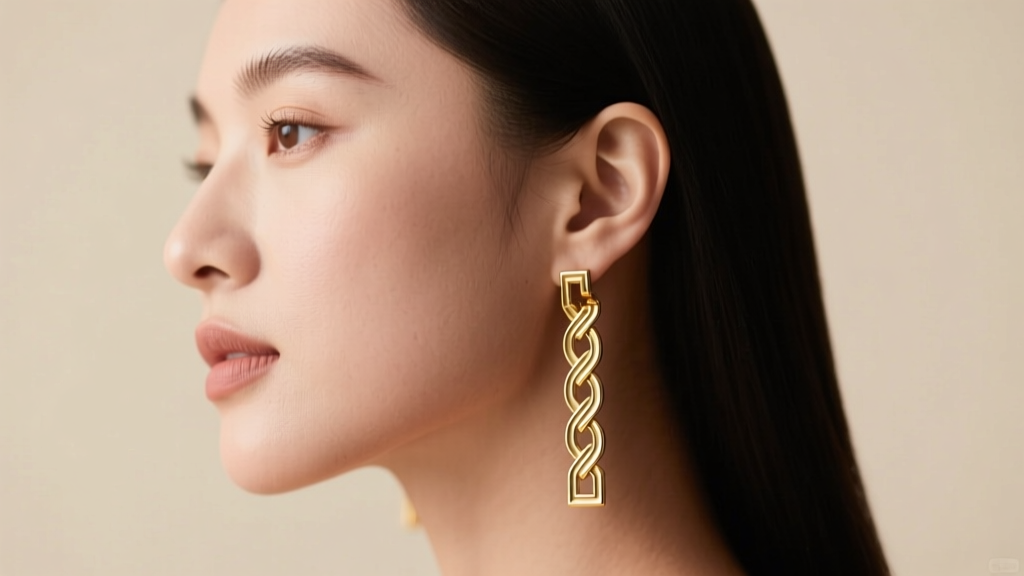
- Round Faces: Avoid wide, square-shaped Greek key studs, which will emphasize facial width. Instead, opt for elongated drop or dangle styles featuring vertical meander chains. The vertical lines create an optical illusion that lengthens the face and sharpens the jawline.
- Square Faces: The goal is to soften a strong, angular jaw. Avoid chunky geometric drops. Look for medium-sized gold hoops that feature the Greek key pattern etched or cast along the outer rim. The circular silhouette of the hoop counteracts the harsh angles of the face while the meander adds classical detail.
- Oval Faces: This balanced face shape can carry almost any variation. Bold, oversized Greek key chandelier earrings or wide, architectural ear cuffs will complement your proportions without overwhelming them.
- Heart-Shaped Faces: Choose dangles that are wider at the bottom than the top, such as a teardrop silhouette featuring a Greek key border. This adds visual weight to the narrower lower half of the face.
Step 3: Securing Heavy Drop and Dangle Styles
Because the Greek key pattern requires a significant amount of metal to form its continuous labyrinthine loops, drop and dangle variations can be surprisingly front-heavy. This weight distribution introduces mechanical challenges that must be addressed to protect your earlobes.
Upgrading Post Gauges
Standard lobe piercings are typically done at 20-gauge (0.81mm) or 18-gauge (1.02mm). However, if your solid 14k gold Greek key dangles weigh more than 5 grams, a thin 20G post will create a 'cheese cutter effect,' slowly migrating downward and stretching the piercing hole over time. For heavy meander drops, seek out jewelers who fabricate posts at 16-gauge (1.29mm) or use a silicone earring support disc (often called a Bling Guard) behind the earlobe to distribute the weight across a wider surface area.
Choosing the Right Earring Backs
Standard friction backs (butterfly clasps) are inadequate for heavy geometric drops. The weight of the earring will cause it to tilt forward, putting uneven pressure on the piercing. Upgrade to La Pousette backs (which feature a locking mechanism similar to a watch clasp) or screw-backs to ensure the earring remains perfectly vertical and secure against the lobe.
Step 4: A Step-by-Step Cleaning and Maintenance Routine
The defining feature of the Greek key—its deep, 90-degree internal corners—is also its greatest maintenance liability. These recesses act as traps for sebum, dead skin cells, cosmetic powders, and hairspray residue. If left uncleaned, this buildup will dull the gold and, in the case of vermeil, accelerate the degradation of the plating.
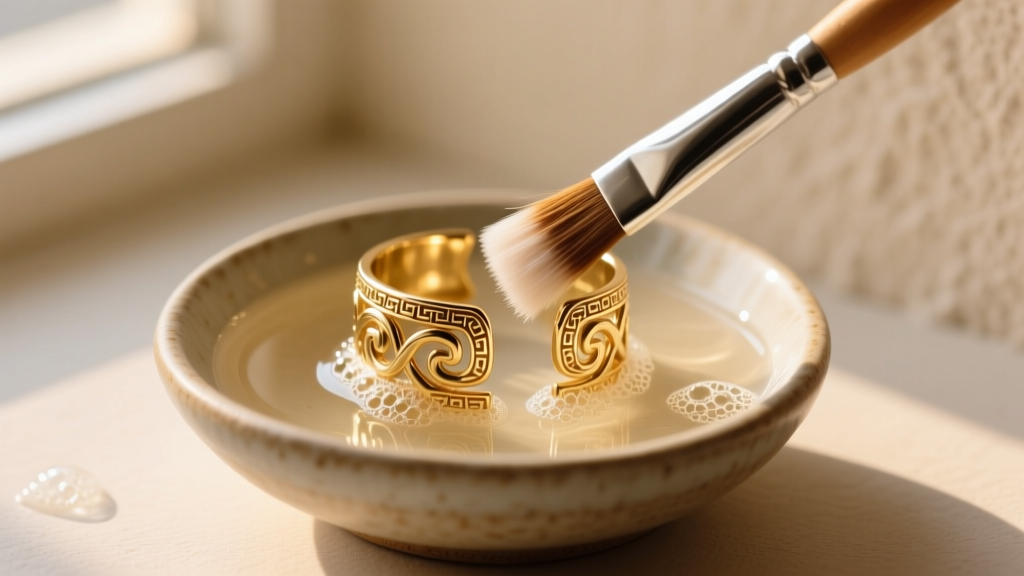
- Prepare a Degreasing Bath: Mix a few drops of mild, phosphate-free dish soap (like Dawn) into a bowl of lukewarm water. Avoid hot water, which can damage certain gemstone inlays if your meander design includes accents.
- Soak Briefly: Submerge the earrings for 3 to 5 minutes to loosen trapped oils. Warning: If your Greek key earrings feature black or blue enamel fills within the geometric channels, skip the soak and move directly to dry brushing, as prolonged water exposure can compromise the enamel adhesion.
- Agitate the Crevices: Use an extra-soft baby toothbrush or a dedicated jewelry brush. Gently trace the continuous line of the meander pattern, paying special attention to the inner corners where debris accumulates. Never use hard-bristled brushes, as they will leave micro-scratches on high-polish gold.
- Rinse and Dry: Rinse under a gentle stream of lukewarm water. Pat dry with a lint-free microfiber cloth. Use a wooden toothpick or a blast of compressed air to remove any remaining water droplets trapped deep inside the geometric folds.
'Never use ultrasonic cleaners on Greek key jewelry that incorporates enamel, tension-set stones, or hollow-cast components. The high-frequency vibrations can easily shatter the enamel or fracture the solder joints at the sharp meander turns.'
Step 5: Integrating Greek Key Gold Earrings into Modern Wardrobes
While the meander motif is steeped in antiquity, styling it in a contemporary context requires a balanced approach. Because the pattern is visually complex and highly detailed, it should serve as the focal point of your jewelry ensemble. If you are wearing elaborate Greek key gold drop earrings, pair them with minimalist, unadorned gold bands or simple solitaire pendants. Mixing the Greek key with other ornate patterns, such as filigree or floral repousse, creates visual clutter and diminishes the architectural impact of the meander design.
For professional environments, opt for smaller, 10mm to 15mm Greek key studs or tightly wrapped huggie hoops that offer a subtle nod to classical geometry without overwhelming your silhouette. For evening wear or editorial styling, embrace the drama of elongated, open-work meander dangles that catch the light with every movement, turning an ancient symbol of eternity into a modern statement of enduring style.


