Earrings Backs Types: Cost vs Security Value Guide
Evaluate earrings backs types by cost and security. Discover the best ROI for push, screw, and locking backs to protect your jewelry investment.

The Hidden Cost of Lost Earrings: Why Backs Matter
When consumers invest in fine jewelry, the focus is almost exclusively on the center stone, the metal purity, and the setting. However, the most critical component for protecting that investment is often the cheapest: the earring back. A $5,000 pair of diamond studs is only as secure as the $2 friction back holding it in place. Understanding the different earrings backs types from a budget and value assessment perspective is essential for minimizing the financial risk of loss. This guide breaks down the cost-to-security ratio of the most common earring backs, helping you determine where to save and where to invest.
Breakdown of Earrings Backs Types by Price and Security
To accurately assess value, we must evaluate each back type based on its initial cost, lifespan, and failure modes. Here is a deep dive into the four primary categories.
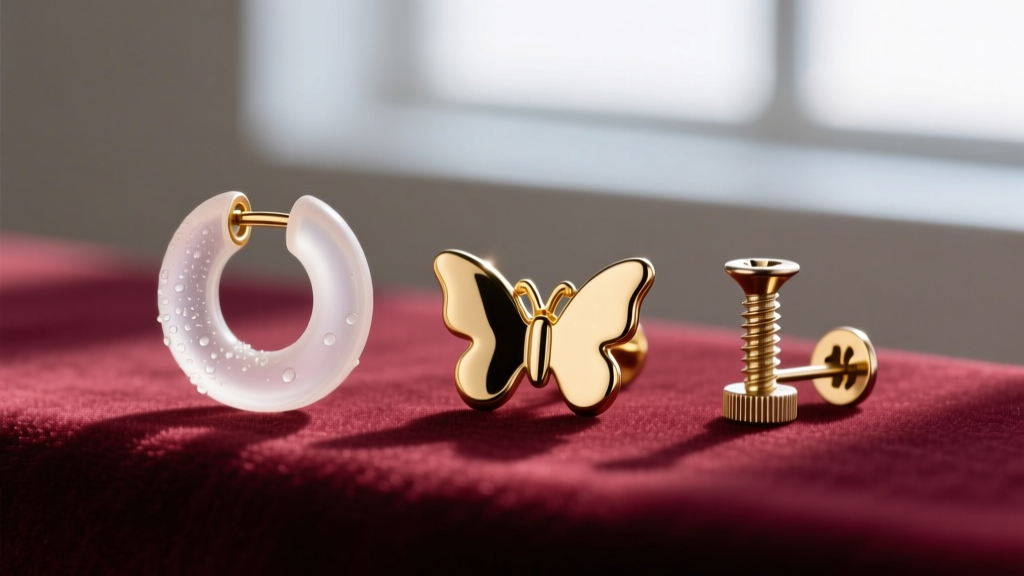
1. Push Backs (Friction/Butterfly Backs): The Budget Standard
Push backs are the industry default for most commercial stud earrings. They rely on the tension of the metal loops against a notched post (typically 20-gauge or 0.81mm, and 18-gauge or 1.02mm).
- Average Cost: $2 to $12 per pair (depending on metal karat).
- Security Level: Low to Moderate.
- Failure Mode: Metal fatigue. Over 12 to 18 months of daily wear, the loops stretch and lose tension. Furthermore, hair and clothing can easily snag the wings, pulling the back off entirely.
- Value Verdict: Excellent for fashion jewelry or earrings under $200. Poor ROI for high-value diamonds due to the high risk of snag-and-loss.
2. Screw Backs: The Mid-Tier Security Upgrade
Screw backs feature a threaded post and a backing that screws down securely against the earlobe. They require precise manufacturing, usually on 18-gauge (1.02mm) or thicker posts to support the threading without compromising the metal's structural integrity.
- Average Cost: $15 to $45 per pair.
- Security Level: High.
- Failure Mode: Cross-threading and stripping. If forced at the wrong angle, the threads will strip, rendering both the back and the earring post useless. They also require two hands and good dexterity to apply.
- Value Verdict: The best mid-range value for everyday diamond studs ($500–$2,000). The slight inconvenience of threading is heavily outweighed by the security.
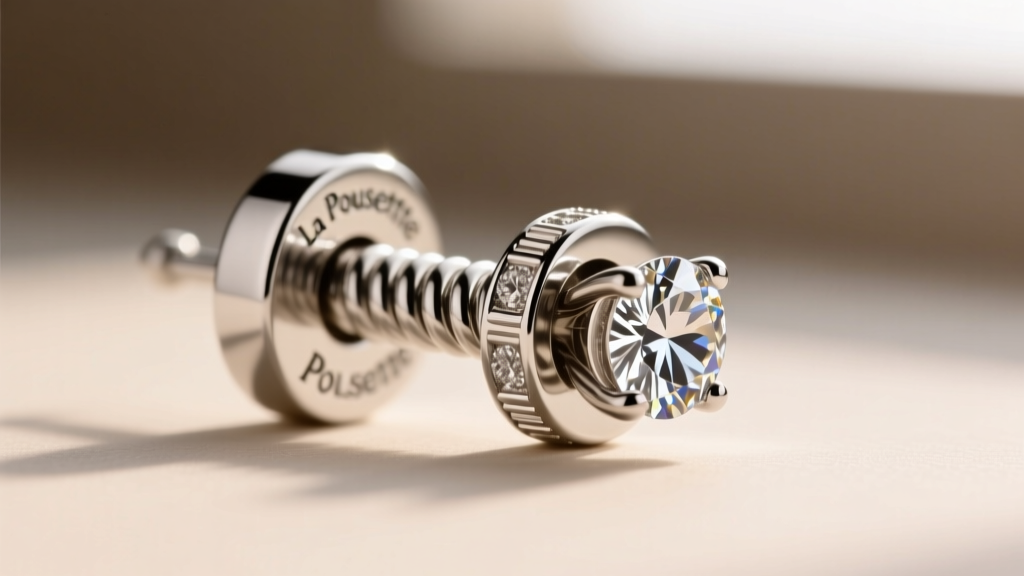
3. La Pousette (Locking) Backs: The Premium Investment
Originally designed in France, La Pousette backs utilize a spring-loaded internal mechanism with two small side tabs. When squeezed, the back slides onto the post; when released, internal locks engage the post's grooves.
- Average Cost: $45 to $90+ per pair.
- Security Level: Maximum.
- Failure Mode: Internal spring degradation or debris jamming. If skin oils, lotion, or dust infiltrate the mechanism and are not cleaned, the spring can stick. However, they are virtually impossible to pull off accidentally.
- Value Verdict: Mandatory for heirloom pieces, heavy drops, or diamond studs exceeding $3,000. The $70 upfront cost is a fractional insurance premium against a total loss.
4. Silicone O-Rings: The Ultra-Cheap Stopgap
Clear or opaque silicone discs that slide onto standard friction posts. They are often used as secondary security guards behind a primary push back.
- Average Cost: $1 to $4 for a pack of 20.
- Security Level: Low (as a primary), High (as a secondary guard).
- Failure Mode: Material degradation. Silicone breaks down when exposed to UV light, chlorine, and natural skin sebum, becoming brittle and tearing within 3 to 6 months.
- Value Verdict: Unbeatable for temporary security during travel or sports, but never rely on them as a permanent primary back for fine jewelry.
Cost vs. Security Matrix: Which Back Offers the Best ROI?
When conducting a budget assessment, it helps to map the initial cost against the expected lifespan and security rating. The table below illustrates the true value proposition of each option.
| Back Type | Cost per Pair | Lifespan | Security Rating | Best Earring Value Tier |
|---|---|---|---|---|
| Silicone O-Ring | $0.15 | 3 - 6 Months | 2/10 | Under $50 (Fashion) |
| Push Back (14k) | $8.00 | 1 - 2 Years | 5/10 | $50 - $500 |
| Screw Back (14k/18k) | $25.00 | 5+ Years | 8/10 | $500 - $3,000 |
| La Pousette (Plat/18k) | $65.00 | 10+ Years | 10/10 | $3,000+ |
Material Matters: How Metal Grade Impacts Back Longevity
A common mistake in budget assessment is ignoring the metallurgy of the earring back. The metal grade directly dictates how well the back maintains its tension or structural integrity over time. According to maintenance guidelines from the Gemological Institute of America (GIA), softer metals require more frequent maintenance.
- 24k and 22k Gold: Far too soft for earring backs. They will bend and lose tension almost immediately. Avoid these entirely for security components.
- 18k Gold (75% pure): Beautiful but relatively soft. Push backs made of 18k gold will suffer from metal fatigue and require professional re-tensioning by a jeweler every 12 to 18 months.
- 14k Gold (58.3% pure): The sweet spot for budget and durability. The higher alloy content provides excellent spring tension for push backs and durability for screw threads.
- Platinum: The ultimate choice for La Pousette backs. Platinum's density and natural springiness mean the internal locking mechanisms will not warp or fatigue, justifying the higher initial price tag.
When to Upgrade: A Value-Based Decision Framework
How do you know when it is financially prudent to spend $60 on La Pousette backs versus sticking with standard friction backs? Use this simple decision framework recommended by experts at Jewelers of America for securing high-value assets:
The 2% Rule: If the cost of upgrading your earring backs is less than 2% of the total replacement value of the earrings, the upgrade is financially justified. For example, if your diamond studs are worth $4,000, spending up to $80 on premium locking backs is a sound financial decision.
Additionally, factor in your lifestyle. If you frequently wear sweaters, scarves, or have long hair that easily tangles, the snag-risk of push backs increases exponentially. In these scenarios, the ROI of a screw back or locking back accelerates significantly.
Expert Troubleshooting: Maximizing the Life of Your Current Backs
Before spending money on replacements, you can often restore the value and security of your existing earring backs with basic maintenance.
Restoring Tension in Push Backs
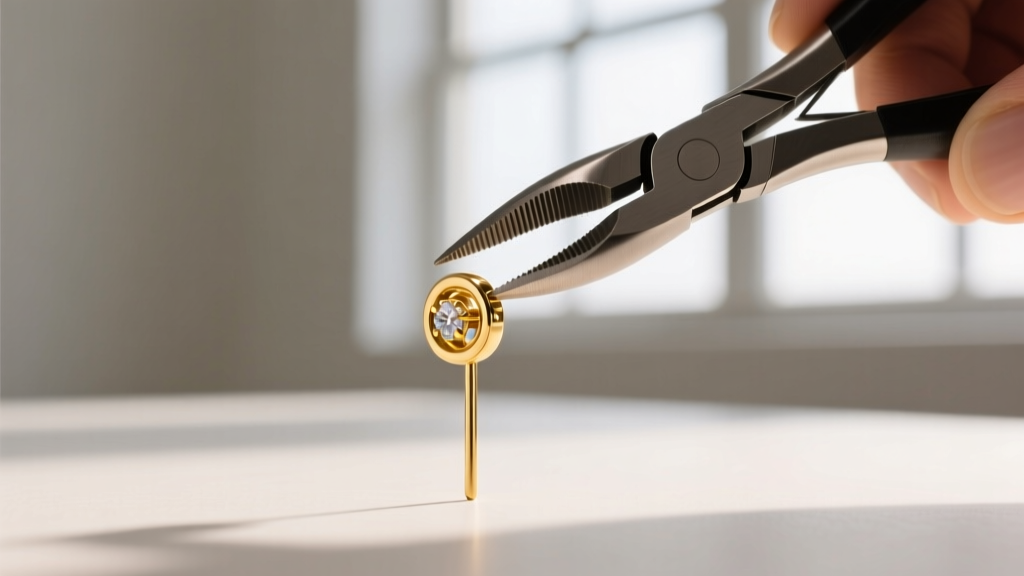
If your friction backs feel loose, do not discard them immediately. Using a pair of nylon-jaw pliers (never steel, which will scratch the gold), gently squeeze the two side loops of the butterfly back together. This restores the inward tension. Test it on the post; it should require a firm push to slide past the notch.
Fixing Stripped or Sticky Screw Backs
Screw backs often feel 'stuck' not because the threads are stripped, but because they are clogged with a mixture of dead skin cells, soap, and sebum. Soak the backs in a small cup of warm water with a drop of mild dish soap for 15 minutes. Use a soft baby toothbrush to gently scrub the internal threads. If the threads are genuinely stripped (the back spins endlessly without tightening), the back must be replaced, and the earring post may need to be re-soldered by a professional bench jeweler.
Conclusion
Assessing earrings backs types through a budget and value lens reveals that the cheapest option is rarely the most economical in the long run. While silicone O-rings and standard push backs serve their purpose for low-cost fashion jewelry, mid-to-high-tier fine jewelry demands the structural reliability of screw backs or La Pousette mechanisms. By matching the cost of the earring back to the replacement value of the earring itself, you ensure that your investment remains secure, stylish, and financially sound for decades to come.


