Silver and Pearl Drop Earrings: 2026 Trend & Style Analysis
Discover how silver and pearl drop earrings are redefining 2026 jewelry trends. Explore baroque styles, argentium silver grades, and face-shape pairings.

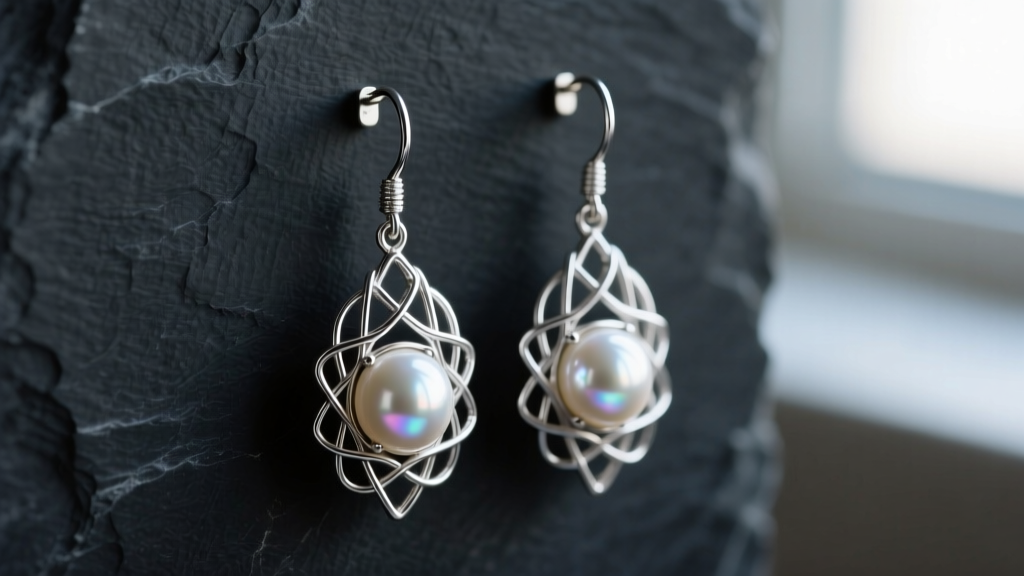
The jewelry landscape in 2026 has decisively moved away from the rigid, predictable symmetry of the past decade. At the forefront of this aesthetic evolution are silver and pearl drop earrings, a category that has been radically reimagined by contemporary designers. No longer confined to the traditional, stuffy silhouettes of heirloom jewelry, today's silver and pearl drop earrings blend organic imperfection with architectural metalwork. This shift reflects a broader consumer demand for pieces that offer both timeless elegance and modern, wearable edge.
As a style radar tracking the intersection of material science and aesthetic trends, we are seeing a massive surge in mixed-texture designs. Designers are pairing high-polish silver with raw, unpolished baroque pearls, creating a visual tension that appeals to the modern collector. But beyond the visual appeal, the true mark of a high-quality drop earring in 2026 lies in its metallurgical integrity, pearl grading, and ergonomic engineering. This comprehensive analysis breaks down the critical factors you need to know when investing in or styling this season's most dynamic earring category.
The 2026 Shift: From Traditional to Architectural
Historically, pearl drop earrings relied on simple post-and-clutch or basic shepherd's hook designs, suspending perfectly round, white pearls. The 2026 trend cycle has dismantled this formula. The current market favors kinetic articulation—earrings that feature multiple hinged silver segments allowing the pearl to move fluidly with the wearer's natural gait.
We are also seeing the rise of the 'cage drop' silhouette, where sterling silver wire is forged into geometric, asymmetrical halos that cradle, rather than simply suspend, the pearl. This architectural approach not only reduces the overall weight of the earring but also protects the pearl's delicate nacre from direct impact. Furthermore, the integration of oxidized silver (blackened through intentional chemical patination) alongside bright-polished ridges has become a dominant textural trend, providing a moody, gothic contrast to the iridescent luster of the pearl.
Material Deep Dive: Argentium vs. Standard Sterling Silver
When evaluating the metalwork of silver and pearl drop earrings, the distinction between standard 925 sterling silver and modern Argentium silver is critical for long-term wearability. Standard sterling silver is an alloy of 92.5% silver and 7.5% copper. While the copper adds necessary tensile strength, it is also the culprit behind rapid oxidation and tarnishing when exposed to humidity and skin acids.
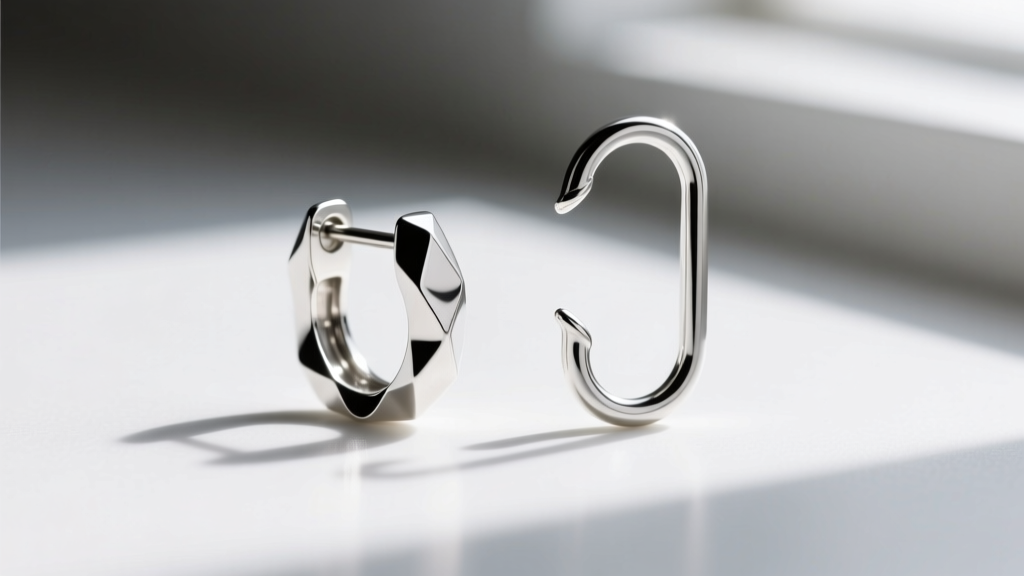
In 2026, premium jewelers are increasingly turning to Argentium Silver. This patented alloy replaces a portion of the copper with germanium. The result is a metal that is highly resistant to tarnish, possesses a naturally brighter, whiter luster that closely mimics platinum, and can be fusion-welded without the risk of firescale. For drop earrings, which are constantly exposed to hair products, perfumes, and environmental moisture, Argentium's resistance to copper oxide tarnish means significantly less maintenance and a longer-lasting mirror finish. When shopping, always look for the '960' stamp or the official Argentium trademark, as standard '925' stamps do not guarantee this advanced metallurgical profile.
Pearl Grading and Selection for Drop Silhouettes
The soul of these earrings lies in the pearl. The 2026 market is heavily skewed toward two distinct pearl types for drop settings: high-luster Akoya and organic Baroque Freshwater. Understanding the Gemological Institute of America's (GIA) pearl value factors—specifically luster, surface quality, and nacre thickness—is essential for making an informed purchase. You can explore the GIA's comprehensive pearl grading guidelines to understand how these factors interact.
For drop earrings, the pearl's orientation and drill hole placement are paramount. Top-drilled pearls are the industry standard for drops, allowing the pearl to hang naturally from a silver cap or wire loop. However, poorly executed top-drilling can cause the pearl to sit at an awkward, tilted angle. High-end manufacturers use precision CNC drilling to ensure the hole is perfectly aligned with the pearl's natural center of gravity.
| Pearl Type | Nacre Structure | Luster Profile | Avg. Price Range (Pair) | Best Drop Style |
|---|---|---|---|---|
| Akoya (Round) | Bead-nucleated (0.5mm+ nacre) | Mirror-like, sharp reflections | $250 - $800+ | Minimalist, single-stone linear drops |
| Freshwater Baroque | Solid nacre (no bead nucleus) | Soft, satiny, deep glow | $80 - $300 | Asymmetrical, multi-pearl cluster drops |
| Tahitian (Drop-Shape) | Bead-nucleated (0.8mm+ nacre) | Metallic, peacock overtones | $400 - $1,500+ | Statement, heavy-gauge silver cage drops |
Face Shape Mapping for Drop Earrings
The elongated nature of silver and pearl drop earrings makes them a powerful tool for facial contouring. However, the specific geometry of the silver wirework and the volume of the pearl must be matched to the wearer's bone structure to achieve a harmonious balance.
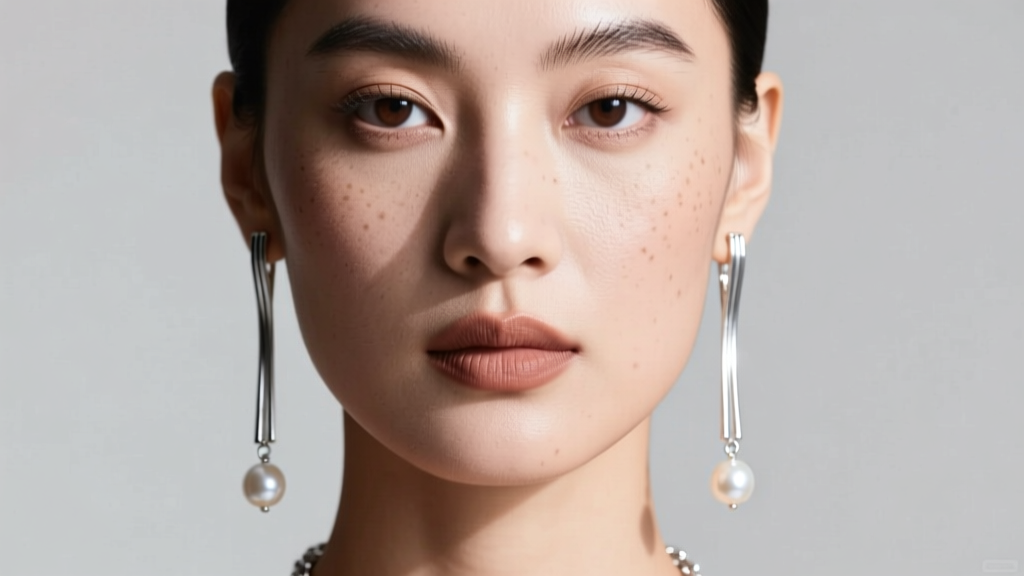
- Round Faces: Avoid short, wide drops or spherical silver halos that mimic the face's circularity. Opt for long, linear silver chains terminating in a single, elongated baroque pearl. The vertical line draws the eye downward, creating the illusion of a longer, more oval facial structure.
- Square Jawlines: The goal is to soften sharp mandibular angles. Choose drop earrings with curved, organic silver wirework and rounded, teardrop-shaped pearls. Avoid harsh geometric silver shapes or rigid, angular drops that will only emphasize the squareness of the jaw.
- Oval Faces: This is the most versatile face shape. Almost any silver and pearl drop earring will work, from delicate 1-inch huggie-drops to dramatic 3-inch chandelier styles. To maintain balance, ensure the widest part of the earring does not extend significantly past the width of the cheekbones.
- Heart-Shaped Faces: Characterized by a wider forehead and a narrow, pointed chin. Select drop earrings that feature a smaller silver cap at the top and gradually widen toward the bottom, ending in a voluminous, round pearl. This adds visual weight to the lower half of the face, balancing the narrower chin.
Engineering and Wearability: Solving the 'Heavy Lobe' Problem
A common failure mode in lower-quality silver and pearl drop earrings is 'lobe droop'—where the weight of the pearl pulls the earring forward, causing it to rest awkwardly against the cheek rather than hanging straight down. In 2026, ergonomic jewelry engineering has introduced several solutions to this persistent issue.
First, consider the gauge of the silver wire passing through the piercing. While 20-gauge (0.81mm) wire is standard for lightweight studs, heavy pearl drops require an 18-gauge (1.02mm) or even 16-gauge (1.29mm) wire to prevent the metal from bending under the pearl's weight. However, thicker wires can be uncomfortable for those with sensitive or tightly pierced lobes.
To bypass this, premium designers are utilizing leverback findings with a hinged, locking mechanism. Leverbacks distribute the weight of the earring across a broader surface area of the earlobe compared to a thin French wire. Additionally, the inclusion of discreet, medical-grade silicone earring backs (often sold as 'lobewonders' or support discs) provides a structural scaffold behind the ear, keeping heavy silver and pearl drops perfectly upright. When evaluating a piece, always check the articulation point where the pearl cap meets the silver wire; it should feature a smooth, polished jump ring that moves freely without pinching the skin or catching on hair.
2026 Market Pricing and Investment Value
The pricing for silver and pearl drop earrings in 2026 is highly stratified, driven largely by the origin of the pearls and the complexity of the silver fabrication. Mass-market, cast-silver earrings with glued-in, low-grade freshwater pearls can be found in the $40 to $90 range. However, these pieces frequently suffer from epoxy failure, where the pearl detaches from the silver cap due to exposure to heat and skin oils.
For heirloom-quality pieces, expect to invest between $250 and $600. In this tier, you will find hand-forged Argentium silver, mechanically secured pearl caps (using tiny silver rivets or precision threading rather than just glue), and AAA-grade Akoya or high-end baroque pearls with excellent luster. Ultimately, the modern silver and pearl drop earring is not just an accessory; it is a study in material contrast and kinetic design, offering a sophisticated, forward-looking aesthetic that transcends fleeting seasonal fads.


