How to Wear Purple Statement Earrings: A Beginner's Guide
Learn how to style, balance, and safely wear purple statement earrings. Discover material guides, face shape matching, and lobe-saving tips.

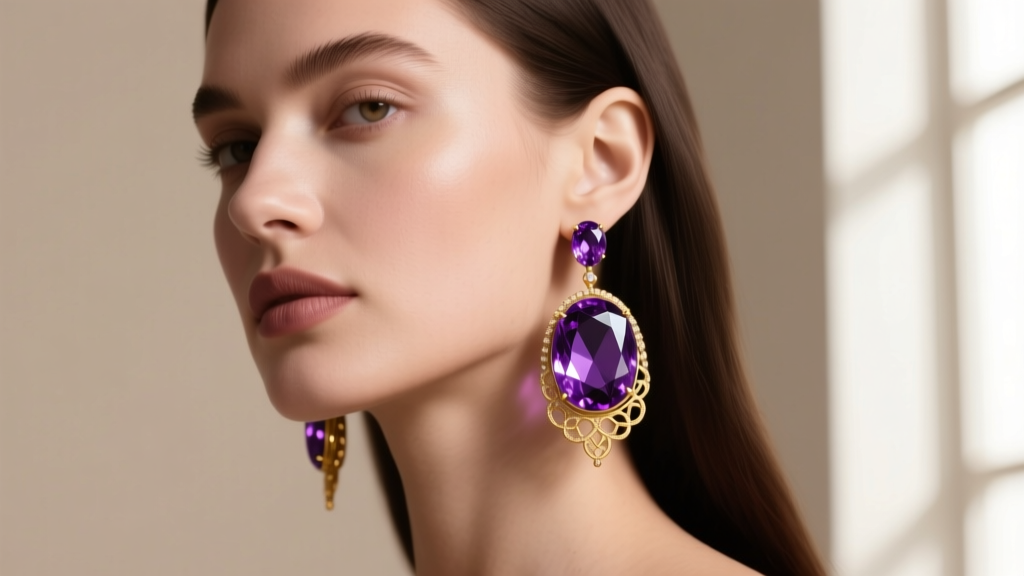
What Defines a Purple Statement Earring?
When we talk about 'statement' jewelry, we are referring to pieces that demand attention through scale, color, or architectural complexity. Purple statement earrings specifically leverage the psychological weight of violet hues—historically associated with royalty, creativity, and luxury—combined with a physical footprint that typically exceeds two inches in drop length. For beginners, stepping into the world of bold, oversized ear decor can feel intimidating. How do you balance the visual weight? Will they tear your piercing? This comprehensive guide breaks down the exact mechanics, materials, and styling frameworks you need to confidently wear large-scale purple earrings without compromising your comfort or your earlobe health.
Matching Purple Hues to Your Skin Undertone
Purple is not a monolith; it is a complex secondary color bridging warm red and cool blue. Selecting the right shade of purple statement earrings requires a basic understanding of your skin's undertone. Wearing the wrong base can make your complexion look sallow, while the right shade will create a striking, luminous contrast.
- Cool Undertones (Veins appear blue/purple): Opt for blue-based purples. Think deep plum, icy lilac, and true violet. These shades harmonize with the pink and red undertones in your skin, creating a cohesive, brightening effect.
- Warm Undertones (Veins appear green/olive): Choose red-based purples. Magenta, orchid, and warm amethyst (which leans slightly reddish) will complement the golden or peachy hues in your skin without clashing.
- Neutral Undertones (Veins appear blue-green or are hard to distinguish): You have the widest latitude. True royal purple, lavender, and mixed-tone gradient earrings will all look exceptionally balanced against your skin.
The Face Shape Pairing Framework
The silhouette of your purple statement earrings should act as a counterbalance to your natural facial geometry. The goal is to create an optical illusion that elongates or softens your features. Below is a quick-reference matrix for pairing face shapes with earring silhouettes.
| Face Shape | Key Characteristics | Ideal Earring Silhouette | Styles to Avoid |
|---|---|---|---|
| Round | Equal width and length, soft jawline | Angular drops, long rectangular dangles, geometric chandeliers | Large circular hoops, short studs |
| Oval | Longer than wide, balanced proportions | Almost any style; teardrops and medium hoops are especially flattering | Extremely long, narrow dangles that over-elongate |
| Square | Strong jawline, broad forehead | Curved drops, oval hoops, soft floral motifs, rounded chandeliers | Boxy, angular, or sharp geometric shapes |
| Heart | Wider forehead, narrow pointed chin | Teardrops, bottom-heavy dangles, inverted triangle shapes | Top-heavy styles, wide inverted triangles |
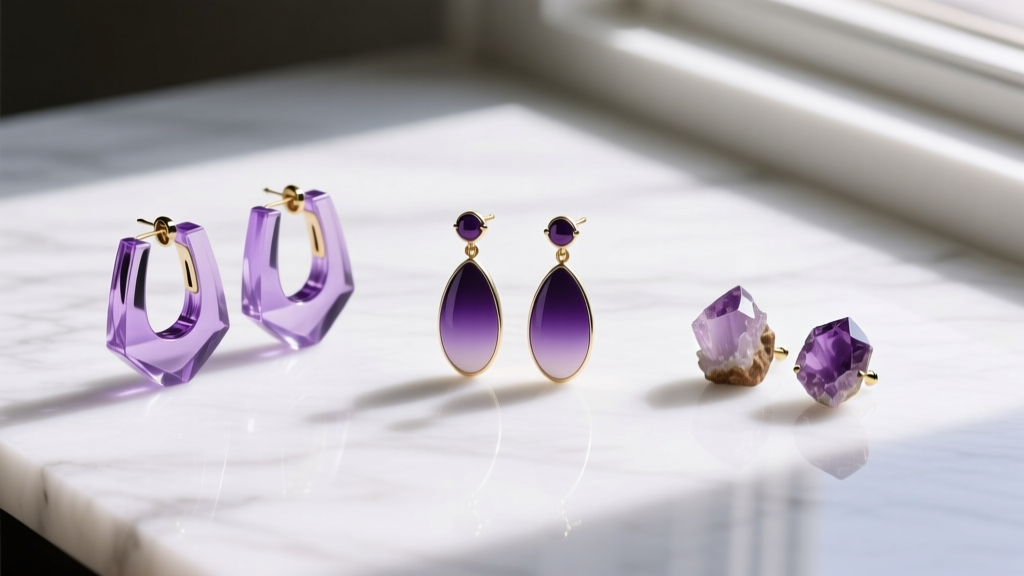
Material Science: What Are Your Earrings Made Of?
Not all purple statement earrings are created equal. The material dictates not only the price point but the weight, durability, and care requirements of the piece. Understanding these differences is crucial for making informed purchasing decisions.
Genuine Amethyst vs. Dyed Quartz
Amethyst is the quintessential purple gemstone. According to the Gemological Institute of America (GIA), amethyst scores a 7 on the Mohs hardness scale, making it highly durable for everyday wear. However, genuine amethyst is heavy. A solid, faceted amethyst drop earring can easily exceed 15 grams per ear. Dyed quartz is a common, more affordable alternative. While it shares the same Mohs 7 hardness, the purple dye is often concentrated in surface-reaching fractures. Dyed stones can bleed color if exposed to harsh chemicals, ultrasonic cleaners, or prolonged direct sunlight. Always ask the retailer if the purple quartz has been color-treated.
Enamel, Acrylic, and Acetate Alternatives
If you want massive scale without the gravitational pull of solid gemstones, look for vitreous enamel, acrylic, or cellulose acetate. Vitreous enamel (fused glass powder) offers a rich, opaque purple that will never fade, though it can chip if dropped on tile. Acrylic and acetate are incredibly lightweight, allowing designers to create 4-inch purple hoops or massive geometric shields that weigh less than 5 grams per ear. These are the ultimate beginner-friendly options for those unaccustomed to heavy jewelry.
Earlobe Biomechanics: Preventing the Cheese-Cutter Effect
The most common failure mode for beginners wearing heavy statement earrings is lobe migration, colloquially known as the 'cheese-cutter effect.' When a heavy earring rests on a thin, standard 20-gauge (0.8mm) or 18-gauge (1.0mm) wire, the downward force concentrates on a microscopic surface area. Over time, this slices through the delicate tissue of the earlobe.
Expert Tip: If your purple statement earrings weigh more than 15 grams each, never rely on standard butterfly friction backs. The localized pressure will cause immediate discomfort and long-term tissue damage.
To safely wear heavy purple drops, implement the following structural supports:
- Upgrade the Post Gauge: Look for statement pieces with 16-gauge (1.2mm) or 14-gauge (1.6mm) posts. The thicker metal distributes the weight across a wider surface area of the piercing hole.
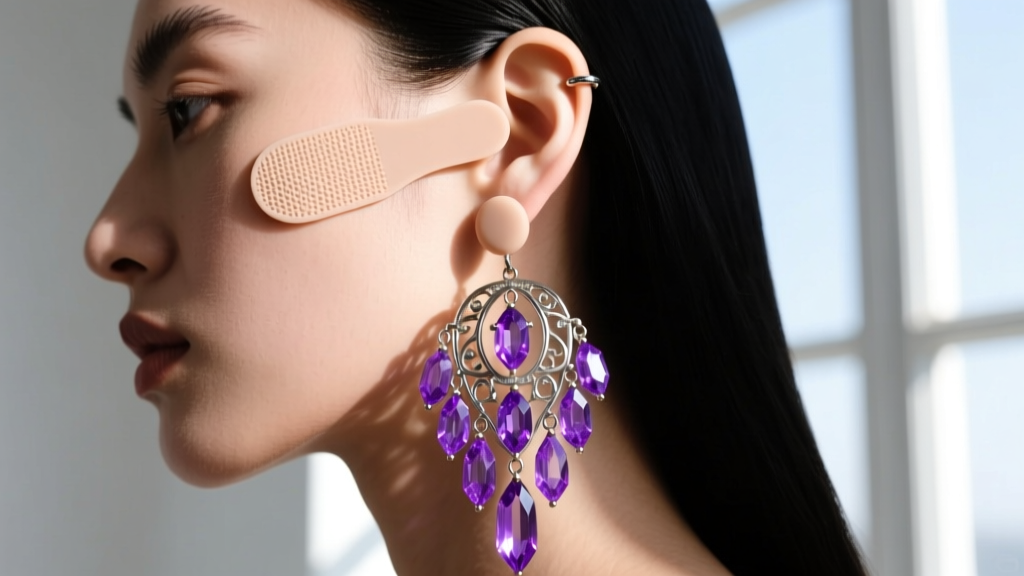
- Use Silicone Support Patches: Products like BlingDots or generic silicone earring support patches adhere to the back of your earlobe. They provide a wide, cushioned barrier that absorbs the downward drag of heavy chandeliers and gemstone drops.
- Switch to Omega or Leverbacks: Instead of a post-and-back mechanism, omega-backs clamp onto the earlobe with a wide, curved paddle (usually 8-10mm wide). This disperses the clamping force evenly, preventing localized pressure points.
- The Clear Nail Polish Trick: For lightweight but irritating cheap metal hooks, coat the ear wire in clear nail polish to create a hypoallergenic barrier, though this does not help with weight distribution.
Styling Rules for Maximum Impact
Purple statement earrings are the focal point of your outfit; everything else should act as a supporting canvas. To avoid visual clutter, follow these three foundational styling rules:
1. The Neckline Rule: Large dangles and chandeliers require negative space to be appreciated. Pair them with strapless tops, deep V-necks, or scoop necks. High collars, turtlenecks, and ruffled blouses will compete with the earrings, creating a cluttered, top-heavy silhouette.
2. The Hair Dynamics: If your hair is down, ensure it is tucked behind your ears or styled in a way that frames rather than hides the jewelry. For maximum impact, an updo—such as a sleek chignon, a messy bun, or a braided crown—exposes the neck and allows the purple drops to catch the light with every movement.
3. The Metal and Color Balance: Purple pairs exceptionally well with both yellow gold and sterling silver. Gold amplifies the warmth and royalty of deep plum and amethyst, while silver or white gold enhances the icy, modern feel of lilac and violet. Keep the rest of your jewelry minimal; a delicate chain or a simple stack of thin rings is all you need to complement the bold ear styling.
By understanding the interplay of color theory, facial geometry, and the physical biomechanics of your piercings, you can confidently integrate purple statement earrings into your wardrobe. For more technical advice on piercing care and jewelry materials, always consult resources like the Association of Professional Piercers (APP) to ensure your earlobes remain healthy while you make a bold statement.


