Beginner's Guide to Choosing the Best Hoop Silver Earrings
Discover everything you need to know about hoop silver earrings. Learn about sterling grades, clasp types, sizing, and daily care in this beginner guide.

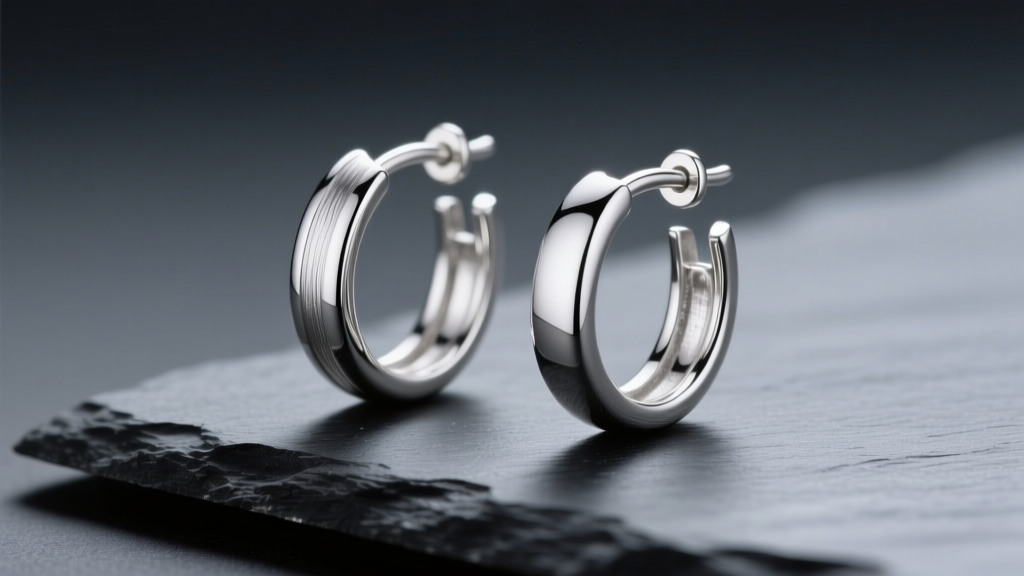
Hoops are a universal jewelry staple, but navigating the market for the perfect pair can be surprisingly complex for newcomers. When shopping for hoop silver earrings, beginners are often overwhelmed by confusing hallmarks, varying thicknesses, and a dizzying array of clasp mechanisms. As we move through 2026, the market is flooded with both high-quality artisan pieces and deceptive fast-fashion alternatives. This comprehensive guide will demystify the metallurgy, sizing, and mechanics of silver hoops, ensuring your first purchase is both stylish and built to last.
Decoding the Metal: What "Silver" Actually Means
Not all silver is created equal. Pure silver, also known as fine silver (999), is exceptionally soft. While it is highly resistant to tarnish, it lacks the structural integrity required for hoop earrings; a pure silver hoop would easily bend out of shape or snap under the tension of daily wear. To solve this, jewelers alloy silver with other metals to increase its durability.
Sterling Silver (925) vs. Argentium
The global standard for jewelry is Sterling Silver (925), which consists of 92.5% pure silver and 7.5% copper. According to the Silver Institute, the 925 hallmark is your guarantee of this specific metallurgical ratio. However, the copper content is precisely what causes sterling silver to tarnish when exposed to sulfur and moisture in the air.
For a modern upgrade, look for Argentium Silver. This patented alloy replaces some of the copper with germanium, resulting in a metal that is highly tarnish-resistant, hypoallergenic, and slightly harder than traditional sterling. If you live in a humid climate or have sensitive skin, Argentium hoop silver earrings are a superior, albeit slightly more expensive, investment.
Warning: Beware of terms like "silver-plated" or "silver-filled." These consist of a cheap base metal core (usually brass or copper) coated in a microscopic layer of silver. Once that layer wears off from friction against the earlobe, the underlying metal will oxidize and likely cause contact dermatitis.
Sizing Your Hoops: Diameter and Gauge Explained
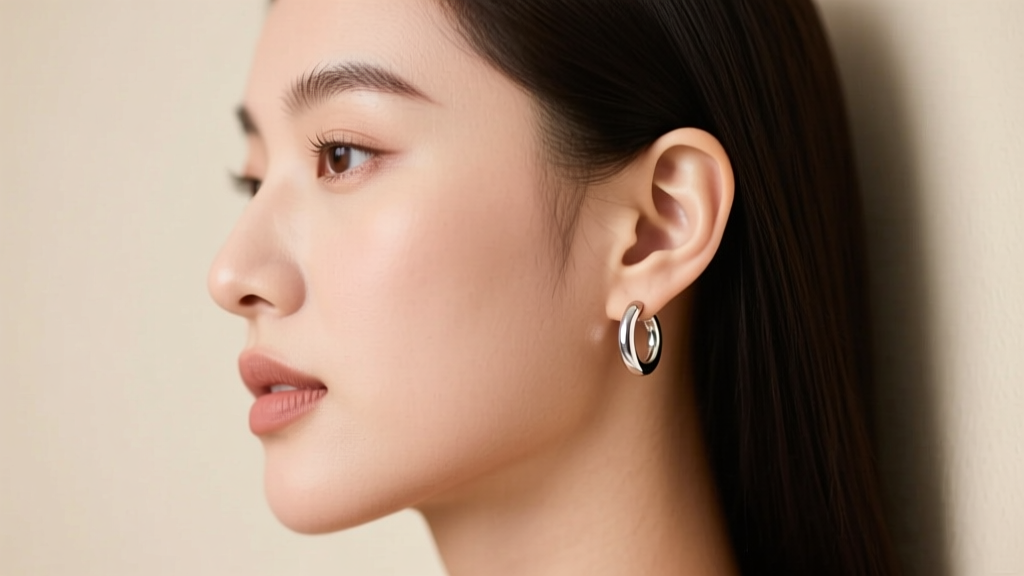
When selecting hoops, you must consider two distinct measurements: the inner diameter (the actual size of the circle) and the gauge (the thickness of the wire). Most standard earlobe piercings are done at 20-gauge (0.81mm) or 18-gauge (1.02mm). Buying a hoop that is too thick (like a 16-gauge) for a standard lobe piercing can cause micro-tears and stretching over time.
| Inner Diameter | Style Category | Best Use Case | Recommended Gauge |
|---|---|---|---|
| 8mm - 12mm | Huggies | Cartilage, helix, or tight lobe stacking | 18G - 20G |
| 15mm - 20mm | Standard Everyday | Office wear, casual daily outfits | 20G |
| 25mm - 35mm | Medium Statement | Evening wear, drawing attention to the jawline | 18G - 20G |
| 40mm+ | Oversized / Bold | High fashion, editorial looks | 16G - 18G (Hollow tube) |
Clasp Mechanics: Which Closure is Best for Beginners?
The clasp is the most critical failure point on any pair of hoop earrings. A poorly designed closure will either snag your hair, pop open while you sleep, or bend permanently. Here is a breakdown of the most common mechanisms:
- Hinged Snap (Clicker): The gold standard for beginners. The hoop features a hidden hinge on one side and a satisfying "click" closure on the other. It is secure, easy to open with one hand, and sits flush against the ear.
- Latch-Back (Saddleback): A classic design where a thin wire loops up and clicks into a grooved saddle. While traditional, the exposed wire can easily bend if caught on a sweater, and the saddle can trap hair and skin oils.
- Continuous (Endless) Hoops: A single piece of wire where a thin straight post feeds into a hollow tube. Avoid these as a beginner. They are notoriously difficult to insert, and bending the wire to force it into the tube will eventually cause metal fatigue and snapping.
- Omega / Hinged Clip-On: Designed for non-pierced ears, utilizing a tension hinge to grip the lobe. Look for padded silicone cushions to prevent ischemic pain (pinching) after a few hours of wear.
The Tarnish Truth: Daily Care and Maintenance
Tarnish is not a sign of fake silver; it is a natural chemical reaction between the copper in 925 sterling silver and sulfur compounds in the environment. To keep your hoop silver earrings looking pristine, you need a proactive maintenance routine. The American Academy of Dermatology notes that keeping jewelry clean also prevents the buildup of bacteria that can lead to localized skin irritation.
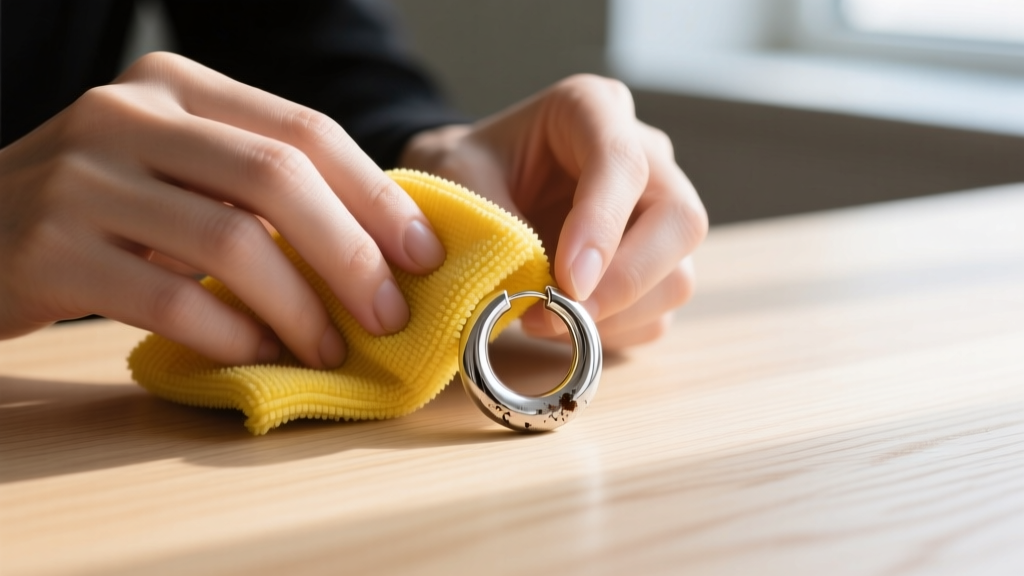
- Daily Wiping: After wearing your hoops, gently wipe them with a soft, lint-free microfiber cloth to remove skin oils, lotions, and sweat before storing them.
- Proper Storage: Store your hoops in an airtight ziplock bag with an anti-tarnish silica strip or a piece of standard white chalk (which absorbs ambient moisture).
- Deep Cleaning: For heavier tarnish, use a dedicated silver polishing cloth (impregnated with micro-abrasives and anti-tarnish agents). Rub gently in one direction, not in circles, to avoid micro-scratching the metal.
- The Chemical Dip (Use Sparingly): Liquid silver dips remove tarnish instantly via harsh chemical reduction. However, they also strip the natural patina and can leave a porous surface that tarnishes even faster the next time. Reserve dips only for heavily oxidized, intricate designs that a cloth cannot reach.
Common Beginner Mistakes to Avoid
Even with the best intentions, new jewelry wearers often fall victim to destructive habits. First, never sleep in your hoops. The pressure of your head against the pillow can warp the metal, permanently altering the circle's geometry and putting stress on the clasp hinge. Second, avoid the "toothpaste hack". Many online forums suggest scrubbing silver with toothpaste and a toothbrush. Modern toothpastes contain hydrated silica, which is highly abrasive and will leave a matte, scratched finish on your high-polish hoops. Finally, remove your hoops before entering hot springs or swimming pools. The high sulfur content in geothermal waters will turn sterling silver pitch-black in a matter of minutes, while chlorine can cause irreversible structural embrittlement.
Pricing Tiers and Where to Buy
Understanding market pricing will protect you from both overpaying and buying counterfeit goods. According to industry guidelines from Jewelers of America, purchasing from vetted, established retailers ensures accurate metal hallmarking and fair return policies.
- Budget ($15 - $35): Mass-market brands and large online marketplaces. Expect standard 925 sterling silver with simple latch-back or hinged clasps. Quality control on the clasp tension can be inconsistent.
- Mid-Range ($40 - $90): Dedicated jewelry brands and independent artisans. This tier offers better finishing (such as rhodium plating for extra shine and tarnish resistance), precise gauge sizing, and reliable clicker hinges.
- Premium ($100 - $250+): Designer labels and specialized metallurgy. Here you will find Argentium silver, recycled precious metals, hollow-tube lightweight oversized hoops, and lifetime warranties on clasp mechanisms.
By prioritizing correct metallurgy, understanding the mechanics of your clasp, and committing to a simple maintenance routine, your first pair of hoop silver earrings will transition from a mere accessory to a lifelong wardrobe staple.


