A Beginner's Guide to Styling and Caring for Embroidered Earrings
Discover how to choose, style, and clean embroidered earrings. Our beginner guide covers thread types, post gauges, and weight management.

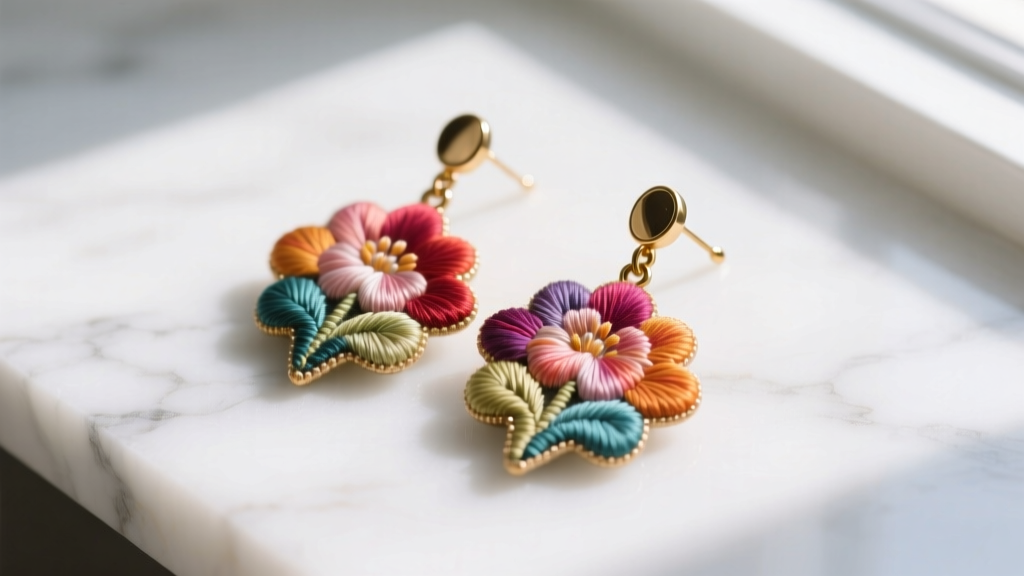
The Renaissance of Thread: Why Embroidered Earrings Are Dominating 2026
As artisan jewelry trends evolve in 2026, embroidered earrings have transitioned from niche craft fair staples to mainstream fashion must-haves. Unlike mass-produced stamped metals, these wearable textiles offer a three-dimensional, lightweight, and deeply personal aesthetic. However, blending fabric, thread, and metal hardware introduces unique challenges regarding weight distribution, skin sensitivities, and long-term maintenance. For beginners stepping into the world of thread jewelry, understanding the anatomy and material science behind these pieces is crucial for both comfort and longevity.
The Anatomy of a Quality Thread Earring
A well-constructed embroidered earring is not simply thread stitched onto cloth. It is a composite structure engineered to hold tension and resist warping. The standard anatomy includes five distinct layers:
- Base Fabric: Usually a tightly woven cotton canvas or ultra-suede that prevents needle punctures from stretching.
- Stabilizer: A crucial middle layer (often Pellon 808 craft-weight fusible interfacing) that gives the earring its rigid shape and prevents the thread from puckering the base.
- Embroidery Thread: The decorative top layer, utilizing various stitches like the satin stitch, long-and-short stitch, or French knots.
- Backing Material: Typically genuine leather, vegan leather, or stiffened felt, which hides the messy underside of the stitching and provides structural integrity.
- Hardware: The metal posts, jump rings, and ear wires that connect the textile to your piercing.
Material Breakdown: Thread Types and Performance
The choice of thread dramatically impacts the sheen, durability, and care requirements of embroidered earrings. While cotton is the most common, understanding the alternatives will help you make informed purchasing decisions.
| Thread Material | Sheen & Texture | Durability & Fray Resistance | Best Use Case |
|---|---|---|---|
| Mercerized Cotton (e.g., DMC) | Soft, subtle luster; matte finish | High; resistant to fraying, washable | Everyday geometric and floral designs |
| Silk Thread | Brilliant, natural high-gloss shine | Moderate; prone to snagging and water spots | High-end, intricate bridal or evening pieces |
| Metallic / Synthetic | Reflective, glittering, stiff | Low; can tarnish or snap under tension | Accent details, festive or holiday jewelry |
| Wool / Acrylic Blend | Matte, fuzzy, highly textured | High; thick and warm, but can pill | Autumnal designs, heavy tapestry styles |
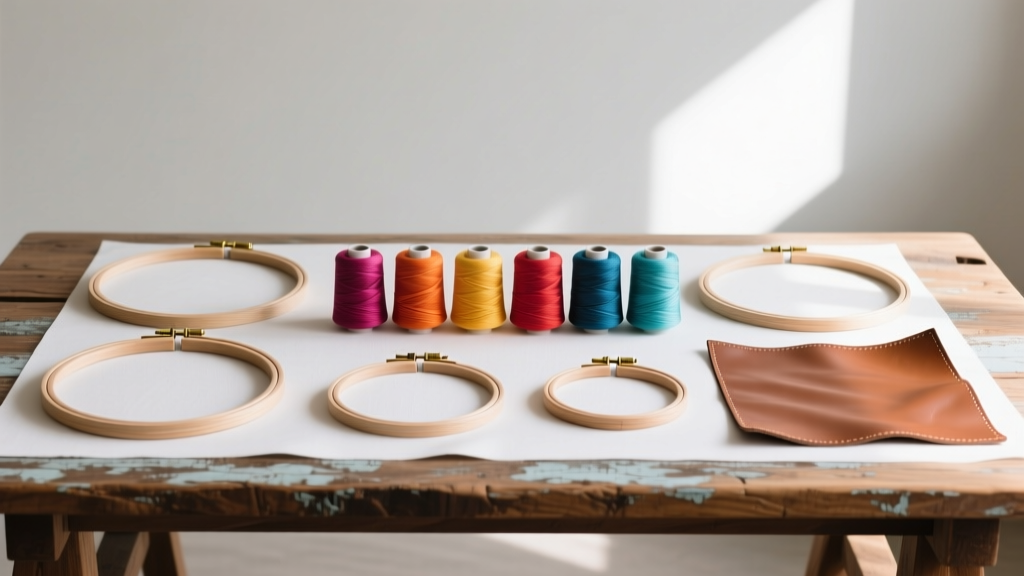
Weight, Gauge, and the 'Cheese-Cutter' Effect
One of the most overlooked aspects of buying embroidered earrings is the hardware gauge relative to the earring's weight. While thread itself is light, the addition of glass seed beads, thick leather backing, and brass hardware can push a single earring's weight past 15 grams.
Understanding Post Gauge Sizing
Standard earlobe piercings are typically done at 20 gauge (0.81mm) or 18 gauge (1.02mm). If you hang a heavy, 20-gram embroidered dangle on a thin 22-gauge (0.64mm) wire, the downward pressure concentrates on a microscopic surface area. Over time, this causes the 'cheese-cutter effect'—a gradual migration and thinning of the earlobe tissue as the wire slices downward.
The Expert Rule of Thumb:
- Under 10 grams: Standard 20g or 18g French hooks or studs are perfectly safe.
- 10 to 20 grams: Insist on an 18g (1.02mm) or 16g (1.29mm) leverback or thick post to distribute the weight.
- Over 20 grams: Avoid standard hooks entirely. Look for pieces designed with a C-clasp or a wide, flat ear cuff that grips the cartilage to share the load.
Furthermore, always verify the metal composition of the post. According to the American Academy of Dermatology, nickel is the most common cause of allergic contact dermatitis. Ensure the hardware passing through your skin is labeled as 316L Surgical Stainless Steel, Niobium, or ideally, ASTM F136 Implant-Grade Titanium, which is entirely nickel-free and biocompatible.
Styling Framework: Matching Embroidery to Face Shapes
Because embroidered earrings often feature bold colors and distinct silhouettes, they act as a focal point for the face. Use this framework to balance your features:
Round Faces
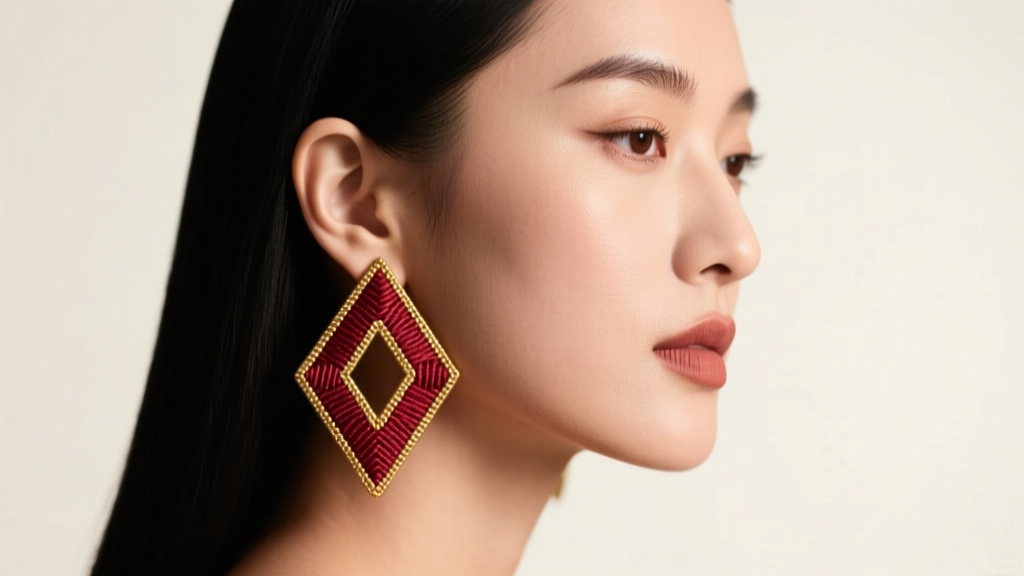
Avoid circular hoops or small, round studs, which will emphasize the face's natural curves. Instead, opt for long, angular geometric embroidered earrings with sharp lines, such as elongated diamonds or vertical Art Deco rectangles. The vertical drop elongates the neck and jawline.
Square Faces
Softening strong jawlines is the goal. Choose circular, floral, or teardrop-shaped embroidery. The organic curves of a satin-stitched peony or a rounded hoop wrapped in thread will beautifully contrast and soften angular bone structure.
Heart-Shaped Faces
With a wider forehead and a narrow chin, the aim is to add visual weight to the lower half of the face. Chandelier-style embroidered dangles or wide, bottom-heavy teardrops draw the eye downward, creating perfect facial symmetry.
Care and Maintenance: Preserving the Threads
Treating embroidered earrings like standard metal jewelry will ruin them. Water submersion, harsh chemicals, and friction are the enemies of textile jewelry. Follow this strict maintenance protocol to ensure your pieces last for years.
Pro-Tip for Storage: Never toss embroidered earrings into a crowded jewelry box where metal clasps from other necklaces can snag and pull the threads. Store them flat in individual anti-tarnish ziplock bags, or hang them on a dedicated fabric display rack.
The Dry-Dusting Method
Do not use wet wipes or liquid cleaners for routine maintenance. Instead, use a clean, dry, soft-bristled makeup brush (like a kabuki or blush brush). Gently sweep the brush across the embroidery in the direction of the stitches to lift away skin oils, makeup dust, and environmental pollutants without pulling the threads.
Spot Cleaning Stains
If you accidentally drop foundation or hair oil onto your earrings, avoid alcohol-based cleaners, which can instantly strip the dye from silk and cotton threads. According to textile conservation guidelines outlined by experts at DMC, a slightly damp microfiber cloth with a drop of pH-neutral baby shampoo is the safest approach. Dab (never rub) the stain, then allow the earring to air-dry completely on a flat paper towel before storing.
Final Thoughts on Building Your Collection
Embroidered earrings represent a beautiful intersection of traditional craftsmanship and modern wearable art. By paying close attention to the gauge of the hardware, the quality of the stabilizer, and the specific thread materials used, you can curate a collection that is not only visually stunning but also comfortable and durable. Start with lightweight cotton pieces for everyday wear, and gradually invest in heavier, silk-threaded statement pieces as you learn how your earlobes handle the unique weight distribution of textile jewelry.


