Beginner's Guide to Buying and Styling a Sword Earring
Discover how to choose, style, and safely wear a sword earring. Learn about ideal metals, gauge sizes, and face-shape tips for beginners.

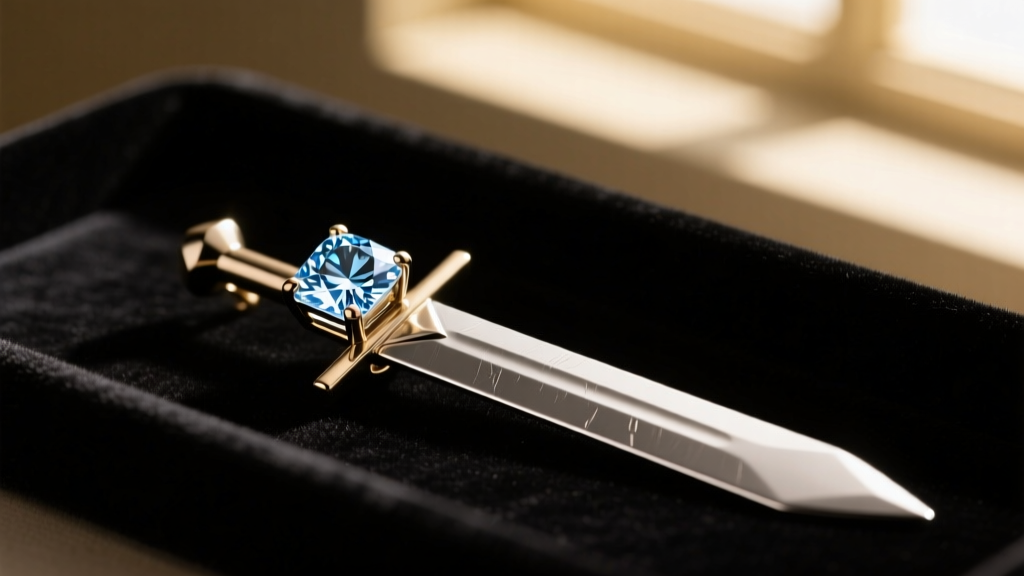
Introduction to Weapon-Inspired Jewelry
Weapon-inspired jewelry has successfully transcended niche subcultures and gothic fashion to become a staple in mainstream edgy elegance. Among these designs, the sword earring stands out as a versatile, striking choice. Whether you are drawn to the minimalist geometry of a rapier stud or the dramatic flair of a gemstone-encrusted dagger drop, sword-shaped earrings offer a unique way to express individuality. However, because of their elongated shapes and varying weight distributions, they require a bit more technical consideration than a standard round stud. This beginner-friendly explainer will walk you through the anatomy, metallurgy, and styling mechanics of choosing your first sword earring, ensuring your piercing stays healthy and your style remains impeccable.
The Anatomy of a Sword Earring: Stud vs. Dangle
Before purchasing, it is crucial to understand the structural categories of sword earrings. The design generally dictates how the earring interacts with your earlobe and surrounding hair.
The Hilt and Blade Proportions
The hilt (the handle and crossguard) serves as the visual anchor of the earring. In stud variations, the hilt is often the main focal point, sometimes featuring a small gemstone, while the blade points downward or upward along the edge of the ear. In dangle variations, the hilt acts as the connecting point to the ear wire, with the blade extending downward. Beginners should note that upward-pointing sword studs can easily snag on hair or headphones, making downward-pointing blades or hinged dangles a much more practical choice for daily wear.
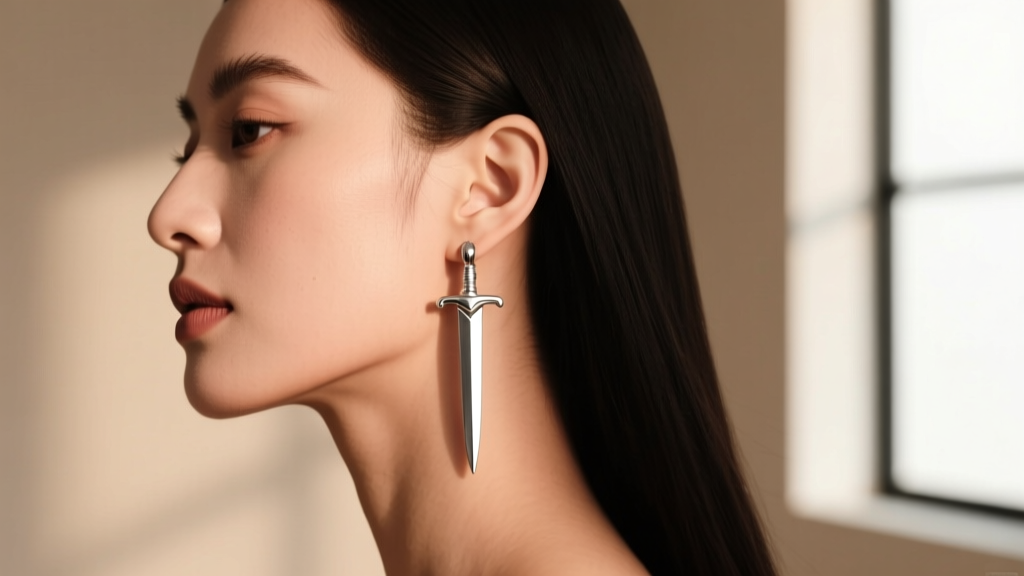
Material Matters: Avoiding Green Ears and Snagging
The metal composition of your sword earring is the single most important factor for long-term wearability. Because sword designs often feature intricate crevices in the crossguard and hilt, cheap alloys can trap moisture and cause severe contact dermatitis. According to the Association of Professional Piercers, choosing biocompatible metals is essential for avoiding irritation, especially in fresh or sensitive piercings.
| Material Grade | Pros & Cons | Best For | Price Range |
|---|---|---|---|
| Implant-Grade Titanium (ASTM F136) | Hypoallergenic, ultra-lightweight, will not tarnish. Harder to find in intricate cast designs. | Sensitive ears, daily wear, fresh piercings. | $35 - $85 |
| 925 Sterling Silver | Classic look, highly detailed casting possible. Requires polishing to prevent sulfur tarnish. | Occasional wear, ornate dagger designs. | $25 - $60 |
| Surgical Steel (316L) | Durable and affordable. Contains trace nickel which can irritate highly sensitive lobes. | Healed lobes, budget-conscious buyers. | $15 - $30 |
| Brass / Zinc Alloy | Very cheap, heavy, prone to turning skin green and causing allergic reactions. | Costume wear only (avoid for sensitive skin). | $5 - $15 |
Expert Tip: Always check for the '925' hallmark on silver pieces to ensure you are getting genuine sterling silver rather than silver-plated brass, as noted by the Gemological Institute of America (GIA).
Gauge Sizes and Weight Distribution
The most common failure mode for beginners wearing elongated jewelry is the "cheese-cutter effect." This occurs when a heavy dangle earring pulls downward, causing the thin wire to slice slowly through the bottom of the piercing hole.
Understanding Ear Gauges
- Standard Lobe Piercings: Usually 20G (0.81mm) or 18G (1.0mm). Most commercial sword dangles are made with 20G or 18G French wire hooks.
- Cartilage / Helix Piercings: Typically 16G (1.2mm) or 14G (1.6mm). Sword studs meant for cartilage must have thicker posts to prevent migration and rejection.
The "Heavy Blade" Problem and How to Fix It
If you are buying a sword earring with a blade length exceeding 2 inches, the lever-action physics will pull on your lobe. To counteract this, avoid standard butterfly backings on heavy studs, as they will droop. Instead, opt for leverback closures for dangles, which distribute weight more evenly, or use silicone earring support discs behind heavy studs to provide a wider surface area against the back of your earlobe.
Hilt Embellishments: Gemstones and Enamel
The hilt of a sword earring is where jewelers showcase their craftsmanship. For beginners, understanding how these embellishments affect durability is key. Pave-set cubic zirconia offers maximum sparkle but requires careful cleaning with a soft brush to prevent dirt buildup in the tiny prongs. Bezel-set stones are vastly superior for daily wear, as the metal rim protects the gemstone from impacts. Enamel detailing on the crossguard provides a beautiful pop of color (like deep ruby red or sapphire blue), but cheap enamel can chip if the earring is dropped on a hard bathroom counter. Always store embellished sword earrings in individual soft pouches.
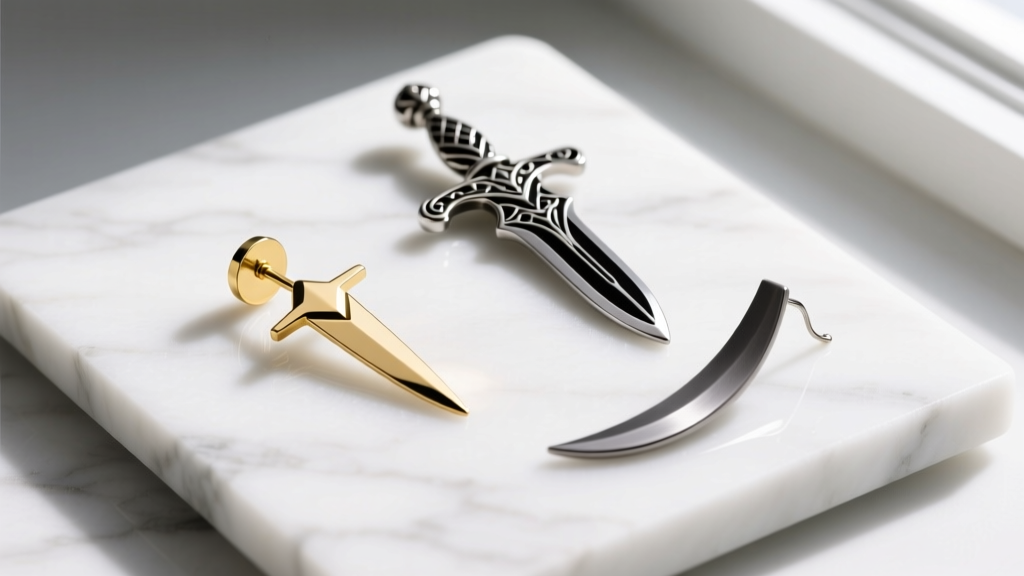
Face Shape & Styling Framework
Because sword earrings introduce strong vertical or diagonal lines to your face, matching the proportions to your natural face shape will elevate your look from costumey to high-fashion.
- Round Faces: Opt for long, slender rapier drops (2.5 to 3 inches). The sharp vertical lines will elongate your facial structure and draw the eye downward, creating a slimming effect.
- Square Faces: Choose sword earrings with ornate, curved hilts or crossguards that feature small teardrop gemstones. The curves will soften a strong jawline, while a medium-length blade (1.5 inches) maintains balance.
- Heart-Shaped Faces: Stick to sword studs or short, wide-hilted daggers that sit close to the earlobe. Avoid extremely long, heavy dangles, which can over-emphasize a narrow chin.
- Oval Faces: You have the versatility to pull off almost any sword earring style, from asymmetrical mismatched sets to dramatic, shoulder-grazing broadswords.
Care, Maintenance, and Snag Prevention
The sharp point of a sword earring is a notorious magnet for knit sweaters, scarves, and tangled hair. To mitigate the "blade catch" issue, look for designs where the tip of the sword is slightly blunted or rounded off by the jeweler, rather than needle-sharp. When removing a sword dangle, never pull it straight down; always unhook the French wire by pulling it forward and then up, following the natural curve of the wire to avoid bending the metal.
Pro-Tip for Sterling Silver Swords: The intricate lines of a sword blade can trap oxidation. Create a gentle cleaning bath using warm water, a drop of mild dish soap, and a baby toothbrush to gently scrub the crevices of the crossguard without scratching the metal.
Final Verdict for Beginners
A sword earring is a phenomenal entry point into alternative and statement jewelry. By prioritizing implant-grade titanium or verified 925 sterling silver, paying strict attention to the gauge size of your piercings, and utilizing silicone supports for heavier dangles, you can wear these striking pieces comfortably all day. Start with a modest 1.5-inch dagger drop or a minimalist hilt stud to get accustomed to the weight and silhouette before graduating to dramatic, elongated broadsword designs.


