How to Choose Hanging Diamond Earrings: A Beginner's Guide
Learn how to choose hanging diamond earrings with our beginner's guide. Discover diamond grades, setting styles, and face-shape tips for your perfect pair.

Introduction to Hanging Diamond Earrings
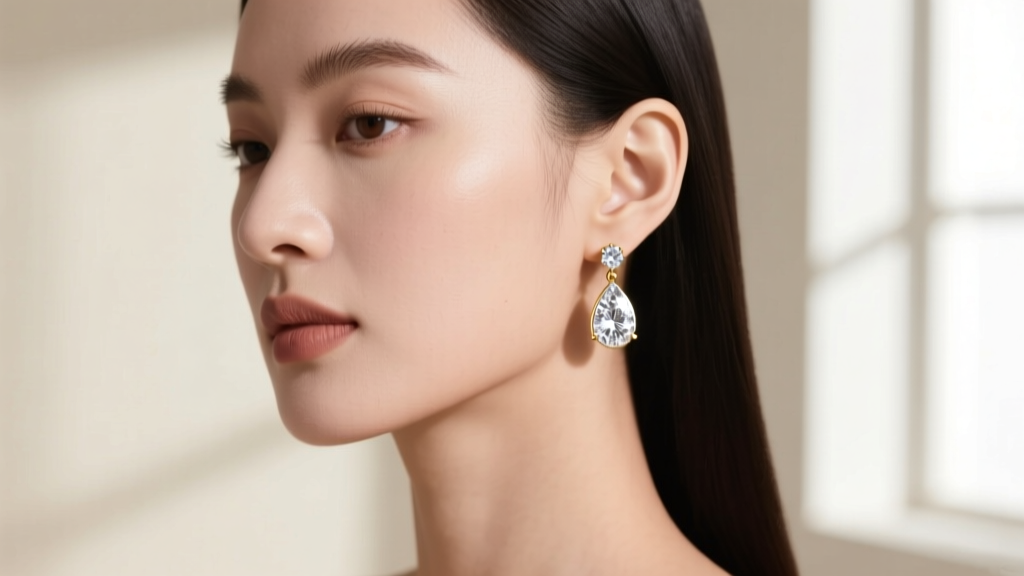
Hanging diamond earrings—encompassing drop, dangle, and chandelier styles—are a cornerstone of fine jewelry. Unlike studs that sit flush against the earlobe, hanging earrings are designed to catch the light in motion, drawing the eye downward and framing the face. For beginners, navigating the myriad of carat weights, setting styles, and backing mechanisms can feel overwhelming. This guide strips away the industry jargon, providing a practical, data-driven framework to help you invest in a pair of hanging diamond earrings that offer maximum brilliance, security, and style.
The "Total Carat Weight" (TCW) Trap
The most common mistake beginners make when buying hanging diamond earrings is misunderstanding carat weight. Retailers frequently list the Total Carat Weight (TCW), which is the combined weight of all diamonds in both earrings.
If a pair is advertised as "1.00 Carat TW," it means each earring contains a 0.50-carat diamond. A 0.50-carat round brilliant diamond measures approximately 5.1mm in diameter, whereas a 1.00-carat single stone measures 6.5mm. Always verify the individual carat weight per ear to understand the actual physical size of the primary stones you will be wearing.
Demystifying the 4Cs for Drop Styles
According to the Gemological Institute of America (GIA), the 4Cs (Cut, Color, Clarity, and Carat) dictate a diamond's value. However, you do not need to pay for top-tier grades across the board when selecting hanging styles.
Cut: The Non-Negotiable Factor
Because hanging earrings rely on movement to create sparkle, Cut is paramount. Always insist on an "Excellent" or "Ideal" cut grade. A poorly cut diamond will look glassy and dead, even if it has high color and clarity. For elongated drops like pear or marquise shapes, look for a length-to-width ratio between 1.45 and 1.75 for the most aesthetically pleasing silhouette.
Color and Clarity: Where to Optimize Your Budget
Unlike an engagement ring which is scrutinized up close, earrings are viewed from a distance.
- Color: You can safely step down to G or H color (near-colorless). Once set in white gold or platinum and dangling away from the skin, the slight warmth is virtually undetectable to the naked eye.
- Clarity: According to the GIA Diamond Clarity Scale, VS2 or even eye-clean SI1 diamonds are excellent choices. As long as the inclusions are not visible without a 10x jeweler's loupe, you are paying for perfection that no one will ever see.
Lab-Grown vs. Natural Diamonds in 2026
The landscape of diamond jewelry has shifted dramatically. In 2026, lab-grown diamonds are a mainstream, scientifically identical alternative to mined stones. For hanging diamond earrings, where larger carat weights are often desired for visual impact, lab-grown options offer massive advantages.
A pair of natural, G-color, VS2-clarity hanging earrings totaling 2.00 carats might retail between $6,000 and $9,000. The exact same specifications in a lab-grown diamond will typically cost between $1,200 and $2,500. This price differential allows beginners to upgrade to larger, more dramatic drop styles or higher-quality precious metal settings without exceeding their budget.
Essential Setting Types and Security
The setting dictates both the light performance and the physical security of your hanging diamonds.
Martini vs. Basket Settings
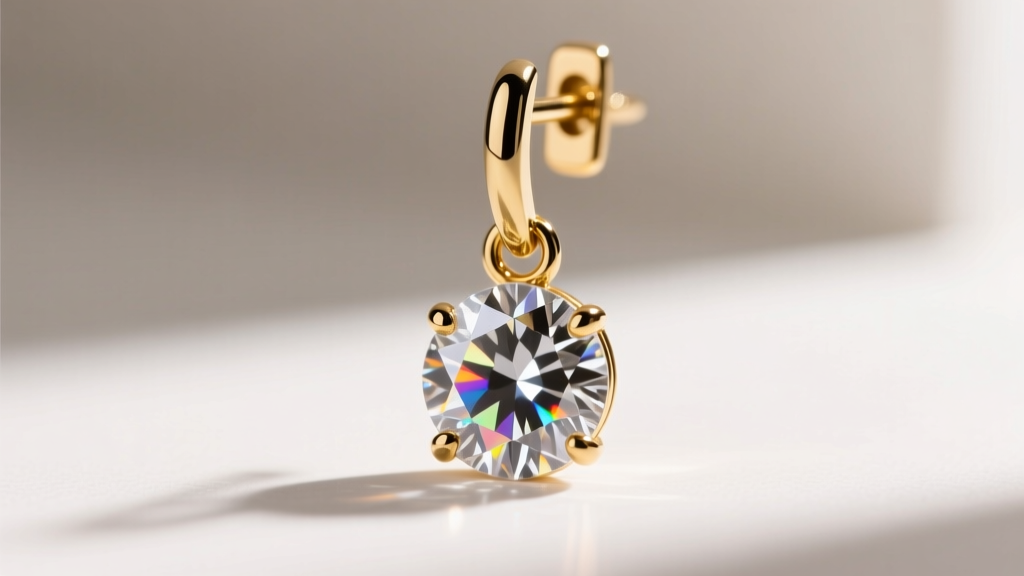
Martini settings feature three prongs and a V-shaped base, allowing maximum light to enter the sides of the diamond. They are ideal for lighter, single-stone drops. Basket settings use four or more prongs with a horizontal metal base. While they slightly restrict side-light, they offer superior structural integrity for heavier, multi-stone chandelier designs.
The Danger of Friction Backs
Standard "push" or friction backs are entirely unsuitable for hanging diamond earrings. The downward pull of gravity and the leverage created by a dangling drop will slowly work a friction back off the post, leading to catastrophic loss. Always demand secure backings:
- La Pousette Backs: These feature a mechanical locking mechanism with two small tabs that snap securely into a grooved post. They are the gold standard for heavy drops.
- Screw Backs: The backing threads onto a grooved post. While highly secure, they can be tedious to put on and may strip over time if cross-threaded.
- Leverbacks / French Wires: Common for dangle styles, ensure the leverback has a secure click-lock mechanism or a small silicone stopper to prevent the wire from slipping out of the piercing.
Matching Hanging Styles to Face Shapes
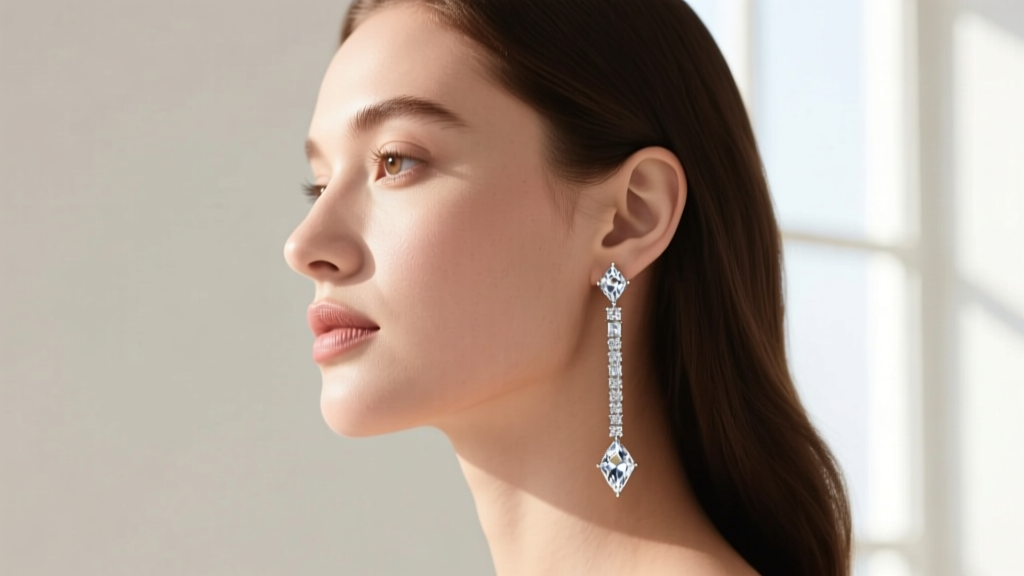
Hanging diamond earrings are a powerful tool for balancing facial proportions. Use this framework to select the most flattering silhouette for your face shape.
| Face Shape | Recommended Drop Style | Styles to Avoid |
|---|---|---|
| Round | Elongated linear drops, rectangular dangles | Short, wide cluster drops or hoops |
| Oval | Most styles; teardrops and geometric chandeliers | Extremely long, narrow drops that over-elongate |
| Square | Curved teardrops, oval drops, soft chandeliers | Angular, sharp geometric drops |
| Heart | Bottom-heavy teardrops, pyramid-shaped dangles | Inverted triangles or top-heavy clusters |
Metal Choices for Longevity
The metal holding your diamonds must withstand the constant kinetic movement of a hanging earring.
- Platinum: The most durable choice. It is dense, hypoallergenic, and its prongs will not wear thin over decades of movement. It is highly recommended for high-value, heavy diamond drops.
- 18k White Gold: Offers a bright, rhodium-plated finish that enhances diamond color. However, the prongs require periodic re-tipping (every 5-10 years) as the alloy wears down from friction.
- 14k Gold: Harder than 18k due to higher alloy content, making it surprisingly durable for prongs, though it lacks the prestige and rich color of higher karat golds.
Care and Maintenance for Dangling Styles
Because hanging earrings swing and brush against hair, clothing, and skin, they accumulate oils and debris faster than studs. This creates a film on the pavilion (bottom) of the diamond, severely dulling its sparkle.
Weekly Cleaning: Soak the earrings in a bowl of warm water with a few drops of mild, ammonia-free dish soap for 15 minutes. Gently brush the back of the diamonds with a soft baby toothbrush to dislodge trapped lotions and sebum. Rinse thoroughly and dry with a lint-free microfiber cloth.
Annual Inspections: The kinetic stress on the prongs of a hanging earring is significantly higher than on a ring or stud. Have a jeweler inspect the prongs and the structural integrity of the jump rings (the tiny loops connecting the drop to the post) once a year to prevent stone loss.
Final Thoughts
Investing in hanging diamond earrings is about balancing visual impact with structural security. By prioritizing an Excellent cut, optimizing your color and clarity grades, insisting on mechanical backings like La Pousette, and choosing a silhouette that complements your face shape, you will secure a pair of earrings that are both breathtaking and built to last a lifetime.


