The Ultimate Guide to Types of Earrings for Men: Styles & Fit
Discover the best types of earrings for men. This beginner guide covers gauge sizes, implant-grade metals, and styles from studs to huggies.


The landscape of men's jewelry has shifted dramatically over the last decade. What was once limited to basic silver studs or bulky novelty pieces has evolved into a nuanced category of fine jewelry, anatomical precision, and deliberate styling. When exploring the various types of earrings for men, the difference between a poorly fitted accessory and a sharp, intentional style choice comes down to understanding gauge sizing, metal metallurgy, and closure mechanics. This beginner-friendly explainer strips away the guesswork, providing you with the exact specifications needed to build a high-quality earring wardrobe.
Why Material and Gauge Matter Before You Buy
Before selecting a style, you must understand the structural foundation of body jewelry. The most common mistake men make is purchasing "surgical steel" from mall kiosks or fast-fashion retailers. While 316L surgical steel is common, it contains nickel, which can cause contact dermatitis and delayed healing in fresh or sensitive piercings.
For any earring that sits in the ear for extended periods, especially in cartilage, you should look for ASTM F-136 Implant-Grade Titanium. According to the Association of Professional Piercers (APP), this specific alloy is nickel-free, highly polished, and biocompatible, making it the gold standard for both fresh and healed piercings. For those preferring precious metals, 14k or 18k solid gold (specifically nickel-free white gold or palladium-based alloys) is the only safe alternative.
Understanding Gauge Sizes
Gauge refers to the thickness of the metal post or wire. In body jewelry, the higher the gauge number, the thinner the metal. Wearing the wrong gauge can cause tearing, migration, or the "cheese-cutter effect" in cartilage.
- 20G (0.81mm): Standard for traditional earlobe piercings done with a needle. Often too thin for cartilage.
- 18G (1.02mm): A versatile size for lobes and some delicate tragus or helix piercings.
- 16G (1.29mm): The universal standard for men's cartilage (helix, conch, tragus) and thicker lobe piercings.
- 14G (1.60mm): Used for industrial bars, daith piercings, and the starting point for stretched earlobes.
The Core Types of Earrings for Men Explained
Once you have your material and gauge dialed in, you can explore the specific silhouettes. The types of earrings for men generally fall into four functional categories, each with distinct closure mechanisms that affect daily wearability.
Studs: Threadless vs. Internally Threaded
Studs are the cornerstone of men's ear styling, typically ranging from 3mm to 6mm in diameter for a masculine, understated profile. The critical factor here is the backing mechanism. Avoid "externally threaded" studs, where the screw is on the post, as the threads can tear the fistula (piercing hole) upon insertion.
Instead, opt for threadless (push-fit) or internally threaded jewelry. Threadless jewelry, pioneered by brands like Neometal, uses a slight bend in the pin that creates tension against the inside of the hollow post. This ensures the earring will never fall out in your sleep or during a workout, solving the most common frustration men have with traditional friction-back studs.
Hoops and Huggies: The Clicker Revolution
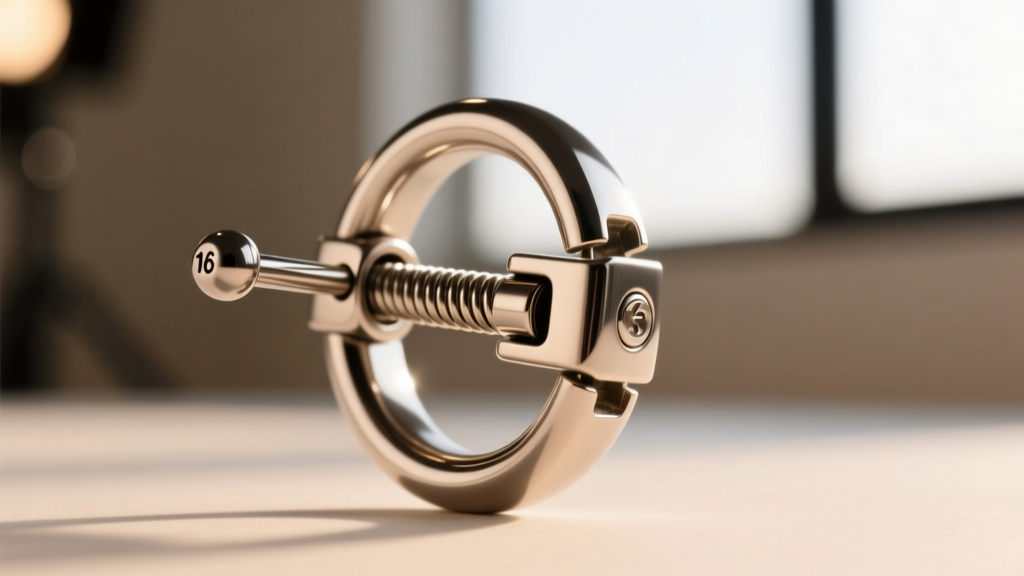
Hoops add movement and edge, but traditional seamless rings can be notoriously difficult to open and close without warping the metal. For men's cartilage and lobe piercings, the hinged segment ring (clicker) is the superior choice. Clickers feature a hidden hinge and a snap closure that produces a satisfying "click" when secured, ensuring the ring won't accidentally pull open.
Huggies are a sub-category of hoops designed to "hug" the earlobe or helix tightly. For men, a huggie with an inner diameter of 8mm to 10mm provides a sleek, structured look without dangling or catching on clothing.
Tunnels and Plugs: A Note on Stretched Lobes
For men with stretched earlobes, the jewelry types shift to tunnels (hollow) and plugs (solid). If you are actively stretching, never use heavy stone or wood, as these are porous and can harbor bacteria. Use borosilicate glass or implant-grade titanium tapers. Glass plugs, such as those from Gorilla Glass, offer a smooth, non-porous surface that is ideal for tissue health during the stretching process.
Matching Earring Styles to Face Shape and Anatomy
The visual weight of an earring can subtly alter the perception of your jawline and facial proportions. While personal preference always reigns supreme, understanding structural balance can help you choose the most flattering types of earrings for men.
| Face Shape | Recommended Earring Type | Styling Rationale & Sizing |
|---|---|---|
| Square | Round Studs & Small Hoops | Curved shapes soften a strong, angular jawline. Stick to 4mm-5mm studs or 10mm huggies. |
| Round | Geometric Studs & Shields | Angular or square-cut gemstones (like princess-cut onyx) add necessary structure and definition. |
| Oval | Any Style (Versatile) | Balanced proportions allow for both minimalist threadless studs and slightly larger 12mm clickers. |
| Diamond | Huggies & Ear Cuffs | Volume around the earlobe and mid-ear helps widen the appearance of the cheekbones and jaw. |
Maintenance and Cleaning Protocols for Men
Men's skin care routines often involve harsh exfoliants, heavy moisturizers, or beard oils that can migrate to the ear and cause buildup around the jewelry post. To maintain the polish of your metals and the health of your piercings, adopt a strict, minimalist cleaning protocol.
Expert Rule of Thumb: Never sleep in large hoops or clickers that fit tightly if your piercing is less than a year old. Cartilage piercings, in particular, are prone to "irritation bumps" caused by the pressure of sleeping on a rigid metal ring. Switch to a flat-back titanium labret stud for sleeping during the healing phase.
For daily maintenance, avoid rubbing alcohol and hydrogen peroxide, which destroy healthy cellular tissue and dry out the skin. Instead, use a sterile 0.9% sodium chloride wound wash (saline). Spray it directly onto the jewelry and the entry/exit points, then gently dry the area with a non-woven gauze pad. Avoid cotton swabs, which leave microscopic fibers tangled in the jewelry closures.
Where to Invest: Brand and Pricing Guide
When building your collection, it is better to invest in a few high-quality, anatomically correct pieces than a drawer full of cheap alloys. High-end body jewelry brands machine their pieces to exact millimeter tolerances, ensuring the hinges and threads never strip.
- BVLA (Body Vision Los Angeles): The pinnacle of fine body jewelry. Known for their 14k/18k gold threadless ends and precision-set gemstones. Expect to pay $80 to $250+ per end (post sold separately). Their material standards are unmatched in the industry.
- Junipurr Jewelry: Offers excellent implant-grade titanium and gold options at a slightly more accessible price point ($40–$120). Ideal for men looking to upgrade from basic steel to threadless titanium.
- Gorilla Glass: The absolute standard for men stretching their lobes or wearing heavy, safe plugs. Hand-blown borosilicate glass pieces range from $25 to $60.
- Maria Tash: While heavily marketed toward women, their Tash Edge clickers and diamond stud collections are exceptionally well-crafted and increasingly popular in men's curated ear projects.
Ultimately, navigating the types of earrings for men is about prioritizing fit, metallurgy, and mechanical security. By choosing implant-grade metals, understanding your specific gauge requirements, and opting for secure closures like threadless pins and clickers, you ensure that your jewelry not only looks intentional but remains comfortable and secure through every aspect of your daily life.


