The Best Book for Earrings: Metals & Material Properties Guide
Discover the best book for earrings focusing on material properties, metal alloys, hardness scales, and biocompatibility for jewelry makers.

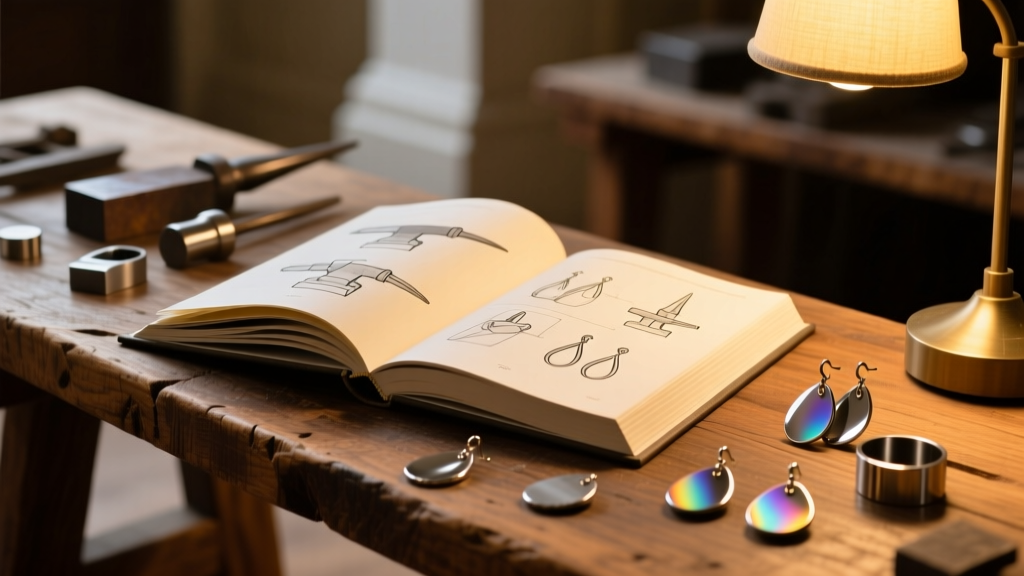
Why Every Jewelry Maker Needs a Definitive Material Reference
When transitioning from basic beading to advanced metalsmithing, finding the right book for earrings is about more than just learning how to bend a wire. It is about understanding the fundamental metallurgy and material science that dictate whether a piece of jewelry will last a lifetime or cause a severe allergic reaction. Earrings present unique engineering challenges compared to rings or necklaces. They must pass through the skin, support varying weights, and resist the corrosive environment of the human body's natural oils and sweat.
While hundreds of craft manuals line the shelves, the most valuable resources are those that treat jewelry design as an intersection of art and applied physics. In this guide, we break down the critical material properties you must master, the specific metal grades required for body-safe jewelry, and how to choose a reference book that provides actionable, scientific data rather than vague crafting advice.
Decoding Metal Alloys: Implant-Grade vs. Commercial-Grade
Any comprehensive book for earrings worth its salt will dedicate entire chapters to the distinction between commercial metals and implant-grade alloys. The difference lies in the smelting process, trace element control, and surface finish.
Titanium: ASTM F67 vs. ASTM F136
Titanium is the gold standard for hypoallergenic earrings, but not all titanium is created equal. Commercially Pure (CP) Titanium, governed by ASTM F67, is highly malleable and excellent for stamped earring blanks. However, for cartilage piercings and initial lobe piercings, you need Ti-6Al-4V ELI (Extra Low Interstitial), known as ASTM F136. This alloy includes aluminum and vanadium, increasing its tensile strength while maintaining absolute biocompatibility. If your reference material does not distinguish between these two grades, it is insufficient for professional earring design.
Surgical Steel: The 316LVM Standard
The term 'surgical steel' is largely a marketing buzzword. The actual standard for body jewelry is 316LVM (Low carbon, Vacuum Melted). The vacuum melting process removes inclusions—microscopic pockets of trapped gas or slag—that can harbor bacteria and cause localized irritation bumps in cartilage piercings. When selecting a 20-gauge or 18-gauge wire for ear hooks, 316LVM provides the necessary tensile strength without the high nickel-release rates found in cheaper 300-series stainless steels.
Niobium: The Anodizing Advantage
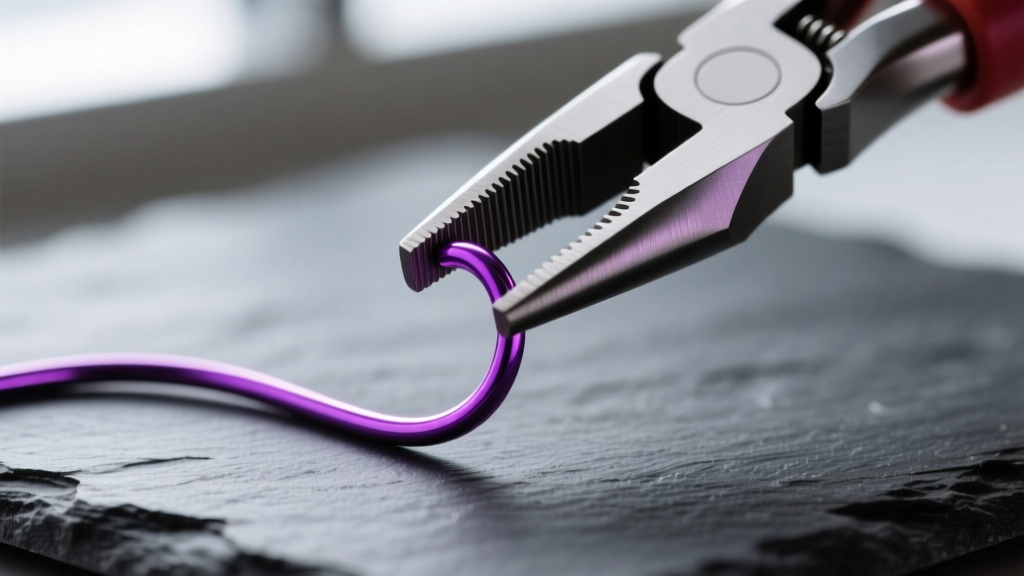
Niobium is a refractory metal that is entirely nickel-free, making it a safe alternative for clients with severe contact dermatitis. Its standout property is its reactivity to voltage. By running a low-voltage electrical current through a niobium earring component submerged in an electrolyte solution (like trisodium phosphate), you can grow a transparent oxide layer that refracts light, producing vivid colors without using dyes or plating. A high-quality textbook will provide a voltage-to-color chart, detailing how 15 volts yields a purple hue, while 90 volts produces a vibrant green.
Matching Material Hardness to Earring Mechanics
One of the most common failure modes in handmade earrings is the deformation of the ear wire. An ear wire must slide through a piercing (requiring a smooth, rounded tip) but must also retain its spring tension to stay securely in the ear lobe. This requires a deep understanding of the Vickers Hardness (HV) scale and metal tempers.
- Dead Soft (HV ~60): Ideal for weaving, bezel setting, and wrapping stones. It will bend easily but will not hold the shape of a structural ear hook.
- Half-Hard (HV ~100-110): The absolute minimum requirement for standard French ear wires. It offers a balance of malleability for shaping and spring-back for retention.
- Full-Hard / Spring-Hard (HV ~140+): Used for clasps, jump rings, and structural components that must resist pulling forces. It is brittle and will snap if bent repeatedly.
According to technical guides provided by suppliers like Rio Grande, work-hardening occurs when metal is manipulated. If you start with a dead-soft 20-gauge sterling silver wire and hammer the tip to create a paddle, you are locally increasing the HV in that specific zone. A superior book for earrings will teach you how to use a rawhide mallet versus a steel chasing hammer to control this work-hardening process without introducing micro-fractures.
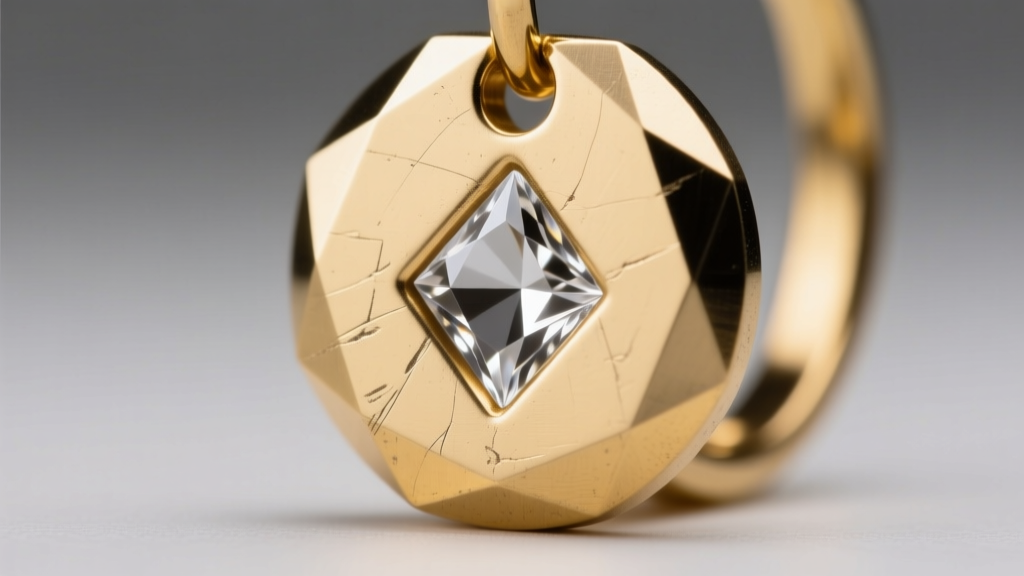
Evaluating the Best Reference Books for Material Science
When building your studio library, you must look for texts that prioritize material behavior over simple step-by-step projects. Below is a comparison of the types of reference materials you should seek out, categorized by their primary focus on earring fabrication and metallurgy.
| Book Category | Primary Focus | Key Material Data Covered | Best For |
|---|---|---|---|
| Metallurgy & Smithing | Alloy behavior, melting points, and crystal structures. | Phase diagrams, annealing temperatures, Vickers hardness. | Advanced metalsmiths designing custom cast or forged earrings. |
| Alternative Materials | Polymers, resins, and metal clays. | Curing shrinkage rates, UV degradation, tensile strength. | Makers focusing on lightweight, oversized dangle earrings. |
| Gemstone Setting | Stone hardness (Mohs scale) and cleavage planes. | Prong tension, bezel pusher mechanics, thermal shock limits. | Designers integrating fragile stones like opals or turquoise into studs. |
| Biocompatibility | Human tissue interaction and allergy prevention. | Nickel release limits, passivation layers, autoclave safety. | Professionals creating jewelry for fresh piercings and medical clients. |
Books like Tim McCreight's The Complete Metalsmith remain foundational because they explain the 'why' behind the 'how.' Understanding that sterling silver contains 7.5% copper—which is what causes it to tarnish and oxidize when exposed to sulfur in the air—allows a jeweler to properly pickle and passivate their earring posts before they ever reach the customer.
Biocompatibility and the EN 1811 Nickel Directive
The most critical chapter in any modern jewelry textbook is the section on contact dermatitis. Nickel allergy affects roughly 10-20% of the global population, and the ear lobe is one of the most sensitive areas for localized reactions. The European Union's EN 1811 standard is the global benchmark for nickel release, mandating that post-assemblies inserted into pierced ears must not release more than 0.5 µg/cm²/week of nickel.
Many crafters mistakenly believe that 'nickel-free' brass or low-grade silver is safe. However, trace nickel can be introduced during the smelting of recycled scrap metals. A professional book for earrings will instruct you on how to source certified, traceable alloys and how to apply protective barrier coatings, such as PVD (Physical Vapor Deposition) or specialized electroplating, to encapsulate base metals. Furthermore, it will warn against using cyanoacrylate (super glue) for setting earring posts, as the adhesive degrades when exposed to skin oils and UV light, leading to catastrophic failure and lost jewelry.
Alternative Materials: Polymers and Resins
Not all earrings are forged from metal. The rise of oversized, architectural dangle earrings has pushed designers toward alternative materials like polymer clay, acrylic, and epoxy resin. When evaluating a book that covers these mediums, look for detailed discussions on specific gravity (density). A 50mm acrylic geometric earring might weigh only 4 grams, making it comfortable for stretched lobes, whereas a solid brass casting of the same dimensions could exceed 25 grams, causing tissue tearing over time.
Furthermore, UV-cured resins require an understanding of photoinitiator degradation. High-quality texts will explain how to formulate resin mixes with UV stabilizers to prevent the yellowing that plagues cheap, mass-market acrylic earrings after just a few months of sun exposure.
Final Thoughts on Building Your Studio Library
Ultimately, the best book for earrings is not a single volume, but a curated collection of texts that cover metallurgy, biomechanics, and material science. By prioritizing resources that teach you the atomic and structural properties of your medium, you elevate your craft from simple assembly to true jewelry engineering. Whether you are bending a 16-gauge titanium barbell or casting a delicate 14k gold bezel, the physics remain the same. Master the material, and the design will follow.


