What the Bible Says About Earrings: A Modest Jewelry Guide
Explore what the Bible says about earrings, unpacking historical context, and discover a practical framework for choosing modest, high-quality jewelry.


For many Christian women and men, navigating the intersection of personal style and scriptural conviction can feel like walking a tightrope. If you have ever found yourself typing what the bible says about earrings into a search engine late at night, you are not alone. The tension between the desire for self-expression and the biblical calls to modesty, humility, and inner beauty is a real, everyday struggle for millions of believers. At Jewel Style Radar, we believe that faith and fashion are not mutually exclusive, but they do require intentionality, historical understanding, and a commitment to quality over ostentation.
In 2026, the jewelry market has seen a massive shift toward 'quiet luxury' and ethical sourcing—trends that align beautifully with biblical principles of stewardship and modesty. This guide will troubleshoot the theological conflicts surrounding ear adornment, unpack the original Greek context of key scriptures, and provide a highly specific, actionable framework for selecting earrings that honor both your faith and your earlobes.
The Scriptural Dilemma: Unpacking 1 Timothy and 1 Peter
When addressing the topic of jewelry, theologians and historians almost universally point to two primary texts: 1 Timothy 2:9 and 1 Peter 3:3. To understand the modern application, we must first troubleshoot the historical context. As noted by scholars on BibleGateway, the Apostle Paul writes that women should 'adorn themselves in respectable apparel, with modesty and self-control, not with braided hair and gold or pearls or costly array.'
Similarly, Peter advises that beauty should not come from 'outward adornment, such as elaborate hairstyles and the wearing of gold jewelry or fine clothes.' The critical error many readers make is interpreting these verses as a blanket ban on the physical materials of gold or pearls. However, the Greek word used for adornment in these passages is rooted in kosmeo (to arrange, to order) and katastole (demeanor, deportment).
In the first-century Greco-Roman world, particularly in wealthy hubs like Ephesus, jewelry was not merely decorative; it was a loud, aggressive display of class division. Wealthy women wore massive, heavy gold earrings and intricate hairnets woven with pearls to publicly flaunt their status, often in the very church assemblies where poorer believers were being marginalized. The biblical prohibition was never against a simple gold band or a modest stud; it was against the ostentation, the arrogance, and the exploitative wealth signaling that disrupted the unity of the early church. For a deeper dive into the historical context of modesty, resources like GotQuestions.org provide excellent theological breakdowns of these cultural nuances.
Troubleshooting the Modesty Conflict in Modern Jewelry
So, how do we apply this to the modern jewelry market? The problem-solving framework for faith-based consumers involves shifting the focus from what you are wearing to why and how you are wearing it. Modesty in jewelry is not about wearing drab, unattractive pieces; it is about avoiding pieces that demand attention, scream for validation, or represent poor financial stewardship.
The Flashiness vs. Quality Paradox
A common trap is purchasing cheap, flashy jewelry. A $15 pair of oversized, gold-plated brass chandelier earrings covered in synthetic rhinestones is far more 'ostentatious' and biblically problematic than a $65 pair of understated, solid 14k gold 4mm ball studs. The former is designed to draw the eye through sheer volume and artificial sparkle, while the latter represents good stewardship—a durable, timeless piece that will not tarnish, turn your skin green, or end up in a landfill after three wears.

From a materials science perspective, investing in solid 14k gold (which contains 58.3% pure gold and is alloyed for durability) or ASTM F136 implant-grade titanium reflects a mindset of stewardship. Titanium, in particular, is entirely nickel-free and hypoallergenic, making it the ultimate choice for believers who want to maintain healthy, uninfected earlobes without the need for heavy, flashy metals. In 2026, traceable, ethically mined gold (such as Fairmined certified gold) also allows Christians to ensure their jewelry purchases do not fund exploitative labor practices, aligning their adornment with the biblical mandate to love their neighbors.
A Practical Framework for Faith-Based Earring Selection
To help you navigate the jewelry counter with confidence and conviction, we have developed a decision matrix. This table evaluates popular earring styles based on their 'flashiness,' material integrity, and alignment with a modest, stewardship-focused lifestyle.
| Earring Style | Recommended Material | Average Weight | Modesty & Stewardship Rating |
|---|---|---|---|
| 4mm - 6mm Ball Studs | Solid 14k Gold or Platinum | ~1.2g - 1.8g | Excellent (Timeless, low-key, lifelong durability) |
| 10mm - 12mm Huggies | Solid 14k Gold or 925 Sterling | ~2.5g - 3.5g | Very Good (Subtle movement, appropriate for daily wear) |
| 6mm Freshwater Pearls | Pearl with 14k Gold Post | ~2.0g | Excellent (Classic, natural, avoids synthetic flash) |
| Chandelier Drops | Brass / Gold-Plated Alloy | ~12g - 18g | Poor (Ostentatious, causes lobe stretching, poor stewardship) |
Gauge Sizes and Earlobe Health
Modesty also extends to how we treat the bodies we have been given. Standard earlobe piercings are done at 20-gauge (0.8mm) or 18-gauge (1.0mm). A practical troubleshooting tip for Christian women is to avoid the modern trend of 'stretching' or 'gauging' the earlobes to 14g, 12g, or larger sizes. Not only does this draw unnecessary, attention-grabbing focus to the ears, but it also causes irreversible tissue damage and lobe elongation over time. Sticking to standard 20g or 18g posts ensures your ears remain healthy and allows you to wear delicate, modest pieces that sit flush against the earlobe.
Furthermore, pay attention to earring weight. Any earring exceeding 7 grams per lobe will gradually stretch the piercing channel over the years, leading to a drooping appearance that often requires surgical correction later in life. Opting for lightweight, well-engineered pieces is a form of long-term bodily stewardship.
Solving the Piercing Guilt: Alternatives and Conscience
It is important to acknowledge that some denominations and individual consciences interpret the scriptures mentioned above as a strict prohibition against the act of piercing the body. If you belong to a tradition that forbids piercings, or if you simply feel personal conviction against modifying your body, you do not have to miss out on the joy of ear styling. The 2026 jewelry market offers incredible, high-quality alternatives that require zero needles.
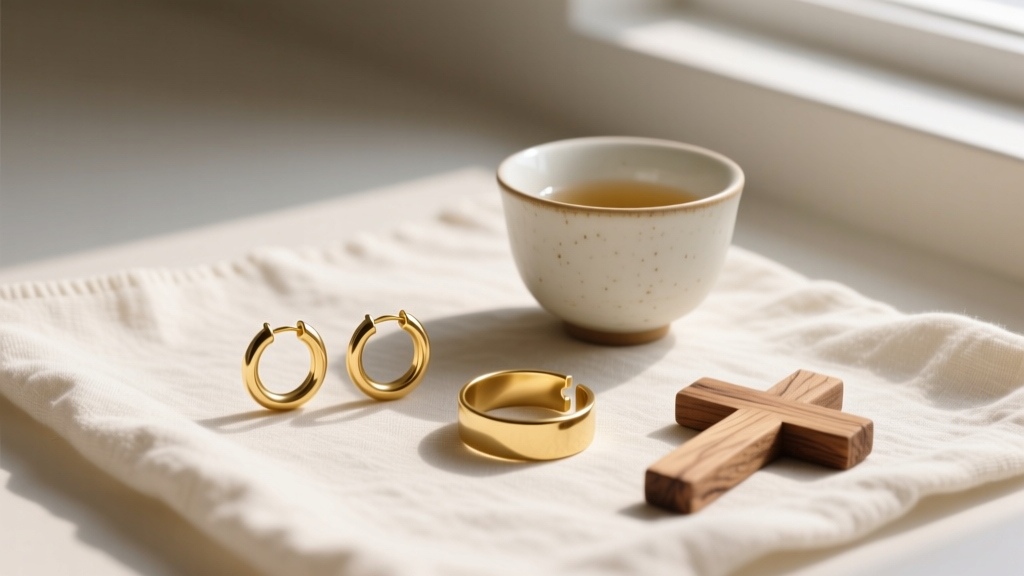
Ear Cuffs and Clip-Ons
Ear cuffs are a phenomenal solution. They wrap around the outer cartilage of the ear, providing the illusion of a complex, curated ear stack without a single piercing. When shopping for ear cuffs, look for those made from solid 925 sterling silver or 14k gold-filled wire. Avoid cheap base metals, as they can cause contact dermatitis on the sensitive cartilage of the ear, even without a piercing.
Modern clip-on earrings have also evolved far past the painful, pinching vintage styles of the past. Today's clip-ons feature silicone comfort pads and adjustable tension screws, allowing you to wear beautiful, modest drop earrings or pearl studs pain-free all day long. This is an excellent troubleshooting workaround for women who want to wear earrings to church or social gatherings without violating their personal or denominational convictions regarding body modification.
Final Thoughts on Adornment and Intent
Ultimately, the Bible is far more concerned with the posture of your heart than the presence of metal on your ears. The scriptural warnings against jewelry were aimed at the pride, vanity, and classism that the jewelry represented in a specific historical context. By choosing pieces that are modest in scale, high in material quality, and ethically sourced, you can wear earrings as a quiet celebration of beauty and craftsmanship, rather than a loud demand for attention.
'Your beauty should not come from outward adornment... Rather, it should be that of your inner self, the unfading beauty of a gentle and quiet spirit, which is of great worth in God’s sight.' — 1 Peter 3:3-4
Whether you opt for a pair of 4mm titanium studs, a delicate set of 10mm gold huggies, or a beautifully crafted sterling silver ear cuff, let your jewelry be a reflection of grace, intentionality, and a heart focused on what truly matters. Good style is never about shouting; it is about whispering with confidence.


