Big Gold Flower Earrings: 2026 Buying Guide & Fit Tips
Discover how to choose big gold flower earrings in 2026. Learn about karat weights, hollow vs. solid construction, and secure backings for heavy lobes.

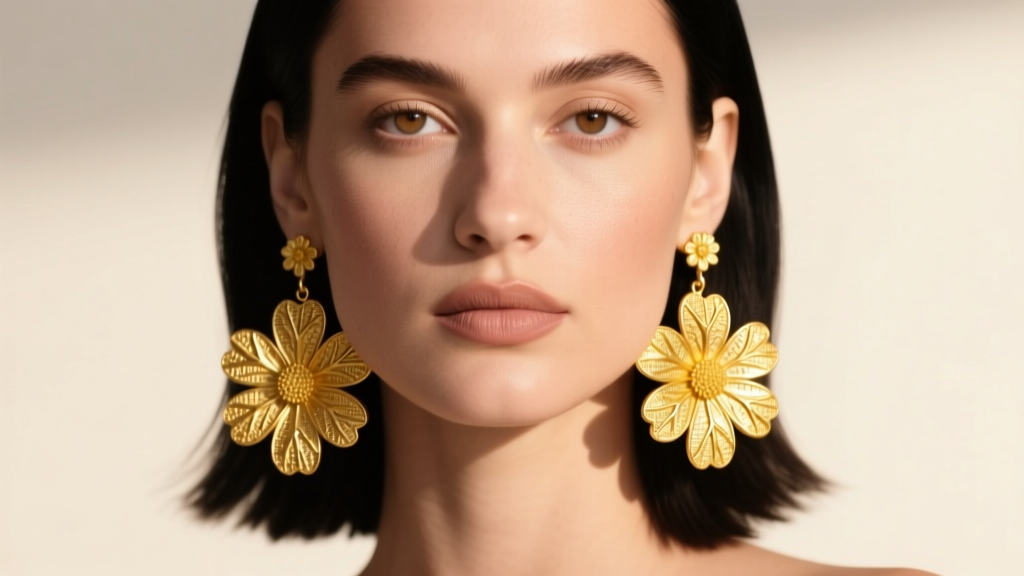
The Allure of Statement Florals in 2026
Maximalist botanical jewelry has firmly taken root in the 2026 accessory landscape, with big gold flower earrings leading the charge. From oversized sculptural orchids to intricate, shoulder-grazing peonies, floral motifs offer a bold way to frame the face. However, purchasing large-scale metallic jewelry requires navigating a minefield of structural and anatomical challenges. A poorly constructed 3-inch gold daisy can easily become an unwearable burden, causing earlobe stretching, post bending, or allergic reactions. This comprehensive buying guide dissects the exact specifications you need to evaluate—from karat purity and electroforming techniques to gauge thickness and weight distribution—ensuring your statement florals are as comfortable as they are captivating.
Karat Purity vs. Structural Integrity
When shopping for big gold flower earrings, the karat weight dictates far more than just the alloy's color; it fundamentally determines the piece's structural viability. Pure 24k gold (99.9% gold) is notoriously soft. While it offers a rich, buttery yellow hue, a large 24k floral petal will bend, warp, or dent under its own weight or with a simple hug. According to the Gemological Institute of America (GIA), alloying gold with metals like copper, silver, and zinc is essential for durability.
- 14k Gold (58.3% pure): The undisputed champion for large, solid-cast floral earrings. The higher alloy content provides the tensile strength needed to support heavy, intricate wire-work or solid petals without sagging. It is also the most budget-friendly, typically ranging from $800 to $2,500 for statement sizes.
- 18k Gold (75% pure): Ideal for moderate-sized florals or pieces utilizing hollow construction. It offers a warmer, more luxurious color but requires careful engineering if the design features thin, protruding stamen or delicate petal edges.
- 22k Gold (91.6% pure): Generally reserved for flat, hammered disc flowers or rigid, thick-cast designs. Avoid 22k for sprawling, 3D dimensional flowers, as the structural failure rate is exceptionally high.
Solid, Hollow, or Electroformed? Decoding Construction
The construction method is the single most critical factor in the wearability of big gold flower earrings. A solid gold rose measuring 2.5 inches across could easily weigh upwards of 35 grams—far exceeding the comfortable weight limit for a standard earlobe, which maxes out around 10 to 12 grams before experiencing fatigue or tearing. To achieve dramatic scale without the punishing weight, jewelers rely on advanced manufacturing techniques.
| Construction Type | Weight Profile (for 2.5" piece) | Durability & Risks | Estimated Price Range |
|---|---|---|---|
| Solid Cast | Heavy (25g - 40g+) | Highest durability, but high risk of lobe tearing and forward drooping. | $2,500 - $6,000+ |
| Hollow Stamped | Light (6g - 10g) | Low durability. Thin sheets are prone to irreversible denting if squeezed. | $400 - $1,200 |
| Electroformed | Featherlight (3g - 7g) | Moderate to High. Thick, seamless shells resist denting better than stamped hollows. | $900 - $2,800 |
The Electroforming Advantage: For massive floral statements, electroforming is the gold standard. This process involves coating a 3D wax model in a conductive solution and submerging it in an electrolyte bath. Gold deposits atom by atom, creating a robust, hollow shell. Once the wax core is melted away, the result is a massive, voluminous gold flower that weighs a fraction of its solid counterpart, allowing you to wear 3-inch botanicals all day without fatigue.
Post Gauge, Backings, and Preventing Lobe Tear
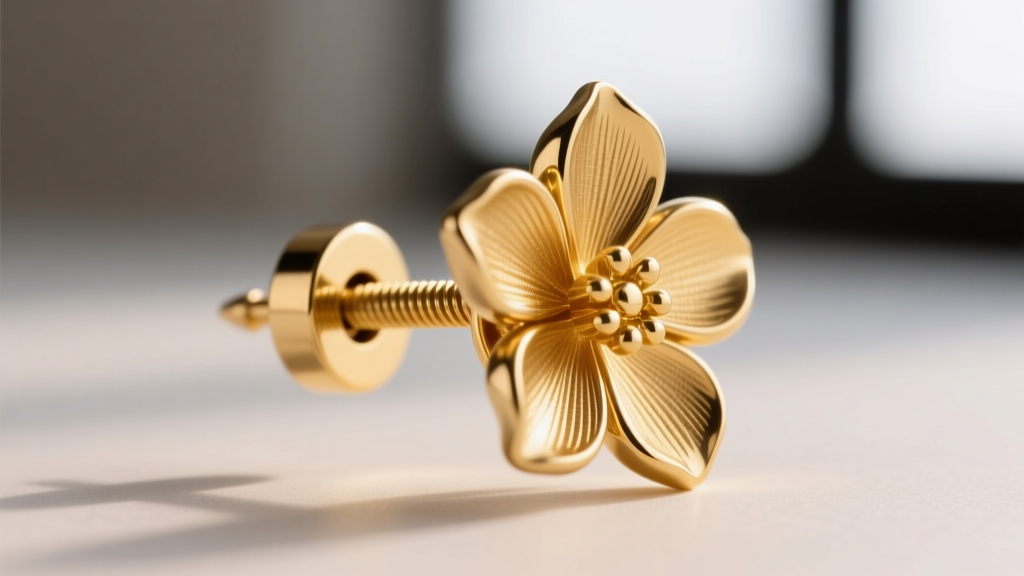
The most common failure mode with heavy statement earrings is not the breaking of the gold, but the tearing of the earlobe. Standard earring posts are 20-gauge (0.81mm) or 18-gauge (1.0mm). When a 15-gram gold flower hangs from a 20-gauge wire, gravity turns that thin post into a cheese-cutter, slowly migrating through the piercing hole. The Association of Professional Piercers (APP) emphasizes that heavier jewelry requires thicker gauges to distribute force safely.
What to demand from your jeweler:
- Thicker Posts: For any solid or heavy floral earring exceeding 8 grams, insist on a 16-gauge (1.29mm) or 14-gauge (1.63mm) post. If your piercings are currently stretched to 20g, a jeweler can easily swap the post, or you can visit a professional piercer to safely taper the hole to 16g.
- French Wires with Silicone O-Rings: If the design uses a hook (French wire), ensure the wire is at least 1.2mm thick and always use a high-quality silicone stopper behind the lobe to prevent the earring from slipping out when caught on hair or clothing.
- Locking Backings: Standard butterfly friction backs are insufficient for big gold flower earrings. The heavy floral head will cause the earring to "nod" forward, pulling the post downward and creating a gap at the back. Opt for La Pousette backings (which feature a mechanical locking click), screw-backs, or jumbo 12mm friction backs that distribute the pressure across a wider surface area of the earlobe.
Face Shape & Scale: Sizing Your Floral Statement
Scale is highly subjective, but matching the diameter and silhouette of your gold florals to your facial geometry ensures the piece elevates rather than overwhelms your features. In 2026, the trend is moving away from perfectly symmetrical, flat daisies toward asymmetrical, sculptural blooms like anthuriums and orchids.
- Round Faces: Avoid wide, circular blooms (like sunflowers) that sit flush against the cheekbone, as they will widen the face. Instead, opt for elongated drop florals—a cascading gold lily or a dangling wisteria cluster—that draw the eye vertically and elongate the jawline.
- Square Faces: Soften angular jawlines with voluminous, rounded designs. A clustered, multi-layered gold peony or a ruffled ranunculus with organic, curved edges will beautifully balance sharp facial contours.
- Oval Faces: You have the versatility to pull off almost any botanical shape. Experiment with oversized, structural orchids or wide cuff-style hibiscus flowers that climb the cartilage.
- Heart-Shaped Faces: Choose florals that are wider at the bottom than the top, such as a teardrop-shaped lotus or a bell-flower (campanula), to add visual weight to the lower half of the face.
Care & Maintenance for Intricate Petal Designs
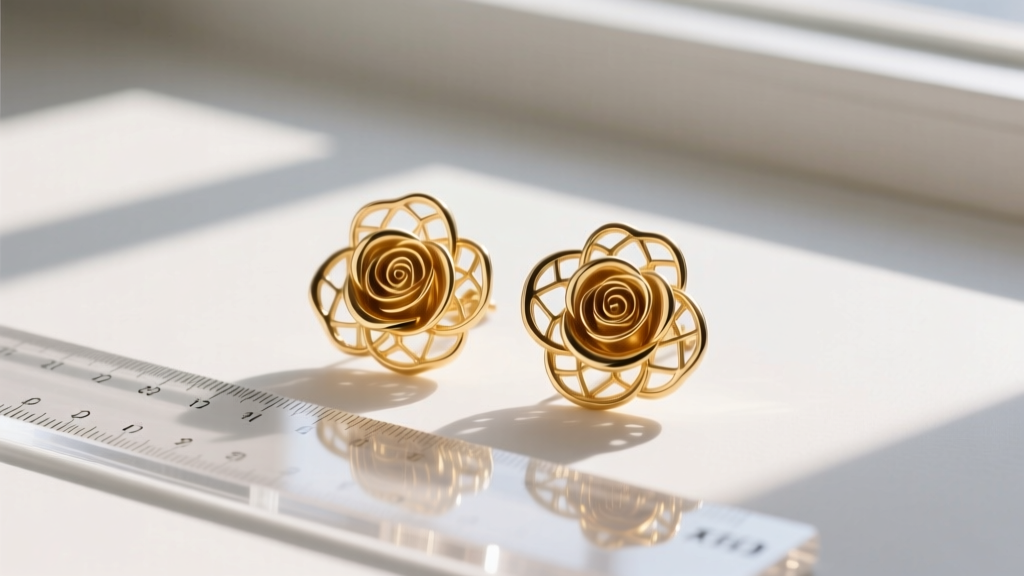
Big gold flower earrings feature deep crevices, overlapping petals, and textured stamens that act as magnets for cosmetics, hairspray, and natural skin oils. Proper maintenance is crucial to preserve the metal's luster and the piece's structural integrity.
Expert Maintenance Warning: Never place hollow or electroformed gold jewelry in an ultrasonic cleaner. The high-frequency sound waves can cause microscopic fractures in the thin gold shells or force water inside the hollow cavity, leading to internal corrosion or a permanent, dull rattle.
The Safe Cleaning Protocol: Create a lukewarm bath of distilled water and a few drops of ammonia-free dish soap. Let the earrings soak for exactly five minutes to loosen sebum and makeup buildup. Use an extra-soft, baby-hair brush to gently sweep the crevices between the petals. Rinse under a low-pressure stream of tepid water, and immediately pat dry with a lint-free microfiber cloth. Use a can of compressed air to blow out any trapped moisture from the post joints or hollow cavities before storing them flat in a tarnish-resistant flannel pouch.
By prioritizing structural engineering over mere aesthetics, you can confidently invest in big gold flower earrings that serve as wearable art. Focus on 14k durability, electroformed lightness, and 16-gauge support, and your botanical statements will bloom flawlessly for decades to come. For more insights on fine jewelry hallmarks and metal care, consult resources from Jewelers of America.


