Big Turquoise Earrings: Weight, Stabilization, and Lobe Health
Master the technical details of big turquoise earrings. Learn about stone stabilization, weight distribution, gauge sizes, and lobe health.

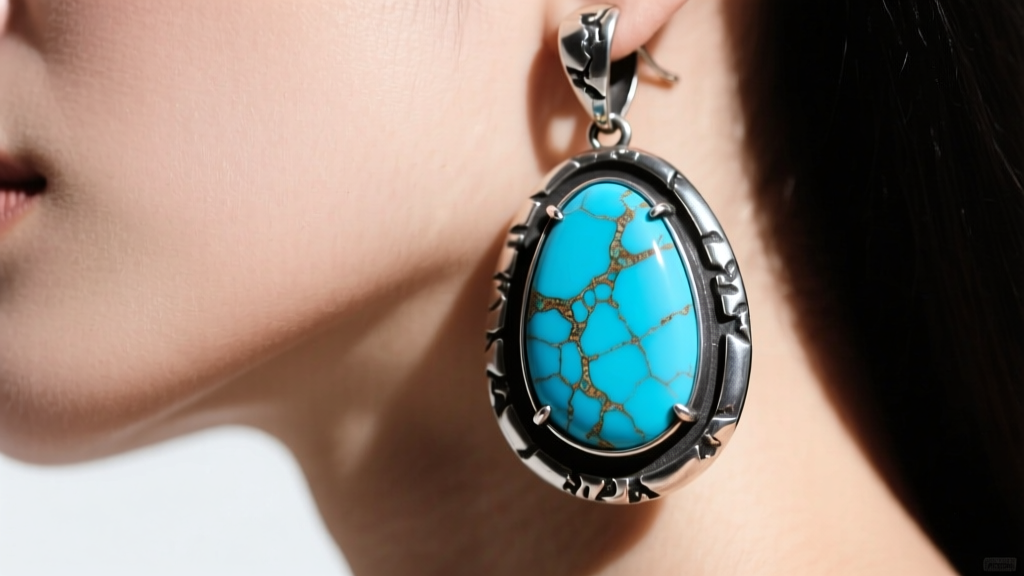
When collectors and style enthusiasts search for big turquoise earrings, the focus is often entirely on the visual impact: the striking robin’s-egg blue, the intricate spiderweb matrix, and the bold, Southwestern silhouette. However, from a technical and lapidary perspective, large-format turquoise jewelry presents a unique set of engineering challenges. Turquoise is inherently porous and relatively soft, and when cut into the large cabochons required for statement dangles, the resulting weight can cause severe biomechanical stress on the earlobe. In this expert deep dive, we bypass the superficial style advice and examine the metallurgy, gemological treatments, and structural physics required to design, purchase, and safely wear heavy turquoise drop earrings.
The Physics of the Drop: Weight Distribution and Lobe Health
The most common failure mode in large statement earrings is not the breakage of the metal, but the tearing of the earlobe tissue—a phenomenon known in body modification circles as the "cheese-cutter effect." A standard stud earring weighs between 2 and 4 grams. In contrast, a pair of big turquoise earrings featuring 30mm x 20mm cabochons set in sterling silver can easily weigh 18 to 28 grams per ear.
When this mass is suspended from a thin wire, gravity exerts continuous downward torque on the piercing fistula. Over time, this pressure restricts blood flow to the lower lobe, leading to tissue necrosis, elongation, and eventual migration of the piercing. To mitigate this, the structural hardware of the earring must be engineered to distribute the load across a wider surface area of the ear.
Calculating Wire Gauge and Backing Requirements
The thickness of the ear wire (measured in gauge) is directly correlated to its tensile strength and its ability to resist cutting into the skin. According to guidelines referenced by the Association of Professional Piercers, jewelry meant to support heavy loads must utilize thicker wire profiles and specialized friction backs.
| Earring Weight (Per Ear) | Minimum Wire Gauge | Wire Diameter (mm) | Recommended Backing / Support |
|---|---|---|---|
| Under 8g | 20-Gauge | 0.81mm | Standard friction post or thin French hook |
| 8g - 15g | 18-Gauge | 1.02mm | Thick French hook with silicone O-ring |
| 15g - 25g | 16-Gauge | 1.29mm | Omega clip-back or leverback with wide saddle |
| Over 25g | 14-Gauge or Custom | 1.63mm+ | Earlobe support patches + custom wide saddle |
For earrings exceeding 20 grams, relying solely on the ear wire is insufficient. We highly recommend the use of transparent, medical-grade silicone earlobe support patches (such as those manufactured by BlingDots). These adhesives bind to the back of the earlobe, featuring a reinforced center hole that absorbs the sheer force of the earring, effectively transferring the load from the fistula to the broader dermal surface.
Gemology: Turquoise Grading and Stabilization Techniques
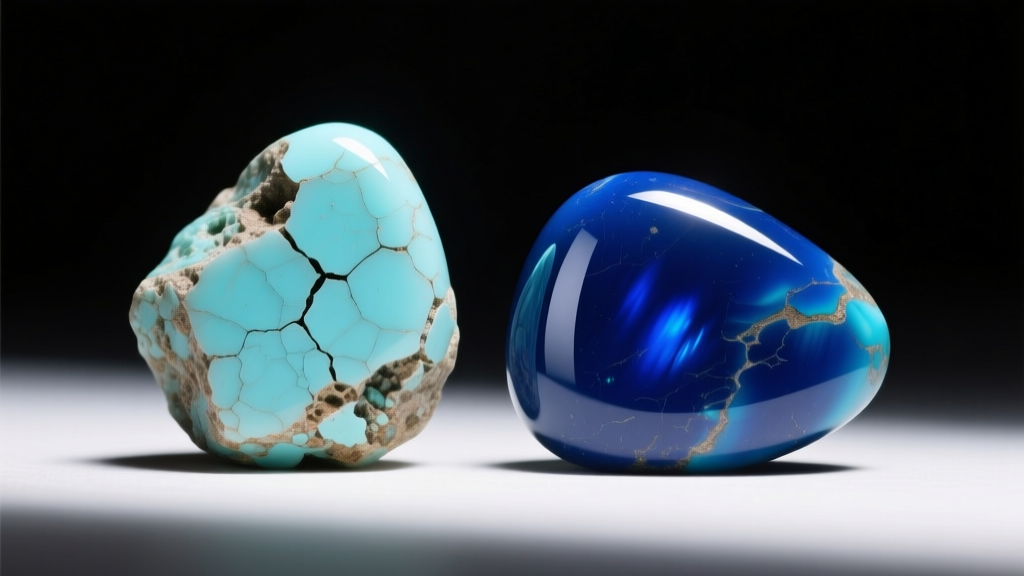
To understand the market for big turquoise earrings, one must understand the geological reality of the stone. Turquoise is a hydrous phosphate of copper and aluminum, registering between 5 and 6 on the Mohs hardness scale. More importantly, it is highly porous. Untreated, natural turquoise acts like a sponge, readily absorbing skin oils, lotions, and environmental pollutants, which causes the stone to oxidize and shift from a vibrant blue to a dull, muddy green over time.
The Necessity of Stabilization in Large Cabochons
While high-grade, naturally hard turquoise (such as material from the now-closed Sleeping Beauty mine or the highly prized Lander Blue) can be cut and polished without treatment, it represents less than 5% of all mined turquoise. Furthermore, the cost of natural, untreated stones large enough for statement earrings can exceed $15 to $30 per carat, making a single pair of earrings cost thousands of dollars.
Therefore, the vast majority of authentic big turquoise earrings on the market feature stabilized turquoise. Stabilization is not a synonym for "fake"; it is a vital lapidary process. According to the Gemological Institute of America (GIA), stabilization involves subjecting the porous rough stone to a vacuum chamber, where a clear epoxy or polymer resin (such as Opticon) is forced deep into the micro-fissures of the stone. Once cured, the resin permanently hardens the turquoise, allowing it to be cut into large, thin cabochons without shattering, and sealing it against color-altering contaminants.
Identifying Fraudulent Imitations
Buyers must be vigilant against reconstituted turquoise and dyed howlite. Reconstituted turquoise consists of turquoise dust and chalk bound together with dyes and resins, lacking any natural matrix structure. Dyed howlite or magnesite features artificial, uniform black veins that look painted on. True stabilized turquoise will still display natural, asymmetrical host-rock matrix (the brown or black webbing), and under magnification, the natural crystalline structure of the copper-aluminum phosphate remains visible beneath the resin seal.
Metallurgy: Choosing the Right Backing and Settings
Large stones require rigid, unyielding metalwork. The most catastrophic failure in big turquoise earrings occurs when the setting warps under lateral torque, causing the stone to pop out and shatter on impact.
Bezel vs. Prong Settings
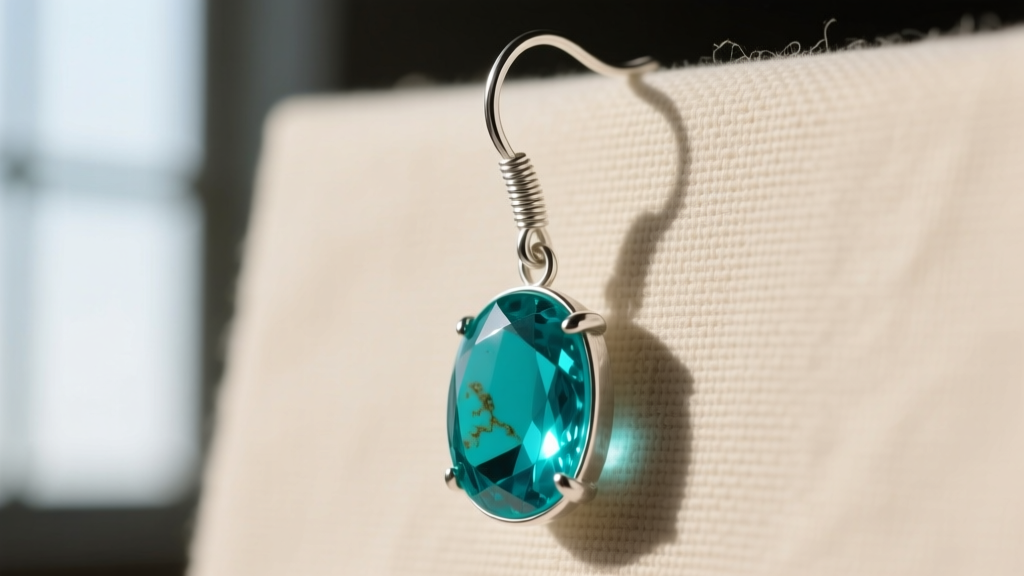
Prong settings are entirely inappropriate for heavy turquoise drops. Turquoise lacks the structural integrity to withstand the point-pressure of prongs, and the leverage exerted by a large, heavy dangle will easily bend silver prongs outward. The only acceptable setting for large turquoise is a full bezel.
"When setting a large turquoise cabochon, the bezel wall must be constructed from dead-soft 22-gauge or 24-gauge sterling silver sheet to allow for a tight burnish over the stone's edge, but it must be soldered to a heavy 14-gauge or 16-gauge backplate. This rigid foundation prevents the metal from flexing and cracking the stone when the earring swings." — Master Lapidary Bench Notes
Silver Alloys and Work Hardening
Sterling silver (925) is the traditional and most aesthetically appropriate metal for turquoise, as the cool white luster of silver complements the warm copper tones of the stone's matrix. However, standard annealed sterling silver is too soft to support heavy drops. Jewelers must utilize work-hardened sterling silver for the ear wires and jump rings. Work hardening alters the crystalline structure of the metal through physical manipulation (like drawing the wire through a die), significantly increasing its yield strength and preventing the jump rings from pulling open under the pendulum-like swinging motion of a heavy earring.
Maintenance and Failure Modes
Even stabilized turquoise requires specific care protocols to maintain its structural and aesthetic integrity. The most common mistake owners make is utilizing ultrasonic jewelry cleaners. The high-frequency acoustic cavitation in ultrasonic baths can fracture the internal resin bonds in stabilized turquoise and completely strip the polish from the stone, leaving it dull and pitted.
The Expert Care Protocol
- Routine Cleaning: Use only a damp, lint-free microfiber cloth with a drop of mild, phosphate-free dish soap. Wipe gently and dry immediately.
- Chemical Avoidance: Never expose turquoise to ammonia, bleach, or harsh commercial silver dips. These chemicals will eat away at the copper content in the stone, causing irreversible white spotting.
- Polishing the Metal: When polishing the sterling silver bezel, use a treated polishing cloth (like a Sunshine cloth) but carefully avoid rubbing the cloth over the turquoise. The mild abrasives in the cloth will scratch the resin seal of the cabochon over time.
- Storage: Store big turquoise earrings flat in a climate-controlled environment. Extreme heat (such as being left in a hot car) can cause the stabilizing resins to soften or weep, compromising the stone's structural integrity.
Conclusion
Investing in big turquoise earrings is an investment in both geological history and wearable art. By prioritizing proper gauge thickness, demanding structurally sound bezel settings, and understanding the vital role of gemological stabilization, collectors can confidently acquire statement pieces that are as technically sound as they are visually breathtaking. True luxury in jewelry is not just about the size of the stone, but the mastery of the engineering that keeps it secure.


