Making Earrings With Beads: 2026 Trend Analysis & Style Guide
Discover 2026 trends for making earrings with beads. Learn expert wire gauge tips, material pairings, and structural techniques for durable designs.

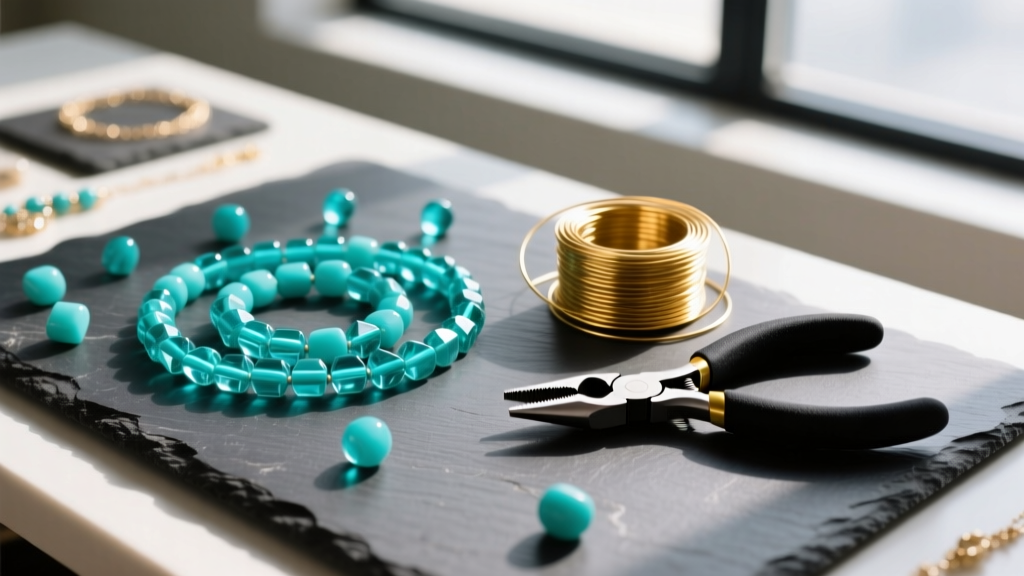
The 2026 Renaissance of Beaded Earrings
As we navigate the jewelry landscape of 2026, the minimalist, ultra-sleek metal trends of the early 2020s have given way to a movement industry insiders are calling 'Tactile Maximalism.' Making earrings with beads is no longer just a beginner's craft; it has evolved into a high-fashion medium embraced by independent designers and luxury houses alike. Today's beaded earring designs prioritize organic textures, raw gemstone inclusions, and mixed-media narratives. Consumers are actively seeking pieces that feel grounded and artisanal, driving a massive surge in demand for handcrafted, beaded drop earrings and intricate wire-wrapped studs.
However, the bridge between a fragile craft project and a durable, retail-ready piece of jewelry lies in structural engineering. Understanding wire temper, metallurgy, and bead hole tolerances is what separates amateur designs from professional collections. This guide breaks down the precise technical specifications and aesthetic trends defining beaded earring design in 2026.
Material Matrix: Pairing Beads with Metals
The interplay between the bead material and the wire alloy is critical for both aesthetics and longevity. In 2026, oxidized metals and matte finishes are dominating the market, providing a moody backdrop for high-contrast gemstones. Below is a technical matrix for pairing common bead types with appropriate wire gauges and alloys.
| Bead Material | Avg. Hole Size | Recommended Wire Gauge | Wire Temper | Best Metal Alloy |
|---|---|---|---|---|
| Baroque Freshwater Pearl | 0.7mm - 0.9mm | 24g or 22g | Dead-Soft | Argentium Silver |
| Matte Onyx Rondelle | 1.0mm - 1.2mm | 22g | Half-Hard | 14k Gold-Filled |
| Recycled Sea Glass | 1.5mm - 2.5mm | 20g or 18g | Half-Hard | Niobium / Copper |
| Raw Emerald Briolette | 0.6mm - 0.8mm | 26g or 24g | Dead-Soft | Fine Silver (.999) |
A common pitfall when making earrings with beads is ignoring the bead's drill hole diameter. According to the GIA Gem Encyclopedia, gemstones like emeralds and opals are often drilled with extremely fine bits to preserve carat weight. Forcing a 22-gauge wire (0.64mm) through a 0.6mm hole will cause internal stress fractures, eventually leading to the stone snapping at the drill site.
Structural Integrity: Wire Gauges and Failure Modes
The most frequent point of failure in beaded earrings is the connection loop. When designing drop earrings that carry significant weight, a simple open loop will inevitably pull apart, resulting in a lost earring. Professional jewelers rely on the wrapped loop technique to secure beads permanently.
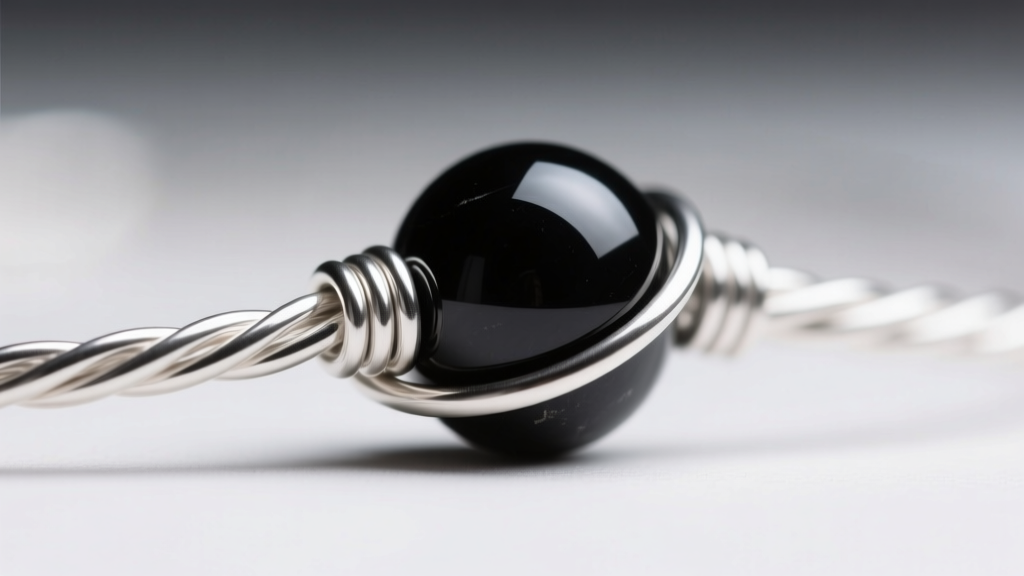
The Physics of Wire Temper
Wire temper dictates how the metal behaves under stress. When sourcing wire for your bench, you must select the correct temper for the specific component you are fabricating:
- Dead-Soft: Extremely malleable. Ideal for intricate wire wrapping and weaving. As you manipulate it, it 'work-hardens,' gaining strength. However, it should never be used for the ear wire itself, as it will bend out of shape when inserted into the earlobe.
- Half-Hard: The industry standard for ear wires and structural loops. It offers a balance of malleability for bending and springiness to retain its shape under the weight of heavy beaded drops.
- Hard / Spring-Hard: Rarely used in standard beading, but excellent for making tension-set clasps or rigid structural frames that must not bend under any circumstances.
Common Failure Points in Beaded Drops
Beyond pulled loops, abrasion is a silent killer of beaded jewelry. Gemstones like quartz, jasper, and agate rank high on the Mohs hardness scale. If these beads rest directly against a soft copper or pure silver wire without a buffer, the natural movement of the wearer will cause the bead to act like sandpaper, eventually sawing completely through the wire. To prevent this, always use a micro-bead spacer or a wire-wrapped guard between hard stones and soft metals. For comprehensive wire manipulation techniques, the educational resources at Beadalon remain an industry-standard reference for preventing structural fatigue.
Trend Forecast: Dominant Bead Styles for 2026
The aesthetic of 2026 is heavily influenced by a desire for authenticity and environmental consciousness. Mass-produced, perfectly calibrated beads are out; character-driven materials are in.
1. The 'Raw Earth' Movement
Designers are leaving gemstones in their rough, unpolished states. Matrix turquoise, raw kyanite, and uncut tourmaline slices are being paired with heavily oxidized sterling silver. This style requires specialized top-drilled briolettes or bezel-cup settings integrated into wire frames, as rough stones rarely have uniform drill holes.
2. Digital Nostalgia & Upcycled Glass
Driven by Gen Z's influence on the luxury market, upcycled glass beads—particularly those sourced from West African powder glass traditions or recycled electronic glass—are seeing a massive resurgence. These beads often feature larger, irregular holes, allowing for the use of thicker, 18-gauge architectural wires and bold, geometric ear cuffs.
3. Asymmetrical Pearl Pairings
Matching pearls are considered outdated. The 2026 approach to making earrings with beads involves curating highly asymmetrical baroque freshwater pearls. Designers are intentionally pairing a heavily ridged, elongated pearl on the left ear with a flat, coin-shaped pearl on the right, unified only by the wire-wrapping technique and metal color.
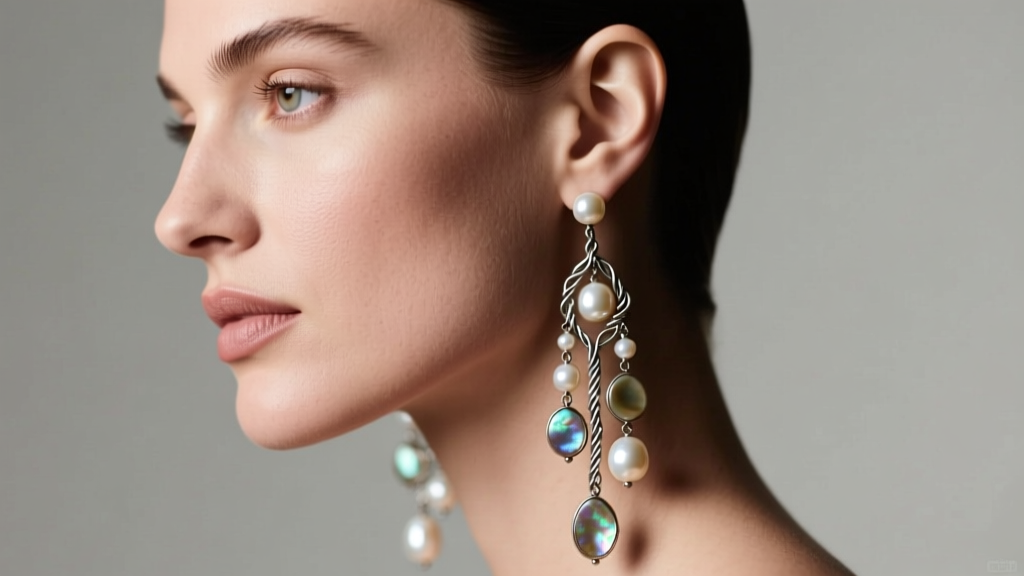
Face Shape & Proportion Guidelines
When designing beaded earrings for a diverse clientele, understanding facial proportions is essential for creating flattering silhouettes. Beads add volume, color, and visual weight, making their placement critical.
- Round Faces: Avoid circular beads like large rondelles or perfect spheres, which echo and exaggerate the face's natural curves. Instead, use elongated briolettes, teardrops, and angular geometric glass beads to create a lengthening illusion.
- Square Faces: Soften strong jawlines with curved, organic shapes. Clustered pearl drops or smooth, undulating wire-wrapped cabochons draw the eye downward and soften angular features.
- Heart-Shaped Faces: Balance a narrower chin by utilizing chandelier-style beaded earrings that are wider at the bottom. Triangular bead arrangements or heavy, clustered stone drops add necessary visual weight to the lower half of the face.
Essential Tools for the Modern Bench
You cannot execute professional-grade wrapped loops with hardware-store pliers. The precision required to avoid marring soft metals like 14k gold-filled wire demands specialized jewelry tools. According to masterclasses hosted by Fire Mountain Gems, investing in the right pliers reduces hand fatigue and material waste.
- Nylon-Jaw Pliers: Essential for gripping and straightening gold-filled or Argentium silver wire without leaving permanent tool marks or scratching the metal surface.
- Flush Cutters (Micro-Flush): Brands like Lindstrom or Tronex provide a perfectly flat cut on the wire, eliminating the sharp 'pinch' left by standard diagonal cutters. This is vital for finishing wrapped loops safely so they don't snag on clothing.
- Stepped Round-Nose Pliers: Unlike standard conical round-nose pliers, stepped pliers feature distinct, uniform barrel sizes. This guarantees that every loop you form for your beaded links is exactly the same diameter, ensuring a symmetrical, professional drape.
Conclusion
Making earrings with beads in 2026 requires a dual mastery of artistic trend forecasting and rigorous structural engineering. By respecting the physical limitations of gemstone drill holes, selecting the correct wire temper, and embracing the tactile, asymmetrical aesthetics of the current market, designers can create heirloom-quality pieces that transcend fleeting fads. Whether you are working with raw emeralds or upcycled glass, the integrity of your wirework will ultimately define the legacy of your jewelry.


