How Long After Ear Piercing Can I Change Earrings? Cost Guide
Learn how long after ear piercing you can change earrings. We break down the hidden costs of early swaps and budget for safe, high-quality healing jewelry.

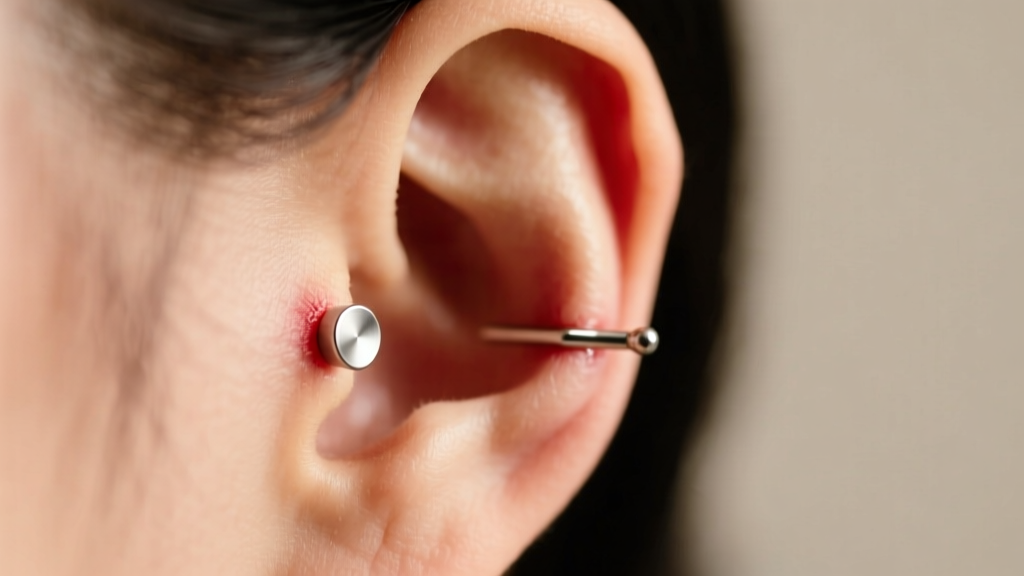
When you invest in a new piercing, the excitement to swap out the initial stud for a stylish new piece is overwhelming. However, the question of how long after ear piercing can i change earrings is not just a matter of biological healing—it is a critical financial decision. Rushing the timeline or choosing the wrong replacement jewelry can trigger a cascade of hidden medical and replacement costs that quickly turn a $50 piercing into a $500 ordeal.
From a budget and value assessment perspective, understanding the exact maturation timeline of your fistula (the healed tissue tube) and investing in the correct material grades for your first swap is essential. This guide breaks down the true costs of impatience, the exact timelines for different ear placements, and how to budget for your first post-healing jewelry upgrade.
The True Cost of Impatience: Why the Timeline Matters
The initial jewelry inserted by a professional piercer is specifically chosen to accommodate swelling and promote undisturbed healing. Changing this jewelry before the fistula has fully formed introduces bacteria, causes micro-tears in the fragile new tissue, and disrupts the healing matrix. According to the Association of Professional Piercers (APP), premature jewelry changes are a leading cause of delayed healing and localized infections.
Let us assess the financial impact of changing your earrings too early:
- Medical Intervention: An infected cartilage piercing often requires an urgent care visit and prescription antibiotics, costing between $150 and $350 out-of-pocket without premium insurance.
- Jewelry Loss: If an infection occurs, you must remove the jewelry to allow the tissue to drain and heal, meaning the $40-$80 piece you just bought is effectively ruined or lost.
- Re-Piercing Costs: If the hole closes or develops severe scar tissue, you will pay the $50-$120 piercing fee all over again once the ear is ready.
The "value" of waiting the appropriate amount of time is the avoidance of these compounding expenses.
Healing Timelines by Piercing Type (And When to Swap)
The timeline for your first jewelry change depends entirely on the vascularity and tissue density of the specific ear placement. Lobe piercings heal relatively quickly due to high blood flow, while cartilage piercings are notoriously slow and require immense patience.
| Piercing Location | Minimum Wait for First Swap | Full Fistula Maturation | Avg. Re-Piercing Cost (If Ruined) |
|---|---|---|---|
| Standard Earlobe | 6 to 8 weeks | 3 to 6 months | $40 - $70 |
| Upper Lobe | 8 to 10 weeks | 4 to 8 months | $50 - $80 |
| Helix / Forward Helix | 6 to 9 months | 12 to 18 months | $60 - $110 |
| Tragus / Conch | 6 to 9 months | 12 to 24 months | $70 - $120 |
| Daith / Rook | 9 to 12 months | 18 to 24 months | $80 - $130 |
While you can technically downsize or swap a standard lobe piercing at the 8-week mark, the Mayo Clinic advises that the tissue remains fragile for months. For maximum value and safety, treating the "minimum wait" as a strict deadline rather than a suggestion is crucial.
Budgeting for Your First Post-Healing Swap
When you finally reach your swap date, the material of your new earrings dictates both the immediate cost and the long-term value of your piercing. The market is flooded with cheap alternatives that carry hidden dermatological costs.
The "Cheap Metal" Trap: Assessing Long-Term Value
Fast-fashion retailers and mall kiosks often sell "hypoallergenic" earrings for $5 to $15. However, these are frequently made of 316L surgical steel or mystery alloys that contain nickel. Nickel allergies can develop at any time, and introducing nickel to a newly healed, still-maturing fistula is a massive risk.
If you develop contact dermatitis from a cheap earring, you will spend $15 to $30 on hydrocortisone creams and antihistamines, not to mention the discomfort and potential scarring. From a value assessment standpoint, spending $30 to $60 on ASTM F-136 Implant-Grade Titanium is the most cost-effective choice. Titanium is entirely nickel-free, highly polished to prevent bacterial adhesion, and biocompatible, ensuring your piercing investment remains secure.
"Investing in implant-grade titanium for your first post-healing swap is not an unnecessary luxury; it is an insurance policy against allergic reactions and tissue rejection."
Premium Metals: Solid Gold vs. Plated
If you prefer gold, you must budget for solid 14k or 18k gold, which typically ranges from $100 to $400+ per piece. Avoid gold-plated or gold-filled jewelry for a first swap. The plating can wear off inside the fistula, exposing the base metal (often brass or copper) to raw tissue, leading to oxidation, green discoloration, and severe irritation. While solid gold has a high upfront cost, its lifetime value and durability make it a superior long-term asset compared to replacing $20 plated earrings every few months.
Professional Downsizing vs. DIY: A Value Assessment
One of the most overlooked aspects of the piercing budget is the "downsize." Initial jewelry, particularly for cartilage, features a longer post (e.g., 5/16" or 1/4") to accommodate the initial swelling phase. Once the swelling subsides (usually around the 4 to 8-week mark for lobes, and 3 to 6 months for cartilage), that extra post length becomes a liability.
Long posts catch on hair, clothing, and pillowcases. This repeated snagging causes trauma to the healing fistula, resulting in irritation bumps (hypertrophic scarring). Treating an irritation bump requires specialized aftercare products, warm saline compresses, and potentially a visit back to the piercer, costing you time and money.
The Downsizing Budget:
- DIY Swap: $0 upfront, but high risk of cross-threading the jewelry, losing the gemstone down the sink, or introducing bacteria from your hands.
- Professional Downsizing: $20 to $50. This fee typically includes a brand new, sterilized, shorter post (e.g., 3/16" or 1/8") and the piercer's expertise to safely swap it without damaging the tissue.
Paying a professional for the first downsizing offers immense value by protecting the structural integrity of the piercing and preventing costly snagging accidents.
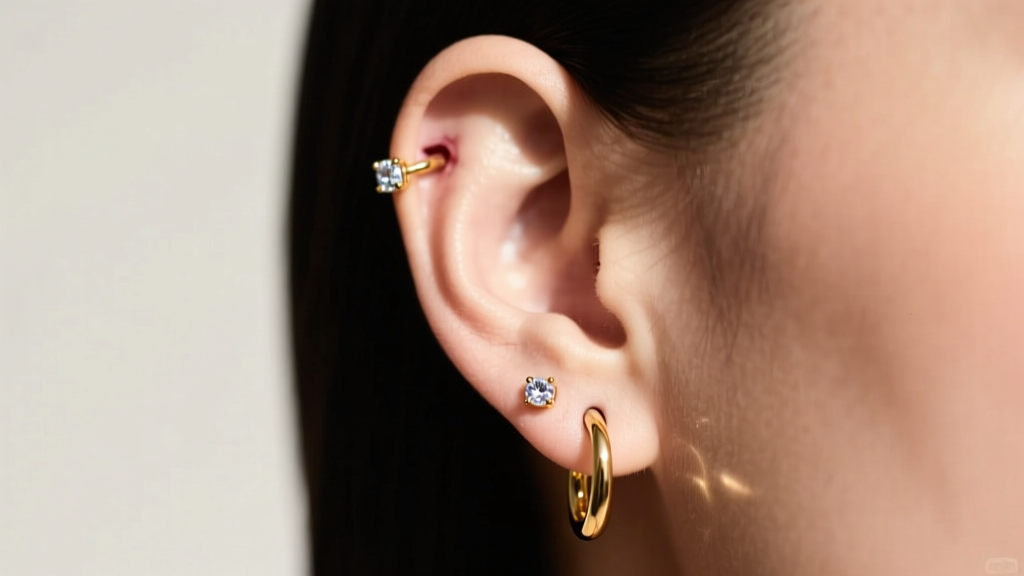
The Hidden Costs of Irritation Bumps
If you ignore the timeline and force a heavy, dangling earring or a tight hoop into a piercing that is only partially healed, you are almost guaranteed to develop an irritation bump. These are not keloids (which are genetic and rare); they are localized swellings caused by mechanical stress and moisture buildup.
The American Academy of Dermatology notes that improper jewelry angles and premature changes are primary culprits for piercing trauma. The budget required to fix an irritation bump includes:
- Consultation Fee: Many high-end studios charge $15-$30 for a troubleshooting consultation.
- Jewelry Correction: You will likely need to purchase a new, high-quality flat-back titanium stud to relieve the pressure ($30-$60).
- Time Cost: Irritation bumps can take 4 to 12 weeks of meticulous aftercare to fully resolve, delaying your ability to wear the decorative jewelry you originally wanted.
By simply waiting the full recommended duration before changing to heavier or differently shaped jewelry, you bypass these frustrating and expensive setbacks entirely.
Final Verdict: Protecting Your Piercing Investment
So, how long after ear piercing can I change earrings? The biological answer is 6-8 weeks for lobes and 6-12 months for cartilage. The financial answer is: wait until you can afford the correct, high-quality replacement jewelry and the professional downsizing service to ensure the hole remains pristine.
Treating your piercing as a long-term body modification investment rather than a fast-fashion accessory will save you hundreds of dollars in medical bills, ruined jewelry, and re-piercing fees. Budget for ASTM F-136 titanium or solid gold, respect the healing timeline, and let the fistula mature before introducing new styles to your ear curation.


