Preventing an Ear Infection from Earring Trends: A Style Guide
Master ear curation safely. Learn material grades, hardware specs, and how to prevent an ear infection from earring stacks and heavy cartilage styles.

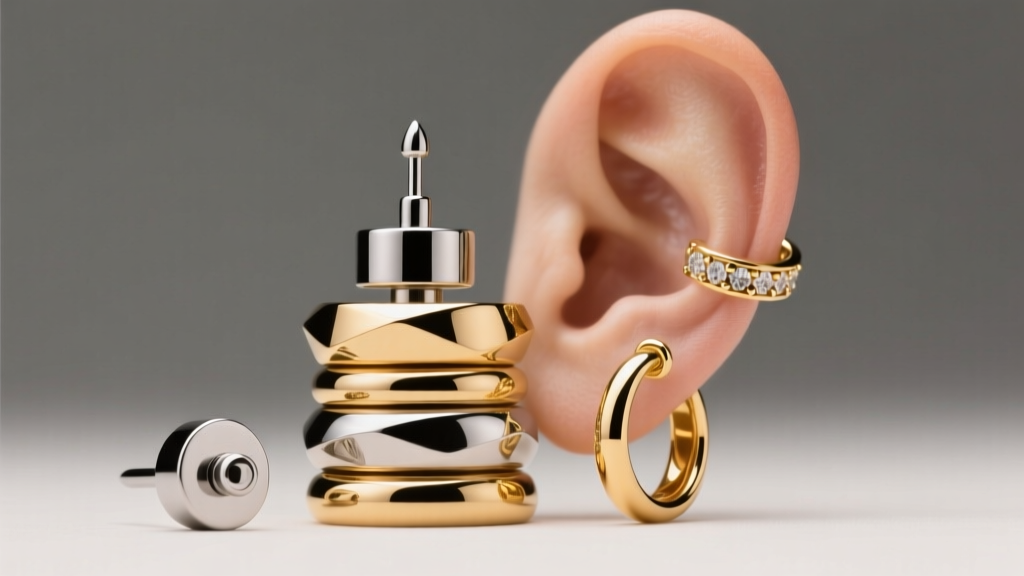
The "Ear Curation" Boom and the Hidden Cost of Stack Fatigue
The modern ear stack is no longer just a collection of random studs; it is a meticulously planned architectural feat. In 2026, the "curated ear" trend has evolved beyond simple lobe clusters into complex cartilage constellations featuring orbital chains, conch hoops, and snug piercings. However, this maximalist approach to ear styling has introduced a significant biological hurdle: stack fatigue. When you introduce five, six, or seven pieces of foreign metal into the delicate tissue of the auricle, you exponentially increase the risk of localized trauma, allergic contact dermatitis, and bacterial ingress.
Many style enthusiasts mistakenly blame their piercer or their aftercare routine when complications arise, but the root cause often lies in the jewelry itself. If you have ever experienced an ear infection from earring hardware that was poorly chosen, you already know the frustration of having to remove a beautiful, expensive stack to let the tissue heal. The intersection of high fashion and tissue health requires a deep understanding of metallurgy, anatomy, and mechanical jewelry design. This guide bridges the gap between runway aesthetics and clinical safety, ensuring your ear curation remains both stunning and biologically compatible.
Material Grades: Why "Hypoallergenic" is a Marketing Myth
The term "hypoallergenic" is entirely unregulated in the jewelry industry. A brand can stamp this label on a piece of brass coated in a microscopic layer of rhodium, and legally market it as safe for sensitive ears. When that plating inevitably wears off, the underlying base metals are exposed to the skin's natural moisture and sebum, triggering a reaction. According to the American Academy of Dermatology, nickel allergy is one of the most common causes of allergic contact dermatitis, affecting nearly 20% of the population.
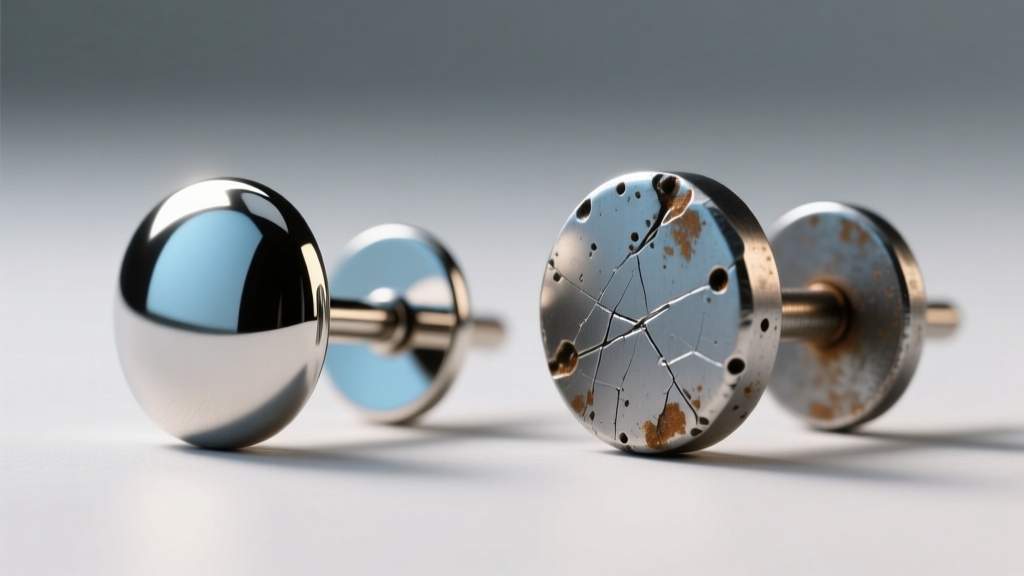
When analyzing materials for a heavy ear stack, we must look at specific metallurgical standards rather than marketing buzzwords. The gold standard for any piercing—especially cartilage, which has notoriously poor blood circulation and slow healing times—is implant-grade titanium. Specifically, you want to look for ASTM F136 or ASTM F1295 certifications. These alloys are completely nickel-free and possess a mirror-polished surface that prevents bacteria from adhering to microscopic scratches.
The Metal Grade Comparison Matrix
| Material Grade | Nickel Content | Surface Finish | Infection / Irritation Risk | Avg. Price Range (Per Piece) |
|---|---|---|---|---|
| ASTM F136 Titanium | 0% (Nickel-Free) | Mirror Polish (Biocompatible) | Extremely Low | $35 - $90 |
| 316L Surgical Steel | 10% - 14% | Polished (Porous at micro-level) | Moderate to High | $15 - $30 |
| 14k / 18k Solid Gold | Varies (Must be alloyed without nickel) | High Polish | Low (If nickel-free alloy) | $80 - $250+ |
| Sterling Silver (925) | 0% (Contains Copper) | Prone to Tarnish/Oxidation | High (Tarnish causes tissue staining) | $20 - $60 |
Notice that 316L stainless steel, often sold as "surgical steel," contains up to 14% nickel. While the chromium oxide layer on the steel traps the nickel temporarily, the chloride ions in human sweat can break down this passive layer, leading to nickel leaching that exceeds the European EN 1811 safety standard of 0.2 μg/cm²/week. For long-term cartilage stacking, 316L is a liability.
Anatomy of an Ear Infection from Earring Hardware Failures
Material is only half the battle; the mechanical design of the earring dictates how the tissue interacts with the jewelry. The most common culprit behind localized bacterial infections in the earlobe and cartilage is the traditional "butterfly" or "push" back. These backs feature tight, enclosed crevices that trap dead skin cells, sebum, and shampoo residue. Furthermore, they apply uneven, adjustable pressure against the back of the ear, which can restrict blood flow and cause pressure necrosis (tissue death) in the piercing fistula.
To eliminate this risk, professional curators exclusively use flat-back labrets. A flat-back disc sits flush against the skin, distributing pressure evenly and eliminating the dark, moist crevices where Staphylococcus aureus bacteria thrive. According to the Association of Professional Piercers (APP), the threading of the post is equally critical. Externally threaded earrings (where the screw pattern is on the post itself) act like a tiny file, tearing through the delicate epithelial lining of the fistula every time they are inserted. This micro-trauma creates open pathways for bacteria, directly leading to an ear infection from earring insertion damage.
The Solution: Threadless and Internally Threaded Hardware
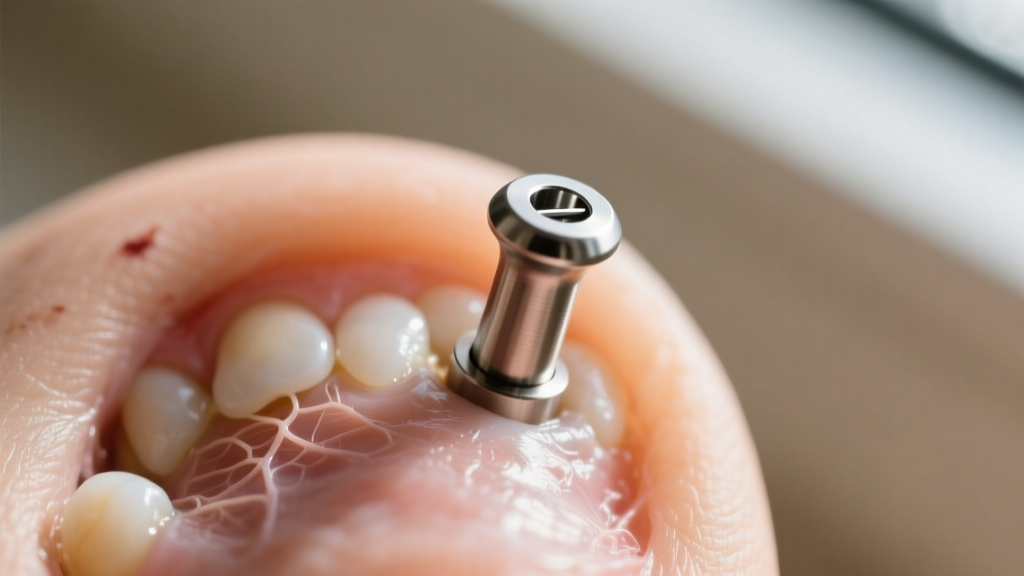
- Threadless (Push-Pin) Jewelry: Utilizes a slightly bent pin that creates tension inside a hollow post. It is completely smooth, glides through the tissue without snagging, and offers the most secure hold for heavy gemstone ends.
- Internally Threaded Jewelry: The screw pattern is on the inside of the decorative end, while the post remains perfectly smooth. This is the minimum acceptable standard for any high-end cartilage stack.
The Gauge and Post-Length Matrix for Healing Cartilage
Another frequent stylistic error that leads to complications is ignoring the physical dimensions of the jewelry. The "gauge" refers to the thickness of the post. While standard lobe earrings are often 20-gauge (0.81mm) or 18-gauge (1.02mm), cartilage piercings require a thicker profile. Using a thin 20-gauge post in a cartilage piercing creates the "cheese-cutter effect," where the thin metal migrates through the tissue under the weight of a heavy hoop or gemstone, causing chronic inflammation and rejection.
For a stable, infection-resistant cartilage stack, adhere to these dimensional standards:
- Standard Cartilage Gauge: 16-gauge (1.2mm) is the industry standard for the helix, flat, and conch. 14-gauge (1.6mm) is preferred for the tragus or daith to support heavier structural jewelry.
- Healed Post Length: 6mm (1/4 inch) is the standard length for a fully healed, settled fistula. It ensures the flat-back sits flush without protruding and catching on hair or clothing.
- Swelling Accommodation: If you are experiencing an irritation flare-up, stepping up to an 8mm (5/16 inch) post temporarily allows lymphatic fluid to drain and prevents the jewelry from embedding into the swollen tissue.
Troubleshooting: Is It an Infection or Just Irritation?
Before you remove your entire curated stack and rush to a doctor, it is vital to distinguish between a true bacterial infection and a mechanical irritation bump (hypertrophic scarring). In the context of ear styling, true infections are actually quite rare after the initial healing phase; irritation is overwhelmingly more common.
Signs of an Irritation Bump: A localized, flesh-colored or pink bump directly adjacent to the piercing hole. It may itch or feel tender when touched, but the surrounding skin is normal. This is almost always caused by a post that is too long (allowing the jewelry to move and bang against the fistula), sleeping on the ear, or using harsh chemical cleaners like rubbing alcohol.
Signs of a True Infection: The entire ear or a large section of cartilage feels hot to the touch. The pain is deep, throbbing, and constant. You may see thick, yellow or green purulent discharge (pus), and in severe cases, you may develop a fever or swollen lymph nodes in your neck. If you suspect a true cartilage infection, seek medical attention immediately, as cartilage lacks its own blood supply and relies on the perichondrium; an untreated infection here can lead to permanent structural deformity (cauliflower ear).
2026 Style Solutions: High-Fashion, Low-Risk Ear Stacks
Achieving a breathtaking ear stack in 2026 does not require sacrificing your tissue health. The key is to invest in modular, high-quality components. By purchasing ASTM F136 titanium flat-back posts and swapping out the decorative threadless ends, you can change your entire ear aesthetic from delicate gold chains to bold, chunky opals without ever disturbing the healing fistula.
Prioritize weight distribution. If you love the look of heavy, oversized floral clusters in your upper helix, ensure the post is 16-gauge to support the weight, and balance it with lightweight, minimalist titanium beads in the lower lobe to prevent the ear from becoming top-heavy. By respecting the biological limits of your anatomy and demanding clinical-grade materials from your jewelers, you can maintain a flawless, irritation-free ear curation that stands the test of time.


