Guide to the Biggest Diamond Stud Earrings: Size, Fit, and Value
Discover how to choose the biggest diamond stud earrings for your lobes. Learn carat vs. mm sizes, lab-grown value, and anti-droop settings for max impact.

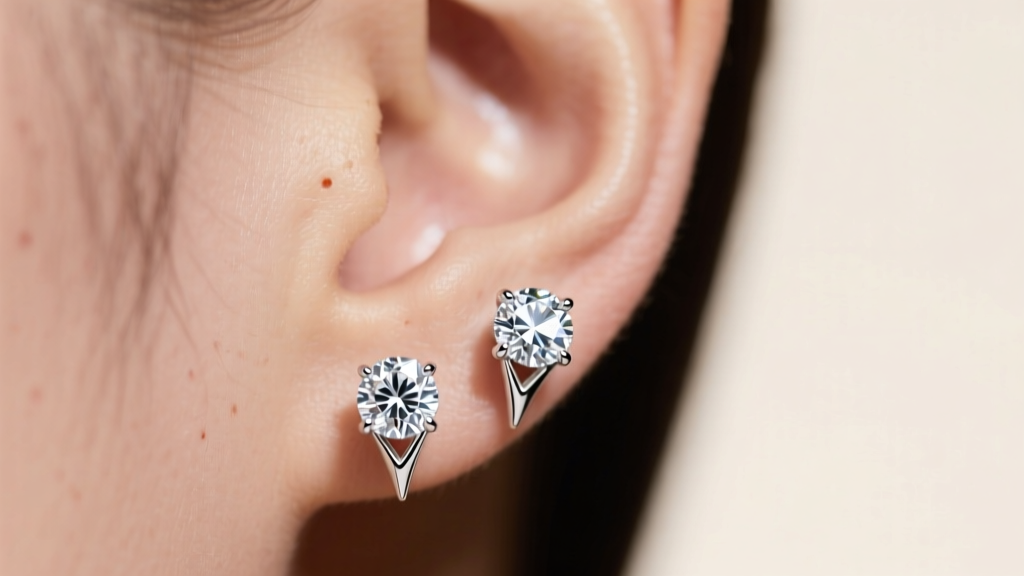
When you begin searching for the biggest diamond stud earrings, it is easy to become overwhelmed by carat weights, pricing tiers, and setting styles. As a beginner, you might assume that a higher carat weight automatically translates to a massive, eye-catching earring. However, the reality of diamond sizing, lobe anatomy, and visual spread is far more nuanced. In 2026, the jewelry market offers more options than ever for achieving maximum visual impact without sacrificing comfort or financial stability. This guide breaks down exactly how to navigate the world of oversized diamond studs, ensuring you get the largest, most brilliant earrings possible for your unique ear anatomy.
The Carat vs. Millimeter Illusion: What 'Big' Actually Means
The most common mistake beginners make is equating carat weight directly with physical size. Carat is a measure of weight, not diameter. A diamond's physical footprint on your earlobe is measured in millimeters (mm). For a standard Round Brilliant cut—the most popular shape for studs—a 1.00-carat diamond measures approximately 6.5mm in diameter. A 2.00-carat stone measures about 8.1mm. Notice that doubling the weight does not double the visual width; it only increases the diameter by roughly 1.6mm.
If your primary goal is finding the biggest diamond stud earrings in terms of sheer visual footprint, you must pay attention to the diamond's cut proportions. According to the Gemological Institute of America (GIA), a diamond cut with a slightly shallower depth will 'face up' larger, meaning it has a wider millimeter spread for its carat weight. However, beware of stones cut too shallow, as they will leak light and appear dull. The sweet spot for maximizing spread while retaining brilliance is a depth percentage between 59% and 62.5%.
Lab-Grown vs. Natural: Unlocking Massive Carat Weights
If you want truly massive diamond studs—think 3.00 to 5.00 carats total weight (ctw)—lab-grown diamonds have completely revolutionized the market. The Federal Trade Commission (FTC) mandates strict disclosure regarding lab-grown stones, ensuring consumers know exactly what they are buying. Chemically, physically, and optically, lab-grown diamonds are identical to mined diamonds, but they cost a fraction of the price.
This price differential is where beginners can unlock the biggest diamond stud earrings without taking out a second mortgage. A natural, high-clarity 4.00 ctw pair of studs can easily exceed $45,000. The exact same specifications in a lab-grown diamond will cost between $2,500 and $4,500 in today's market. This allows you to prioritize higher color grades (D-F) and better clarity (VS1-VS2), which are crucial for large stones where inclusions and yellow tints are easily visible to the naked eye.
| Carat Total Weight (ctw) | Approx. MM Diameter (per ear) | Natural Price Range | Lab-Grown Price Range |
|---|---|---|---|
| 1.00 ctw | 5.0mm | $3,500 - $6,000 | $400 - $800 |
| 2.00 ctw | 6.5mm | $10,000 - $18,000 | $800 - $1,500 |
| 3.00 ctw | 7.5mm | $25,000 - $40,000 | $1,500 - $2,800 |
| 4.00 ctw | 8.1mm | $45,000+ | $2,500 - $4,500 |
Settings That Maximize Visual Spread
If a solid 2-carat stone is out of your budget, or if you simply want an even larger footprint, the setting you choose can create the illusion of a much larger diamond. The biggest diamond stud earrings are often not single stones, but cleverly engineered composite designs.
The Halo Illusion
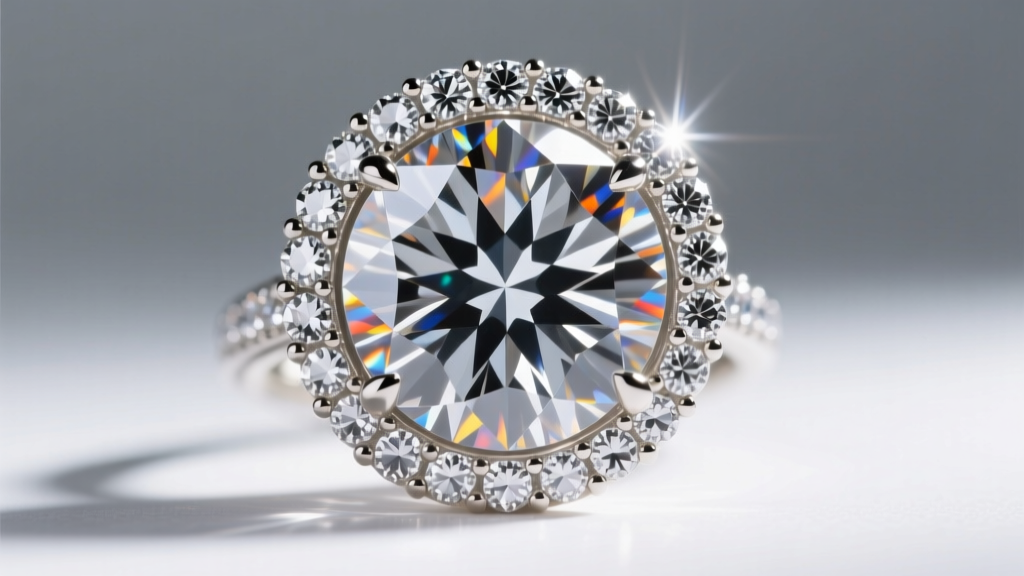
A halo setting surrounds the center stone with a continuous ring of micro-pave melee diamonds. This design can add 1.5mm to 2.5mm to the overall diameter of the earring. A 1.00-carat center stone in a well-crafted halo can easily mimic the visual footprint of a 2.50-carat solitaire. The key is to ensure the melee diamonds are color-matched to the center stone to prevent a disjointed, grayish ring from forming around the perimeter.
Bezel vs. Prong: The Light Performance Trade-Off
A bezel setting encircles the diamond's girdle in a thin rim of metal. While a bezel can make a stone look slightly larger by extending the metal edge, it covers the diamond's perimeter, blocking light entry and reducing the stone's overall sparkle. For the biggest, brightest impact, a 3-prong or 4-prong setting is vastly superior. A 3-prong 'martini' setting uses less metal, exposing more of the diamond's crown and allowing maximum light return.
The Droop Factor: Engineering Heavy Studs for Sagging Lobes
Here is a critical reality check that most jewelry guides ignore: the biggest diamond stud earrings are heavy. A 4.00 ctw pair of diamonds weighs roughly 1.6 grams. When you add the weight of a platinum or 18k gold setting, the total weight approaches 2.5 grams per ear. If you have thin, stretched, or naturally sagging earlobes, this weight will cause the earrings to tilt forward, pointing at the floor rather than facing outward.
To combat the dreaded 'nodding dog' effect, you must consider the earring's center of gravity. Martini settings sit lower and closer to the earlobe compared to traditional 4-prong basket settings, which sit higher on a gallery wire. By keeping the diamond's mass closer to the piercing hole, a martini setting significantly reduces the lever effect that causes drooping. Additionally, opting for an 18-gauge post (1.0mm thick) rather than a flimsy 20-gauge post provides the structural rigidity needed to hold a heavy stone straight.
Secure Backings for Heavy Diamonds
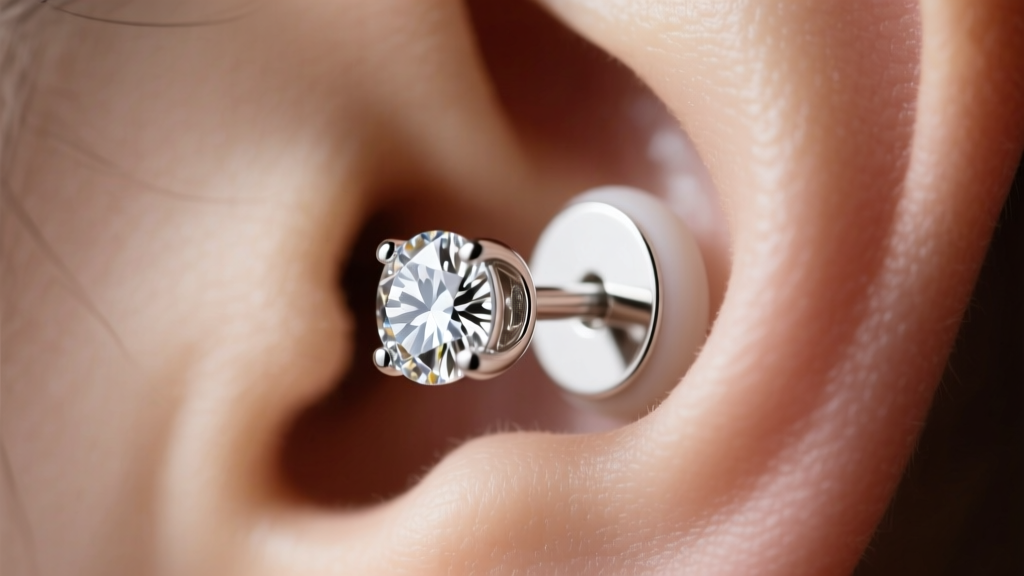
The standard 'butterfly' friction back that comes with most earrings is entirely inadequate for oversized diamond studs. The small surface area will dig into your neck, and the tension will eventually loosen, risking the loss of a massive investment. When buying large studs, you must upgrade your backings.
- La Pousette Backs: These mechanical, push-pull backs lock securely into a grooved post. They offer the highest level of security for heavy stones and distribute weight evenly.
- Screw Backs: These thread onto a grooved post. While highly secure, they can be tedious to put on and require careful handling to avoid cross-threading the delicate metal.
- Jumbo Silicone Discs: For an immediate, budget-friendly fix, pair your existing friction backs with a flat, 10mm silicone support disc. The disc slides onto the post before the metal back, creating a wide, cushioned base that supports the earlobe from behind and completely eliminates forward droop.
Expert Tip: Always clean your earring posts with rubbing alcohol before securing heavy backs. Natural skin oils reduce the friction on metal posts, making even tight backings prone to sliding off throughout the day.
Final Checklist for Your Purchase
Finding the biggest diamond stud earrings that actually look good and wear well requires balancing carat weight, cut quality, and structural engineering. Before finalizing your purchase, run through this quick checklist:
- Verify the MM Spread: Don't just look at carat weight; check the exact millimeter measurements on the grading report.
- Assess the Cut Grade: Ensure the diamonds have an 'Excellent' or 'Ideal' cut grade to guarantee they sparkle from across the room.
- Choose the Right Metal: Platinum or 14k/18k white gold provides the necessary prong strength for large stones. Avoid soft 24k gold or high-karat yellow gold for heavy prongs.
- Plan for Support: Budget an extra $50-$100 for high-quality La Pousette backs or jumbo silicone support discs to protect your earlobes and your investment.
By understanding the interplay between physical dimensions, setting styles, and lobe mechanics, you can confidently select oversized diamond studs that deliver breathtaking visual impact while remaining comfortable enough for everyday wear.


