Black Crystal Stud Earrings: 2026 Value & Budget Buying Guide
Discover the true value of black crystal stud earrings in 2026. Compare Swarovski, CZ, and onyx pricing, metal grades, and budget tiers for the best buy.

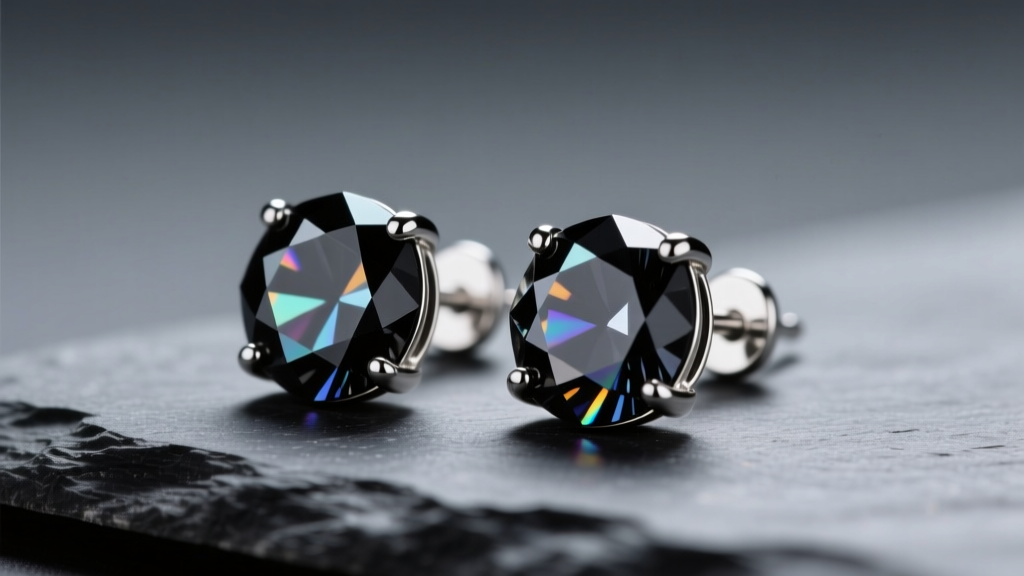
The Anatomy of Black Crystal Studs: What Are You Actually Paying For?
Black crystal stud earrings have surged in popularity as a versatile, edgy alternative to traditional clear diamonds. However, the term 'crystal' is heavily abused in the jewelry market. In 2026, navigating the pricing landscape requires understanding the exact material composition, the metal integrity of the post, and the long-term wearability of the stone. Are you paying for precision-cut glass, lab-created cubic zirconia, or natural onyx? To assess true value, we must first break down the geological and synthetic realities of these dark stones.
Crystal vs. Cubic Zirconia vs. Natural Onyx
Technically, 'crystal' in the jewelry industry refers to high-refractive-index glass. Since the industry-wide shift away from lead oxide, top brands now use barium or zinc oxide to achieve brilliance. According to Swarovski's Advanced Crystal standard, modern lead-free crystals maintain optical clarity without the toxicity of legacy glass. However, glass (Mohs hardness 5-6) scratches significantly faster than Cubic Zirconia (Mohs 8-8.5) or natural Black Onyx (Mohs 6.5-7).
If you want a stone that mimics the deep, light-absorbing void of a black diamond, precision-cut CZ is actually superior in hardness and dispersion. The Gemological Institute of America (GIA) notes that CZ's high specific gravity makes it denser and more durable for daily wear than glass. Natural onyx, conversely, offers a completely opaque, glassy luster that absorbs light entirely, making it ideal for moody, gothic, or minimalist aesthetics.
2026 Pricing Tiers: Where Does the Real Value Lie?
When shopping for black crystal stud earrings, price is rarely an indicator of stone quality alone; it is heavily inflated by brand positioning. Below is the 2026 value assessment matrix for standard 6mm to 8mm studs.
| Tier | Price Range (2026) | Stone Material | Metal Base | Expected Lifespan |
|---|---|---|---|---|
| Budget | $12 - $25 | Machine-pressed glass | Brass/Copper alloy (flash plated) | 6 - 12 months |
| Mid-Range | $35 - $85 | Precision-cut CZ or Crystal | 316L Surgical Steel or 925 Silver | 3 - 5 years |
| Luxury | $120 - $300+ | Natural Onyx or High-Grade CZ | ASTM F-136 Titanium / 14k Gold | Lifetime |
The 'Mid-Range' tier offers the highest utility-to-cost ratio. You avoid the rapid degradation of budget flash-plated metals while bypassing the massive markup of luxury designer brands that often use the exact same mid-tier CZ stones.
The Hidden Cost: Metal Backings and Post Grades
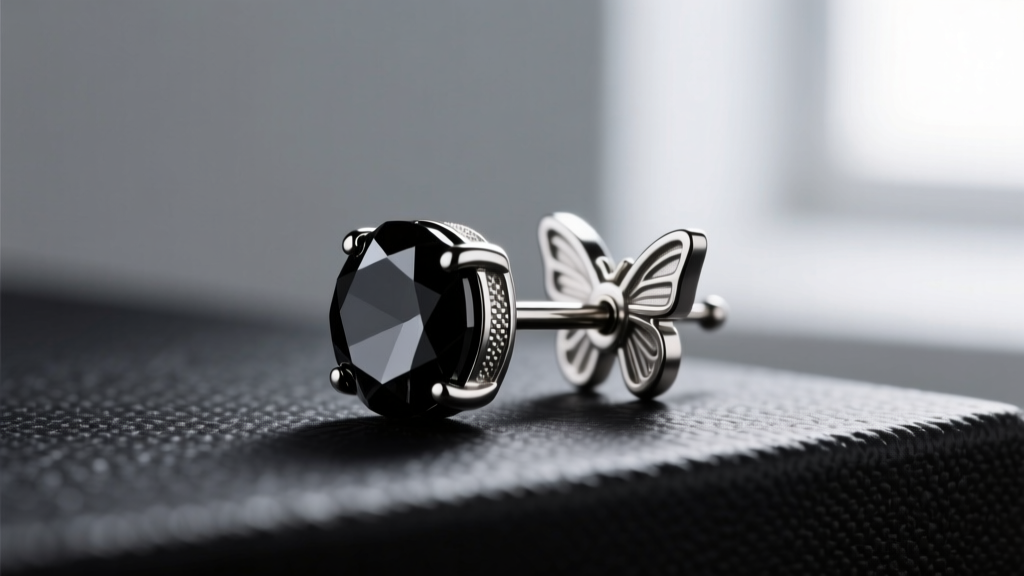
The most critical value factor often ignored by consumers is the earring post. A $60 pair of black crystal studs loses all value if the post is made of nickel-containing brass that triggers severe earlobe irritation. The Mayo Clinic notes that nickel is a leading cause of allergic contact dermatitis. For daily wear, demand 316L surgical steel or, ideally, ASTM F-136 implant-grade titanium.
Gauge Sizing and Structural Rigidity
Standard lobe piercings are typically 20G (0.81mm). However, black crystals are often cut in larger 6mm to 8mm sizes to maximize their dark visual impact. An 8mm stone on a flimsy 22G or 20G post will droop, causing the butterfly backing to press unevenly against the earlobe, leading to micro-tears and fistula irritation. Always opt for an 18G (1.02mm) or 16G (1.22mm) post for stones over 6mm to ensure structural rigidity and proper weight distribution.
Setting Styles: Prong vs. Bezel for Dark Stones
The way the black crystal is secured drastically impacts both the aesthetics and the longevity of the earring.
- Prong Settings (4 or 6 prongs): Allows maximum light to enter the pavilion of the stone. For faceted black CZ, this creates a 'crushed ice' effect that mimics black diamonds. However, prongs expose the girdle (edge) of the stone to chipping if dropped on hard surfaces.
- Bezel Settings: A metal rim completely encircles the girdle. This is the superior choice for natural onyx and glass crystals, as it protects the edges from impact damage. The trade-off is a slightly more modern, industrial look and reduced light return.
Failure Modes: Why Cheap Black Studs Turn Green or Cloud
Understanding how black earrings fail is the key to making a smart budget purchase. There are two primary failure modes in the sub-$30 market:
1. Foil-Backing Oxidation
Many budget 'black crystals' are actually clear or grey glass with a black metallic foil glued to the pavilion (back) to create depth and an opaque illusion. When sweat, humidity, and moisture bypass the prong setting, the foil oxidizes. The stone doesn't fall out, but it turns a sickly, cloudy grey, completely ruining the aesthetic. Solid-color CZ and natural onyx do not suffer from this failure mode because their color is consistent throughout the entire volume of the stone.
2. Epoxy Degradation and Flash-Plating Tarnish
Cheap studs often rely on industrial epoxy to glue the stone into a shallow cup setting rather than using proper metal prongs. Over 6 to 12 months, body heat and skin oils break down the epoxy bond. Simultaneously, the thin flash-plating (usually rhodium over brass) wears away, exposing the copper alloy beneath, which reacts with sulfur in the air and skin to create a green, irritating crust on the earlobe.
Final Verdict: How to Maximize Your Budget
Expert Styling Tip: Black studs are incredibly forgiving for round and oval face shapes. Because they absorb light rather than reflecting it outward like clear diamonds, they provide a grounding, slimming visual anchor to the earlobe without adding visual width to the face.
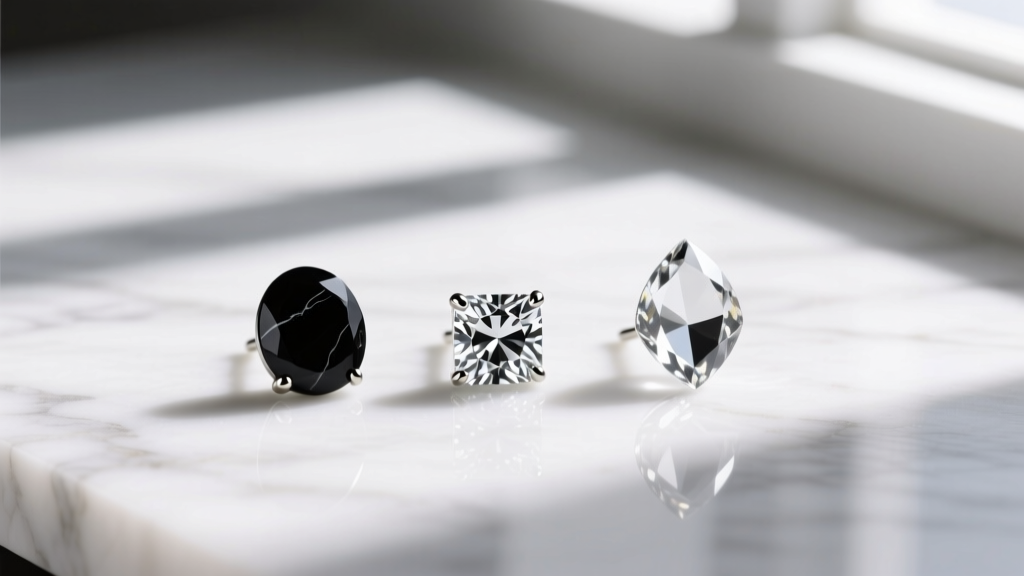
To maximize your budget in 2026, skip the 'designer' branded glass studs in the $80-$100 range. Instead, allocate $40-$60 toward a pair of AAAA-grade cubic zirconia or natural onyx studs set in rhodium-plated sterling silver or solid titanium. By prioritizing the metal grade (ASTM F-136 or 316L) and opting for solid-color stones over foil-backed glass, you guarantee a hypoallergenic, scratch-resistant, and eternally dark accessory that will outlast fast-fashion trends by decades.


