Black Gold Stud Earrings: 2026 Style & Metal Guide
Discover why black gold stud earrings dominate 2026 trends. We analyze PVD vs rhodium plating, gauge sizes, and styling tips for lobe and cartilage.

The 2026 Shift: Why Black Gold Stud Earrings Are Dominating
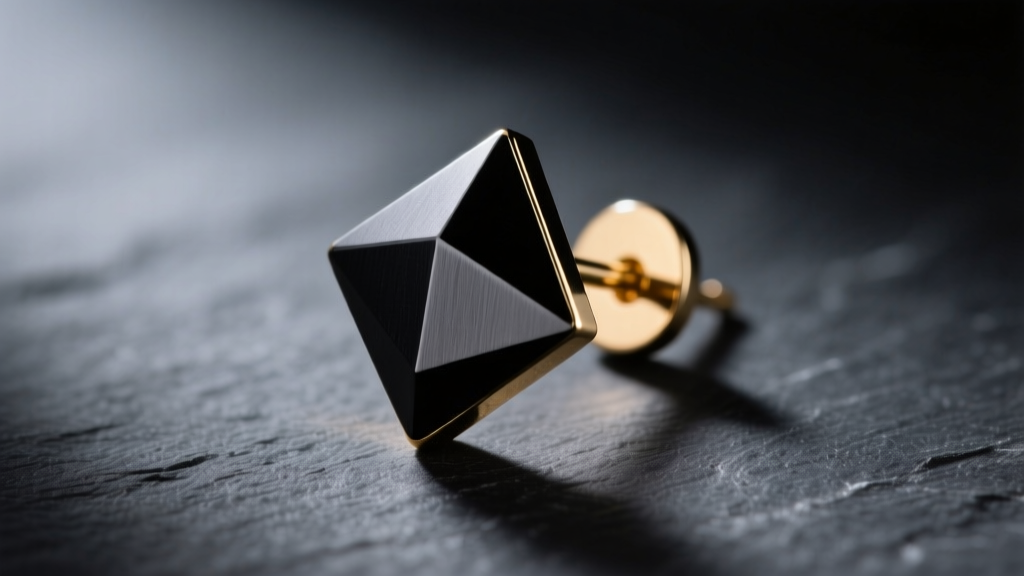
The jewelry landscape in 2026 has decisively pivoted from the hyper-polished "clean girl" yellow gold aesthetic toward a more nuanced, moody minimalism. At the forefront of this movement are black gold stud earrings. Unlike the heavy, overt gothic hardware of the early 2010s, today's black gold studs are defined by stealth-wealth sophistication, micro-pave diamond accents, and razor-sharp geometric silhouettes. They offer an edge that complements both tailored office wear and avant-garde evening styling, effectively bridging the gap between fine jewelry and alternative subcultures.
However, the term "black gold" is a metallurgical misnomer. Pure gold cannot naturally be black. The dark hue is achieved through advanced surface treatments or alloying techniques. Understanding the difference between these methods is critical for consumers and collectors, as it dictates the earring's longevity, hypoallergenic properties, and ultimate value.
Metallurgy Breakdown: How "Black Gold" is Actually Made
According to the Gemological Institute of America (GIA), gold's natural color is dictated by its alloy composition (e.g., copper for rose gold, nickel/palladium for white gold). To achieve a black finish, jewelers rely on surface modifications. The two primary methods dominating the 2026 market are Black Rhodium Electroplating and Physical Vapor Deposition (PVD).
PVD Coating vs. Electroplated Black Rhodium
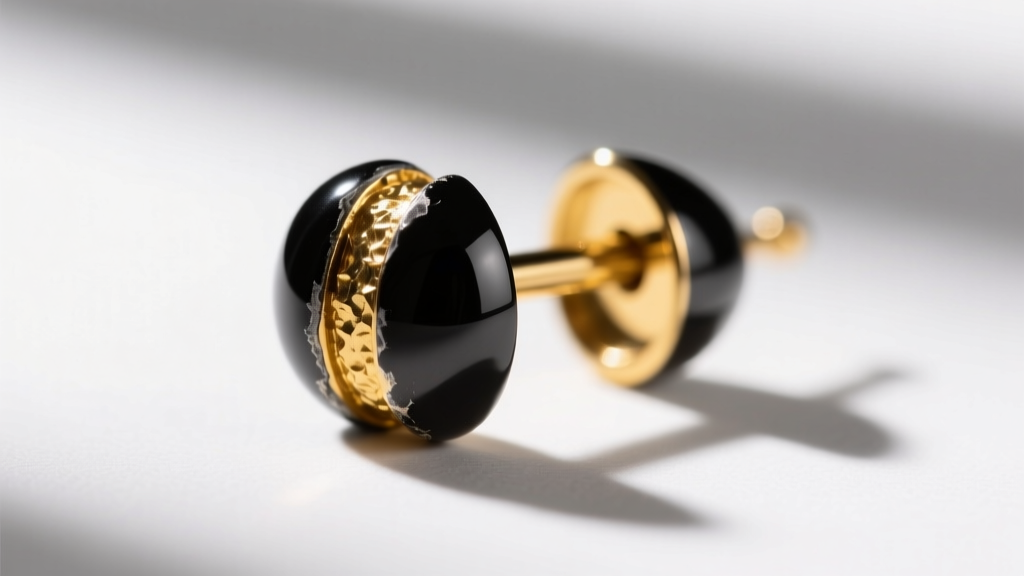
Electroplated black rhodium involves submerging a 14k or 18k gold base into a chemical bath containing rhodium (a platinum-group metal) and a darkening agent, typically ruthenium. While it yields a rich, deep black luster, the molecular bond is relatively weak. Friction from daily wear, especially on the earring post and backing, will eventually cause the plating to wear away, revealing the yellow or white gold substrate beneath.
Conversely, Physical Vapor Deposition (PVD) is a vacuum-chamber process where titanium or zirconium nitride is vaporized and bonded to the gold substrate at a molecular level. As noted in materials science research via ScienceDirect, PVD coatings are exponentially harder, more scratch-resistant, and impervious to the acidic pH of human sweat. For everyday black gold studs, PVD is the undisputed industry standard in 2026.
Comparative Analysis: Plating Methods
| Method | Durability (1-10) | Base Metal Requirement | Wear & Tear Profile | Ideal Application |
|---|---|---|---|---|
| Black Rhodium | 4 | 14k or 18k Gold | Flakes off at high-friction points; requires re-plating every 1-2 years. | Occasion wear, large statement studs. |
| PVD Coating | 9 | 18k Gold or Titanium | Highly scratch-resistant; may slowly fade to a dark gunmetal over a decade. | Everyday wear, cartilage, sleepers. |
| Oxidized/Blackened | 2 | Sterling Silver or Copper | Patina rubs off quickly; can cause skin discoloration. | Budget fashion jewelry only. |
Gauge Sizes & Hardware: Lobe vs. Cartilage Applications
The structural integrity of black gold studs relies heavily on the hardware, particularly when transitioning from standard lobe piercings to cartilage placements like the helix or tragus. The Association of Professional Piercers (APP) strictly recommends specific gauges and backing styles to prevent embedding, migration, and hair snagging.
Standard Lobe Placements (20G and 18G)
For standard earlobe piercings, 20-gauge (0.81mm) and 18-gauge (1.02mm) posts are the norm. If you are purchasing black rhodium plated studs, opt for a butterfly friction back with a smooth, rounded profile to minimize friction against the post, which accelerates plating loss. For PVD-coated studs, standard friction backs are perfectly safe, as the coating will not degrade from the metal-on-metal contact.
Cartilage & Helix Placements (16G and Flat-Backs)
Cartilage piercings require thicker, more stable hardware. A 16-gauge (1.29mm) post is the standard for helix and flat piercings. More importantly, traditional butterfly backs are a liability in cartilage; they trap bacteria, press uncomfortably against the skull when sleeping, and easily tangle in hair. The 2026 standard is the threadless (push-pin) or internally threaded flat-back labret. These feature a flat disc that sits flush against the back of the ear, providing superior comfort and security. Finding genuine 18k PVD black gold in threadless labret configurations is a hallmark of high-end, specialized piercing studios.

Styling Frameworks: Matching Studs to Face Shapes
Because black gold absorbs light rather than reflecting it, it creates a visual "weight" that differs significantly from bright metals. Use these structural guidelines to balance your facial geometry:
- Round Faces: Opt for angular, architectural black gold studs. Hexagons, sharp squares, or elongated rectangular baguette diamonds set in black gold add necessary structure and elongate the jawline.
- Square Faces: Soften a strong jaw with rounded silhouettes. A black gold bezel-set cabochon onyx or a circular halo of black diamonds will draw the eye inward and soften harsh angles.
- Heart-Shaped Faces: Balance a narrower chin with bottom-heavy designs. Teardrop-shaped black gold studs or inverted triangle motifs add visual weight to the lower half of the face.
- Oval Faces: The universal canvas. You can pull off ultra-minimalist micro-studs (3mm) or avant-garde asymmetrical black gold ear cuffs paired with a single statement stud.
Real-World Failure Modes & Maintenance
Even the finest black gold earrings are subject to environmental stressors. Understanding failure modes allows you to preemptively protect your investment.
- Galvanic Corrosion: If black rhodium plating wears through to a 14k gold alloy containing nickel or copper, exposure to sweat can create a micro-galvanic cell, leading to green skin discoloration and rapid metal degradation. PVD coatings prevent this entirely by acting as an inert barrier.
- Chemical Stripping: Chlorine in swimming pools and harsh sulfates in anti-dandruff shampoos will strip black rhodium in a matter of hours. Always remove plated black gold studs before swimming or showering.
- Ultrasonic Damage: Never clean black gold (especially rhodium-plated) in an ultrasonic jewelry cleaner. The high-frequency cavitation will shatter the microscopic plating layers. Instead, use a lint-free microfiber cloth and a mild, phosphate-free dish soap solution.
Price Tiers & Brand Benchmarks for 2026
The market for black gold stud earrings is highly stratified. Here is what you should expect to pay based on metallurgy and brand positioning:
- Fashion / Entry-Level ($20 - $80): Typically sterling silver or brass base metals with black rhodium or oxidized finishes. Expect rapid wear and potential allergic reactions. Brands like Mejuri or Missoma occasionally offer seasonal blackened silver pieces in this tier.
- Mid-Tier Fine ($150 - $400): 14k solid gold with black rhodium plating, often featuring small black diamond or onyx accents. Excellent for occasion wear, but budget for re-plating every 18 months. Brands like Maria Tasha or Local Eclectic frequently utilize this method for their edgier collections.
- Investment / High-End ($500 - $1,500+): 18k solid gold utilizing proprietary PVD coatings or specialized blackened gold alloys (like black gold achieved through laser-induced nano-structuring). These pieces are designed for generational wear and daily cartilage use. Look to specialized piercing jewelers like BVLA or Maria Black for premium threadless hardware in this category.
"The demand for black gold in 2026 isn't just a trend; it's a rejection of traditional, flashy luxury. Clients want jewelry that feels personal, slightly subversive, and technically superior. PVD-coated 18k gold is the only way we can deliver that dark aesthetic without compromising the integrity of the fine jewelry."
— Master Bench Jeweler, 2026 Trend Report
Final Verdict: Are They Worth the Investment?
Black gold stud earrings are an essential component of the modern jewelry wardrobe, offering a striking alternative to traditional white and yellow metals. However, the purchasing decision must be driven by metallurgical reality rather than marketing buzzwords. If you are buying for occasional, high-impact styling, black rhodium over 14k gold is a beautiful, cost-effective choice. But if you intend to wear your studs daily, sleep in them, or place them in cartilage piercings, investing in 18k gold with a PVD coating is non-negotiable. By prioritizing advanced surface treatments and proper gauge sizing, your black gold studs will maintain their dark, enigmatic allure for decades to come.


