The Anatomy of Black Heart Earrings: Metals, Gauges & Care
Discover the metallurgy, gemstone hardness, and gauge sizing for black heart earrings. An expert guide to materials, settings, and long-term care.

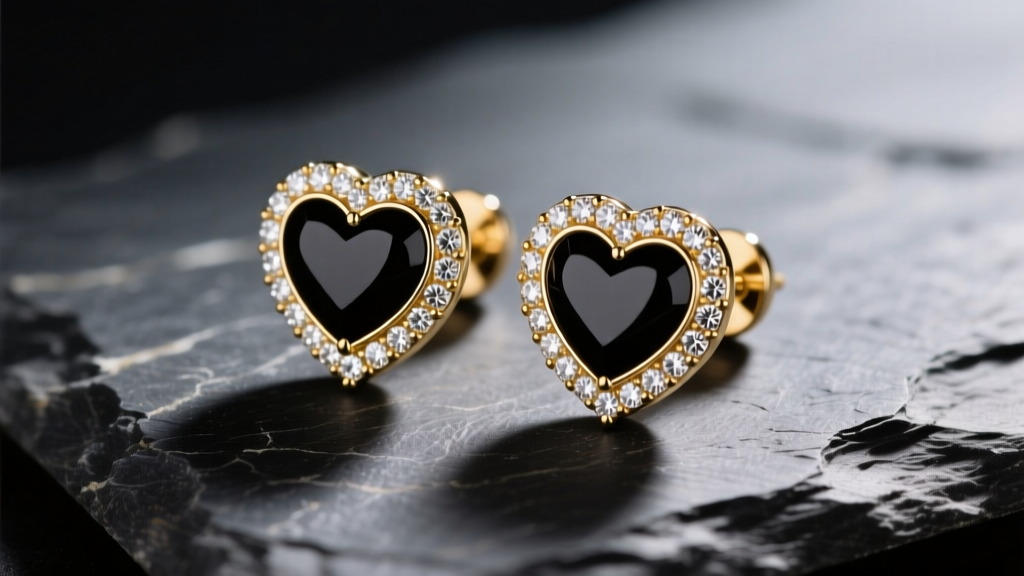
Black heart earrings occupy a unique space in modern jewelry design, bridging the gap between romantic symbolism and alternative, gothic, or minimalist aesthetics. However, from a metallurgical and gemological standpoint, achieving a true, lasting black finish in fine jewelry presents distinct technical challenges. Whether you are sourcing a pair of 14k black gold studs for a standard lobe piercing or a 16-gauge titanium clicker with black enamel inlays for a helix placement, understanding the material science behind these pieces is critical for longevity, biocompatibility, and structural integrity. This expert deep dive explores the exact alloys, gauge specifications, and structural vulnerabilities inherent to black heart earrings.
The Metallurgy of Black Heart Earrings: Plating vs. Solid Alloys
Contrary to popular belief, "black gold" is not a naturally occurring metal. The deep, obsidian-like finish seen in high-end black heart earrings is typically achieved through one of three metallurgical processes, each with varying degrees of durability:
- Black Rhodium Plating: This is the industry standard for luxury black jewelry. Rhodium is electroplated onto a base of white or yellow gold, mixed with a blackening agent (often ruthenium or specific organic metallic salts). For daily-wear earrings, the plating thickness must be between 0.75 and 1.0 microns. Anything less will wear through to the underlying gold within months.
- Oxidized Sterling Silver: A more accessible option, this involves treating 925 sterling silver with liver of sulfur (potassium sulfide) to create a black patina. While the black oxidation is permanent in the crevices of a design, the high-polish raised areas will naturally wear back to bright silver over time, creating an antique contrast.
- Physical Vapor Deposition (PVD) Coating: Often used on titanium or stainless steel huggies and hoops, PVD involves vaporizing a material (like titanium nitride) in a vacuum chamber to bond a microscopic, ultra-hard black layer to the metal. PVD is vastly superior to electroplating for cartilage jewelry, as it is highly resistant to scratching and sweat corrosion.
Hypoallergenic Considerations and Nickel Release
When selecting black heart earrings for sensitive or newly healed piercings, the base metal beneath the black finish is paramount. Many commercial black rhodium-plated earrings use nickel-alloyed white gold as a base. As the black rhodium inevitably wears down at the friction points (where the post meets the earlobe), nickel ions can leach into the skin, triggering contact dermatitis. For guaranteed biocompatibility, experts recommend seeking out black PVD-coated ASTM F-136 implant-grade titanium or solid 14k/18k nickel-free yellow gold that has been black-rhodium plated. The Association of Professional Piercers (APP) strictly advises against wearing plated jewelry in unhealed piercings due to the risk of microscopic flaking and subsequent infection (safepiercing.org).
Gemstone and Inlay Durability: Onyx, Spinel, and Enamel
The "black" in black heart earrings is frequently achieved through gemstone inlays or vitreous enamel. Understanding the Mohs hardness scale is essential for predicting how these materials will survive daily wear.
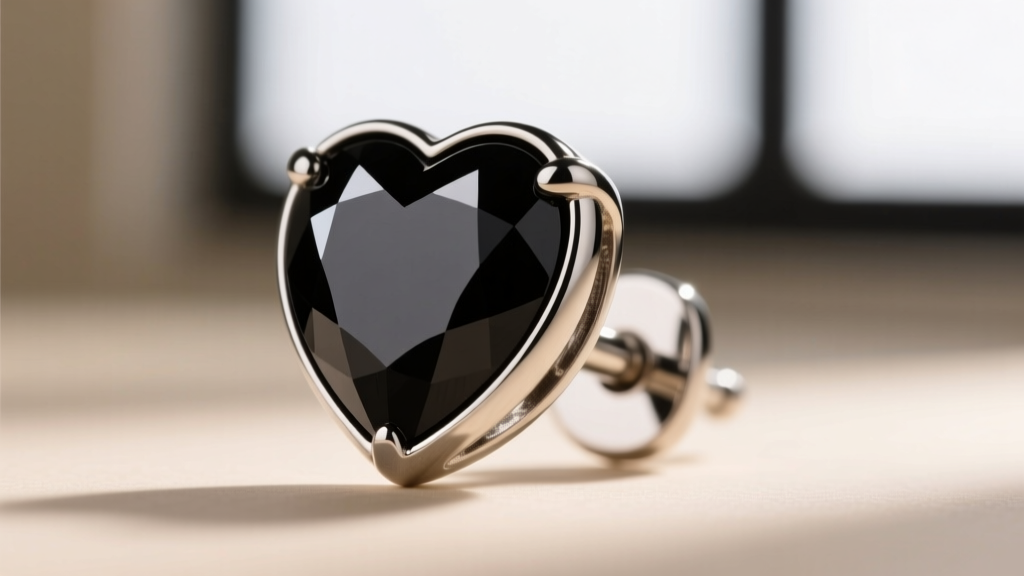
Black Onyx (Mohs 7): Most black onyx on the market is actually gray chalcedony that has been dyed and heat-treated. While it takes a brilliant, glassy polish, its cryptocrystalline structure makes it susceptible to chipping if dropped on a hard surface. According to the Gemological Institute of America (GIA), dyed agates can also fade if exposed to prolonged, intense UV light or harsh chemical cleaners (gia.edu).
Black Spinel (Mohs 8): A superior, albeit more expensive, alternative to onyx. Natural black spinel is incredibly durable, lacks cleavage planes (meaning it resists fracturing upon impact), and maintains its deep black color without the need for artificial dyes. For a heart-shaped stud meant for everyday lobe wear, spinel is the optimal gemological choice.
Vitreous Enamel (Mohs 5.5 - 6.5): Enamel is essentially fused glass powder. While it offers a rich, opaque black that metals cannot replicate, it is highly vulnerable to thermal shock and blunt force. Enamel inlays in heart-shaped huggies should be reserved for secondary or tertiary piercings that are less likely to be snagged on clothing or hair.
Gauge Sizing and Piercing Placement Matrix
The structural requirements of black heart earrings change drastically depending on the piercing placement. Cartilage tissue requires thicker, more rigid jewelry to prevent the "cheese-cutter effect," while earlobes can accommodate delicate, lightweight studs. Below is the technical matrix for pairing black heart styles with specific piercings:
| Piercing Location | Standard Gauge (AWG / mm) | Recommended Post/Hoop Diameter | Ideal Black Heart Style |
|---|---|---|---|
| Standard Lobe | 20G (0.81mm) or 18G (1.0mm) | 6mm - 8mm post length | Black Rhodium Heart Studs |
| Upper Lobe | 18G (1.0mm) | 6mm - 7mm post length | Small Black Onyx Heart Studs |
| Helix / Cartilage | 16G (1.29mm) | 6mm - 8mm post length | PVD Titanium Heart Flat-Back |
| Tragus | 16G (1.29mm) | 5mm - 6mm post length | Micro Black Enamel Heart Stud |
| Conch | 14G (1.6mm) or 16G (1.29mm) | 8mm - 10mm post length | Large Black Spinel Heart Labret |
Structural Vulnerabilities in Heart-Cut Settings
From a bench jeweler's perspective, the heart shape is notoriously difficult to secure. The geometry features two high-stress vulnerability points: the cleft (the top center dip) and the terminus (the bottom point).
"Prong settings on heart-shaped stones frequently fail at the cleft due to the acute angle required to bend the metal over the stone. For daily-wear black heart earrings, a full bezel or a custom V-prong at the bottom terminus is mandatory to prevent stone loss."
If you are purchasing black onyx or spinel heart earrings, inspect the setting under a loupe. The metal rim of the bezel should sit perfectly flush against the gemstone's girdle. Any gaps will allow sweat, lotions, and debris to accumulate, eventually degrading the adhesive backing that many commercial onyx stones rely on for stability.

Maintenance Protocols and Replating Realities
Caring for black heart earrings requires abandoning traditional jewelry cleaning methods. Ultrasonic cleaners, which use high-frequency sound waves to dislodge dirt, will shatter vitreous enamel inlays and can cause micro-fractures in dyed black onyx. Furthermore, the intense heat and chemical baths used in ultrasonic cleaning will strip black rhodium plating down to the base metal in a single cycle.
The Correct Cleaning Protocol:
- Mix a few drops of pH-neutral dish soap into a bowl of lukewarm (not hot) distilled water.
- Submerge the earrings for no more than three minutes.
- Gently agitate the water; do not scrub the black surfaces with a brush, as this will introduce micro-scratches into the rhodium or enamel.
- Rinse with distilled water and pat dry with a lint-free microfiber cloth.
Finally, consumers must factor in the cost of maintenance. Black rhodium is a sacrificial finish. Depending on the wearer's skin chemistry (specifically the pH and salt content of their sweat), black rhodium-plated heart studs may require replating every 12 to 24 months. Expect to pay between $60 and $120 per pair for professional stripping and replating by a master jeweler to maintain the pristine, gothic aesthetic of the earrings.


