Black Onyx Hoop Earrings: 2026 Value & Budget Guide
Discover the true value of black onyx hoop earrings. Our 2026 budget guide breaks down metal grades, stone authenticity, and pricing tiers.

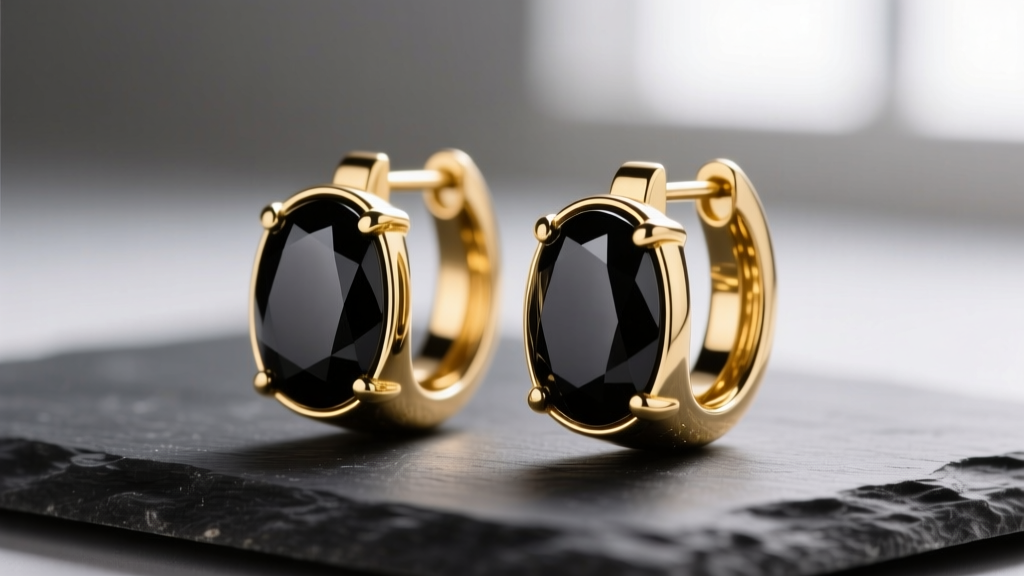
When building a versatile, timeless jewelry wardrobe, black onyx hoop earrings represent a masterclass in contrast, elegance, and everyday wearability. The deep, light-absorbing black of the stone paired with the reflective geometry of a metal hoop creates a striking visual anchor for any face shape. However, as we navigate the jewelry market in 2026, the pricing for these seemingly simple accessories is notoriously opaque. You will find black onyx hoops priced anywhere from $18 in fast-fashion bins to over $850 in luxury boutiques. How do you separate genuine, lasting value from inflated brand markups? As a buyer, understanding the gemological realities, metal grading standards, and structural engineering of hoop earrings is essential to making a financially sound investment. This guide dissects the true cost of black onyx hoops, equipping you with the expert knowledge needed to assess value accurately.
The Gemstone Reality: Natural Onyx vs. Dyed Agate
To accurately assess the budget and value of black onyx hoop earrings, we must first address the stone itself. True, naturally occurring black onyx is incredibly rare and commands a premium price that is rarely reflected in mainstream commercial jewelry. The vast majority of "black onyx" sold globally is actually gray or white chalcedony (a type of agate) that has been treated with a sugar and acid solution, then heated to carbonize the sugar, resulting in a permanent, deep black color.
According to the Gemological Institute of America (GIA), this dyeing process is an accepted, stable, and permanent industry practice. It is not a scam, but it fundamentally alters the value proposition. You should never pay a "rare gemstone" premium for black onyx. The value of the stone in your earrings lies in the quality of the cut, the polish, and the uniformity of the black color, rather than its natural rarity. When evaluating budget options, look for stones with a glassy luster and no visible gray banding or chalky patches, which indicate poor dye penetration or low-quality base agate.
Metal Matters: Evaluating the Hoop Foundation
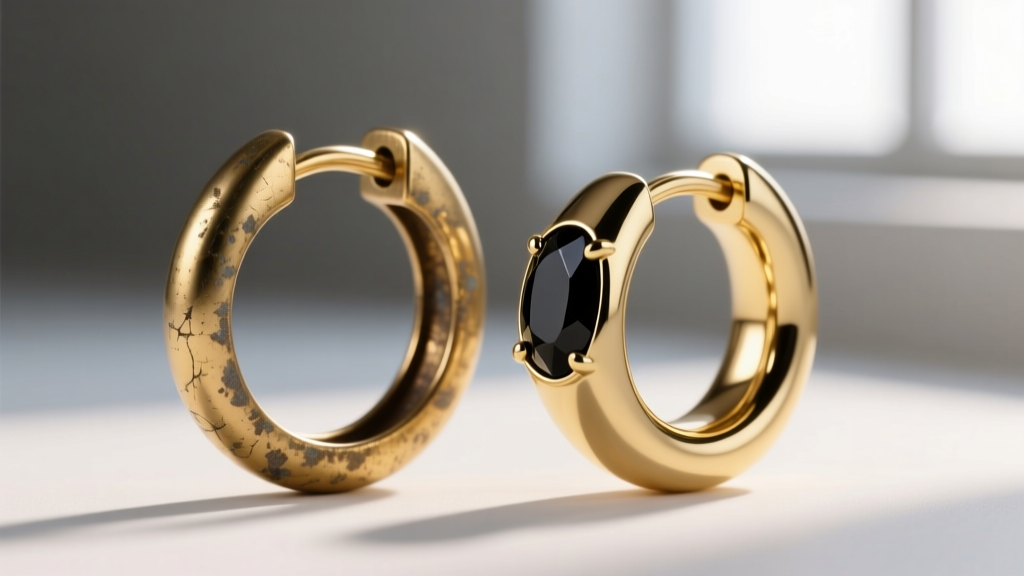
The metal foundation dictates 80% of the earring's longevity and price. Budget earrings often disguise base metals with microscopic layers of gold, leading to rapid tarnishing and skin irritation. Understanding the Federal Trade Commission (FTC) Jewelry Guides is critical for value assessment, particularly regarding gold vermeil versus standard gold plating. By FTC standards, gold vermeil must have a sterling silver base and a gold layer of at least 2.5 microns thick. Standard "gold plated" jewelry can use a brass or copper base with a gold layer as thin as 0.5 microns, which will wear off within months of daily friction.
| Metal Category | Base Material | Gold Thickness | Expected Lifespan | Fair Price Range |
|---|---|---|---|---|
| Flash Plated | Brass / Copper | < 0.5 microns | 3 - 6 Months | $15 - $35 |
| Gold Vermeil | Sterling Silver (925) | 2.5+ microns | 2 - 5 Years | $65 - $140 |
| Solid 14k Gold | 14k Gold Alloy | Solid | Lifetime / Heirloom | $250 - $600+ |
Construction & Gauge: Where Budget Earrings Fail
A beautiful stone and thick gold plating mean nothing if the earring's structural engineering is flawed. Hoops are subject to constant mechanical stress—pulling from hair, snagging on clothing, and the repetitive tension of opening and closing the clasp.
Wire Gauge and Tensile Strength
The thickness of the hoop wire, measured in gauges, is a primary indicator of manufacturing quality. High-quality black onyx hoop earrings typically utilize an 18-gauge (1.02mm) or 16-gauge (1.29mm) wire for the main body or the post. Budget manufacturers frequently cut costs by using 20-gauge (0.81mm) or even 22-gauge wire. While 20-gauge wire is acceptable for lightweight studs, it is entirely inadequate for medium or large hoops. A 20-gauge hoop will easily bend out of its circular shape when pulled, eventually causing metal fatigue and snapping at the solder joints. If a product listing does not specify the gauge, and the hoops feel suspiciously lightweight, assume they are 20-gauge or thinner and adjust your budget expectations accordingly.
The Hinge and Clasp Vulnerability
For huggies and hinged hoops, the clasp mechanism is the most common point of failure. Budget earrings often use cast hinges rather than soldered, machined hinges. Cast hinges are brittle and prone to snapping under lateral pressure. Furthermore, the click-shut closure on cheap hoops often fails to align perfectly, leaving a sharp gap that scratches the earlobe or catches on fine knits. When assessing value in the mid-tier ($50–$150), insist on hinged snap closures with a distinct, secure click and a seamless gap when closed.
Stone Setting Techniques: Inlay vs. Bezel
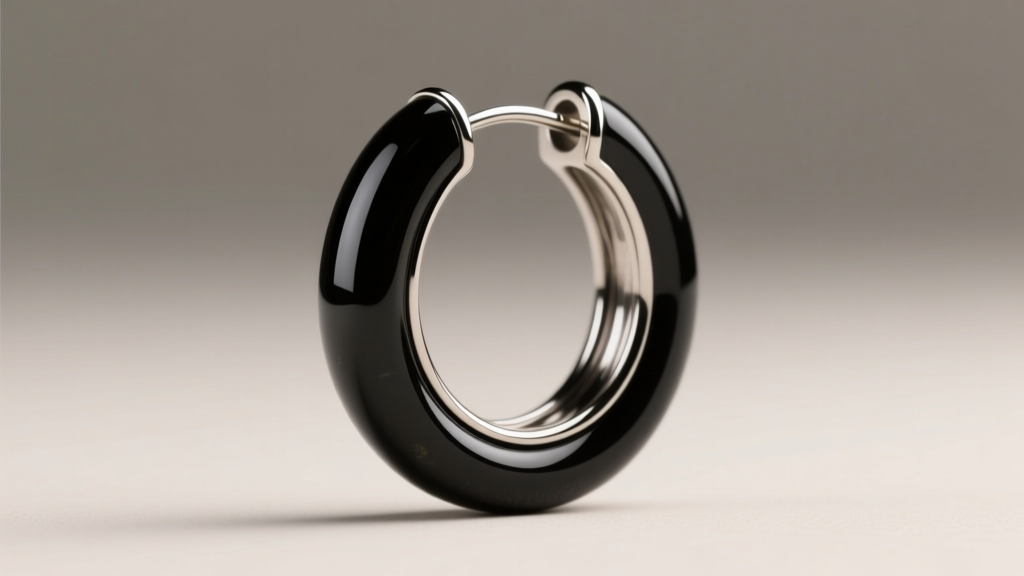
How the onyx is secured to the metal drastically impacts both the aesthetic and the durability of the earring.
- Flush Inlay: Common in modern, minimalist huggies. The onyx is cut to perfectly fit a channel in the metal. While sleek, budget inlays often rely on heavy amounts of jeweler's epoxy rather than precise friction fitting. Over time, exposure to lotions and oils degrades the glue, causing the stone to pop out.
- Bezel Setting: A rim of metal is pushed over the girdle of the onyx cabochon. This is the superior, more expensive method. A well-crafted bezel requires skilled labor to ensure the metal sits flush against the stone without chipping the fragile onyx edges. If you are investing over $150, demand a mechanical bezel setting over glued inlays.
2026 Pricing Tiers: What You Should Actually Pay
To synthesize these material and construction factors, we can categorize the market into three distinct value tiers. Use this framework to benchmark any black onyx hoop earrings you consider purchasing.
Tier 1: The Fashion Budget (Under $45)
What you get: Brass or copper base, flash gold plating (under 0.5 microns), 20-gauge wire, and glued-in dyed agate.
Value Assessment: Acceptable only for occasional, trend-driven wear. Do not expect these to survive a year of regular use. The primary risk is contact dermatitis from exposed base metals once the plating wears through.
Tier 2: The Accessible Luxury Sweet Spot ($65 – $160)
What you get: 925 Sterling silver base, 2.5-micron 14k or 18k gold vermeil, 18-gauge wire, and precision-cut inlaid or bezel-set onyx. Brands operating in this space often use CAD-designed molds for consistent hinge tension.
Value Assessment: This is where the highest cost-per-wear value exists. You are paying for structural integrity and skin-safe metals. With proper care—specifically, removing them before showering to preserve the vermeil—these hoops will last for years.
Tier 3: The Heirloom Investment ($250 – $700+)
What you get: Solid 14k or 18k gold (no plating to wear off), 16-gauge or 18-gauge wire, hand-soldered hinges, and premium bezel settings.
Value Assessment: You are paying for the intrinsic melt value of the gold and the artisan labor required for hand-finishing. These are buy-it-for-life pieces that can be passed down or easily repaired by any bench jeweler if damaged.
Maintenance Costs and Longevity
A crucial, often overlooked aspect of budget assessment is the long-term maintenance cost. Black onyx, despite its Mohs hardness of 6.5 to 7, can be brittle. Furthermore, the dyeing process can leave microscopic surface fractures. Budget jewelry guides often recommend ultrasonic cleaners for all jewelry, but placing dyed onyx in an ultrasonic bath can cause the high-frequency vibrations to shatter the stone or strip its polish. To protect your investment, clean your black onyx hoops exclusively with a soft, damp microfiber cloth and mild dish soap. Factor in the reality that vermeil hoops may eventually require professional re-plating (typically costing $40–$80), whereas solid gold hoops require zero structural maintenance beyond occasional polishing.
"True value in jewelry is not defined by the lowest initial price tag, but by the cost-per-wear over the item's functional lifespan. A $120 pair of well-constructed gold vermeil hoops worn 300 times a year for three years offers vastly superior financial and aesthetic value compared to a $25 pair that tarnishes and breaks within a single season."
Navigating the market for black onyx hoop earrings requires looking past the initial visual appeal and scrutinizing the metallurgy and gemology beneath the surface. By understanding the accepted practices of agate dyeing, demanding FTC-compliant gold vermeil, and verifying the structural gauge of the hoop wire, you can confidently allocate your jewelry budget. Whether you opt for a reliable mid-tier vermeil pair for daily office wear or invest in solid 14k gold for a lifetime staple, you now possess the expert criteria to ensure every dollar spent translates into lasting style and durability.


