Blade Honkai Star Rail Earrings: 2026 Material & Craft Guide
Discover the metallurgy, weight limits, and enamel techniques behind premium Blade Honkai Star Rail earrings for safe, long-lasting cosplay wear.

The Intersection of Cosplay Aesthetics and Jewelry Engineering
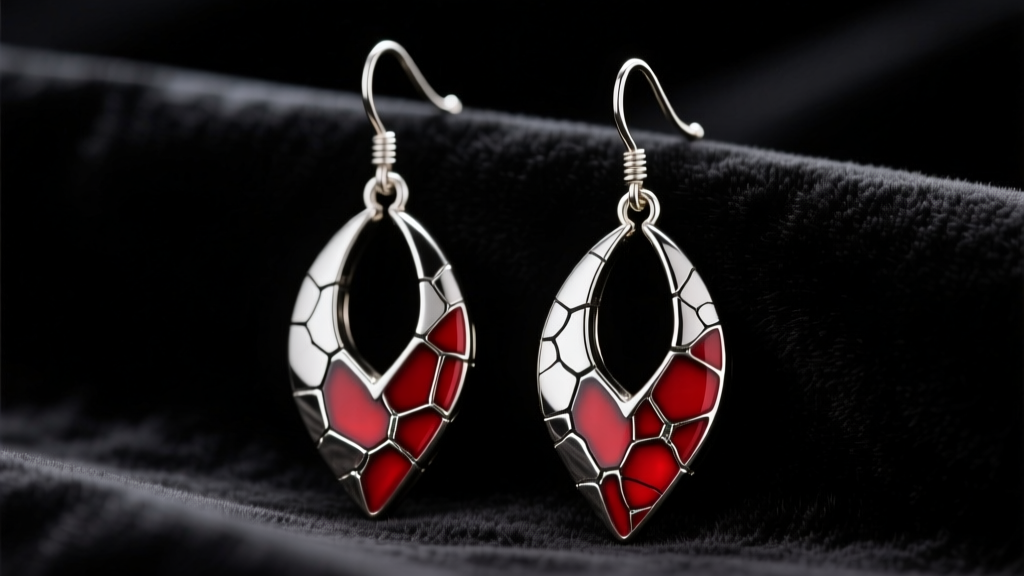
When fans and cosplayers search for custom blade honaki star rail earrings (a common internet misspelling of the official Honkai: Star Rail IP), they are usually looking for accessories that capture the Mara-struck swordsmith’s brooding, shattered aesthetic. Blade’s design language is defined by jagged edges, obsidian blacks, crimson reds, and fragmented sword motifs. However, translating these aggressive, asymmetrical designs into wearable, skin-safe jewelry requires a deep understanding of metallurgy, weight distribution, and polymer chemistry.
As a senior jewelry analyst, I have evaluated dozens of character-inspired dangles and ear cuffs. The gap between a cheap convention-aisle trinket and a premium, convention-ready piece of jewelry lies in the technical execution. This guide deconstructs the material science, structural integrity, and ergonomic upgrades necessary for high-end Blade Honkai Star Rail earrings in 2026.
Deconstructing the Blade Aesthetic: Design & Motifs
Blade’s visual identity relies on contrast and destruction. Authentic character jewelry must replicate this without compromising structural integrity. The most common design elements include:
- Shattered Glass/Cracked Motifs: Achieved through hand-carved master molds or CAD-designed fracture lines, later filled with translucent crimson resin.
- Asymmetrical Dangles: Mimicking his broken sword, often requiring counter-weighting to prevent the earring from pulling the lobe forward.
- Chain and Link Accents: Representing his restraints, which introduce kinetic movement but add significant shear stress to the earring post.
The primary engineering challenge here is edge finishing. Jagged motifs meant to look like shattered steel must be meticulously tumble-polished and hand-filed. Poorly finished zinc alloy castings will leave micro-abrasions on the jawline and neck during active convention wear.
Metallurgy & Base Alloys: What Touches Your Skin
The base metal of your earrings dictates both the longevity of the piece and your skin’s biological response. Many mass-produced cosplay accessories use Zamak (a zinc-aluminum alloy) due to its low melting point and cheap casting costs. However, Zamak is highly porous, prone to galvanic corrosion when exposed to sweat, and frequently contains trace nickel that triggers contact dermatitis.
According to the American Academy of Dermatology, nickel allergy is one of the most common causes of allergic contact dermatitis, affecting up to 18% of adults. For heavy dangle earrings that maintain constant friction against the piercing tract, upgrading the base metal is non-negotiable.
Base Metal Comparison Chart
| Material | Composition | Vickers Hardness (HV) | Nickel Risk | Best Application |
|---|---|---|---|---|
| Zamak 3 | Zinc, Aluminum, Copper | ~85 HV | High (Trace) | Display props, short-term wear |
| 316L Surgical Steel | Iron, Chromium, Nickel, Moly | ~150 HV | Low (Trapped) | Standard cosplay dangles, posts |
| ASTM F136 Titanium | Ti, Al, V (Grade 5) | ~330 HV | Zero | Fresh piercings, sensitive lobes |
| Brass (Raw) | Copper, Zinc | ~60 HV | None | Avoid (causes green skin oxidation) |
For premium Blade earrings, 316L Surgical Steel is the industry standard for the structural framework and posts. The Association of Professional Piercers (APP) notes that while 316L contains nickel, it is trapped in the alloy's crystalline structure and generally safe for healed piercings. For those with severe hypersensitivity, seeking out creators who cast the main body in ASTM F136 Titanium is the ultimate, albeit expensive, solution.
Enamel Techniques & Colorfastness
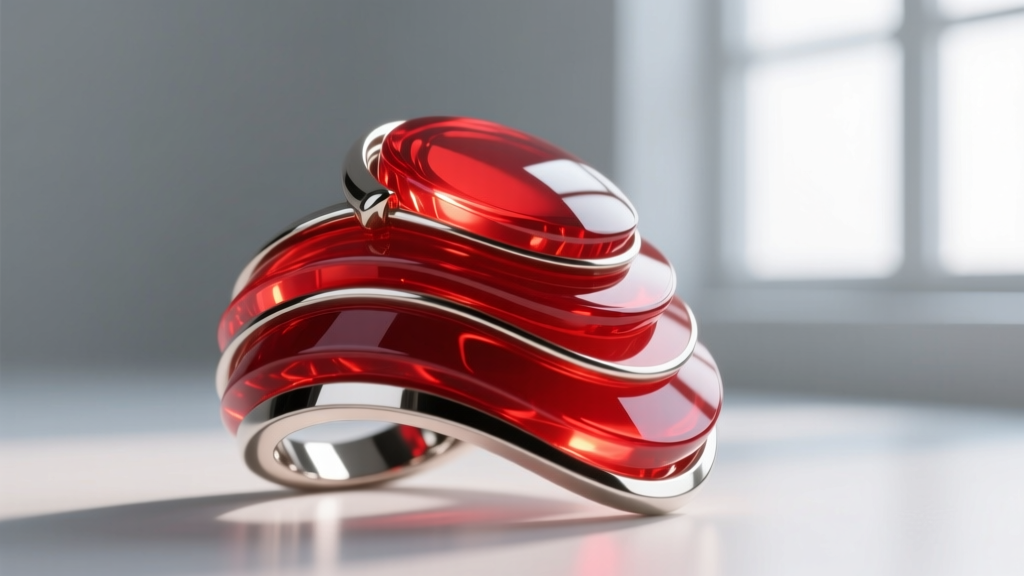
Blade’s signature crimson accents are typically achieved through enameling. There is a massive technical divide between soft enamel and hard enamel (epoxy/resin) in character jewelry.
Soft Enamel vs. Hard Epoxy Resin
Soft Enamel: The colored enamel sits recessed below the metal lines. While it provides excellent tactile contrast, the exposed metal ridges can catch on hair and cosplay wigs. Furthermore, traditional soft enamel paints can chip upon impact.
Hard Epoxy Resin: The resin is poured over the metal base and polished flat. For Blade’s shattered sword motifs, a high-domed, translucent red epoxy is vastly superior. It mimics the look of shattered ruby glass and protects the underlying metal.
Expert Warning on UV Degradation: Red pigments in standard epoxy are notoriously susceptible to UV photodegradation, turning yellow or brown after a few months of sun exposure. High-end jewelry makers in 2026 use resins formulated with Hindered Amine Light Stabilizers (HALS) to ensure the crimson remains vibrant through outdoor photoshoots and summer conventions.
Weight Distribution & The 15-Gram Rule
Dangle earrings inspired by swords and chains inherently suffer from weight issues. A standard human earlobe can comfortably support roughly 10 to 15 grams of static weight before experiencing tissue fatigue. When you introduce kinetic movement (walking, turning your head), the dynamic shear stress on the piercing tract multiplies.
If a pair of Blade sword dangles exceeds 15 grams per ear, you risk gradual lobe stretching, migration, or catastrophic tearing of the fistula (the piercing hole).
Engineering Solutions for Heavy Dangles
- Hollow-Back Casting: Instead of a solid block of alloy, the back of the sword motif is milled out via CNC or cast with a hollow cavity, reducing weight by up to 40% without altering the front-facing aesthetic.
- Silicone Support Discs: Also known as 'Ouchless pads', these 12mm silicone discs sit between the earring post and the butterfly backing. They distribute the shear force across a wider surface area of the lobe, effectively neutralizing the cutting effect of heavy dangles.
- Ear Cuff Integration: For massive, multi-piece ear arrangements, designers are now linking the heavy lower dangle to an upper cartilage cuff via a delicate chain. This transfers up to 60% of the structural load to the thicker cartilage of the helix, relieving the lobe entirely.
Sizing, Gauges, and Hardware Upgrades
The hardware connecting the earring to your body is the most critical point of failure. Mass-market cosplay earrings frequently use 22-gauge (0.64mm) brass posts. Under the weight of a metal sword dangle, a 22G post will bend, warp, and eventually snap, potentially leaving a jagged edge inside your piercing tract.
The Expert Standard: Always verify the post gauge. For heavy character dangles, the post should be a minimum of 18-gauge (1.0mm), ideally machined from 316L steel. If the design is exceptionally heavy, a 16-gauge (1.2mm) post provides the necessary rigidity. Note that 16G posts may require slight, gentle stretching of a standard lobe piercing (usually 20G or 18G), so they should be inserted carefully with a water-based lubricant.
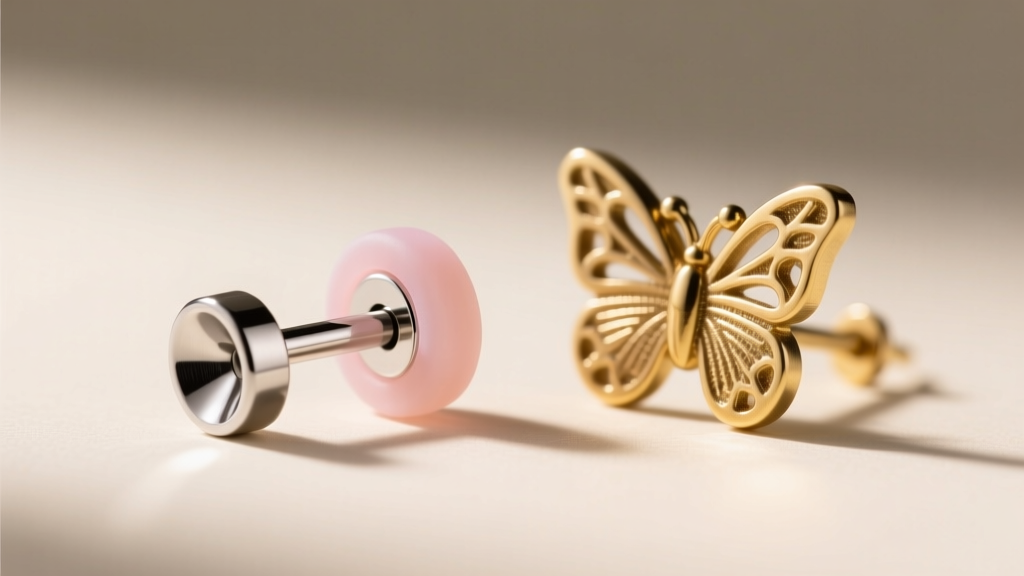
Furthermore, discard standard friction-back 'butterfly' clasps. They easily slip off when snagged on high-collared cosplay jackets. Upgrade to flat-back labret studs with internally threaded or threadless (push-pin) ends. Threadless titanium ends use tension to stay seated, making them virtually impossible to dislodge accidentally during a crowded convention floor walk.
Maintenance: Preventing Tarnish and Resin Cracking
To ensure your Blade Honkai Star Rail earrings survive multiple convention seasons, proper maintenance is required. Never use isopropyl alcohol or harsh chemical solvents to clean the crimson epoxy elements; alcohol causes micro-fractures in cured resin, leading to cloudiness and eventual cracking. Instead, use a mild, pH-neutral dish soap and a microfiber cloth.
For the gunmetal or oxidized steel components, avoid silver polish, which will strip the intentional dark patina used to age the 'shattered sword' look. A simple wipe-down with a dry, lint-free cloth after exposure to sweat is sufficient to prevent galvanic corrosion and keep the dark aesthetic intact.
Pro-Tip for Cosplayers: Store your dangle earrings in a rigid, compartmentalized tackle box rather than a soft jewelry pouch. The jagged, asymmetrical motifs of Blade's design will easily tangle and bend when compressed against other accessories in a soft bag.
Final Verdict on Character Jewelry
Investing in character-specific jewelry is about more than just fandom; it is an exercise in wearable art. By prioritizing 316L surgical steel, UV-stabilized epoxy resins, and ergonomic weight distribution, you ensure that your Blade Honkai Star Rail earrings are not just visually striking, but structurally sound and biologically safe. Always scrutinize the hardware, respect the 15-gram rule, and demand technical excellence from your jewelers.


