Bling Bling Earrings: Technical Guide to Pavé & Prong Settings
Discover the metallurgy, setting techniques, and biomechanics behind high-density bling bling earrings. An expert guide to pavé, melee, and lobe support.

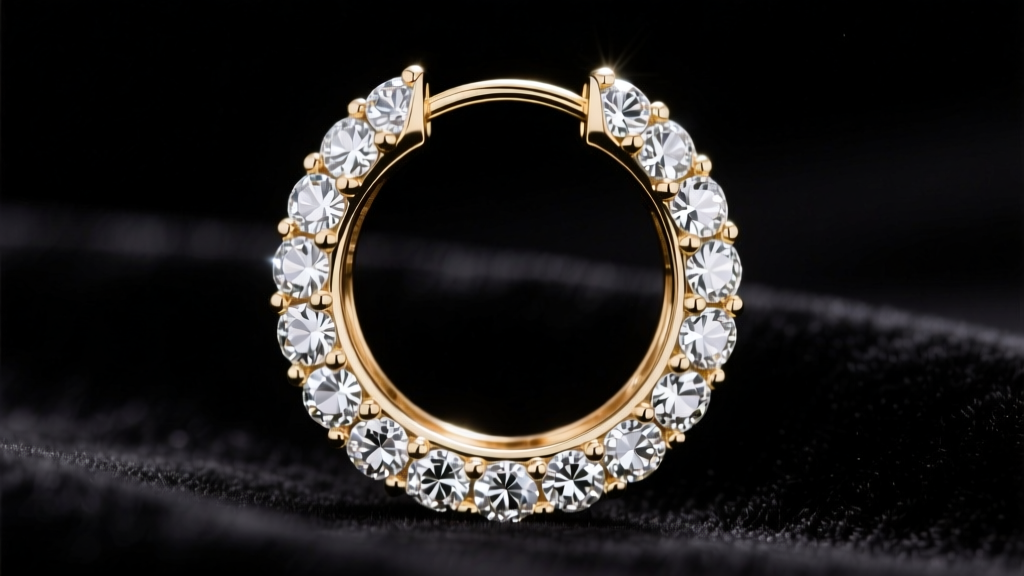
When consumers and collectors seek out bling bling earrings, they are typically looking for maximum light return, high-density gemstone coverage, and an unapologetic display of luxury. However, from a gemological and metallurgical perspective, achieving this 'iced-out' aesthetic requires rigorous engineering. High-density stone coverage is not merely about gluing diamonds to metal; it is a complex interplay of alloy tensile strength, microscopic prong geometry, and biomechanical load distribution on the human earlobe.
In this expert deep dive, we deconstruct the technical anatomy of premium bling bling earrings, examining the specific metal alloys, setting techniques, and structural reinforcements necessary to create pieces that are as durable as they are brilliant.
The Metallurgy of High-Density Stone Settings
The foundation of any heavy, gemstone-dense earring is its metal alloy. While 18-karat gold (75% pure gold) is highly prized for its rich color and prestige, it is often too soft for the extreme demands of micro-pavé settings. On the Vickers hardness scale (HV), standard 18k yellow gold sits at approximately 90 HV to 110 HV. When a jeweler raises a prong that is only 0.15 millimeters thick to secure a 1mm melee diamond, an 18k prong is highly susceptible to bending, snagging, and eventual stone loss.
Why 14k Gold Dominates Pavé Engineering
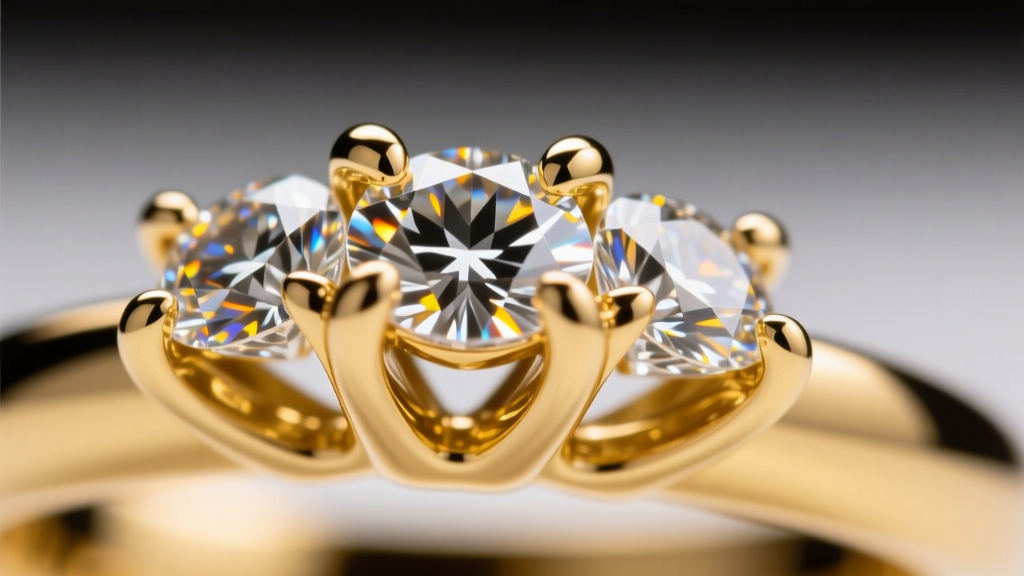
For structural integrity in bling bling earrings, master jewelers frequently turn to 14-karat gold (58.5% pure gold). The higher proportion of alloy metals—typically copper, silver, and zinc—increases the Vickers hardness to roughly 125 HV to 140 HV. This additional tensile strength allows the jeweler to push the metal to its absolute limits, creating microscopic beads and prongs that firmly grip the girdle of the diamond without warping under daily thermal and physical stress.
For those who demand the prestige and hypoallergenic properties of platinum, 950 Platinum alloyed with Ruthenium (950Pt/Ru) is the industry gold standard. Ruthenium increases the hardness of platinum to over 130 HV while maintaining a naturally white color that never requires rhodium plating, ensuring the metal between the diamonds remains invisible and bright.
Deconstructing the 'Bling' Setting Techniques
The term 'bling' relies on the illusion of a continuous surface of diamonds with minimal metal visibility. Jewelers achieve this through specialized setting techniques, each with distinct structural profiles and light-return characteristics.
| Setting Type | Typical Melee Size | Metal Visibility | Structural Risk | Light Return |
|---|---|---|---|---|
| Standard Pavé | 0.02 - 0.05 ct | Moderate (Beads visible) | Low | High |
| Micro-Pavé | 0.005 - 0.015 ct | Minimal (Tiny beads) | High (Prong wear) | Very High (Scintillation) |
| French Cut (Fish-tail) | 0.01 - 0.03 ct | Low (V-shaped cutaways) | Moderate | Maximum (Side light entry) |
| Bright Cut / Channel | 0.02 - 0.05 ct | Moderate to High | Very Low (Protected) | Moderate |
According to the Gemological Institute of America (GIA), the precision of the melee cut is just as critical as the setting. In micro-pavé, stones are often set at slight angles to follow the curvature of a hoop or drop earring. If the pavilion angles of these sub-1mm diamonds are not perfectly calibrated, light will leak out the bottom, resulting in 'dead' spots that ruin the continuous bling effect.
Melee Diamond Grading: CVD vs. HPHT in 2026
The landscape of bling bling earrings has been radically transformed by lab-grown diamonds. However, not all lab-grown melee is created equal. When sourcing high-density pavé earrings, understanding the difference between Chemical Vapor Deposition (CVD) and High Pressure High Temperature (HPHT) synthesis is crucial for color consistency.
- HPHT Melee: Generally preferred for D-F (colorless) melee. HPHT stones tend to exhibit higher clarity and lack the brownish or greyish tints that can sometimes plague smaller CVD stones. For a pristine, icy-white bling aesthetic, HPHT is the superior choice.
- CVD Melee: Excellent for near-colorless (G-J) ranges and fancy colors. However, in 2026, buyers must be wary of post-growth treatments. Some lower-tier CVD melee undergoes secondary HPHT treatment to bleach out brown undertones, which can occasionally result in a milky or hazy appearance under UV-heavy lighting.
For true luxury bling bling earrings, insist on melee that is 'full-cut' (57 or 58 facets). Many commercial manufacturers use 'single-cut' melee (17 or 18 facets) for stones under 0.02 carats to save costs. Single-cut stones lack the complex scintillation required for a premium iced-out look, appearing flat and glassy in dense clusters.
Biomechanics: Engineering for the Earlobe
The most overlooked aspect of heavy, diamond-encrusted earrings is the biomechanical toll they take on the human body. A standard earlobe piercing is performed at 20-gauge (0.81mm) or 18-gauge (1.02mm). When you suspend a 15-gram, fully pavéed hoop or a heavy diamond drop earring from a 20-gauge post, you create severe localized torque.
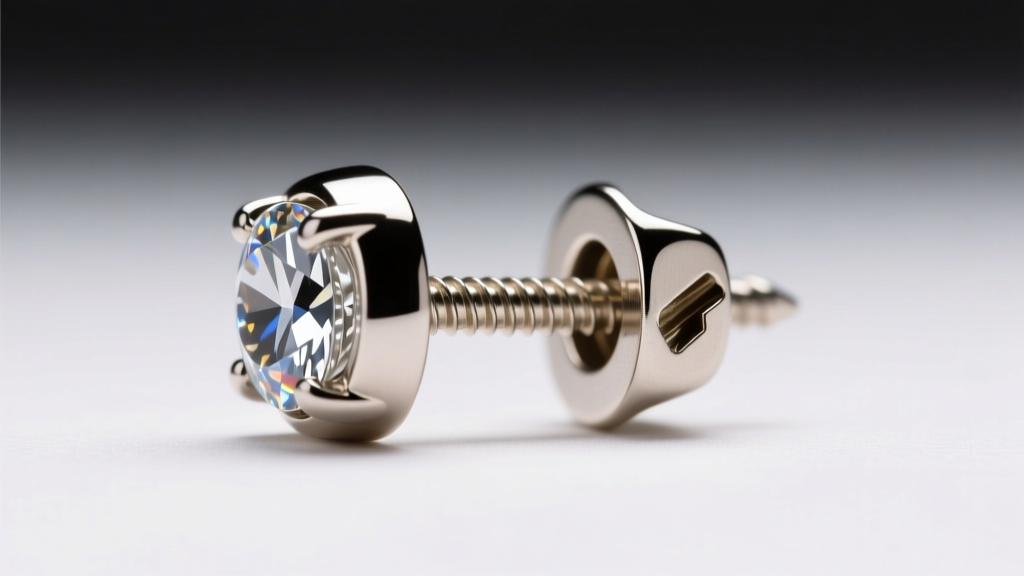
This constant downward drag leads to a condition known as piercing migration, where the fistula (the healed tissue tube) slowly stretches and tears downward. To combat this, high-end jewelry engineers employ several structural solutions:
1. Reinforced Post Gauges
Premium bling earrings abandon the flimsy 20-gauge wire. Instead, they utilize solid 16-gauge (1.29mm) or even 14-gauge (1.63mm) posts. This thicker metal distributes the shear force across a wider surface area of the earlobe tissue, drastically reducing the 'cheese-cutter' effect.
2. Hollow-Core Tubing for Hoops
For large, iced-out hoop earrings, solid metal would result in an unwearable weight. Master fabricators use hollow-core tubing—extruding the gold or platinum into a seamless tube. This maintains the thick, luxurious visual profile of the earring while reducing the overall mass by up to 40%, preserving the structural integrity of the micro-pavé settings without tearing the lobe.
3. Advanced Backing Mechanisms
Standard friction backs (butterfly backs) are entirely inadequate for heavy bling bling earrings. The tension of the earlobe pulling downward will slowly work the friction back off the post groove. Expert manufacturers utilize threaded screw-backs or oversized, silicone-cushioned jumbo backs that provide a wide surface area against the rear of the lobe, offering both security and ergonomic weight distribution.
Maintenance and Failure Modes of Dense Pavé
Owning high-density diamond earrings requires a departure from standard jewelry cleaning habits. The most common failure mode for micro-pavé bling earrings is stone loss caused by improper cleaning.
Never place micro-pavé or heavily iced-out earrings in an ultrasonic cleaner. The high-frequency acoustic cavitation creates microscopic vibrations that can easily rattle the tiny 0.1mm beads out of their burred positions, leading to catastrophic stone loss.
Instead, the Jewelers of America recommends a manual cleaning protocol. Use a soft-bristled baby toothbrush, warm water, and a mild, ammonia-free degreasing dish soap. Gently brush the underside (the pavilion) of the earrings, as sebum, lotions, and dead skin cells accumulate in the gallery wire, blocking light entry and dulling the 'bling' effect. Rinse thoroughly and dry with a lint-free microfiber cloth.
Final Verdict on Engineering True Bling
Creating exceptional bling bling earrings is an exercise in pushing the physical limits of metal and stone. It requires the hardness of 14k gold or ruthenium-platinum, the optical precision of full-cut HPHT melee, and a deep respect for the biomechanics of the human ear. When evaluating your next pair of iced-out drops or pavé hoops, look past the initial sparkle and inspect the post gauge, the setting geometry, and the alloy composition. True luxury lies not just in the carat weight, but in the flawless engineering that keeps those diamonds securely blazing for a lifetime.


