Blue Crystal Earrings Buying Guide: Styles & Quality
Discover how to choose the perfect blue crystal earrings. Our expert buying guide covers gemstone types, settings, pricing, and quality markers.

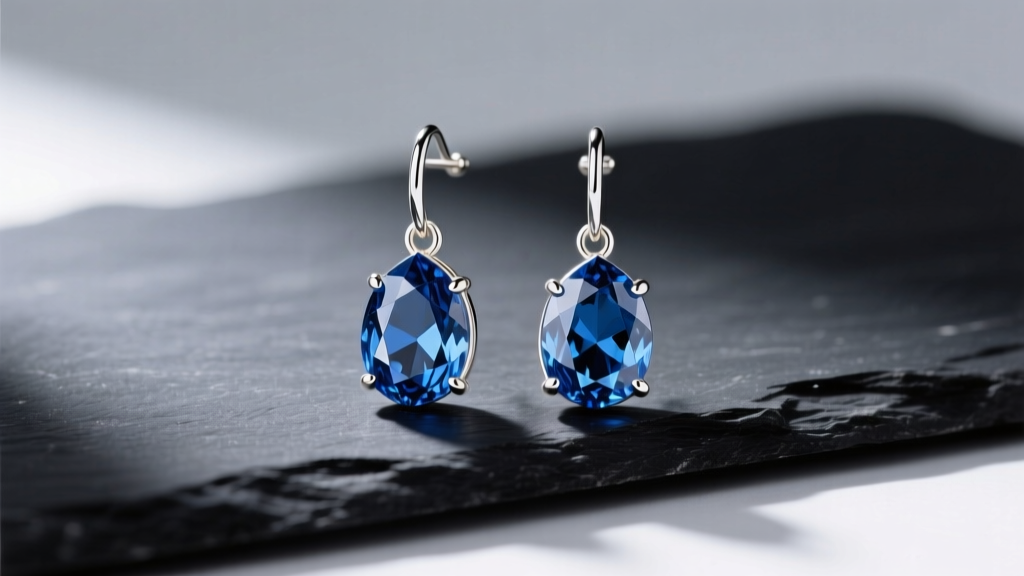
The Enduring Appeal of Blue Crystal Earrings
Blue crystal earrings occupy a unique space in the jewelry market, bridging the gap between accessible fashion accessories and high-end fine jewelry. Whether you are drawn to the deep, inky hues of London blue topaz, the serene pastels of aquamarine, or the royal prestige of sapphire, understanding the material science and structural integrity of your earrings is paramount. As of 2026, the market has seen a massive influx of lab-grown alternatives and advanced coatings, making it more important than ever for buyers to look beyond the surface sparkle. This comprehensive buying guide will decode gemstone classifications, evaluate setting durability, and provide a structural framework for selecting blue crystal earrings that align with your lifestyle, budget, and aesthetic preferences.
Decoding the Term: Natural vs. Lab vs. Glass
The term 'crystal' in the jewelry industry is notoriously ambiguous. It can refer to a crystalline mineral structure, a brand name (like Swarovski), or a generic catch-all for any transparent gemstone. When shopping for blue crystal earrings, you must first identify the material's origin and composition.
Natural Gemstones
Natural blue crystals are mined from the earth and possess unique inclusions that act as a fingerprint of their origin. The 'Big Three' blue gemstones used in earrings are:
- Blue Sapphire (Corundum): The gold standard for durability and prestige. Naturally occurring blue sapphires are exceptionally rare and command premium prices.
- Blue Topaz (Silicate): Naturally colorless or pale blue, almost all commercial blue topaz is treated via irradiation and heat to achieve popular shades like Swiss Blue and London Blue.
- Aquamarine (Beryl): Prized for its pale, sea-water blue color. It is naturally occurring but often heat-treated to remove greenish undertones.
Lab-Created and Simulants
Lab-grown sapphires and topaz share the exact chemical, physical, and optical properties as their mined counterparts but are created in controlled environments using flux or hydrothermal methods. According to market reports from JCK Online, lab-grown colored gemstones have captured a significant share of the accessible luxury market, offering identical Mohs hardness and refractive indices at a fraction of the cost. Simulants, on the other hand, include blue cubic zirconia (CZ) and lead glass (crystal glass), which mimic the look but lack the durability and optical fire of true crystalline structures.
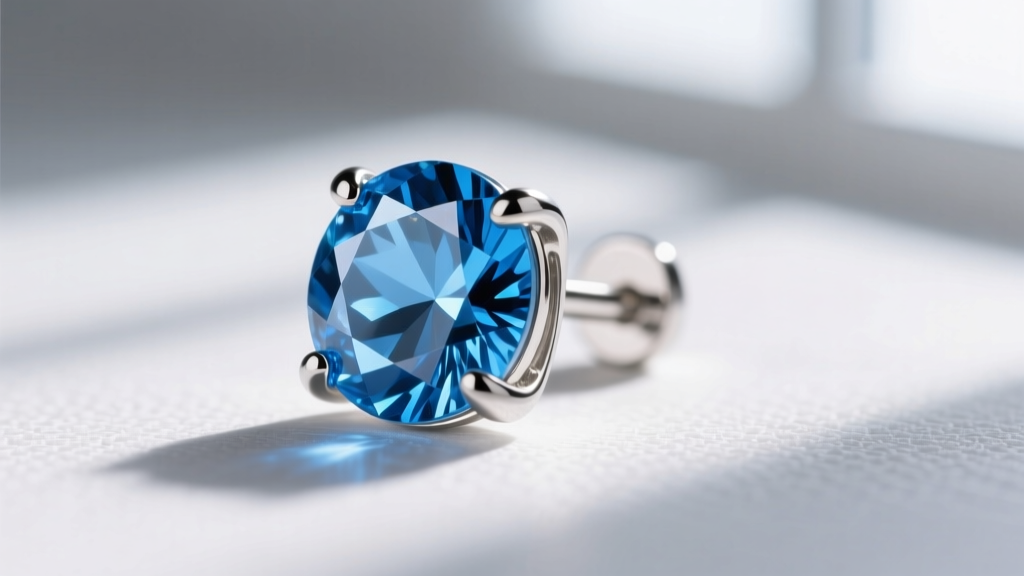
Evaluating Color: The Blue Spectrum
Color is the primary value driver for blue crystal earrings. In topaz, the industry relies on three distinct trade names to classify color saturation. Understanding these will prevent you from overpaying for lighter stones marketed as premium.
- Sky Blue: A light, pastel blue reminiscent of aquamarine. It is the most common and least expensive treated topaz.
- Swiss Blue: A vibrant, medium-dark electric blue. It offers high saturation and excellent light return, making it ideal for stud earrings where maximum brilliance is desired.
- London Blue: A deep, inky blue with subtle gray or green undertones. It requires the longest irradiation process and commands the highest price among topaz varieties.
For sapphires, the most coveted color is 'cornflower blue' (a medium-dark, velvety blue) or 'royal blue'. The Gemological Institute of America (GIA) notes that sapphire color should be evaluated under both daylight-equivalent and incandescent lighting to ensure the stone does not exhibit 'extinction' (dark, lifeless areas where light fails to return to the eye).
Durability, Settings, and the Mohs Scale
Earrings are subject to accidental impacts, hair snagging, and chemical exposure from cosmetics. The durability of your blue crystal earrings depends on both the gemstone's Mohs hardness and its cleavage planes. While hardness measures scratch resistance, toughness measures resistance to chipping and breaking.
| Gemstone | Mohs Hardness | Cleavage / Toughness | Avg. Price (Per Carat) | Recommended Setting |
|---|---|---|---|---|
| Blue Sapphire | 9 | No cleavage; Excellent | $500 - $5,000+ | Prong or Bezel |
| London Blue Topaz | 8 | Perfect basal cleavage; Poor | $50 - $150 | Bezel or V-Prong |
| Aquamarine | 7.5 - 8 | Poor cleavage; Brittle | $100 - $500 | Bezel or Halo |
| Lab-Grown Sapphire | 9 | No cleavage; Excellent | $50 - $300 | Prong or Bezel |
| Blue Crystal Glass | 5.5 | Conchoidal fracture; Fragile | $5 - $20 (Total) | Bezel or Channel |
Expert Warning on Topaz: According to the GIA's Topaz Quality Factors guide, topaz has perfect basal cleavage, meaning it can split cleanly along a single plane if struck at the wrong angle. For topaz dangle or drop earrings, avoid standard four-prong settings that leave the girdle (the stone's widest edge) exposed. Opt for bezel settings or protective V-prongs at the pointed ends of pear-cut stones.
When purchasing treated topaz or sapphire, always request a disclosure report. As of 2026, reputable gemological labs use advanced spectroscopy to detect beryllium diffusion in sapphires and irradiation markers in topaz, ensuring you are paying for the correct material grade.
— Master Gemologist Appraiser, 2026 Industry Standards
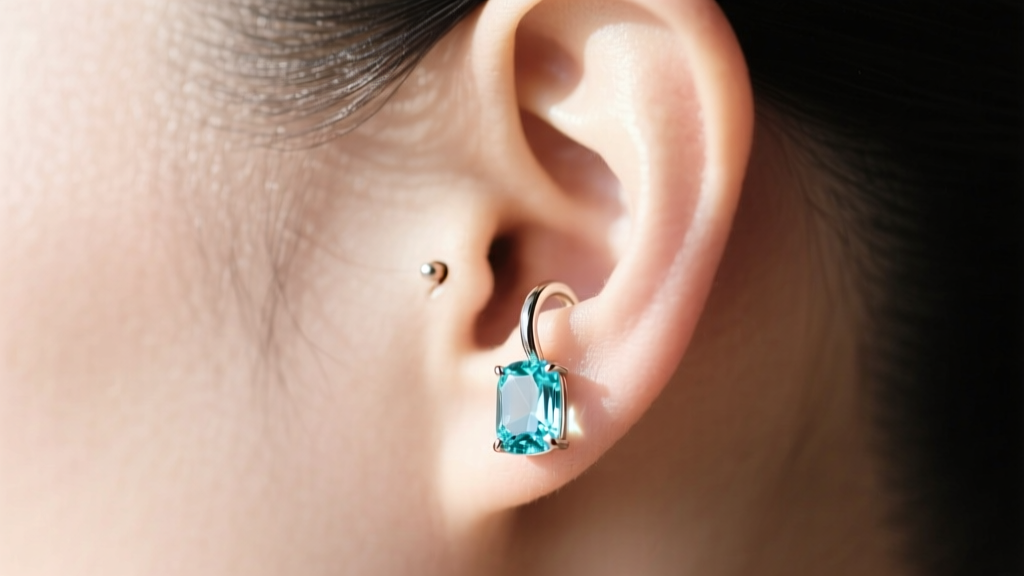
Ear Lobe vs. Cartilage: Weight and Gauge Considerations
The anatomy of your piercing dictates the structural requirements of your blue crystal earrings. Dense crystalline materials like sapphire and topaz are surprisingly heavy, which can lead to lobe stretching or cartilage migration if the earring's architecture is poorly designed.
Standard Ear Lobes
Standard lobe piercings are typically 20-gauge (0.81mm) or 18-gauge (1.02mm). If you are purchasing heavy London blue topaz drops, ensure the earring post is at least 18-gauge to prevent bending. Additionally, look for earrings with secure friction backs or screw-backs; the weight of a crystal dangle can easily pull a standard butterfly back off the post, resulting in lost jewelry.
Cartilage and Helix Piercings
Cartilage piercings (usually 16-gauge or 1.29mm) are highly sensitive to weight and pressure. Avoid heavy crystal dangles in the helix. Instead, opt for lightweight blue crystal huggies or flush-fit bezel studs. If you prefer a crystal clicker ring for your cartilage, ensure the internal diameter is large enough (usually 8mm to 10mm) to accommodate the natural swelling and curvature of the ear without putting torque on the piercing channel.
Face Shape and Style Matrix
Blue crystals draw the eye due to their high contrast against most skin tones and hair colors. Use this to your advantage by pairing the earring silhouette with your face shape:
- Round Faces: Avoid large circular hoops or round cluster studs, which emphasize facial width. Choose angular blue crystal dangles, such as emerald-cut sapphire drops or geometric topaz chandeliers, to create vertical elongation.
- Square Faces: Soften a strong jawline with curved silhouettes. Blue crystal hoops or oval-shaped aquamarine drops provide a balancing contrast to sharp angles.
- Heart-Shaped Faces: Balance a narrow chin with volume at the bottom. Teardrop or pear-shaped blue crystal earrings set in rose gold or yellow gold draw the eye downward, creating visual harmony.
- Oval Faces: The most versatile shape. You can confidently wear anything from delicate blue crystal ear cuffs to massive statement chandeliers.
Red Flags: What to Avoid When Shopping
Protect your investment by watching out for these common industry pitfalls:
- 'Mystic' or Coated Topaz: Some blue crystals are coated with a thin metallic film to enhance color. This coating will eventually scratch and wear off, leaving a dull, colorless stone underneath. Always ask if the color is natural, irradiated, or coated.
- Fracture-Filled Stones: Lower-quality sapphires or aquamarines may have surface-reaching fractures filled with lead glass or resin to improve clarity. These fillers can melt or discolor when exposed to the heat of a jeweler's torch during routine resizing or repair.
- Hollowed-Out Backs: To reduce weight and cost, some manufacturers carve out the pavilion (the back of the stone). While this makes large dangle earrings lighter, it traps soap, lotion, and skin oils, making them impossible to clean and destroying the stone's light return.
Final Verdict
Purchasing blue crystal earrings requires looking past the initial flash of color to evaluate the structural integrity, treatment history, and setting mechanics of the piece. For everyday wear, lab-grown or natural blue sapphires in a bezel setting offer unmatched durability. For statement pieces and special occasions, London blue topaz provides incredible saturation and size at an accessible price point, provided it is protected by a secure setting. By understanding the gemological nuances and anatomical requirements outlined in this guide, you can confidently select blue crystal earrings that will remain vibrant, secure, and stylish for years to come.


