Blue Earrings Flower Styles: 2026 Budget & Value Guide
Assess the true value of blue earrings flower designs in 2026. Compare enamel, topaz, and sapphire options across budget and fine jewelry tiers.

The Material Matrix: Sourcing the Perfect Blue
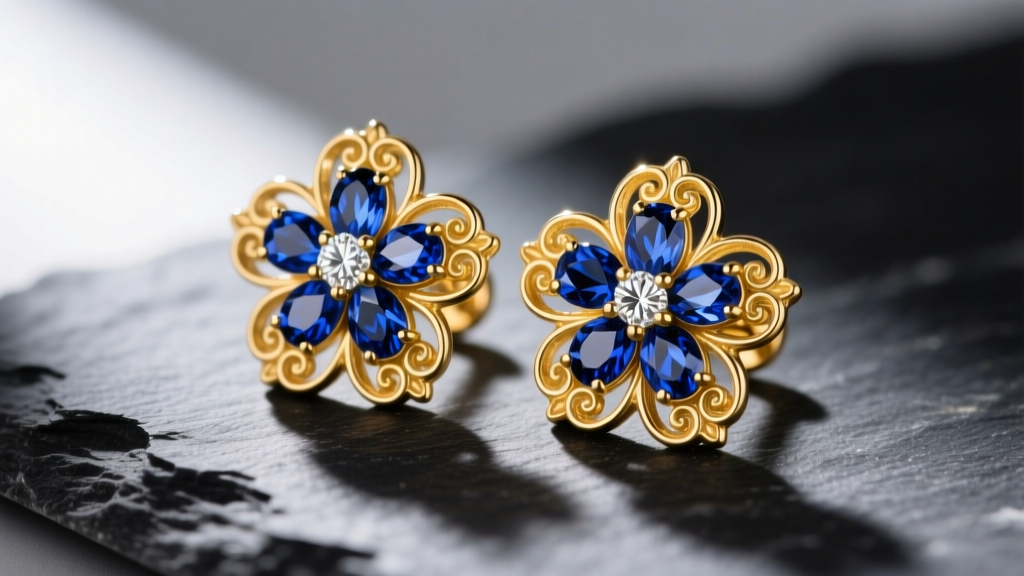
When evaluating the true cost and longevity of blue earrings flower designs, the first variable to assess is how the blue coloration is achieved. The market is saturated with floral motifs, but the material science behind the blue hue dictates whether a piece is a fleeting fast-fashion purchase or a generational asset. In 2026, discerning buyers must look past the initial aesthetic and scrutinize the metallurgical and gemological foundations of their jewelry.
For gemstone-based floral earrings, London Blue Topaz remains the most prevalent mid-market choice. It is crucial to understand that London Blue Topaz is not naturally occurring; it is created by irradiating colorless topaz and subsequently heating it to achieve that deep, inky blue. While stable for everyday wear, it holds a fraction of the intrinsic value of natural blue sapphire. Conversely, budget tiers often rely on dyed quartz or blue glass, which lack the refractive index and hardness (Mohs 8 for topaz vs. 7 for quartz) required to resist micro-scratching along the delicate edges of floral petals.
Enamel vs. Gemstone: Long-Term Value and Wearability
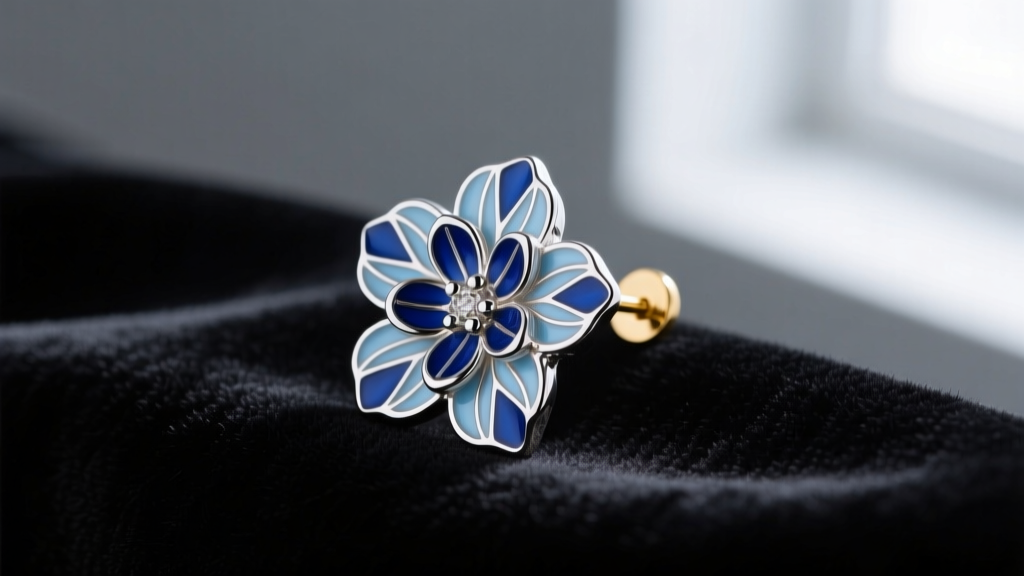
Not all blue floral earrings rely on stones. Enamel work is a cornerstone of floral jewelry design, but the value disparity between enamel types is massive. If you are investing over $150 in a blue enamel flower earring, you must verify whether the piece utilizes vitreous enamel or cold enamel.
- Vitreous Enamel (Kiln-Fired): Made from powdered glass fused to metal at temperatures exceeding 1,400°F. It is impervious to UV fading, highly scratch-resistant, and maintains its translucent blue depth indefinitely. This is the standard for fine jewelry value.
- Cold Enamel (Epoxy Resin): A polymer-based alternative cured at room temperature. While it allows for vibrant, opaque blues and intricate floral shading, it is prone to yellowing from UV exposure and will chip or peel within 2 to 4 years of regular wear. Cold enamel should strictly be confined to sub-$50 budget purchases.
Price Tier Analysis: What Your Budget Actually Buys
To accurately assess value, we must map the pricing tiers to the actual materials and manufacturing techniques employed in floral earring production. The following matrix breaks down what you should expect at each price point in the current market.
| Price Tier | Base Metal & Post | Blue Material | Value Proposition & Failure Modes |
|---|---|---|---|
| Budget ($15 - $45) | Brass alloy, nickel-free plating, 20g hollow post | Cold enamel, dyed glass, or synthetic spinel | High aesthetic, low longevity. Plating will wear off in 6-12 months, exposing brass that oxidizes and turns earlobes green. |
| Mid-Tier ($80 - $250) | Solid 925 Sterling Silver, 18g solid post | London Blue Topaz, vitreous enamel, or blue zircon | Excellent price-per-wear. Sterling silver requires occasional polishing, but the structural integrity and gemstone hardness offer years of reliable use. |
| Fine ($400 - $1,500+) | 14k or 18k Solid Gold, 18g or 16g post | Natural Blue Sapphire, high-grade guilloché enamel | Heirloom value. Gold prevents all tarnish and allergic reactions. Sapphires (Mohs 9) are virtually indestructible in daily wear. |
Structural Integrity: Gauge Sizing and Weight Distribution
A critical, often overlooked aspect of value assessment in floral earrings is the physics of the design. Flower shapes are inherently wide and can be top-heavy. When evaluating a floral stud or dangle, the gauge (thickness) of the post or wire is a primary indicator of manufacturing quality.
Standard ear piercings are typically 20-gauge (0.8mm) or 18-gauge (1.0mm). However, a blue topaz flower stud with a diameter exceeding 12mm generates significant leverage against the earlobe. If the manufacturer uses a thin 20-gauge or 22-gauge post to save on metal costs, the post will inevitably bend, and the earring will droop forward. For wide floral designs, demand an 18-gauge (1.0mm) or even a 16-gauge (1.2mm) solid post. This ensures the earring sits flush against the lobe and prevents the "cheese-cutter effect," where thin wires slowly migrate through the ear tissue under the weight of the floral head.
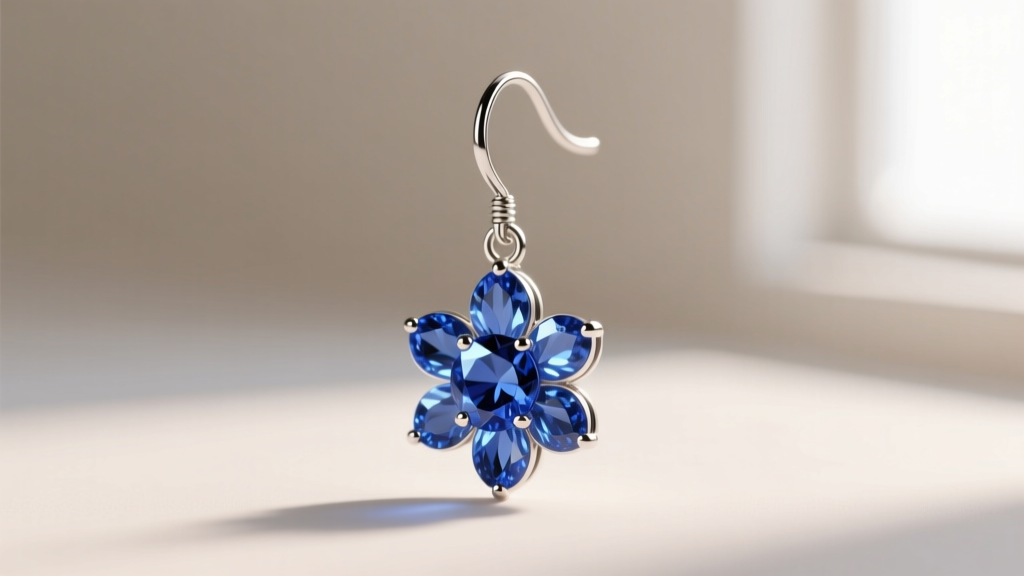
Expert Insight: When purchasing blue floral drop earrings, inspect the jump ring (the small loop connecting the flower to the fishhook wire). In budget pieces, this ring is often left unsoldered. The wide profile of a flower design easily catches on hair and sweaters, which will pull an unsoldered jump ring open, resulting in a lost earring. Always pay the premium for soldered jump rings or closed-loop designs.
Maintenance and the Hidden Costs of Floral Crevices
The true cost of ownership extends beyond the purchase price. Floral designs, with their overlapping petals, stamen details, and pavé settings, create micro-crevices that act as traps for sebum, lotions, and dead skin cells. This structural complexity demands specific maintenance protocols that can impact the long-term value of the piece.
According to guidelines from the Silver Institute, sterling silver is highly susceptible to tarnishing when exposed to sulfur and moisture. When trapped in the tight crevices of a silver flower earring, this tarnish accelerates. While ultrasonic cleaners are often recommended for jewelry, they pose a severe risk to specific blue materials. The high-frequency vibrations can fracture treated London Blue Topaz along its cleavage planes and can shatter cold epoxy enamel. Therefore, the most valuable blue floral earrings are those designed with slight negative space between the metal petals, allowing for easy cleaning with a soft brush and mild surfactant, rather than requiring expensive professional servicing.
Final Verdict: Maximizing Your Investment
If your budget is under $50, prioritize surgical steel or anodized titanium bases with cold enamel, accepting that the piece is a seasonal accessory rather than an investment. For the $100 to $250 range, solid sterling silver set with genuine London Blue Topaz or kiln-fired vitreous enamel offers the highest price-per-wear ratio, provided the post is at least 18-gauge. For fine jewelry buyers, 18k gold paired with natural, unheated blue sapphires remains the ultimate standard for a blue flower earring that will retain both its structural beauty and its financial value for generations.


