What Does Earring in Right Ear Mean? History & Material Guide
Discover what an earring in the right ear means historically, and explore the best hypoallergenic materials for modern right-ear cartilage curations.

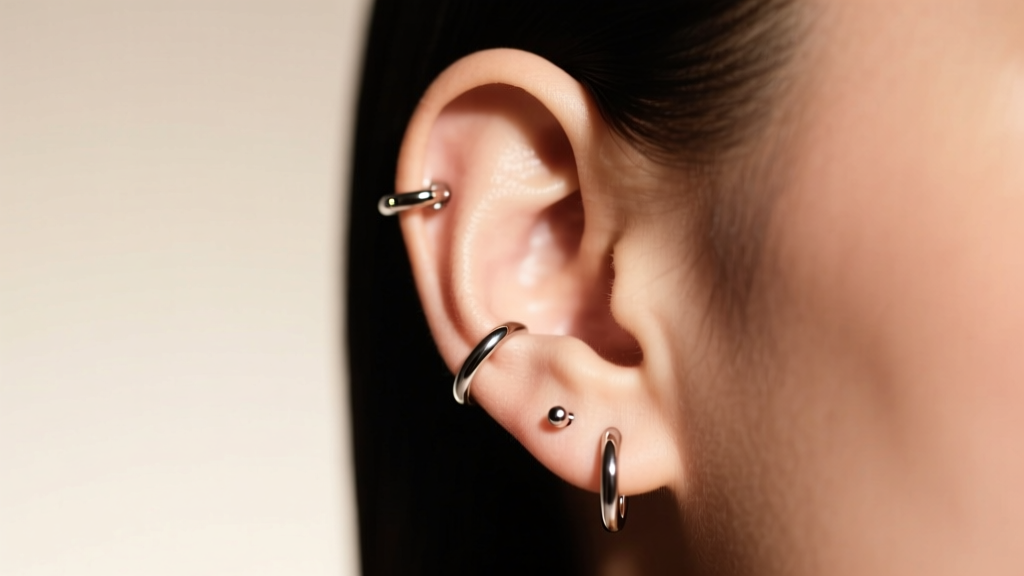
When exploring the world of body modification and jewelry styling, one of the most persistent search queries remains: what does earring in right ear mean? For decades, this question was rooted in mid-20th-century societal codes and hidden signaling. However, as we navigate the modern jewelry landscape, the 'meaning' of a right-ear piercing has entirely shifted. Today, the right ear is a premier canvas for asymmetrical styling, intricate cartilage curations, and avant-garde anatomical layouts.
Because the right ear is frequently chosen for complex, multi-piercing arrangements—often featuring helix, rook, conch, and tragus placements alongside the standard lobe—understanding the metallurgical properties of your jewelry is no longer optional. It is a medical and aesthetic necessity. Cartilage tissue is notoriously unforgiving, and selecting the wrong alloy can lead to hypertrophic scarring, contact dermatitis, and piercing migration. This guide decodes the historical context of the right-ear earring and dives deep into the material science required to safely curate one.
The Historical Code: What Does an Earring in the Right Ear Mean?
To answer the historical aspect of what does earring in right ear mean, we have to look back to the 1970s and 1980s. During this era, Western pop culture adopted a clandestine signaling system where a single pierced right ear was widely recognized as a subtle identifier for homosexual men. This 'left is right, right is wrong' mnemonic was a product of a less accepting society, requiring marginalized groups to utilize subtle fashion markers to identify one another.
However, tracing back even further, maritime folklore suggested that sailors pierced their right ears to signify they had survived a shipwreck or crossed the equator. In some ancient cultures, ear piercings on specific sides were tied to acupuncture meridians or spiritual protection. Yet, in contemporary 2026 fashion, these archaic codes are entirely obsolete. Today, a right-ear piercing simply means the wearer values personal expression, asymmetry, and curated aesthetics. The modern 'meaning' is defined not by secret societal codes, but by the intentionality of the jewelry's material, gauge, and anatomical placement.
The Modern Right Ear: Asymmetry and Cartilage Curations
In modern jewelry styling, asymmetry is a dominant trend. Many individuals opt for a 'curated ear' on the right side, leaving the left side minimal or unpierced. A standard right-ear curation might include a standard lobe piercing (20g or 18g), a secondary lobe, a flat helix, and a tragus stud.
Unlike the fleshy, vascular tissue of the earlobe, the auricular cartilage lacks its own direct blood supply. It relies on the perichondrium (the surrounding tissue membrane) for nutrients and immune response. This biological reality means that cartilage piercings take anywhere from 6 to 12 months to heal fully, and they are highly susceptible to irritation bumps and infection if subjected to reactive metals. Therefore, the true focus of right-ear styling must be on biocompatible materials.
Metallurgy & Biocompatibility: Choosing the Right Alloy
The market is flooded with misleading marketing terms like 'hypoallergenic' or 'surgical grade.' To safely wear earrings in cartilage, you must look for specific ASTM (American Society for Testing and Materials) or ISO certifications. According to the Association of Professional Piercers (APP), only specific grades of metal are safe for prolonged contact with healing or compromised tissue.
Implant-Grade Titanium (ASTM F136)
Implant-grade titanium, specifically Ti-6Al-4V ELI (Extra Low Interstitial), is the undisputed gold standard for cartilage piercings. It is entirely nickel-free, highly resistant to corrosion, and possesses a mirror-polish finish that prevents bacteria from adhering to the post. Brands like Anatometal and Industrial Strength utilize this exact alloy. If you are building a right-ear curation and suffer from metal sensitivities, ASTM F136 titanium should constitute 100% of your internal hardware.
Solid Gold (14k and 18k)
High-quality solid gold is biocompatible, provided it is alloyed correctly. 14k and 18k gold must be nickel-free, utilizing alloys like silver, copper, and palladium to achieve the desired color and hardness. However, gold is softer than titanium and can scratch more easily, which can harbor bacteria in fresh piercings. Furthermore, the National Center for Biotechnology Information (NCBI) notes that nickel contact dermatitis is one of the most common allergic reactions globally; thus, verifying that your goldsmith uses strictly nickel-free alloys is paramount. Avoid gold-plated or gold-filled jewelry entirely for cartilage, as the microscopic wear-through will expose the reactive brass or steel core beneath.
Surgical Steel vs. Niobium
The term 'surgical steel' is largely a marketing fabrication. Most commercial 'surgical steel' earrings are made from 316L stainless steel, which contains between 8% and 10.5% nickel. While the nickel is bound within the alloy, prolonged exposure to the saline environment of a healing cartilage piercing can cause ion leaching, triggering localized dermatitis and severe itching. For those seeking a budget-friendly, highly biocompatible alternative to titanium, Niobium is an exceptional choice. Niobium is a highly inert, nickel-free elemental metal that can be anodized to produce a spectrum of vibrant colors without the use of toxic dyes or platings.
Material Comparison Chart for Cartilage & Lobe Piercings
| Material | Standard / Grade | Nickel Content | Best Application | Price Range (USD) |
|---|---|---|---|---|
| Implant-Grade Titanium | ASTM F136 (Ti-6Al-4V ELI) | 0% | Fresh cartilage, sensitive lobes, industrials | $30 - $90 |
| Niobium | Elemental (Unalloyed) | 0% | Healing piercings, anodized color rings | $25 - $75 |
| Solid Gold | 14k or 18k (Nickel-Free) | 0% (if properly alloyed) | Healed lobes, healed cartilage, luxury curation | $80 - $350+ |
| 316L Stainless Steel | ASTM F138 | 8% - 10.5% | Fully healed, non-sensitive lobes only | $10 - $30 |
Gauge Thickness and the 'Cheese-Cutter' Effect
Material is only half the battle; the physical dimensions of the earring post dictate the long-term health of your right-ear cartilage. Standard lobe earrings are typically manufactured at 20-gauge (0.81mm) or 18-gauge (1.02mm). However, placing a 20g post through a helix or conch piercing is a recipe for disaster due to a biomechanical phenomenon known as the 'cheese-cutter effect.'
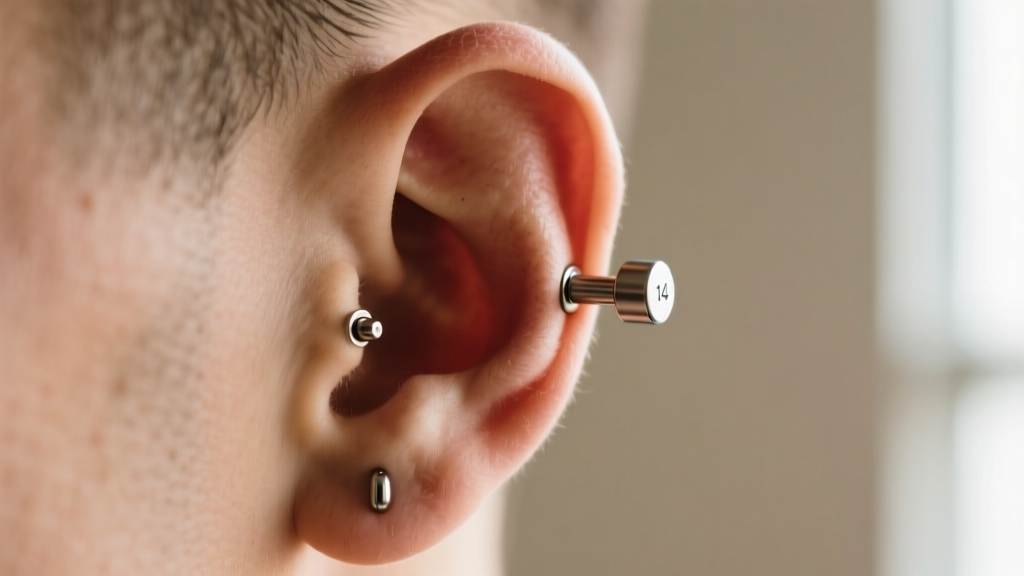
When a thin, lightweight wire rests under the tension of heavy cartilage tissue or the friction of sleeping, it creates immense localized pressure. Over time, this pressure necrosis causes the thin metal to slowly slice downward through the cartilage, much like a wire cheese cutter. This leads to piercing migration, rejection, and permanent tissue splitting.
To combat this, professional piercers mandate thicker posts for cartilage. A 16-gauge (1.2mm) or 14-gauge (1.6mm) post distributes the mechanical load over a wider surface area, drastically reducing the risk of migration. When sourcing right-ear jewelry, particularly for structural pieces like industrial barbells or heavy hoop huggies, always verify the gauge. Reputable brands like Maria Tash and BVLA default to 18g for lobes but strictly utilize 16g or 14g for all cartilage applications to ensure anatomical longevity.
Threading and Hardware Mechanics
Beyond the metal alloy, the engineering of the earring's threading plays a vital role in tissue preservation. Traditional 'externally threaded' earrings feature screw threads on the post itself. Forcing these sharp threads through a healing or tight cartilage fistula causes micro-tears and severe irritation.
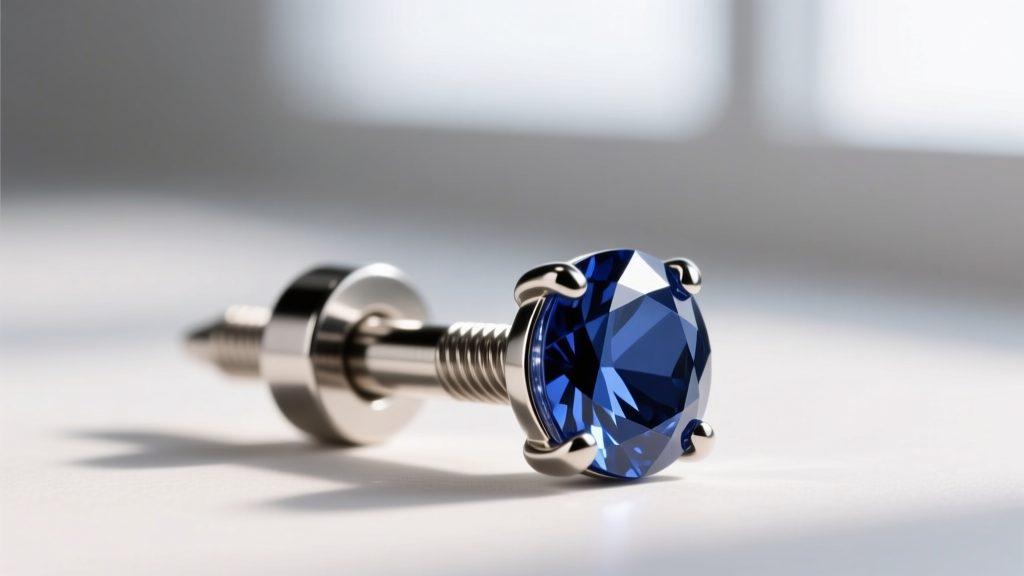
For any right-ear cartilage project, insist on internally threaded or threadless (press-fit) jewelry. In internally threaded pieces, the screw mechanism is located on the decorative end, while the post remains perfectly smooth, gliding through the tissue without causing trauma. Threadless systems, which utilize a slight bend in a solid titanium pin to create tension-lock friction, are currently the industry standard for secure, high-end gemstone settings that will not unscrew and fall out during sleep.
Final Thoughts on Right-Ear Styling
So, what does an earring in the right ear mean today? It means you are participating in a sophisticated, anatomy-driven art form. The archaic codes of the past have been replaced by a deep appreciation for biocompatible metallurgy, precise gauge sizing, and bespoke anatomical layouts. By prioritizing ASTM F136 titanium, demanding nickel-free gold alloys, and respecting the physics of cartilage gauge thickness, you ensure that your right-ear curation is not only visually stunning but structurally sound for a lifetime of wear. According to the American Academy of Dermatology, avoiding reactive metals is the single most effective way to prevent chronic contact dermatitis, allowing your jewelry to remain a source of joy rather than irritation.


