Blue Rose Earrings: A Material Guide for Sapphires, Enamel & Titanium
Compare materials for blue rose earrings, from sapphire and enamel to anodized titanium. Find the best hypoallergenic options for your lobes.

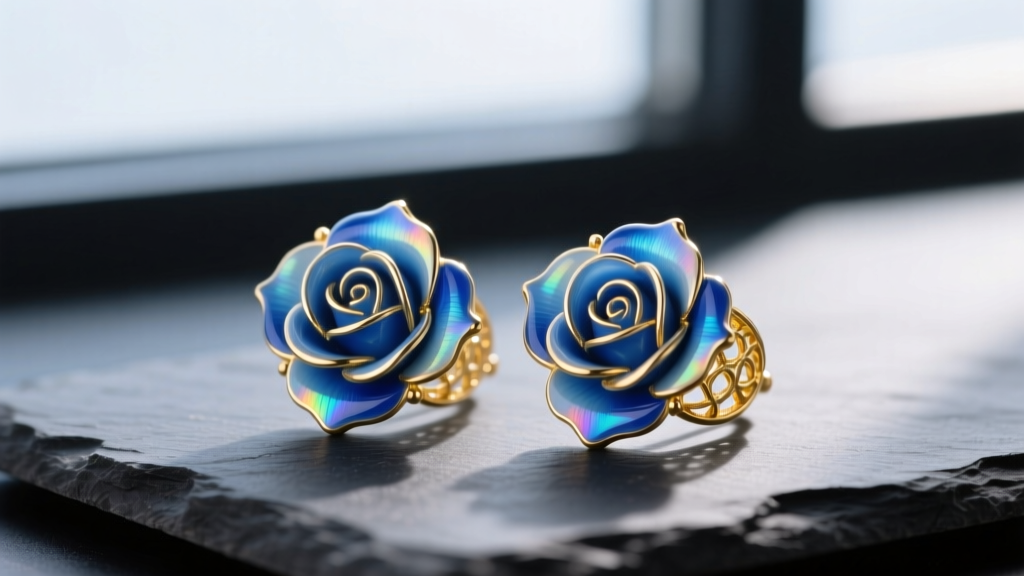
The Anatomy of Blue Rose Earrings: Design Meets Metallurgy
Blue rose earrings represent a unique intersection of botanical inspiration and advanced jewelry manufacturing. Because blue roses do not exist in nature, jewelers must rely on synthetic color induction, gemstone treatments, or specialized metal oxides to bring this design to life. When evaluating a pair of blue rose earrings, the aesthetic appeal is only half the equation. The underlying material composition dictates the earring's structural integrity, its behavior under daily wear, and its biocompatibility with sensitive ear tissue.
Crafting a multi-layered rose petal design requires materials that can be precisely carved, cast, or enameled without compromising the delicate edges of the petals. In 2026, the market is dominated by three primary material categories for this specific design: carved gemstones, vitreous enamel over precious metals, and anodized implant-grade titanium. Each presents distinct advantages and failure modes that buyers must understand before investing.
Gemstone vs. Enamel vs. Anodized Titanium
Carved Blue Sapphire and Treated Topaz
For high-end blue rose earrings, gem carvers typically utilize blue sapphire or London blue topaz. Sapphire (corundum) ranks at a 9 on the Mohs hardness scale. Crucially, sapphire lacks true cleavage planes, meaning it does not have structural weak points where the crystal can easily split. This makes it an exceptional medium for carving the ultra-thin, overlapping petals of a rose design. According to the Gemological Institute of America (GIA), sapphire's durability ensures that intricate carvings will survive decades of daily wear without chipping at the petal edges.
London blue topaz, while more affordable, presents a structural risk. Topaz ranks at an 8 on the Mohs scale but possesses perfect basal cleavage. If a carved topaz rose earring is dropped on a hard surface, the shockwave can cause the stone to cleave or chip along its internal planes. Furthermore, the deep blue color in London blue topaz is achieved through neutron irradiation and heat treatment; prolonged exposure to intense UV light or high heat (such as during jewelry resizing) can occasionally cause color fading.
Cloisonné and Champlevé Vitreous Enamel
Enameling allows for a level of color saturation and opacity that gemstones cannot match. High-quality blue rose earrings utilize vitreous enamel—a finely ground glass powder fused to a metal substrate (usually 18k gold or sterling silver) in a kiln at temperatures exceeding 1400°F (760°C). The Champlevé technique is particularly effective for rose designs, where troughs are carved into the metal and filled with blue enamel, leaving the metal walls visible to outline the petals.
As detailed by master jewelers at Ganoksin, vitreous enamel is highly resistant to scratching and UV fading. However, its primary vulnerability is impact. Because it is essentially glass, a sharp blow against a countertop can cause the enamel to shatter or pop out of its metal housing. Buyers should also beware of "cold enamel" (epoxy resin), which is often used in cheaper mass-produced rose earrings. Cold enamel sits at a mere 2-3 on the Mohs scale, scratches easily, and will inevitably yellow or peel within a few years of exposure to skin oils and cosmetics.
Anodized Titanium for Hypoallergenic Needs
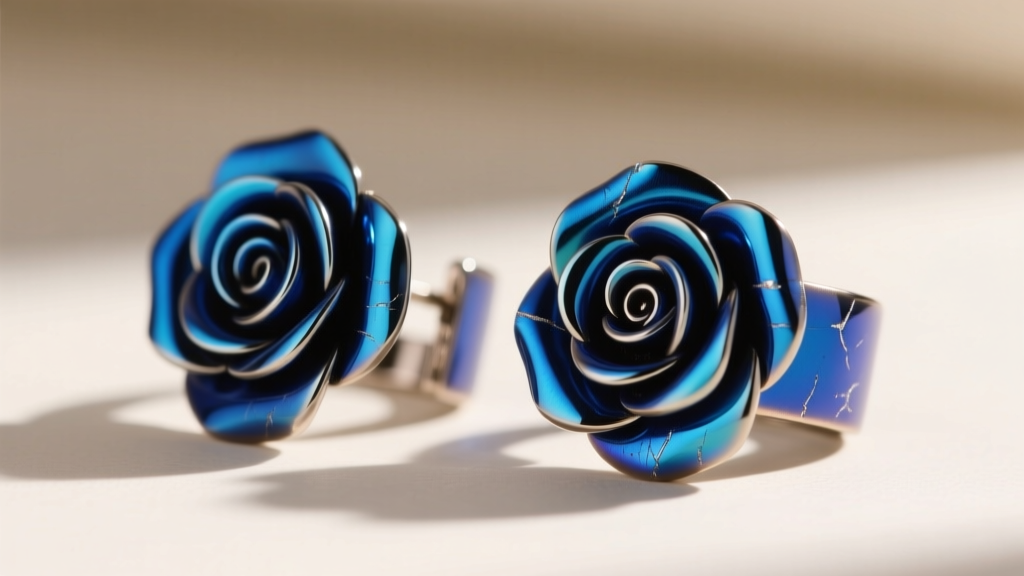
For individuals with severe contact dermatitis or nickel allergies, ASTM F136 implant-grade titanium is the gold standard. Titanium cannot be dyed or plated safely for internal wear, but it can be anodized. Anodizing is an electrolytic process that thickens the natural oxide layer on the titanium's surface. By precisely controlling the voltage during this process, jewelers can manipulate light interference to produce vibrant, permanent colors without using any external dyes or pigments.
To achieve a deep, rich sapphire blue for a titanium rose earring, the anodizer must apply exactly 90 to 100 volts. Lower voltages (around 15V) yield a pale ice blue, while pushing past 110V shifts the color into green or gold. Because the color is an integral part of the metal's oxide layer, it will not peel or flake. However, the oxide layer is relatively soft; friction from heavy fabrics or aggressive polishing can wear away the blue hue over time, revealing the dull grey titanium beneath.
Material Durability and Mohs Hardness Comparison
Understanding the physical properties of these materials is critical for predicting how your blue rose earrings will age. The following table breaks down the technical specifications and practical considerations for each material type.
| Material | Mohs Hardness | Hypoallergenic Rating | Avg. Price Range (Studs) | Primary Vulnerability |
|---|---|---|---|---|
| Blue Sapphire (Carved) | 9.0 | Excellent (Inert) | $800 - $3,500+ | Extreme blunt force trauma |
| London Blue Topaz | 8.0 | Excellent (Inert) | $150 - $400 | Basal cleavage (chipping from drops) |
| Vitreous Enamel on 18k Gold | 5.5 - 6.5 | Very Good (Check solder alloys) | $400 - $1,200 | Shattering from sharp impacts |
| Cold Enamel (Resin) on Silver | 2.0 - 3.0 | Poor to Fair | $30 - $90 | Scratching, UV yellowing, peeling |
| Anodized Titanium (ASTM F136) | 6.0 (Base metal) | Perfect (Implant-Grade) | $45 - $120 | Oxide layer abrasion (color loss) |
Weight, Gauge Sizing, and Lobe Health
The intricate, multi-petal structure of a rose design inherently adds surface area and, consequently, weight. A standard 12mm to 15mm blue rose earring crafted in solid 18k gold with enamel can easily weigh between 4 and 7 grams per ear. This weight distribution is a critical factor in long-term lobe health.
Standard Lobe vs. Cartilage Considerations
Most mass-produced fashion earrings utilize 20-gauge (0.81mm) or 22-gauge (0.64mm) posts. When a heavy 6-gram enamel rose is mounted on a 22-gauge wire, the post will inevitably bend under the weight, causing the earring to droop forward and creating uneven pressure on the piercing fistula. Over time, this localized stress can lead to the "cheese-cutter effect," where the thin wire slowly migrates downward, stretching and thinning the earlobe tissue.
For heavy blue rose designs, always seek out 18-gauge (1.02mm) or 16-gauge (1.29mm) posts. If the design is intended for cartilage (such as a flat or helix piercing), a 16-gauge or 14-gauge (1.63mm) internally threaded or threadless post is mandatory to prevent the jewelry from shifting and irritating the delicate cartilage canal.
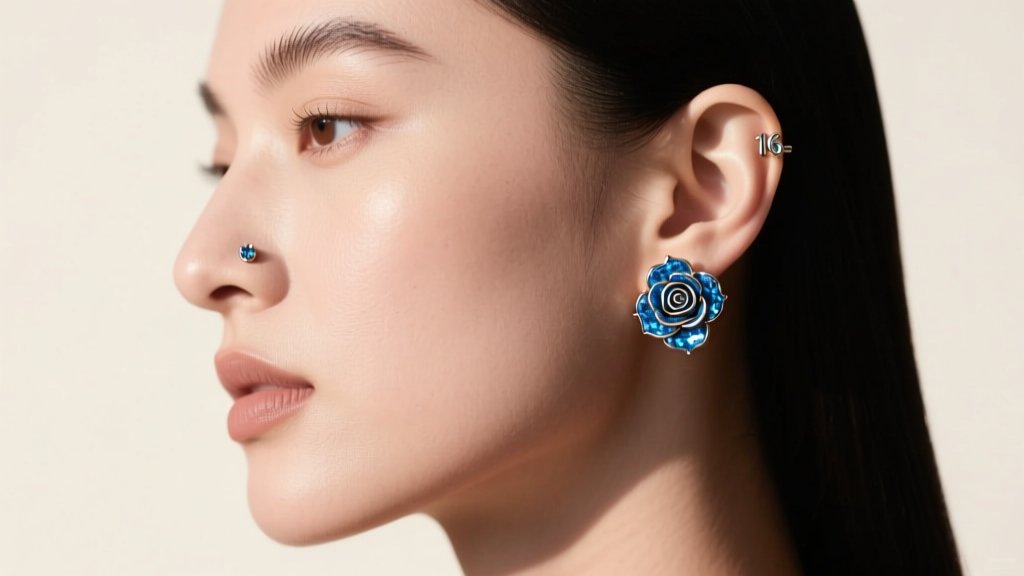
For those who already own heavy rose earrings with thin posts, utilizing silicone or specialized silicone-backed ear supports (like BlingGuard or similar stabilizing discs) can help distribute the weight across a wider surface area of the earlobe, preventing irreversible stretching.
Long-Term Care and Oxidation Prevention
Maintenance protocols vary wildly depending on the material of your blue rose earrings. A one-size-fits-all approach to jewelry cleaning will result in catastrophic damage to certain pieces.
- Sapphire and Topaz: These can be safely cleaned in an ultrasonic jewelry cleaner using a mild alkaline solution. However, if the topaz has been fracture-filled (a common treatment to hide internal flaws), ultrasonic waves can shatter the stone. Always verify the treatment status with the jeweler first.
- Vitreous Enamel: Never place enameled earrings in an ultrasonic cleaner. The high-frequency vibrations can cause micro-fractures in the glass, leading to a spiderweb effect or complete detachment from the metal backing. Clean only with a soft microfiber cloth, lukewarm water, and a drop of mild dish soap.
- Anodized Titanium: Avoid harsh chemicals, alcohol, and abrasive polishing cloths. While the titanium base is impervious to tarnish, the colored oxide layer can be worn away by friction. Simply rinse with warm water and pat dry to maintain the vibrant blue hue.
- Sterling Silver Settings: If your blue rose earrings are set in sterling silver, the metal will naturally oxidize and tarnish when exposed to sulfur in the air and skin acids. Use a dedicated silver polishing cloth on the metal parts only, taking extreme care not to rub the polishing compounds into the enamel or porous gemstone crevices.
Final Verdict: Choosing Your Perfect Pair
Selecting the right blue rose earrings requires balancing your budget, lifestyle, and biological sensitivities. If you require a daily-wear piece for highly reactive skin and active lifestyle, anodized ASTM F136 titanium is the undisputed champion, offering a lightweight, perfectly hypoallergenic option that will never tarnish. For heirloom-quality luxury and unmatched scratch resistance, carved blue sapphire remains the pinnacle of fine jewelry craftsmanship, provided you have the budget to support it. Finally, for those who prioritize deep, opaque color saturation and vintage-inspired artistry, vitreous enameled gold offers a breathtaking aesthetic, so long as you commit to the careful, impact-free maintenance it demands.
Pro Tip: When purchasing enameled or carved gemstone rose earrings, always inspect the back of the piece. High-end jewelers will finish the back with a textured or guilloché pattern and a high polish to prevent skin oils and dead cells from accumulating in the crevices of the rose design, ensuring the earring remains hygienic and comfortable over years of wear.


