Blue Topaz Earrings White Gold: The Ultimate Buying Guide
Discover how to choose the perfect blue topaz earrings in white gold. Compare Swiss vs London hues, karat options, and setting styles in our expert guide.

The Synergy of Blue Topaz and White Gold
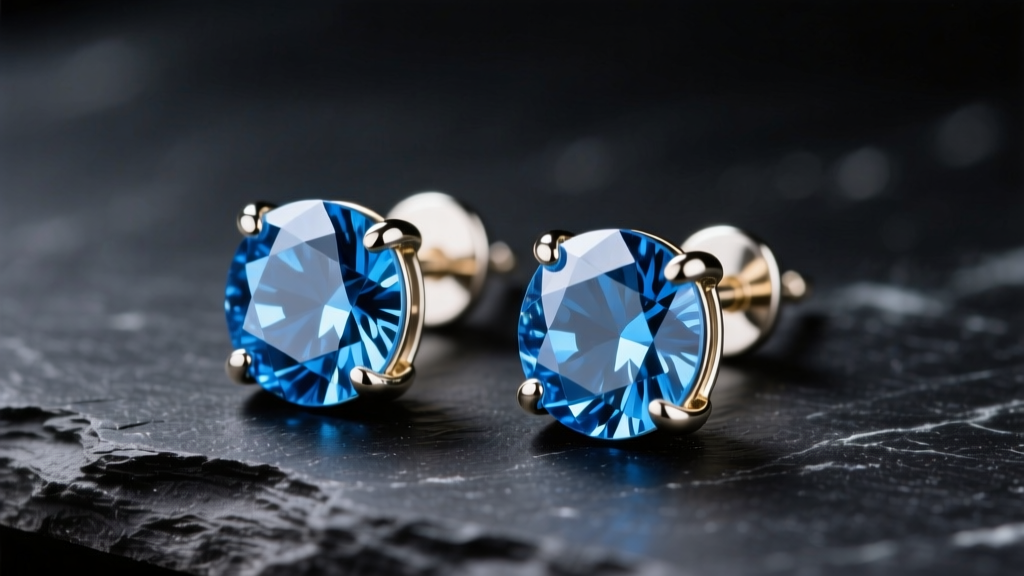
When it comes to fine jewelry, the pairing of blue topaz earrings white gold settings remains one of the most sought-after combinations in the market. The cool, icy undertones of rhodium-plated white gold perfectly amplify the vitreous luster and striking blue hues of treated topaz. Unlike warmer metals that can sometimes muddy the crispness of a blue gemstone, white gold acts as a reflective mirror, bouncing light back through the pavilion of the stone and maximizing its brilliance. As of 2026, advancements in gemstone cutting and sustainable metallurgy have made these earrings more accessible, yet navigating the nuances of topaz treatments, gold karat weights, and structural integrity requires a discerning eye. This comprehensive buying guide will equip you with the gemological and metallurgical knowledge necessary to make an informed investment.
Decoding the Spectrum: Sky, Swiss, and London Blue
Naturally occurring blue topaz is exceptionally rare and typically very pale. The vivid blue topaz earrings white gold settings you see in jewelry stores are the result of controlled irradiation and heat treatments. The Gemological Institute of America (GIA) recognizes three primary commercial grades of blue topaz, each with distinct visual characteristics and price points.
- Sky Blue: The lightest of the three, resembling a clear summer sky. It requires the least intensive treatment and is the most budget-friendly.
- Swiss Blue: A vibrant, medium-toned blue with high saturation. It is currently the most popular choice for everyday stud earrings due to its striking color and moderate pricing.
- London Blue: The deepest and most valuable commercial grade. It exhibits an inky, dark blue hue often accompanied by subtle gray or green undertones in certain lighting. The treatment process for London blue is longer and more complex, utilizing both electron beam irradiation and extended heat cycles.
| Hue Grade | Color Depth & Tone | Treatment Intensity | Avg. Price Per Carat | Best Metal Pairing |
|---|---|---|---|---|
| Sky Blue | Light, pastel blue | Low | $8 - $15 | Sterling Silver or 10K White Gold |
| Swiss Blue | Medium, vivid blue | Medium | $20 - $40 | 14K White Gold |
| London Blue | Dark, inky blue with gray undertones | High | $45 - $85 | 18K White Gold or Platinum |
Metallurgy Matters: Choosing the Right White Gold
White gold is not a naturally occurring metal; it is an alloy of pure yellow gold mixed with white metals such as nickel, palladium, or silver, and subsequently plated with rhodium to achieve its bright, silvery finish. When selecting blue topaz earrings white gold settings, understanding the karat weight is critical for both aesthetics and durability.
14K vs. 18K White Gold
14K White Gold (58.5% Pure Gold): This is the industry standard for secure gemstone settings. Because it contains a higher percentage of alloy metals, 14K white gold is significantly harder and more resistant to scratching and bending. For heavy gemstones like topaz, 14K provides superior prong tension, reducing the risk of the stone slipping out of its setting.
18K White Gold (75% Pure Gold): While 18K offers a richer, slightly warmer underlying tone and is preferred by those with nickel allergies (as it is often alloyed with palladium instead), it is a softer metal. If you opt for 18K white gold for dangle or drop earrings, ensure the setting features a robust bezel or reinforced V-prongs to compensate for the metal's softer yield strength.
Navigating Topaz Cleavage and Setting Security
One of the most critical, yet frequently overlooked, factors in buying topaz jewelry is its cleavage. According to the American Gem Society, topaz possesses one direction of perfect basal cleavage. This means that if the stone is struck sharply along a specific crystallographic plane, it can split or fracture cleanly. This structural reality dictates how your earrings should be set.
Prong Placement and Protective Settings
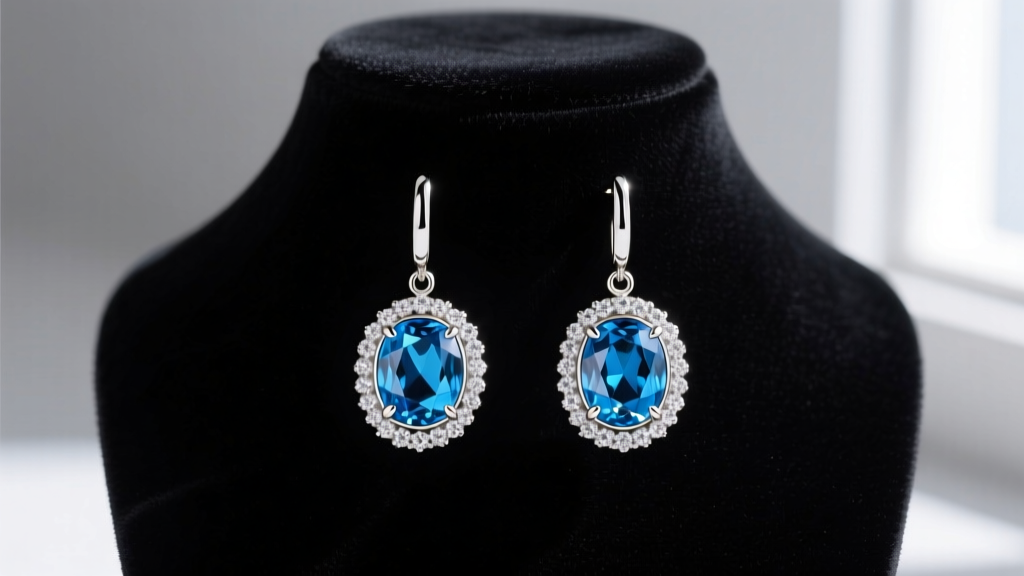
A master jeweler will orient the topaz stone so that the cleavage plane is parallel to the table (the flat top facet), minimizing the risk of a lateral impact causing a split. When evaluating blue topaz earrings white gold settings, inspect the prongs closely:
- Four-Prong vs. Six-Prong: A six-prong setting offers more security and distributes pressure more evenly across the girdle of the stone, which is highly recommended for Swiss and London blue topaz studs over 2 carats.
- V-Prongs for Fancy Cuts: If you are purchasing pear, marquise, or trillion-cut blue topaz, the pointed tips of the stone are highly vulnerable. Insist on V-prongs (metal caps that wrap around the point) rather than standard rounded prongs.
- Bezel Settings: For active lifestyles, a full or partial bezel setting in white gold completely encircles the girdle, offering the ultimate protection against lateral knocks and cleavage-plane fractures.
Earring Silhouettes and Face Shape Pairings
The visual weight of blue topaz combined with the reflective nature of white gold can dramatically influence facial aesthetics. Selecting the right silhouette ensures the earrings complement rather than overwhelm your features.
Studs and Huggies
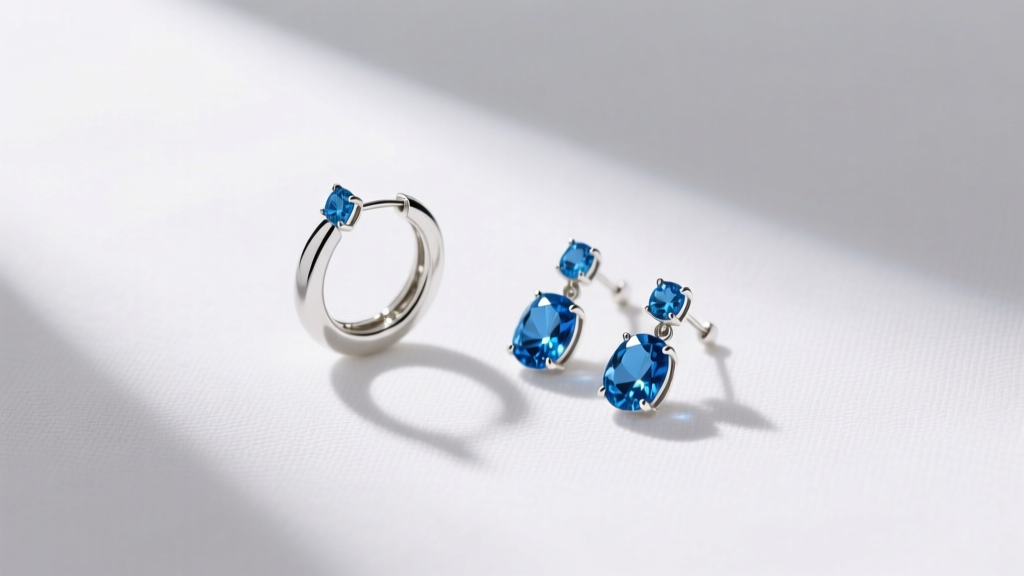
Round or cushion-cut blue topaz studs in white gold are universally flattering and ideal for round or heart-shaped faces, as they draw attention to the center of the face without adding unnecessary width. White gold huggie hoops featuring channel-set Swiss blue topaz offer a modern, architectural look that suits square jawlines by softening angular features.
Drops and Dangles
Elongated drop earrings featuring pear-shaped London blue topaz are exceptionally effective for round or oval face shapes. The vertical line created by the dangle helps to visually lengthen the face and neck. Ensure the white gold bail (the connector) is reinforced with a jump ring that allows the stone to swing freely, preventing rigid stress on the topaz during movement.
Real-World Pricing and Market Expectations
When shopping for blue topaz earrings white gold settings, pricing is dictated by the gemstone hue, the gold karat weight, and the complexity of the craftsmanship. As of 2026, fluctuations in the rhodium market have slightly increased the baseline cost of white gold finishing.
- Entry-Level ($150 - $350): Typically features Sky or light Swiss blue topaz (1-2 total carats) set in 10K or lightweight 14K white gold. Often mass-cast with standard four-prong settings.
- Mid-Tier ($400 - $850): The sweet spot for fine jewelry. Expect vivid Swiss or London blue topaz (3-5 total carats) in solid 14K white gold, often accented with melee diamond halos or intricate milgrain detailing.
- Premium ($900 - $2,000+): Features top-tier London blue topaz with exceptional checkerboard or precision custom cuts, set in heavy 18K white gold or platinum, frequently incorporating high-clarity diamond accents and custom-forged ear wires.
Long-Term Care and Rhodium Maintenance
Proper maintenance is vital to preserve both the metal and the gemstone. Because topaz has perfect cleavage, ultrasonic cleaners and steamers are strictly prohibited. The high-frequency vibrations can easily cause internal fractures or completely split the stone. Instead, clean your earrings using a soft-bristled baby toothbrush, lukewarm water, and a mild, phosphate-free dish soap.
Regarding the white gold setting, the rhodium plating will naturally wear away over time, particularly on the ear posts and the backs of the earrings where friction against the skin and hair occurs. Depending on your body chemistry and wear frequency, expect to have your earrings professionally re-plated every 12 to 24 months to maintain their bright, icy white luster. Store your blue topaz earrings in a fabric-lined compartment separate from harder gemstones like diamonds or sapphires, which can easily scratch the topaz (which ranks an 8 on the Mohs hardness scale) and the white gold alloy.


