Matching Heart Necklace With Bow Earrings Fashion Guide: How-To
Master the romantic aesthetic with our step-by-step matching heart necklace with bow earrings fashion guide. Learn metal pairing, gauge sizing, and styling.

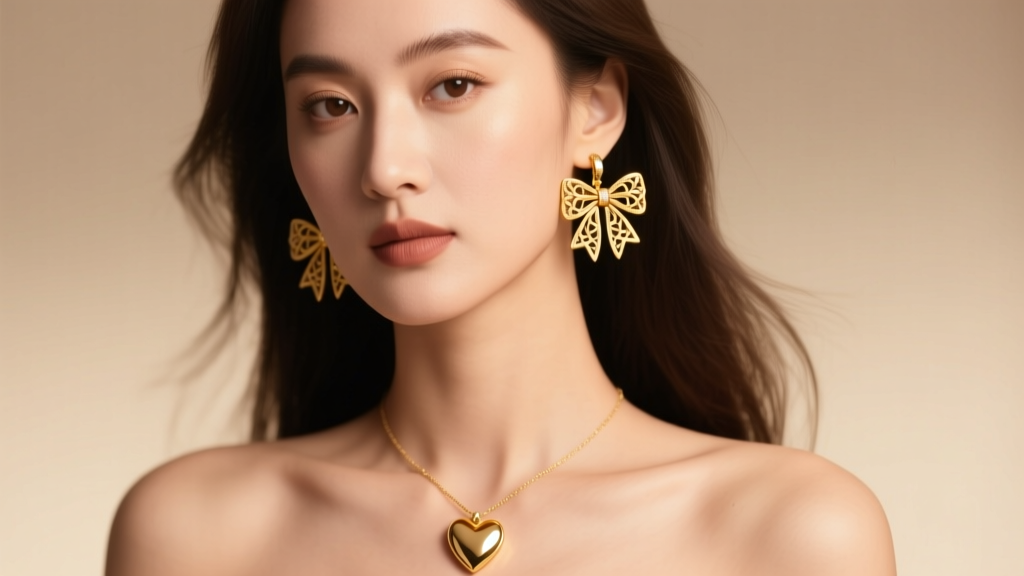
The Evolution of the Romantic Aesthetic in 2026
The coquette and romantic jewelry trends have matured significantly. In 2026, styling a matching set is no longer about simply wearing two pieces with similar motifs; it is an exercise in proportional balance, metallurgical harmony, and precise placement. When executing a matching heart necklace with bow earrings fashion guide, the goal is to achieve a cohesive look that feels intentional and elevated, rather than costumey or juvenile. This requires a deep understanding of visual weight, metal grades, and anatomical scaling.
Whether you are styling a delicate 10mm heart pendant with micro-bow studs, or pairing a chunky silver heart chain with oversized ribbon drop earrings, the mechanics of how these pieces interact with your face shape and skin chemistry remain paramount. Below is our comprehensive, step-by-step masterclass on curating, matching, and wearing this iconic jewelry duo.
Step 1: Selecting the Right Bow Earring Silhouette for Your Face Shape
The bow motif inherently carries horizontal volume due to its loops. If not balanced correctly, bow earrings can widen the appearance of the face. To counteract this, you must select a silhouette that complements your underlying bone structure.
Elongation for Round and Square Faces
If you have a round or square face shape, your primary objective is vertical elongation. Avoid wide, puffy bow studs that sit flush against the lobe, as they will emphasize jaw width. Instead, opt for drop bow earrings measuring between 1.5 and 2.25 inches in length. The vertical drop draws the eye downward, softening angular jawlines and lengthening the neck. Look for designs where the bow acts as a cap atop a vertical chain or pearl drop.
Adding Width for Heart and Oval Faces
Heart-shaped faces (characterized by a wider forehead and narrow chin) benefit from added volume at the lower half of the face. Medium-sized bow huggies or wide, horizontal bow studs (approximately 12mm to 15mm wide) add necessary visual weight to the lower cheek and jaw area, creating a balanced, symmetrical illusion.
Step 2: Metallurgical Harmony and Material Grades
A critical failure point in matching jewelry sets is metal mismatching. If your heart necklace is crafted from 14k solid gold, but your bow earrings are gold-plated brass, the difference in luster and undertone will be immediately apparent. Furthermore, inferior base metals can cause contact dermatitis. According to the Gemological Institute of America (GIA), understanding gold purity and plating thickness is essential for longevity.
| Material Grade | Base Metal | Gold Thickness | Est. Price Range | Tarnish Risk |
|---|---|---|---|---|
| 14k Solid Gold | Gold Alloy | N/A (Solid) | $150 - $450 | None |
| 14k Gold Vermeil | 925 Sterling Silver | Min. 2.5 Microns | $45 - $120 | Low (Years) |
| Gold Flash Plated | Brass or Copper | 0.1 - 0.5 Microns | $15 - $35 | High (Weeks) |
| PVD Plated | 316L Surgical Steel | N/A (Ion Bonded) | $25 - $60 | Very Low |
Pro Tip: Always check the chain width of your heart necklace. A delicate 1.0mm cable chain pairs best with bow earrings featuring thin, cylindrical wire elements. If your necklace features a thick 3.0mm Cuban or Figaro chain, your bow earrings should have a heavier, cast-metal appearance to maintain textural harmony.
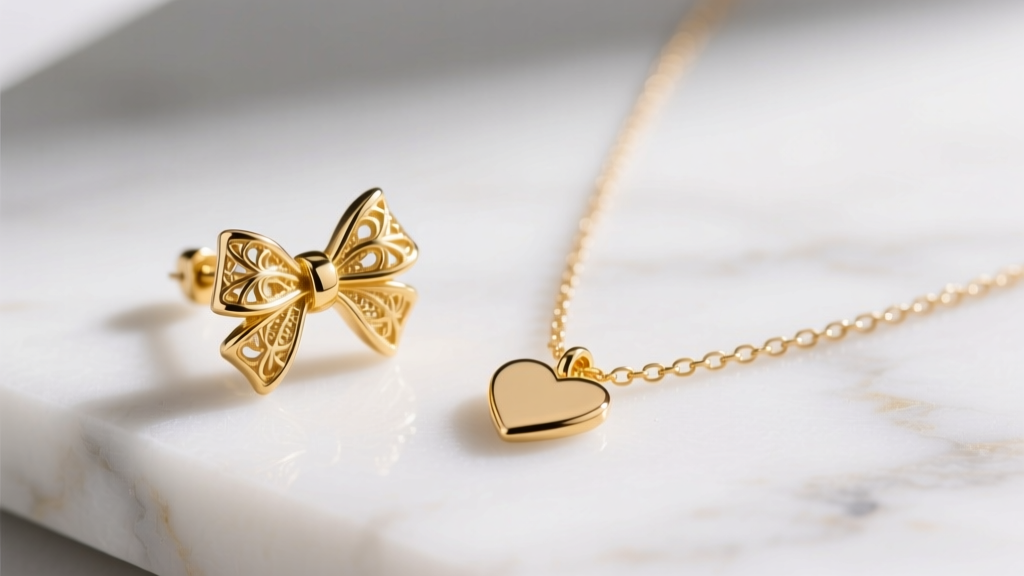
Step 3: The 1.5x Rule for Visual Weight and Proportions
The most common styling mistake when wearing a matching set is allowing one piece to completely overpower the other. To achieve perfect visual equilibrium, apply the 1.5x Rule.
The physical dimensions and visual weight of your bow earrings should not exceed 1.5 times the size of your heart pendant. Conversely, the earrings should not be smaller than 0.75 times the pendant size.
For example, if your heart pendant measures 10mm across, your bow earrings should ideally measure between 8mm (for a subtle, cohesive look) and 15mm (for a bold, earring-forward look). If you wear a massive 30mm heart pendant, pairing it with tiny 5mm micro-bow studs will make the earrings look like an afterthought, destroying the "matching" illusion.
Step 4: Ear Placement, Gauge Sizing, and Piercing Health
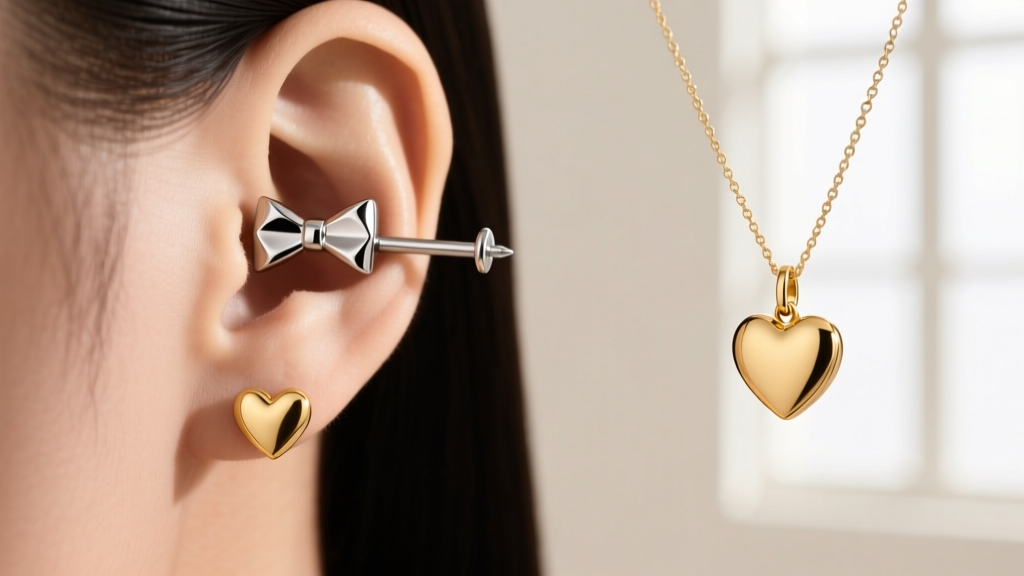
Bow earrings are not limited to standard lobe piercings. In 2026, curated ear parties frequently feature bow motifs in cartilage placements. However, you must respect the anatomical gauge requirements of your piercings to avoid migration or the "cheese-cutter effect." The Association of Professional Piercers (APP) strictly advises on proper gauge and material safety for cartilage.
- Standard Lobe Piercings: Typically heal at 20G (0.81mm) or 18G (1.02mm). Most commercial bow studs and drop earrings are manufactured with 20G posts. Ensure the butterfly clutch or screw-back is secure, as bow drops can be front-heavy and cause the earring to droop forward.
- Helix and Flat Cartilage: Usually pierced at 16G (1.29mm) or 14G (1.62mm). If you are placing a bow stud in your upper cartilage, you must purchase specialized 16G cartilage posts. Forcing a 20G lobe post into a 16G cartilage hole can lead to irritation bumps and tearing.
- Ear Cuffs: For non-pierced ears, opt for adjustable bow ear cuffs with a tension gap of at least 3mm to accommodate varying ear thicknesses without cutting off circulation to the helix rim.
Step 5: Troubleshooting Common Styling and Wear Failures
Even the most beautifully matched sets can fail in real-world wear. Here is how to troubleshoot the most common issues associated with bow and heart jewelry sets:
The Hair Snagging Hazard
Bow earrings, particularly those made from wrapped wire or featuring open jump rings, are notorious for catching on loose hair. When purchasing, inspect the loops of the bow. High-quality pieces will feature soldered jump rings or flush-set ribbon loops, meaning there are no microscopic gaps for hair to slip into. If you already own a snag-prone pair, a jeweler can apply a tiny bead of clear, jewelry-safe epoxy to the gaps to seal them.
Pendant Flipping and Chain Tangling
Heart pendants, especially asymmetrical or heavy ones, tend to flip upside down on delicate chains. To combat this, ensure your necklace features a fixed bail (the loop the chain passes through) rather than a free-floating jump ring. Alternatively, use a chain with a slight twist, like a rope or twisted cable chain, which provides enough friction to keep the heart pendant facing forward, matching the deliberate orientation of your bow earrings.
Green Skin and Oxidation
If the skin behind your earlobes turns green or black, your bow earrings likely have a copper or brass base reacting to your skin's pH and sweat. This is common in fast-fashion matching sets. To salvage the pieces, you can coat the earring posts in clear nail polish as a temporary barrier, but the ultimate solution is to upgrade to 925 sterling silver, 316L surgical steel, or solid gold, ensuring your romantic aesthetic remains comfortable and skin-safe all day.


