How to Choose the Best Ring Earrings for Your Piercings
Discover what to look for when buying ring earrings. Explore gauge sizes, hypoallergenic metals, and closure types for lobe and cartilage piercings.

The Modern Definition of Ring Earrings
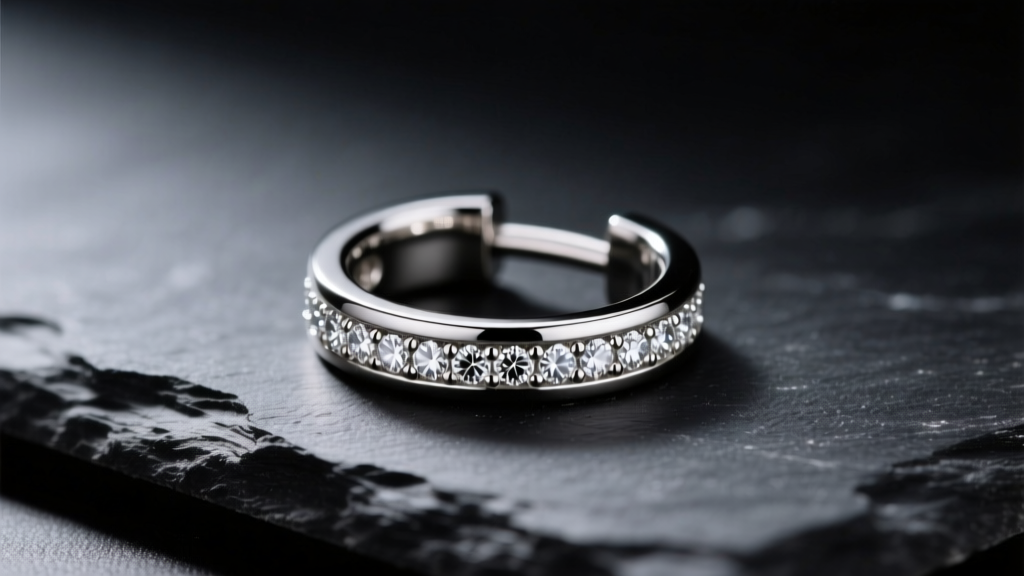
When jewelry enthusiasts and professional piercers discuss 'ring earrings' in 2026, they are referring to a broad spectrum of circular adornments that go far beyond the standard hoop. This category encompasses huggies, seamless cartilage rings, captive bead rings (CBRs), hinged clickers, and even ear cuffs designed to mimic the look of a piercing. Choosing the right ring earring is not merely an aesthetic decision; it is a matter of anatomical compatibility, material safety, and mechanical reliability.
Unlike flat-back labret studs, which sit flush against the tissue, ring earrings introduce movement, weight distribution, and curvature into the piercing channel. If you are buying ring earrings for a fresh helix, a healed daith, or a stretched lobe, understanding the precise metrics of jewelry sizing and metallurgy is critical to avoiding migration, irritation bumps, and allergic contact dermatitis. This comprehensive buying guide will break down exactly what to look for before you add to cart.
Decoding Gauge Sizes and Inner Diameters
The most common mistake consumers make when purchasing ring earrings is focusing solely on the gauge (thickness) while completely ignoring the inner diameter (ID). The inner diameter dictates how the ring sits against your anatomy. A ring with an ID that is too small will 'choke' the piercing, creating upward pressure that leads to irritation bumps and migration. Conversely, an ID that is too large will snag easily on hair and clothing, causing micro-tears in the fistula.
| Gauge (G) | Millimeter (mm) | Common Placement | Recommended Inner Diameter (ID) |
|---|---|---|---|
| 20G | 0.81mm | Standard Lobe, Nose | 6mm - 8mm |
| 18G | 1.02mm | Lobe, Upper Lobe, Tragus | 6mm - 10mm |
| 16G | 1.29mm | Helix, Conch, Septum | 8mm - 12mm |
| 14G | 1.62mm | Daith, Snug, Industrial | 10mm - 14mm |
Pro-Tip for Cartilage: If you are buying a ring earring for a helix or conch piercing, measure the distance from the piercing hole to the edge of your ear, then add 2mm to 3mm to allow for natural swelling and movement. According to the Association of Professional Piercers (APP), improper sizing is the leading cause of delayed healing in cartilage piercings.

Material Grades: What Actually Prevents Infections?
The term 'hypoallergenic' is largely unregulated in the jewelry industry. To ensure your ring earrings do not trigger a reaction, you must look for specific metallurgical standards rather than marketing buzzwords.
Implant-Grade Titanium vs. Surgical Steel
For fresh piercings or highly reactive skin, ASTM F-136 implant-grade titanium is the undisputed gold standard. It contains zero nickel and is polished to a mirror finish that prevents bacteria from harboring in microscopic scratches. 'Surgical steel' (often 316L), while popular and affordable, contains up to 14% nickel. As noted by the American Academy of Dermatology, nickel is the most common trigger for allergic contact dermatitis, which can manifest as weeping, itching, and severe swelling around the piercing site.
Solid Gold Karat Breakdown
If you prefer the warmth of gold, you must opt for solid 14k or 18k gold that is specifically alloyed for body jewelry (often palladium-based white gold rather than nickel-based). Avoid gold-plated or gold-filled ring earrings entirely for cartilage piercings; the friction of the ring rotating through the fistula will eventually wear away the plating, exposing the reactive brass or steel base metal underneath.
Closure Mechanisms and Failure Modes
The way a ring earring closes dictates both its security and its ease of use. Here is a breakdown of the most common mechanisms you will encounter when shopping:
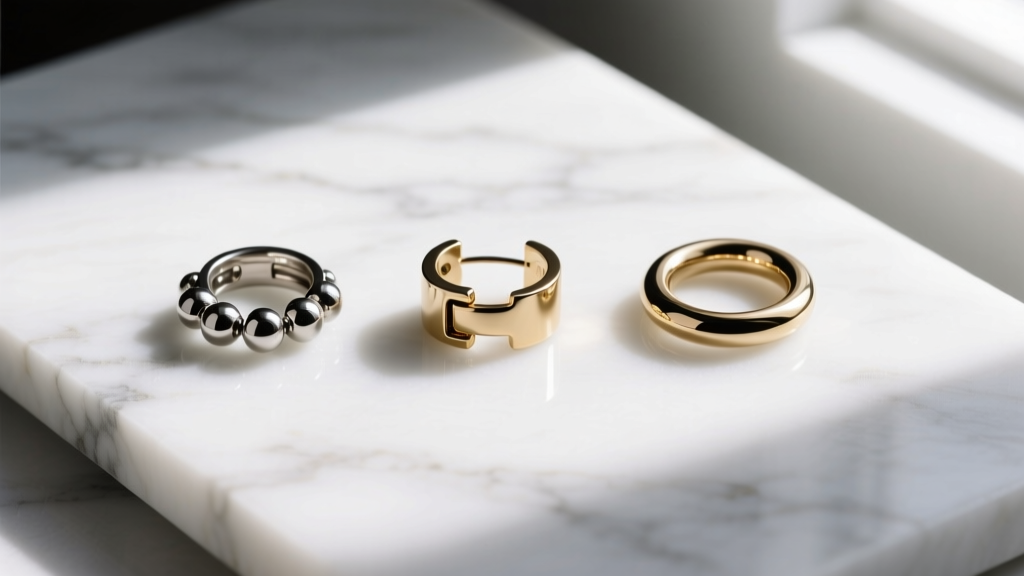
- Hinged Clickers: The most popular choice in 2026. They feature a satisfying 'click' when closed and are incredibly easy to insert and remove without tools. Failure Mode: Cheap clickers can lose their tension over time, causing the hinge to pop open during sleep.
- Captive Bead Rings (CBRs): The bead is held in place by the natural tension of the ring's gap. Failure Mode: Requires specialized ring-opening pliers to change. If the bead falls out, the ring is useless until replaced.
- Segment Rings: These offer the look of a seamless continuous ring but feature a removable curved segment that snaps into place. Failure Mode: The segment can easily be lost in a sink drain during removal.
- Endless / Continuous Hoops: A thin wire that slides into a hollow tubing. Failure Mode: High risk of metal fatigue. Bending the wire too many times will cause it to snap.
Troubleshooting Common Ring Earring Issues
Even with the perfect purchase, ring earrings can sometimes cause frustration. Here is how to troubleshoot the most common issues:
The 'Sleeping on It' Problem: If your cartilage piercing aches only in the mornings, your ring earring's inner diameter is likely too small, causing the jewelry to press into the tissue when your head rests on a pillow. Upsizing the ID by 2mm usually resolves this immediately.
Snagging and Tearing: If your ring earring constantly catches on your hair or sweaters, switch from a CBR or endless hoop to a hinged clicker or a flat-profile segment ring. The smooth, uninterrupted surface of a segment ring drastically reduces friction against textiles.
2026 Pricing Tiers and Brand Expectations
When budgeting for high-quality ring earrings, expect pricing to reflect the material grade and the precision of the closure mechanism. Entry-level implant-grade titanium clickers from reputable brands like NeoMetal or BVLA typically range from $35 to $85. Solid 14k or 18k gold hinged rings will generally fall between $150 and $400, depending on the presence of gemstone settings. High-end designer pieces featuring precision-set pavé diamonds or custom anodized titanium finishes can easily exceed $600.
Ultimately, investing in properly sized, high-quality ring earrings is an investment in the long-term health and aesthetics of your piercings. By prioritizing ASTM F-136 titanium or solid gold, carefully measuring your inner diameter, and selecting a secure closure mechanism, you ensure your jewelry enhances your style without compromising your anatomy.


