Gold Butterfly Hoop Earrings: A Material & Alloy Comparison Guide
Compare 14k, 18k, and vermeil gold butterfly hoop earrings. Learn how alloy properties affect durability, weight, and intricate motif detailing.

The Engineering Behind Butterfly Motif Hoops
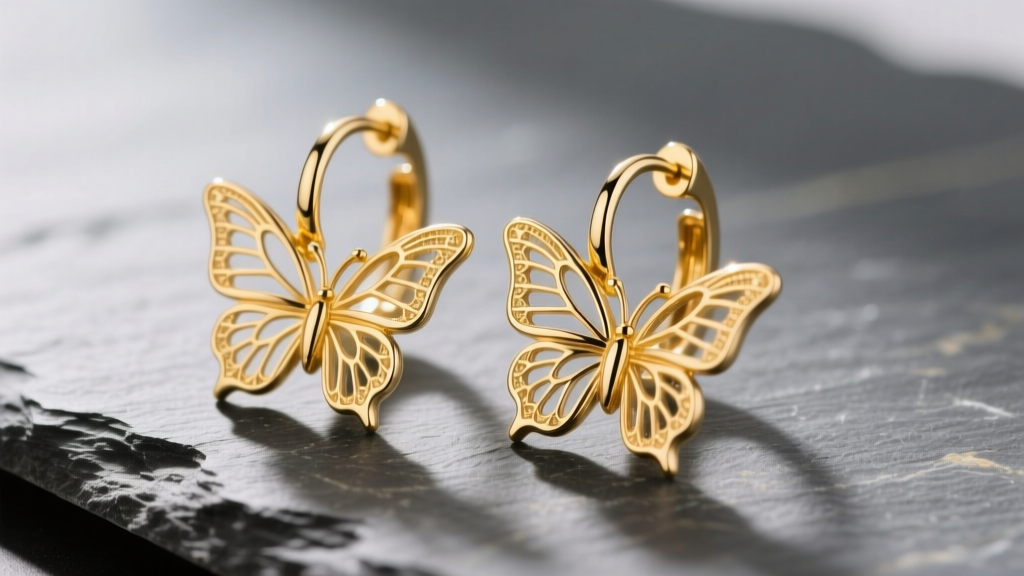
When selecting gold butterfly hoop earrings, consumers often focus entirely on the aesthetic appeal of the wing detailing and the overall silhouette. However, as a domain expert in jewelry metallurgy, I can tell you that the structural integrity of motif-based hoops relies entirely on alloy composition, gauge thickness, and manufacturing techniques. The butterfly motif presents a unique engineering challenge: it requires high surface area for intricate cutouts and venation, yet it must remain lightweight enough to prevent earlobe distortion while rigid enough to resist bending.
As we navigate the 2026 jewelry market, advancements in 3D wax printing and laser casting have allowed for unprecedented detail in butterfly wing textures. But these delicate, high-relief designs are only as durable as the metal alloy poured into the mold. Understanding the material properties of your gold butterfly hoop earrings is the difference between a lifelong heirloom and a piece that warps, tarnishes, or snaps within a single season.
Solid Gold Alloys: 14k vs. 18k for Intricate Detailing
Pure 24k gold is far too malleable for structural jewelry, scoring a mere 25 on the Vickers Hardness (HV) scale. To create functional gold butterfly hoop earrings, jewelers alloy pure gold with metals like copper, silver, zinc, and palladium. The karatage you choose drastically alters the physical behavior of the earring.
14k Gold: The Durability Standard
Composed of 58.3% pure gold, 14k gold is the industry standard for intricate, everyday hoop earrings. The higher percentage of alloyed metals (particularly copper and silver) increases the Vickers hardness to approximately 120-140 HV. This added rigidity is crucial for butterfly hoops. The delicate outer edges of the butterfly wings are highly susceptible to impact; 14k gold provides the necessary tensile strength to prevent the wings from denting if the earring is dropped or caught on clothing. Furthermore, 14k white gold, which is heavily alloyed with nickel or palladium, offers exceptional spring-back memory, making it ideal for the tension clasps often used on huggie-style butterfly hoops.
18k Gold: Rich Color vs. Structural Risk
Containing 75% pure gold, 18k gold offers a significantly richer, warmer yellow hue and is highly hypoallergenic. However, its Vickers hardness drops to roughly 90-110 HV. In the context of gold butterfly hoop earrings, 18k gold is softer and more prone to micro-scratching along the high-polish edges of the butterfly wings. If you opt for 18k gold, look for designs that utilize a slightly thicker gauge or a brushed/matte finish on the wings to mask inevitable wear. According to the Gemological Institute of America (GIA), while 18k gold is superior for color and skin sensitivity, it requires more mindful wear when fashioned into complex, protruding motifs.
Gold Vermeil vs. Standard Plating: What Holds Up?
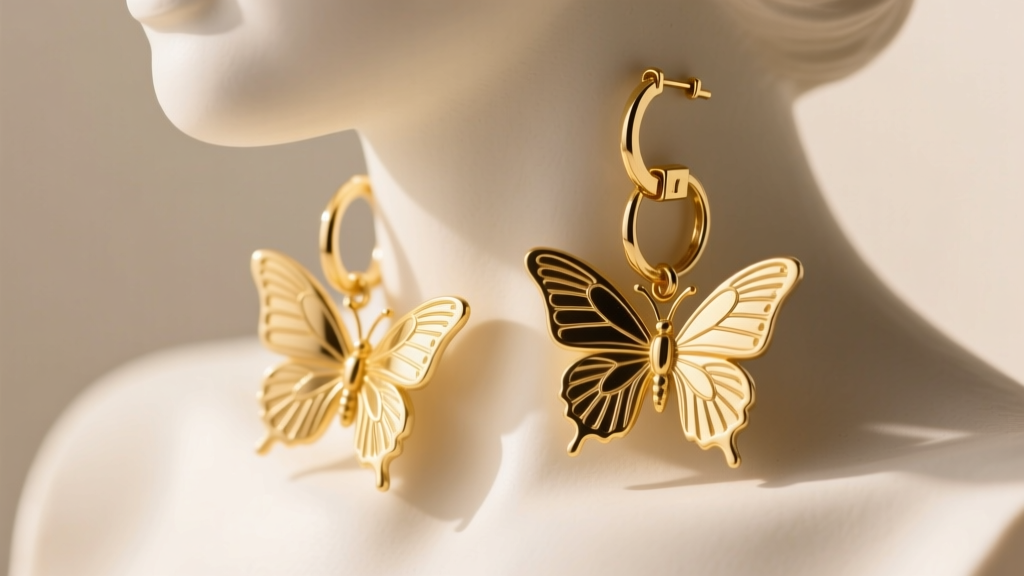
For those seeking the look of solid gold at a fraction of the cost, plated options are ubiquitous. However, not all plating is created equal, especially for textured pieces like butterfly hoops where friction and skin contact accelerate wear.
- Standard Gold Plated: Typically features a brass or copper base with a microscopic layer of gold (often less than 0.5 microns). The brass base is rigid, but the thin gold layer will wear off the high points of the butterfly wings within months, exposing the base metal which can oxidize and turn the skin green.
- Gold Vermeil: By definition, vermeil must feature a sterling silver base coated with a minimum of 2.5 microns of gold (usually 14k or 18k). The sterling silver base provides a hypoallergenic foundation, and the thicker gold layer ensures the intricate crevices of the butterfly design retain their color significantly longer. The Jewelers of America strictly regulates the vermeil standard, making it the only safe alternative to solid gold for sensitive ear piercings.
Material Comparison Chart
| Material Grade | Base / Core Metal | Gold Thickness | Hardness (HV) | Estimated Price Range | Best Use Case |
|---|---|---|---|---|---|
| 14k Solid Gold | N/A (Solid Alloy) | N/A | 120 - 140 | $250 - $600 | Everyday wear, high-relief wing detailing |
| 18k Solid Gold | N/A (Solid Alloy) | N/A | 90 - 110 | $500 - $1,200 | Special occasions, hypoallergenic needs |
| Gold Vermeil | Sterling Silver (925) | ≥ 2.5 microns | ~60 (Silver base) | $80 - $180 | Budget-conscious buyers with sensitive lobes |
| Gold Plated | Brass or Copper | < 0.5 microns | ~100 (Brass base) | $20 - $60 | Short-term trend wear only |
Gauge Thickness and the Pendulum Effect
The wire gauge of the hoop itself is a critical, often overlooked specification. Most standard hoop earrings are crafted in 20-gauge (0.81mm) or 18-gauge (1.0mm) wire. When a butterfly charm is integrated into the hoop—either as a fixed soldered element or a dangling drop—it alters the center of gravity.
If the butterfly is a dangling charm, it creates a "pendulum effect" with every movement of the wearer's head. This continuous kinetic stress concentrates entirely on the jump ring connecting the charm and the post that enters the ear. For gold butterfly hoop earrings featuring dangling elements, an 18-gauge (1.0mm) wire is mandatory. A 20-gauge wire subjected to the pendulum effect will experience metal fatigue at the curve of the post, eventually leading to a microscopic fracture and a lost earring. Always inspect the jump rings; laser-welded jump rings are vastly superior to traditional soldered ones, as they leave no weak seam for the charm to pry open.
Clasp Mechanisms and Metal Fatigue
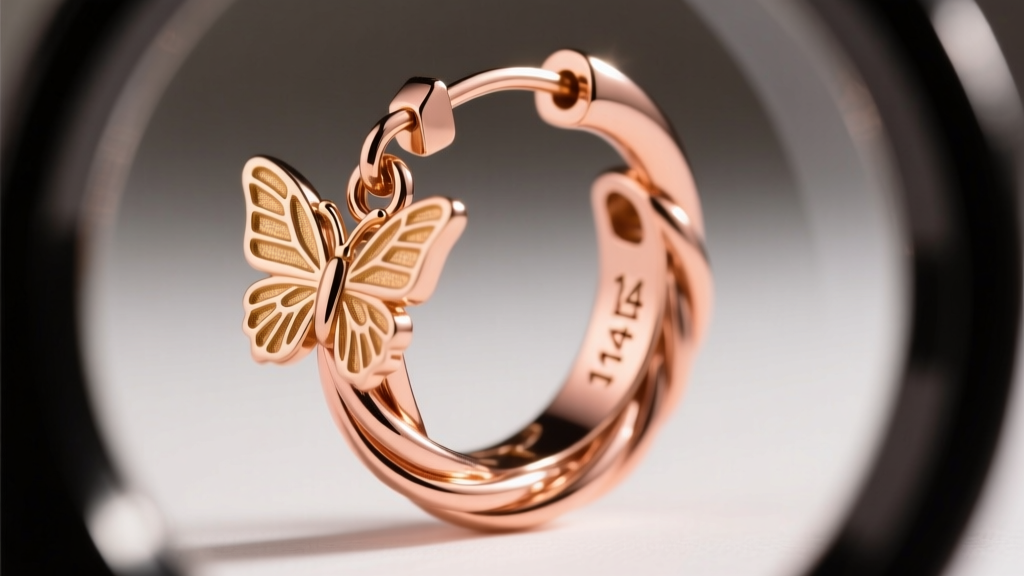
The clasp is the most common point of failure in hoop earrings. For butterfly huggie hoops (which sit tightly against the earlobe), hinged snap clasps are the industry standard. The longevity of a hinged clasp depends entirely on the alloy's spring-back memory and the precision of the CNC-machined hinge.
In 14k gold, the alloy's rigidity allows the clasp to snap shut securely and maintain tension over years of opening and closing. In softer 18k gold or vermeil (which relies on the softer sterling silver core), the tiny tongue of the clasp can compress over time, resulting in a loose fit that fails to click securely. If you are purchasing 18k or vermeil butterfly huggies, opt for designs that incorporate a secondary silicone friction back or a reinforced steel spring insert within the gold housing to guarantee security.
Care and Maintenance for Textured Gold Alloys
The intricate venation and textured surfaces of butterfly wings trap sebum, lotions, and environmental dust, which can dull the metal and accelerate tarnishing in lower-karat alloys or vermeil.
Expert Maintenance Rule: Never use ultrasonic cleaners on gold vermeil or heavily textured 14k gold butterfly hoops. The high-frequency cavitation can strip the micron-thick gold layer from vermeil and loosen micro-pave gemstones often set into the butterfly wings. Instead, use a soft-bristled baby toothbrush with a drop of mild dish soap and lukewarm water, gently agitating the crevices of the wings, then pat dry with a microfiber cloth.
By prioritizing material science over mere aesthetics, you ensure that your gold butterfly hoop earrings remain a structurally sound and visually stunning staple in your collection for years to come. Whether you choose the unyielding durability of 14k solid gold or the accessible luxury of heavy vermeil, understanding these metallurgical properties empowers you to buy with absolute confidence.


