Box Earring Organizer Materials: Prevent Tarnish & Damage
Discover how the materials in your box earring organizer impact jewelry longevity. Compare wood, acrylic, and linings to prevent tarnish and damage.

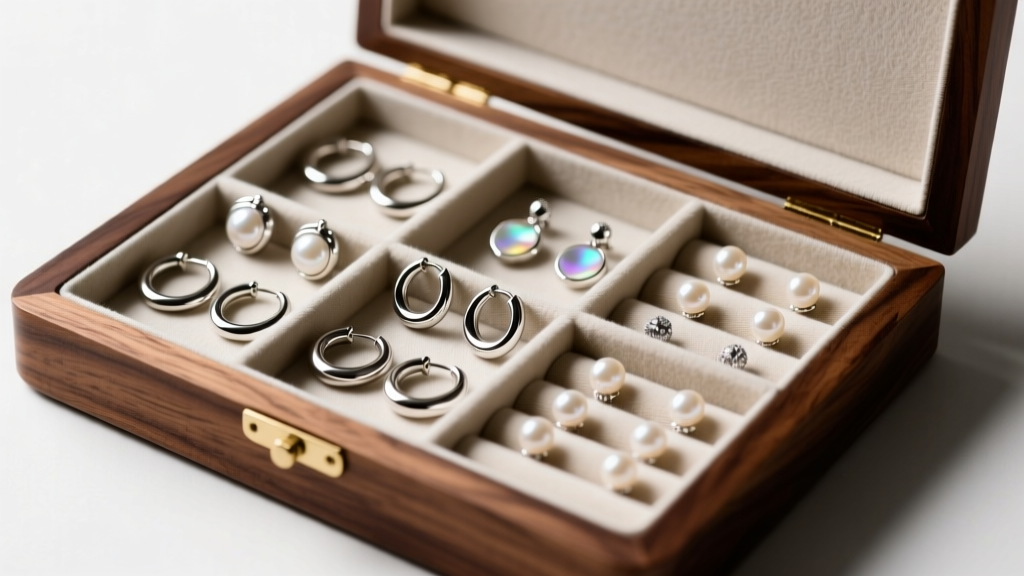
Most jewelry collectors obsess over carat weights, gold purities, and gemstone clarities, yet completely neglect the micro-environment where those pieces spend 90% of their time. As we navigate the jewelry landscape of 2026, where heirloom-quality and sustainable metals are highly prized, understanding the material science of your storage is no longer optional. A poorly constructed box earring organizer can actively destroy your collection through chemical off-gassing, moisture trapping, and abrasive friction. This guide breaks down the exact material properties of jewelry storage, helping you protect your investments from irreversible tarnish and structural damage.
The Hidden Chemistry of Jewelry Storage
To understand why organizer materials matter, we must first look at the chemistry of tarnish and metal degradation. Sterling silver (925) is an alloy containing 92.5% silver and 7.5% copper. While pure silver is highly resistant to tarnish, the copper component reacts rapidly with hydrogen sulfide ($H_2S$) and moisture in the air to form silver sulfide—the black, unsightly layer that ruins the finish of your favorite studs and hoops.
According to the Smithsonian Museum Conservation Institute, sulfur compounds are the primary catalyst for silver tarnish. These compounds don't just come from the air; they are frequently emitted by the very materials used to manufacture cheap jewelry boxes. Furthermore, copper and brass components in costume jewelry or rose-gold plating are highly susceptible to chlorides and acidic environments, which can cause permanent pitting and verdigris (green corrosion).
Shell Materials: Wood, Acrylic, and PU Leather
The exterior shell of a box earring organizer dictates its structural integrity, but more importantly, its chemical stability. Not all woods and plastics are created equal when it comes to preserving precious metals.
The MDF and Plywood Problem
Medium-Density Fiberboard (MDF) is the most common material in budget-friendly jewelry boxes. However, MDF is manufactured using urea-formaldehyde resins. These resins continuously off-gas Volatile Organic Compounds (VOCs), including formaldehyde and trace sulfur compounds, for years after production. When trapped inside a closed box, these gases create a highly corrosive microclimate that will blacken sterling silver and degrade delicate pearl nacre in a matter of weeks.
Solid Hardwoods: The Safe Standard
Solid, kiln-dried hardwoods like walnut, cherry, and maple are chemically stable and excellent for jewelry storage. However, the finish matters. Polyurethane and certain lacquers can trap residual solvents. The safest wooden organizers are finished with natural, fully cured oils like tung oil or raw linseed oil, which seal the wood without introducing harmful chemical vapors.
Acrylic and Glass: The Humidity Trap
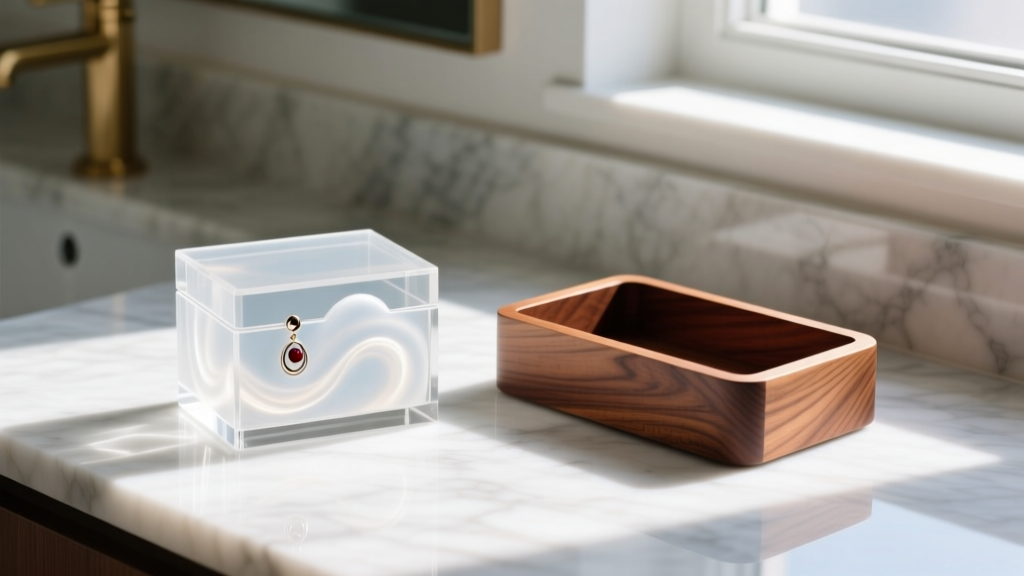
Acrylic and glass organizers are completely inert, meaning they will never off-gas or chemically react with your earrings. Their flaw, however, is environmental control. Because they are entirely non-porous, any humidity trapped inside the box when closed will remain there. If you store gold hoops or silver studs in an acrylic box in a humid bathroom, you are essentially creating a greenhouse for oxidation and moisture damage.
The Lining: Where the Magic (or Damage) Happens
The interior lining of your box earring organizer is the material that actually touches your jewelry. This is where abrasive damage and chemical transfer occur. The Gemological Institute of America (GIA) emphasizes that improper storage materials can cause micro-scratches on soft gems and accelerate metal tarnishing.
- Standard Synthetic Velvet: Often made from nylon or polyester, standard velvet is generally safe from a chemical standpoint but can generate static electricity, which attracts dust and microscopic abrasive particles to your earrings.
- Untreated Flannel and Cotton: While natural, standard cotton and flannel are often treated with acidic sizing agents during manufacturing. These acids can degrade soft metals and damage porous gemstones like turquoise and opals.
- Acid-Free Archival Felt: Used in museum conservation, acid-free felt is chemically neutral and provides excellent cushioning for heavy drop earrings and delicate ear cuffs without risking chemical transfer.
- Pacific Silvercloth: The gold standard for silver storage. This material is embedded with microscopic silver particles that act as a sacrificial anode. The sulfur in the air reacts with the particles in the cloth rather than your sterling silver earrings, keeping them brilliantly polished for years.
Material Interaction Matrix
Use the following data table to match your specific earring collection with the safest box earring organizer materials.
| Organizer Shell | Ideal Lining | Best Suited For | Avoid Storing | Tarnish Risk Level |
|---|---|---|---|---|
| Solid Walnut/Cherry | Pacific Silvercloth | Sterling silver studs, huggies | None | Very Low |
| MDF / Particleboard | Synthetic Velvet | Stainless steel, platinum | Silver, pearls, opals | High |
| Cast Acrylic | Acid-Free Microfiber | 14k/18k Gold, diamonds | Porous gems (if humid) | Low (if dry) |
| PU / Vegan Leather | Cotton Flocking | Costume jewelry, brass | Fine silver, karat gold | Medium-High |
Strategic Storage for Different Earring Styles
Beyond chemical compatibility, the physical design of the organizer must accommodate the specific mechanical stresses of different earring types.
Studs and Post Earrings
Studs require secure friction or screw-back retention. Organizers with thin, low-density foam inserts often fail to grip the posts tightly, allowing the earrings to shift and bend the posts. Look for organizers with high-density, die-cut foam or tightly woven fabric slots that hold the 20-gauge or 18-gauge posts firmly upright to prevent warping.
Hoops and Huggies
Huggies and small hoops are best stored flat in compartmentalized boxes to prevent the hinged clasps from bearing weight. Large, thin-wire hoops, however, should be hung. Storing large hoops flat can lead to warping if heavier items are placed on top, compromising the circular geometry and causing the post to misalign with the clasp.
Ear Cuffs and Cartilage Pieces
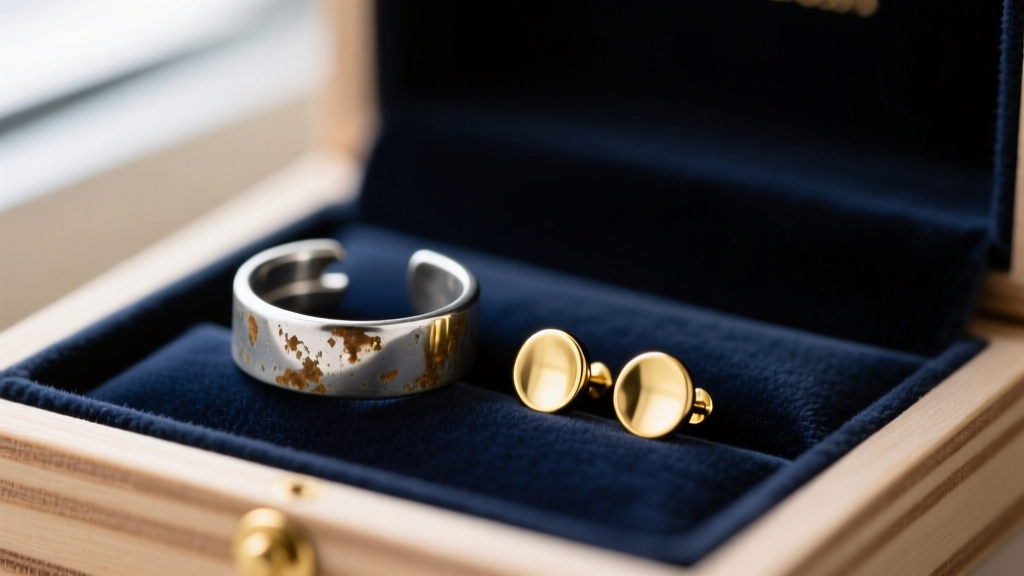
Ear cuffs rely on precise metal tension to stay on the ear without piercing. Storing them in cramped, overstuffed boxes can stretch the metal, ruining the tension. Dedicated, wide compartments with plush, acid-free lining are essential to maintain the structural integrity of non-piercing cartilage cuffs.
Climate Control and Final Maintenance
Even the best box earring organizer requires environmental management. To combat humidity in acrylic or glass boxes, place a small, rechargeable silica gel desiccant packet in the corner of the box. For wooden boxes prone to off-gassing, activated charcoal sachets can help absorb VOCs and neutralize odors. Avoid storing your organizer in bathrooms or near exterior windows where temperature fluctuations cause condensation.
The Final Verdict
Investing in a high-quality box earring organizer is an investment in the lifespan of your jewelry. By prioritizing solid hardwoods over MDF, demanding acid-free or sacrificial linings, and matching the storage environment to your specific metal types, you ensure that your earrings remain as brilliant as the day you bought them. Stop letting your storage box be the silent killer of your jewelry collection; choose materials that protect, preserve, and display your pieces with the scientific precision they deserve.


