Can You Bring Your Own Earrings to Get Pierced? Prep & Care Guide
Wondering if you can bring your own earrings to get pierced? Learn the strict material, gauge, and sterilization rules for safe healing.

The Short Answer: Can You Bring Your Own Earrings to Get Pierced?
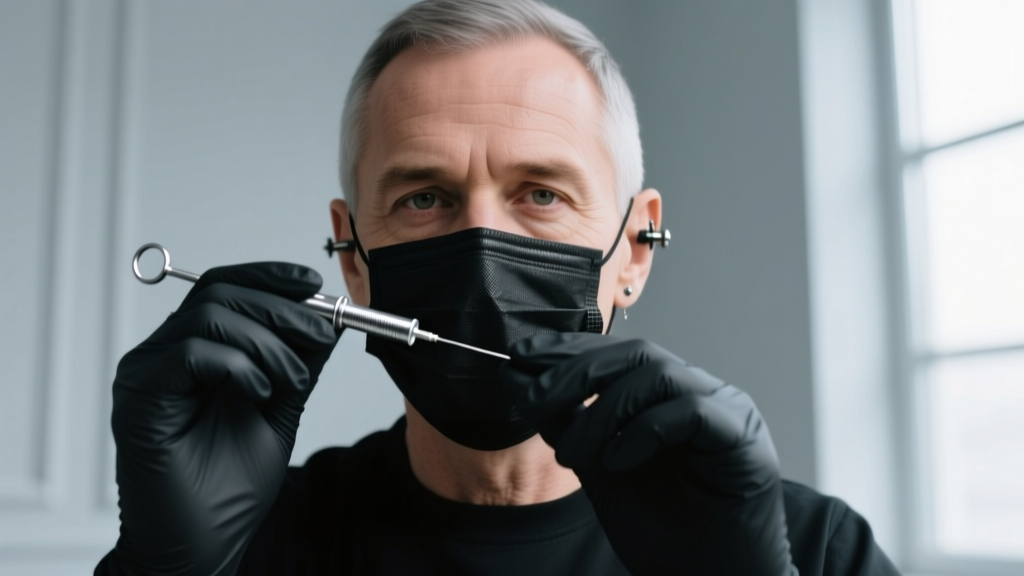
The short answer to the common question, 'can you bring your own earrings to get pierced,' is yes—but with massive, non-negotiable asterisks. Professional piercing studios operate under strict medical-grade hygiene standards. While many high-end studios prefer you purchase from their curated, guaranteed-sterile inventory, most reputable piercers will install your personal jewelry, provided it passes a rigorous vetting process. This vetting isn't about brand snobbery; it is about biological compatibility, structural integrity, and the ability to withstand extreme sterilization protocols.
From a care and maintenance perspective, bringing your own jewelry shifts the responsibility of initial prep partially onto you, and requires a deep understanding of how different metals interact with fresh, open wounds. If you plan to bring a cherished piece or a custom-ordered design to your appointment, you must understand the material science, gauge requirements, and sterilization limits that will dictate whether your piercer accepts or rejects your jewelry.
Material Grades: What Survives the Autoclave (and Your Body)
The most critical factor in your jewelry's approval is its material composition. Fresh piercings are essentially puncture wounds that require biocompatible metals to prevent contact dermatitis, heavy metal leaching, and severe rejection. According to the Association of Professional Piercers (APP), only a handful of materials are safe for initial piercings.
- Implant-Grade Titanium (ASTM F-136): The gold standard. It is entirely nickel-free, highly polished, and biologically inert. It will easily survive the high heat of an autoclave without degrading.
- Niobium: A reactive metal that is also nickel-free and highly biocompatible. It can be anodized to different colors and is safe for fresh piercings.
- Solid 14k or 18k Gold (Nickel-Free): Must be alloyed for biocompatibility (avoiding nickel and zinc). Note that gold-plated or gold-filled jewelry is strictly forbidden, as the thin plating will wear away or blister in the autoclave, exposing base metals to your wound.
What will get your jewelry rejected? 'Surgical steel' (316L) contains 8-10.5% nickel, which triggers allergic reactions in healing fistulas. Sterling silver oxidizes and traps bacteria in its porous surface. Plastics, bioplasts, and acrylics are highly porous and will melt or warp under sterilization temperatures.
The Threading Test: Internally Threaded vs. Externally Threaded
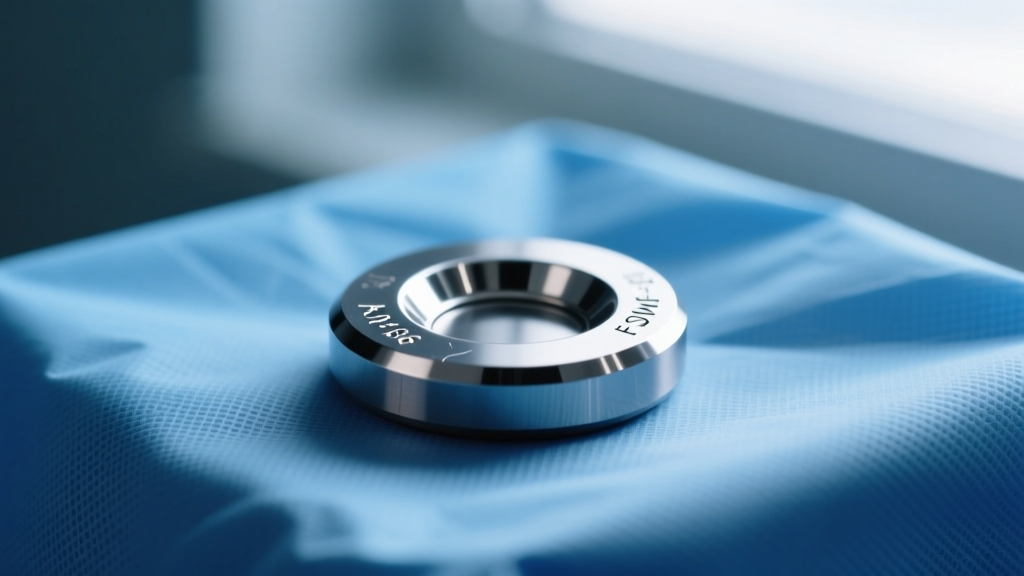
Even if your titanium earring is the correct alloy, a piercer will inspect the threading. Externally threaded jewelry (where the screw pattern is on the post that passes through the skin) acts like a microscopic cheese grater, tearing the delicate new tissue of the fistula upon insertion and harboring bacteria in the thread grooves. Professional studios mandate internally threaded (the screw is on the decorative end) or threadless (push-pin) jewelry. If your brought-in earrings are externally threaded, expect the piercer to refuse them, regardless of the metal quality.
Sterilization Limits: The Autoclave Reality Check
To ensure your jewelry is entirely free of pathogens, the piercer will place it in a medical autoclave. This machine uses pressurized steam at 121°C (250°F) for 15 to 20 minutes to achieve sterility. The CDC guidelines on steam sterilization confirm this is the most reliable method for destroying all microbial life, including bacterial spores.
Gemstones and Organic Materials That Will Fail
While metals survive the autoclave, many decorative elements do not. If your custom earrings feature any of the following, the piercer cannot safely sterilize them for a fresh piercing:
- Opals, Pearls, and Coral: These organic or water-containing stones will crack, cloud, or completely shatter under high heat and pressure.
- Epoxy-Set Gems: Many commercial jewelry brands use glue or epoxy to set stones. The autoclave will melt the adhesive, causing the gem to fall out or introducing toxic chemicals into your open wound.
- Wood, Bone, and Horn: These porous organics will warp, splinter, and cannot be sterilized via steam.
- Ultrasonic Cleaning: If you own an ultrasonic jewelry cleaner, run your metal jewelry (without delicate gems) in a bath of distilled water and a drop of mild, fragrance-free dish soap for 3 minutes. This vibrates away microscopic dust, polishing compounds, and manufacturing oils.
- Rinse and Dry: Rinse thoroughly under distilled water. Do not use tap water, as it contains trace minerals and chlorine that can leave water spots.
- Safe Transport: Place the cleaned jewelry in a brand-new, unused ziplock bag or a sterile glass container. Do not wrap it in tissue paper or cotton, as these materials leave microscopic fibers clinging to the metal, which the piercer will have to painstakingly remove with sterile tweezers before autoclaving.
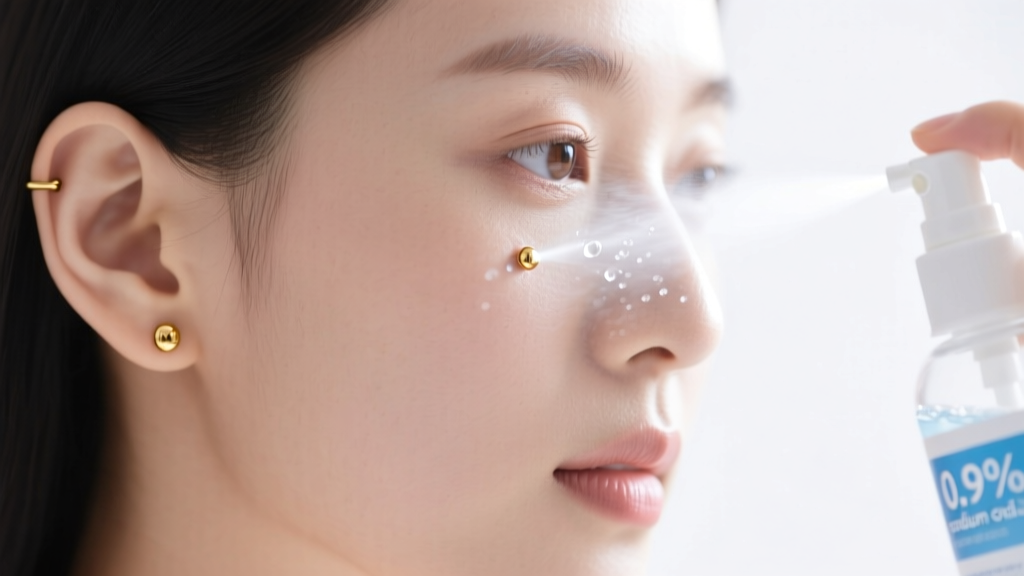
- Spray, Don't Soak: Use a sterile, canned 0.9% sodium chloride wound wash (with no additives, preservatives, or aloe). Spray the front and back of the piercing for 3-5 seconds, twice a day.
- Emulsify Crusties: Allow the saline to soften any lymph fluid ('crusties') that has accumulated around the post. Never pick or force crusties off, as this rips the fragile healing tissue and restarts the inflammatory phase.
- Dry Thoroughly: Moisture trapped behind the ear or under the flat-back disc breeds bacteria and yeast. After spraying, gently pat the area dry with non-woven gauze, or use a hair dryer on the 'cool' setting to ensure the area is completely dry.
Pro-Tip: If your jewelry features delicate gems, ask the piercer if they can sterilize a plain titanium post for the initial piercing, allowing you to swap to your gemstone piece only after the fistula is fully healed (typically 6-12 months for cartilage).
Gauge and Post Length: Avoiding the 'Embedment' Trap
Bringing standard mall-kiosk earrings to a professional piercing is a recipe for disaster. Standard fashion earrings usually feature 20-gauge (0.8mm) or 22-gauge (0.6mm) posts, which are far too thin for a stable, professional piercing. Furthermore, fashion posts are exceptionally short. A fresh piercing will swell significantly within the first 48 hours. If the post is too short, the backing will embed into the swelling tissue, cutting off circulation and requiring emergency surgical removal.
| Piercing Type | Standard Professional Gauge | Required Initial Post Length | Swelling Allowance |
|---|---|---|---|
| Standard Lobe | 18g (1.0mm) or 16g (1.2mm) | 5/16' (8mm) to 3/8' (10mm) | High |
| Helix / Cartilage | 16g (1.2mm) | 1/4' (6mm) to 5/16' (8mm) | Moderate |
| Tragus / Conch | 16g (1.2mm) | 5/16' (8mm) | Moderate to High |
| Industrial (Bar) | 14g (1.6mm) | Custom measured (usually 1.25' to 1.5') | High |
Before your appointment, measure your jewelry's post length using digital calipers. If your 16-gauge titanium labret has a 6mm post and you are getting a standard lobe piercing, the piercer will likely swap the post for a longer one from their stock to accommodate the initial swelling, charging you only for the replacement post.
Pre-Appointment Prep: How to Clean Your Jewelry at Home
While the piercer will handle the final medical sterilization, you should never bring jewelry straight out of a dusty jewelry box or a plastic shipping bag. Proper pre-appointment maintenance ensures the ultrasonic cleaning process at the studio is more effective.
Post-Piercing Care: Maintaining Your Custom Jewelry During Healing
Once your custom jewelry is safely installed, the healing process begins. The care and maintenance of your new piercing relies heavily on the LITHA method (Leave It The Hell Alone) combined with a strict saline regimen.
The Daily Cleaning Protocol
The Crucial 'Downsize' Appointment
Remember the long post required to accommodate swelling? Once the swelling subsides (usually between weeks 4 and 8), you must return to the piercer to 'downsize' to a shorter post. Failing to downsize leaves excess metal protruding behind the ear, which can catch on hair, masks, and clothing, leading to irritation bumps (hypertrophic scarring) and piercing migration. Your piercer will measure the healed fistula and swap in a snug-fitting post, ensuring your custom jewelry sits flush and comfortable for the remainder of the healing journey.
Red Flags: When a Piercer Will Refuse Your Jewelry
'A professional piercer's primary duty is to your health and the longevity of the piercing. If a client brings in jewelry that is porous, improperly alloyed, or structurally unsound for a fresh wound, we will refuse to use it. It is not a rejection of the client's taste, but a refusal to participate in guaranteed bodily harm.' — Senior APP-Certified Piercer
Do not take offense if a piercer rejects your brought-in earrings. They are protecting you from heavy metal toxicity, severe allergic reactions, and botched healings. If your jewelry is rejected, ask the piercer for recommendations on reputable vendors (such as Intrinsic Body, Industrial Strength, or Maria Tash) where you can order custom, internally-threaded, implant-grade pieces that will pass their strict sterilization and safety protocols with flying colors.


