Bronze Drop Earrings: 2026 Trend Analysis & Style Guide
Discover the 2026 trends for bronze drop earrings. Explore alloy grades, patina care, face-shape styling, and artisanal designs in our expert guide.

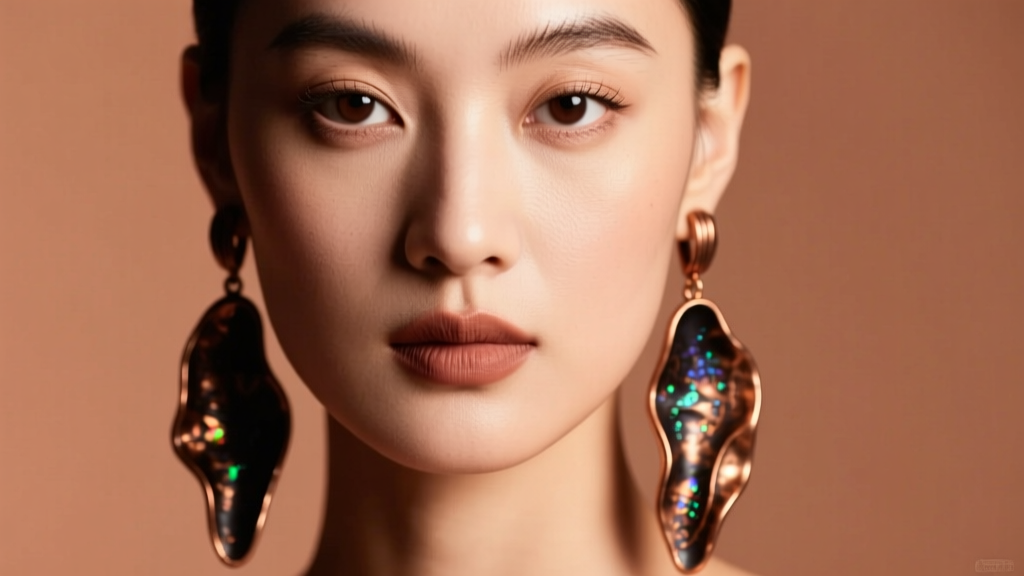
The 2026 Shift: Why Bronze is Reclaiming the Drop Silhouette
In the landscape of contemporary jewelry, 2026 marks a definitive pivot away from the hyper-polished, minimalist gold aesthetics that dominated the early 2020s. Today’s trend forecast points toward raw, tactile, and historically grounded materials. At the forefront of this movement are bronze drop earrings, a style that perfectly marries ancient metallurgical warmth with modern kinetic silhouettes. The drop earring—defined by its elongated, gravity-driven form—has become the primary canvas for artisanal bronze work, allowing designers to showcase the metal's unique oxidation properties and substantial drape.
Unlike static studs or rigid hoops, drop earrings introduce movement, catching the light and highlighting the complex, multi-tonal patinas that only true bronze can achieve. According to trend forecasters and recent runway analyses from Paris and Milan, the demand for 'bruised metals'—alloys that show intentional signs of aging, casting porosity, and chemical oxidation—has surged by over 40% in the luxury artisan sector. This guide explores the metallurgy, structural engineering, and styling frameworks necessary to master the bronze drop earring trend this year.
Metallurgy & Material Grades: Not All Bronze is Created Equal
To understand the value and behavior of bronze drop earrings, one must first decode the metallurgy. The term 'bronze' is frequently misused in commercial jewelry to describe any brownish base metal. True bronze is an alloy consisting primarily of copper (usually 88%) and tin (12%). However, modern jewelers and metallurgists often rely on specific variations to optimize for skin safety and structural integrity.
Silicon Bronze (C65500) vs. Architectural Bronze (C38500)
When sourcing high-quality bronze drops, you will typically encounter two distinct alloys. Silicon Bronze (C65500) is the gold standard for premium artisan jewelry. Containing copper, silicon, and manganese, it offers superior corrosion resistance, a rich reddish-gold hue, and a significantly lower risk of causing contact dermatitis compared to high-tin bronzes. Conversely, Architectural Bronze (C38500) is, despite its name, actually a brass alloy (copper and zinc). It yields a yellower, more rigid drop earring that oxidizes to a dull brown rather than a rich, warm umber. For jewelry that rests against the skin, silicon bronze is the superior choice.
For a deeper understanding of copper-based alloys and their jewelry applications, the Copper Development Association provides exhaustive metallurgical breakdowns that inform modern jewelry casting techniques.
Weight Distribution and Gauge Engineering
Bronze has a density of approximately 8.8 g/cm³. While slightly lighter than sterling silver (10.5 g/cm³), a solid cast bronze drop earring measuring 60mm in length and 15mm in width can easily weigh between 12 and 18 grams. This substantial weight requires precise engineering to prevent lobe stretching or tearing. Expert jewelers mitigate this by utilizing 20-gauge half-hard ear wires (often crafted from hypoallergenic niobium or sterling silver) paired with the bronze drop. Furthermore, the integration of silicone O-ring earring backs is no longer optional; it is a structural necessity to distribute the kinetic load of a heavy bronze drop across a wider surface area of the earlobe.
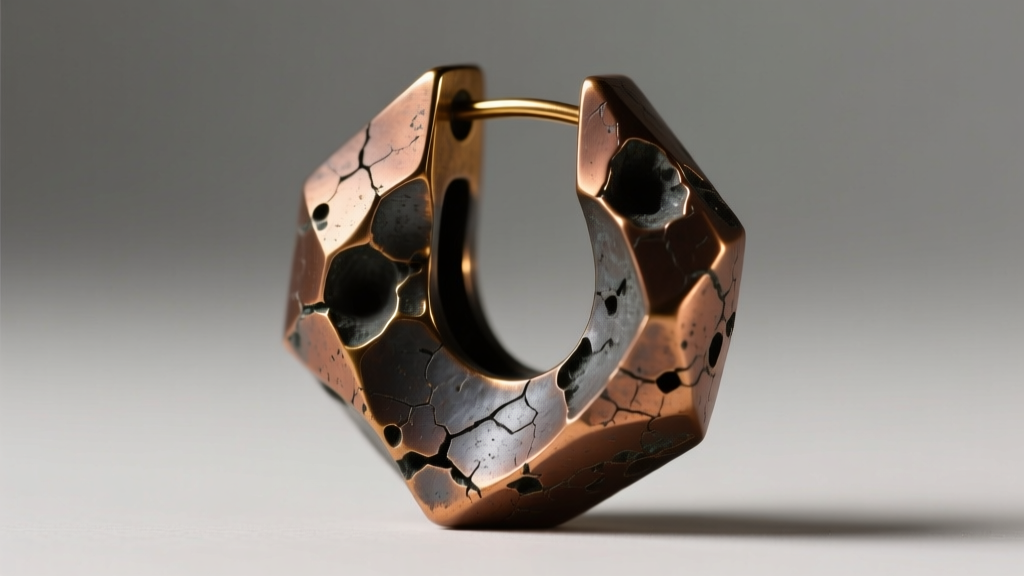
2026 Silhouette Trends: The Anatomy of the Drop
The 'drop' category encompasses several distinct structural variations. In 2026, two specific silhouettes are dominating the artisan market, each requiring different fabrication techniques and offering unique visual impacts.
The Kinetic Articulated Drop
This design relies on movement. Instead of a single solid piece of metal, the earring is constructed from multiple geometric bronze segments connected by jump rings. The engineering challenge here is friction and wear. To ensure longevity, artisans use 18-gauge closed jump rings to connect the segments. If the rings are too thin (e.g., 22-gauge), the dense bronze segments will grind through the metal over time, leading to structural failure. When executed correctly, the articulated drop creates a mesmerizing, liquid-metal effect that shifts dynamically as the wearer moves, making it a favorite for evening and editorial styling.
The Brutalist Cast Monolith
Embracing the 'rough luxury' trend, the brutalist monolith is a single, elongated piece of bronze cast using the lost-wax method, often retaining the organic, pitted texture of the original wax or the investment mold. These drops are celebrated for their asymmetry and raw surface topography. Designers are intentionally leaving casting sprues and gating marks visible, treating the manufacturing process as an aesthetic feature rather than a flaw to be polished away.
Proportion & Face Shape Matrix
Because bronze drop earrings possess significant visual weight—both in physical mass and optical warmth due to their earthy tones—proportion is critical. An oversized bronze drop can easily overwhelm delicate features, while a slender drop might look unbalanced on a stronger jawline. Below is our 2026 styling matrix for matching drop dimensions to facial geometry.
| Face Shape | Ideal Drop Length | Ideal Width / Volume | Recommended Silhouette |
|---|---|---|---|
| Oval | 40mm - 60mm | 10mm - 20mm | Kinetic Articulated (adds dynamic movement) |
| Round | 50mm - 75mm | 5mm - 12mm (Slender) | Linear Monolith (elongates the facial profile) |
| Square | 35mm - 50mm | 15mm - 25mm (Curved) | Teardrop or Oval Cast (softens angular jawlines) |
| Heart | 45mm - 65mm | Bottom-heavy (20mm+) | Chandelier or Flared Drop (balances narrow chin) |
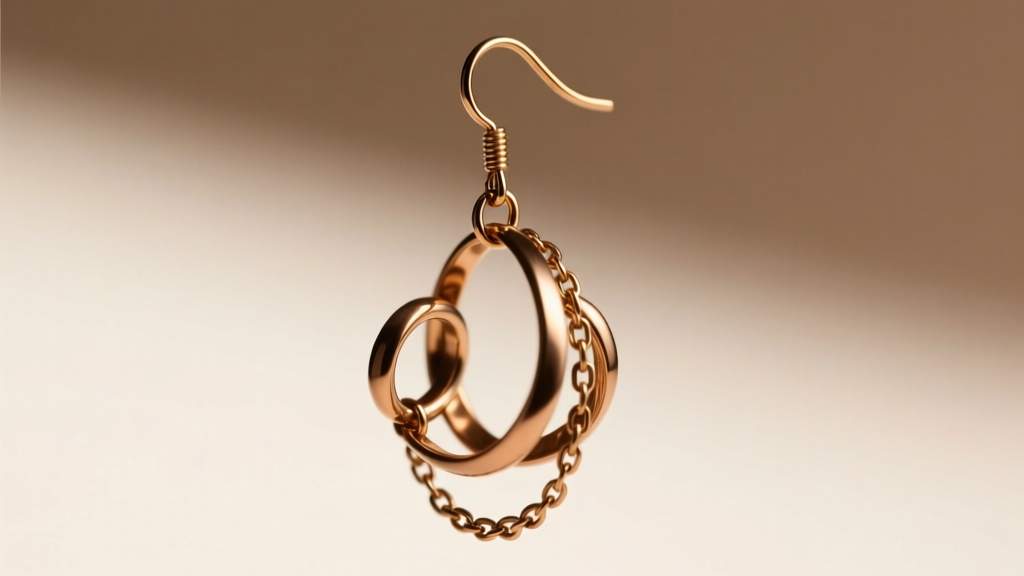
Patina as a Design Element: Embracing Oxidation
One of the most compelling aspects of bronze is its reactivity. Unlike gold or platinum, bronze interacts with oxygen, moisture, and the wearer's natural skin chemistry. In 2026, high-end jewelers are no longer trying to prevent this oxidation; they are orchestrating it.
'The modern collector doesn't want a static piece of jewelry. They want a living metal that records the environment and the wearer. A bronze drop earring that shifts from bright copper-pink to deep mahogany over six months is a feature, not a defect.' — Contemporary Metalsmithing Journal, 2025
Artisans achieve high-contrast, antique finishes using Liver of Sulfur (potassium polysulfide). By submerging the cast bronze drop in a heated liver of sulfur solution, the metal rapidly oxidizes to a deep, charcoal-black. The jeweler then uses fine abrasive pads to selectively polish the high points of the drop, leaving the dark patina trapped in the textured recesses. This technique highlights the brutalist topography of the metal and creates a striking visual depth that flat, polished metals cannot replicate.
Managing the 'Green Ear' Phenomenon
The most common consumer complaint regarding copper-rich alloys is the green discoloration left on the skin. This is caused by copper reacting with chlorides and acids in human sweat to form copper chloride. To combat this without sacrificing the metal's natural luster, reputable artisans seal the ear wires and the back of the earring posts with microcrystalline wax (such as Renaissance Wax) or a specialized jewelry-grade polyurethane coating. When purchasing bronze drops, always inquire about the sealing method used on the components that maintain direct, prolonged contact with the skin.
Sourcing, Pricing, and Authenticity
As the demand for artisanal bronze jewelry grows, the market has become saturated with misleading listings. It is vital to distinguish between solid cast bronze, bronze-plated brass, and electroformed copper. Here is a realistic pricing framework for the 2026 market:
- Bronze-Plated Base Metal ($20 - $45): Often found in fast-fashion retail. The 'bronze' is merely a micron-thin flash plating over brass or zinc alloy. These will wear through to the base metal within months and lack the structural density of solid drops.
- Solid Cast Artisan Bronze ($85 - $250): The sweet spot for genuine, handcrafted jewelry. These pieces are cast in small batches, feature intentional patina work, and utilize high-quality findings (like 20g sterling silver ear wires). You are paying for the metallurgical integrity and the artist's finishing labor.
- High-Fashion / Designer Bronze ($350 - $800+): Luxury houses and established avant-garde designers who incorporate bronze into their seasonal collections. The premium here is driven by brand equity, complex kinetic engineering, and the integration of secondary materials like raw diamonds or oxidized silver accents.
For consumers looking to verify material claims, the Gemological Institute of America (GIA) offers excellent resources on identifying base metals and understanding the longevity of various jewelry alloys.
Final Styling Verdict
The resurgence of bronze drop earrings in 2026 is a testament to a broader cultural desire for authenticity, texture, and wearable art. By understanding the specific alloy grades, respecting the physics of weight distribution, and embracing the living nature of copper oxidation, you can confidently integrate these pieces into a modern wardrobe. Whether you opt for the kinetic energy of an articulated silicon bronze drop or the quiet, heavy presence of a brutalist monolith, bronze offers a warm, grounding counterpoint to the sterile perfection of traditional fine jewelry.


