Technical Guide to Brown Diamond Earrings & Color Grades
Explore the technical nuances of brown diamond earrings. Learn C1-C7 color grading, ideal metal pairings, and pricing for champagne and cognac stones.

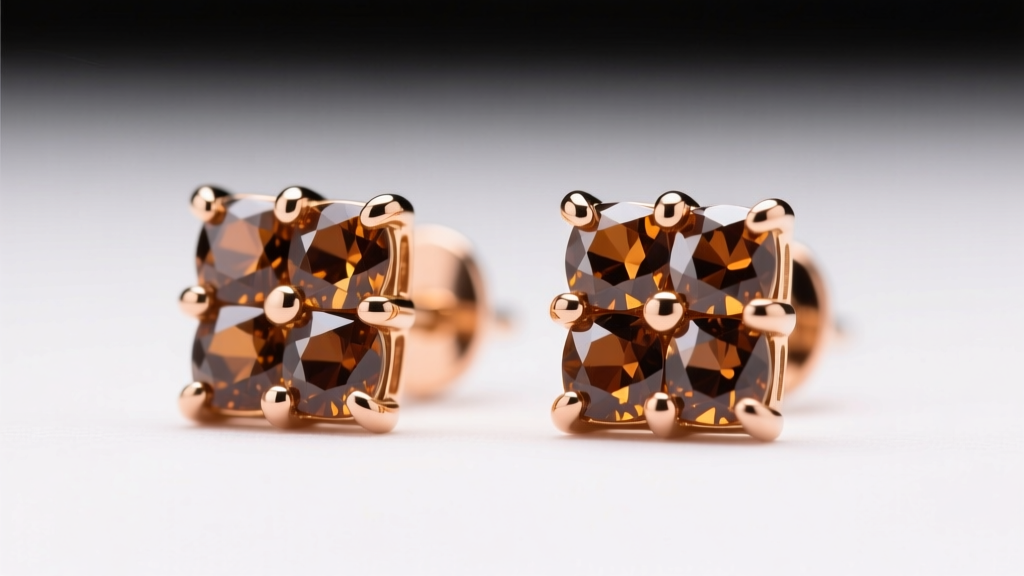
The Crystallography of Brown Diamonds
Historically relegated to industrial abrasives due to their perceived lack of optical purity, brown diamonds have undergone a radical gemological rebranding over the last two decades. To properly evaluate brown diamond earrings, one must first understand the crystallographic phenomena that dictate their hue. Unlike yellow diamonds, which derive their color from nitrogen impurities substituting for carbon atoms in the crystal lattice, brown diamonds owe their coloration primarily to plastic deformation.
As the diamond is forced toward the Earth's surface through kimberlite pipes, immense tectonic pressure causes the crystal lattice to distort. This deformation creates microscopic parallel slip planes, known as 'graining,' which absorb specific wavelengths of light and transmit the warm brown spectrum. According to the GIA Gem Encyclopedia, the intensity of the brown hue is directly proportional to the degree of this internal plastic deformation. Understanding this structural reality is critical for jewelers, as heavily grained stones can exhibit internal stress, making them more susceptible to cleavage if struck at the wrong angle during the setting process.
Decoding the Color Scales: Argyle vs. GIA
When sourcing brown diamond earrings, you will encounter two distinct grading nomenclatures. The Gemological Institute of America (GIA) utilizes a descriptive scale ranging from Faint Brown to Fancy Deep Brown. Conversely, the now-closed Argyle Mine in Western Australia—which historically produced over 80% of the world's naturally colored diamonds—developed the proprietary 'C' scale to market their stones more effectively to luxury consumers.
| Argyle Grade | Commercial Term | GIA Equivalent | Earring Application |
|---|---|---|---|
| C1 - C2 | Light Champagne | Faint to Very Light Brown | Subtle halo accents, melee stones |
| C3 - C4 | Medium Champagne | Light to Fancy Light Brown | Cluster studs, geometric drops |
| C5 - C6 | Dark Champagne / Cognac | Fancy Brown to Fancy Dark Brown | Primary center stones in studs |
| C7 | Fancy Cognac | Fancy Deep Brown | High-contrast bezel settings |
For statement stud earrings, the C5 to C7 range is highly desirable. Stones in the C1-C2 range often lack the saturation required to stand alone as center stones and are better utilized as accent melee in pavé settings. Furthermore, buyers must be vigilant regarding High-Pressure High-Temperature (HPHT) treatments. Some lower-quality, heavily included white diamonds are artificially irradiated and annealed to mimic the brown hue. Always demand a GIA or AGS report that explicitly states the origin of color is 'Natural'.
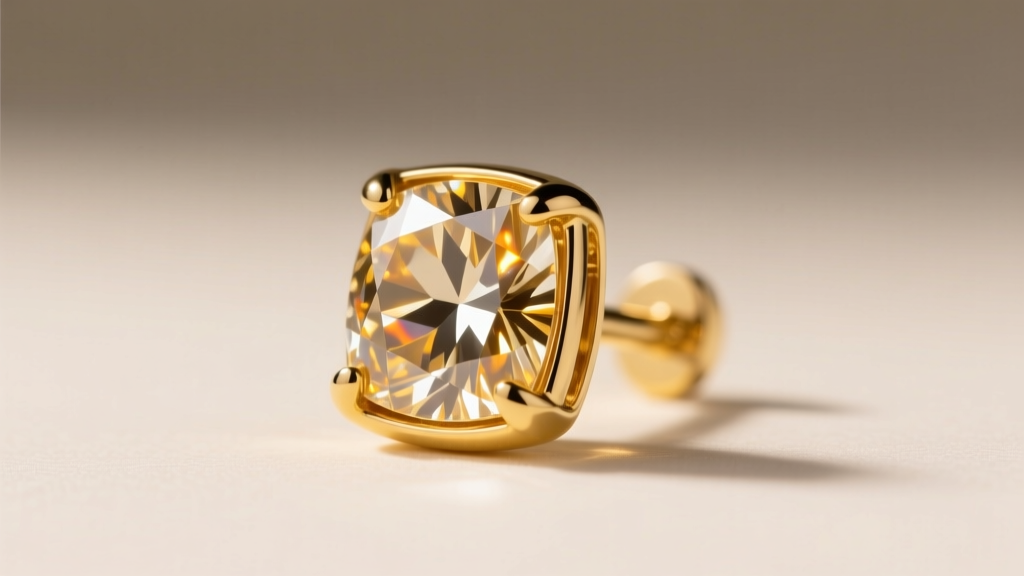
Optimizing Cut and Proportions for Color Retention
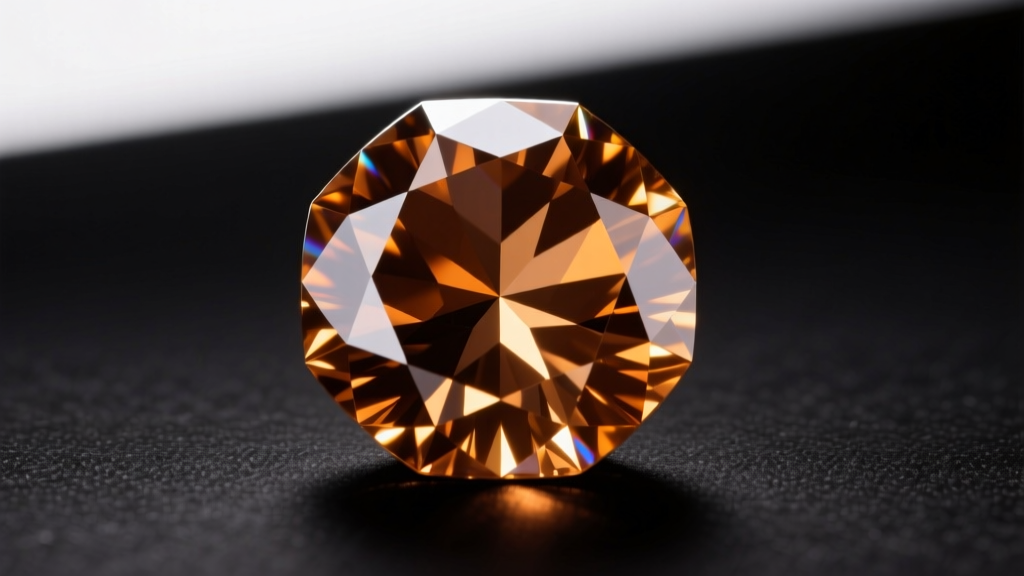
The lapidary approach for brown diamonds fundamentally differs from that of colorless diamonds. A round brilliant cut is engineered to maximize light return (brilliance) and dispersion (fire). However, excessive brilliance can actually 'wash out' the body color of a brown diamond, making a Fancy Brown stone face up closer to a muddy gray or faint yellow.
To preserve and amplify the warm cognac and champagne hues, expert cutters favor radiant, cushion, and pear cuts. These shapes feature larger, more open facet tables and deeper pavilions, which increase the optical path length of light traveling through the stone. This extended path allows the diamond to absorb more light, thereby saturating the brown color. When selecting brown diamond earrings, look for radiant cuts with a depth percentage between 65% and 69%, and a table percentage under 65%. This specific geometry ensures the rich, molten color is retained when viewed from the top down.
Clarity Tolerances in Brown Stones
Because the dark body color of cognac and chocolate diamonds naturally masks internal inclusions, buyers can be far more aggressive with clarity grading than they would with D-color diamonds. While a VS2 or VVS2 is standard for white diamond studs, an SI1 or even a well-chosen SI2 brown diamond will appear eye-clean to the naked eye. The brown hue effectively camouflages carbon spots and internal feathers, allowing you to reallocate budget toward higher carat weights or superior cut quality.
Metallurgical Pairings: Enhancing the Warm Spectrum
The metal alloy used in the earring setting acts as a reflector, bouncing light back through the diamond's pavilion. Choosing the wrong metal can neutralize the stone's warmth. The Natural Diamond Council notes that metal color significantly influences the perceived hue of fancy colored diamonds.
- 18k Rose Gold (75% Au, 22.25% Cu, 2.75% Ag): The optimal choice for C5-C7 cognac diamonds. The high copper content in rose gold emits a warm, reddish-pink reflectance that amplifies the secondary orange and red modifiers often found in deep brown diamonds.
- 18k Yellow Gold (75% Au, 12.5% Cu, 12.5% Ag): Ideal for C3-C4 champagne diamonds. The pure yellow reflectance enhances the golden, honey-like undertones of lighter brown stones without overpowering them.
- Platinum / 18k White Gold: Generally discouraged for solitaire brown studs, as the cool, blue-white reflectance creates a jarring contrast that can make the brown hue appear muddy. However, white metals are highly effective when used in 'halo' settings, where a ring of bright white melee diamonds provides a high-contrast border that makes the center brown stone pop.
Pricing Metrics and Market Valuation
Brown diamonds occupy a unique position in the gemological market: they offer exceptional carat weight accessibility without the exponential price premiums associated with colorless or rare fancy-colored diamonds (like pinks or blues). The closure of the Argyle mine in late 2020 created a supply shock for high-quality, untreated cognac stones, stabilizing and slightly elevating their market floor.
| Diamond Type | Color Grade | Average Retail Price (USD) | Price Per Carat Metric |
|---|---|---|---|
| Colorless | G Color | $6,500 - $8,200 | $3,250 - $4,100 / ct |
| Champagne | C3 - C4 (Fancy Light) | $1,800 - $2,400 | $900 - $1,200 / ct |
| Cognac | C5 - C6 (Fancy Brown) | $2,500 - $3,800 | $1,250 - $1,900 / ct |
| Deep Cognac | C7 (Fancy Deep) | $3,200 - $4,500 | $1,600 - $2,250 / ct |
"The value proposition of brown diamond earrings lies in their ability to deliver substantial carat weight and dramatic visual impact at roughly 40% to 60% of the cost of equivalent white diamond studs, provided the stones are naturally colored and untreated."
Setting Engineering and Durability Considerations
When designing or purchasing brown diamond earrings, the physical setting must account for the stone's unique structural vulnerabilities. Because the brown color is a result of plastic deformation and internal graining, heavily colored C7 diamonds can possess inherent structural weaknesses along their cleavage planes.
For daily-wear studs, a bezel or half-bezel setting is highly recommended over traditional four-prong martini settings. A bezel setting encases the girdle—the widest and most vulnerable edge of the diamond—in a continuous ribbon of metal. This not only protects the girdle from chipping upon impact but also creates a mirror-like interior wall that further reflects warm light back into the stone. If a prong setting is preferred for maximum light exposure, ensure the diamond has a 'Medium' to 'Slightly Thick' girdle and that the prongs are positioned away from any surface-reaching feathers noted on the GIA plotting diagram.
Final Verdict: Sourcing Authentic Stones
Brown diamond earrings represent a masterclass in combining gemological science with avant-garde aesthetic design. By prioritizing radiant or cushion cuts for color retention, pairing C5-C7 stones with 18k rose gold alloys, and opting for protective bezel settings, you ensure the longevity and optical brilliance of the jewelry. Always verify the natural origin of the color via a reputable gemological laboratory to avoid paying natural premiums for HPHT-treated synthetic hues.


