The Definitive Guide to Brushed Gold Hoop Earrings
Discover what to look for when buying brushed gold hoop earrings. Learn about karats, finishes, gauge sizes, and styling tips in our expert guide.

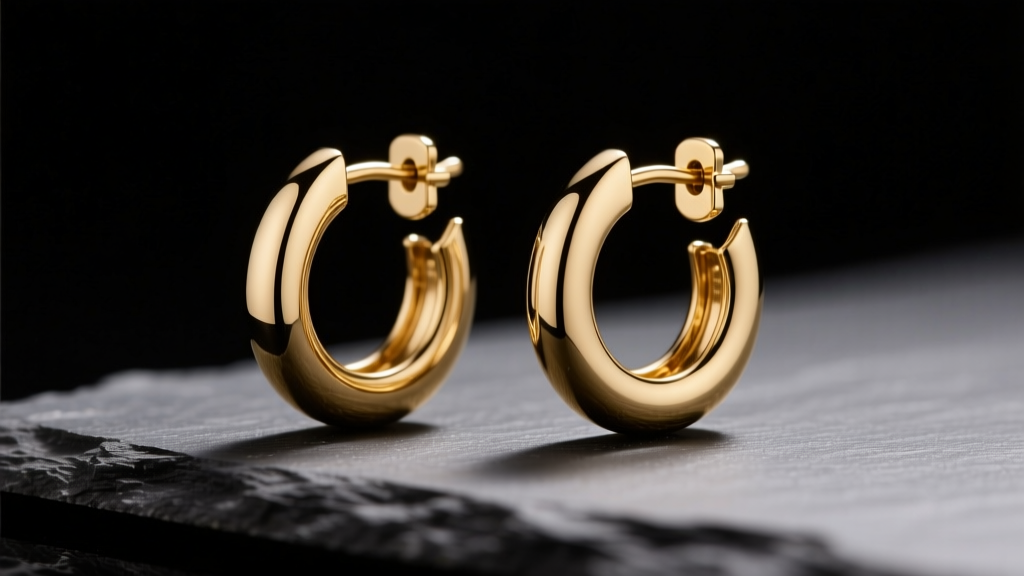
The Appeal of the Brushed Finish
When navigating the vast landscape of fine jewelry, brushed gold hoop earrings stand out as a masterclass in understated elegance. Unlike high-polish finishes that reflect light sharply and create a brilliant flash, a brushed finish scatters light across its surface. This results in a sophisticated, muted glow that is incredibly versatile for both professional environments and casual wear. Furthermore, the micro-texture of a brushed surface is highly forgiving; it naturally conceals the micro-scratches and scuffs that inevitably plague polished metals over time. However, not all matte finishes are created equal, and understanding the metallurgy, construction, and mechanics behind these earrings is essential for making a smart investment.
Anatomy of a Brushed Texture
The term "brushed" refers to a specific mechanical finishing technique. Jewelers use fine wire brushes, abrasive pads, or sandpaper to create microscopic, directional grooves on the surface of the gold. This is distinct from "sandblasting," which uses high-pressure abrasives to create a pitted, non-directional matte texture, or "satin" finishes, which are generally softer and less linear. When shopping, look for a consistent, unidirectional grain. High-quality brushed gold hoop earrings will have a uniform texture that wraps seamlessly around the entire circumference of the hoop, including the areas near the clasp, indicating meticulous hand-finishing or precision CNC milling.
Decoding Gold Purity and Base Metals
The longevity and color of your earrings depend heavily on the gold purity and the underlying metal. According to the Gemological Institute of America (GIA), pure 24K gold is too soft for functional hoop earrings, which require structural rigidity to maintain their shape and secure the closure. Therefore, gold is alloyed with metals like copper, silver, and zinc.
Solid Gold vs. Plated Alternatives
Solid 14K gold (58.5% pure gold) is the industry standard for everyday hoop earrings. It offers the perfect balance of a warm yellow hue and the tensile strength needed to prevent the wire from bending. Solid 18K gold (75% pure gold) provides a richer, deeper color but is noticeably softer, making it better suited for thicker, heavier gauge hoops where structural integrity is less of a concern. If you are looking at more affordable options, you must understand the legal definitions of plating. The Federal Trade Commission (FTC) Jewelry Guides mandate that "Gold Vermeil" must feature a sterling silver (.925) base with a minimum gold plating thickness of 2.5 microns. Anything less is simply gold-plated and will wear through to the base metal rapidly with daily friction.
| Material Grade | Gold Content | Durability & Rigidity | Avg. Price Range (20-30mm) |
|---|---|---|---|
| Solid 14K Gold | 58.5% Pure Gold | Excellent (High Tensile Strength) | $180 - $450 |
| Solid 18K Gold | 75.0% Pure Gold | Good (Softer, Prone to Bending) | $350 - $800+ |
| Gold Vermeil | 2.5+ microns over .925 Silver | Moderate (Plating will eventually wear) | $70 - $160 |
| Gold-Filled | 5% by weight over Brass | Moderate-High (Thick mechanical bond) | $45 - $130 |
Sizing, Wire Gauge, and Closure Mechanics
The physical dimensions of the wire and the engineering of the clasp dictate how comfortable and secure your earrings will be. Many buyers focus solely on the diameter, ignoring the gauge (thickness) and construction method.
Wire Gauge and Construction
Gauge refers to the thickness of the wire used to form the hoop. A 20-gauge (0.81mm) wire is lightweight and ideal for delicate, minimalist hoops, but it can easily warp if snagged on clothing. An 18-gauge (1.02mm) wire is the sweet spot for standard everyday hoops, offering enough rigidity to support a secure hinged clasp without feeling heavy on the lobe. For chunky, sculptural statement pieces, jewelers typically use 16-gauge (1.29mm) or 14-gauge (1.63mm) wire. Additionally, consider hollow vs. solid construction. Large diameter hoops (over 40mm) are often electroformed or stamped to be hollow, reducing weight and preventing lobe stretching. However, hollow hoops are susceptible to denting if crushed, whereas solid wire hoops are virtually indestructible.
Closure Mechanisms
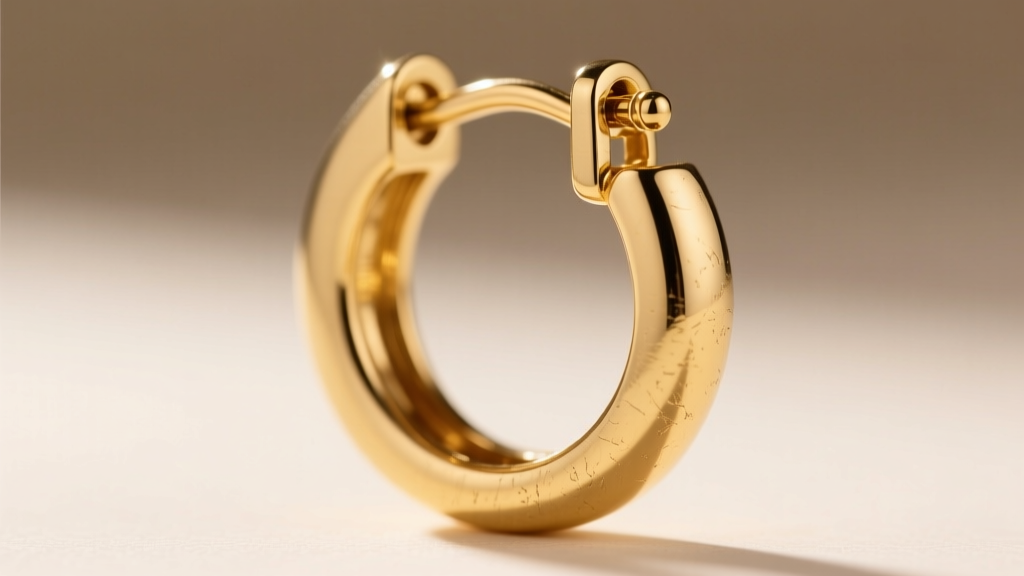
The closure is the most common point of failure on any hoop earring. Hinged Snap Closures are the most reliable for standard hoops; a rigid post clicks securely into a catch on the opposite side of the hinge. Continuous (Endless) Hoops feature a thin wire that threads into a hollow tube. While they offer a seamless aesthetic, the thin wire is prone to bending, losing tension, and eventually snapping. Clicker Closures feature a hinged segment that snaps shut with an audible click, typically reserved for thicker 16g or 14g hoops and cartilage jewelry due to the bulky hinge mechanism required.
Styling for Face Shapes
Brushed gold hoop earrings are remarkably adaptable, but the specific geometry of the hoop can enhance your natural features.
- Round Faces: Opt for elongated oval hoops or angular, geometric hoops with a brushed finish. The vertical lines help elongate the face, while the matte texture keeps the look grounded and modern.
- Square Faces: Choose medium-to-large circular hoops (30mm - 40mm). The continuous curves of a round hoop soften a strong jawline, and the brushed finish prevents the earrings from overpowering your features with excessive shine.
- Heart Faces: Teardrop-shaped hoops or hoops that are slightly wider at the bottom help balance a narrower chin and wider forehead.
- Oval Faces: You have the versatility to pull off almost any style, from tight 12mm brushed huggies to massive 60mm statement hoops.

Caring for Matte and Brushed Textures
Maintaining a brushed finish requires a different approach than caring for polished gold. The most critical rule is to never use a jewelry polishing cloth (such as a Sunshine cloth) on brushed gold. These cloths are treated with mild micro-abrasives designed to remove tarnish and restore shine. If you rub a polishing cloth over a brushed surface, you will literally sand down the microscopic ridges of the texture, creating shiny, uneven bald spots that ruin the matte effect.
To clean your earrings, mix a few drops of mild, phosphate-free dish soap in warm water. Submerge the hoops for five minutes to loosen sebum and skin cells. Use a soft-bristled baby toothbrush to gently sweep along the grain of the brush strokes, dislodging any debris trapped in the micro-grooves. Rinse thoroughly under lukewarm water and pat dry with a lint-free microfiber cloth. Avoid ultrasonic cleaners if your hoops feature a hollow construction or delicate hinge mechanisms, as the high-frequency vibrations can trap moisture inside the tubing or loosen the tension of the clasp.
Final Verdict
Investing in high-quality brushed gold hoop earrings is about prioritizing structural integrity and finish consistency. Look for solid 14K gold for everyday durability, ensure the wire gauge matches the diameter of the hoop (18g for standard sizes), and always opt for a secure hinged snap closure. By understanding these technical details, you can select a pair of earrings that will maintain their sophisticated, muted elegance for decades.


