Budget Elegant Gold Earrings: 2026 Value & Buying Guide
Discover how to find budget elegant gold earrings in 2026. Compare solid, vermeil, and gold-filled options with pricing, karat grades, and longevity tips.

Navigating the 2026 Gold Market for Fine Jewelry
Finding truly elegant gold earrings on a budget requires more than just browsing the sale section; it demands a fundamental understanding of metallurgy, market pricing, and manufacturing techniques. As we navigate the 2026 jewelry market, spot gold prices remain historically elevated, hovering near record highs. According to data from the World Gold Council, these sustained high prices mean that the cost of raw materials is directly squeezing the margins on entry-level solid gold jewelry. Consequently, brands are increasingly relying on alternative gold applications to keep price tags under the $100 mark while maintaining a luxury aesthetic.
For the savvy shopper, this landscape presents a unique opportunity. By understanding the precise differences between solid karat gold, gold vermeil, and gold-filled wire, you can curate a high-end ear curation without the high-end markup. This guide breaks down the exact specifications, pricing brackets, and failure modes of budget-friendly gold earrings, ensuring your investment retains its elegance and structural integrity for years to come.
Decoding the Gold: Solid vs. Plated vs. Filled
The term "gold" is frequently manipulated in marketing. To assess true value, you must look past the color and examine the core material and the thickness of the gold layer. The Federal Trade Commission (FTC) maintains strict guidelines on how these terms can be legally used, and knowing them is your best defense against overpriced costume jewelry.
10K and 14K Solid Gold: The Entry-Level Investment
Solid gold is an alloy. Pure 24K gold is too soft for functional earring posts and clasps. Therefore, 14K gold (58.3% pure gold) is the industry standard for fine jewelry, offering an optimal balance of rich color, durability, and hypoallergenic properties. For strict budgets, 10K gold (41.7% pure gold) is the absolute minimum threshold to be legally called "solid gold" in the US. While 10K is highly durable and resistant to scratching, it contains more alloy metals (like copper, zinc, or nickel), which can cause contact dermatitis in sensitive ears and presents a slightly paler, less elegant yellow hue.
- 2026 Price Range (Small Studs/Huggies): $85 – $220
- Best For: Healing piercings, 24/7 wear, and sensitive lobes.
- Failure Mode: Cheap 10K alloys may tarnish or cause green skin discoloration if copper-heavy.
Gold Vermeil: The Sterling Silver Standard
Gold vermeil (pronounced ver-MAY) is not standard gold plating. By FTC definition, vermeil must consist of a .925 sterling silver base coated with a minimum of 2.5 microns of 10K, 14K, or 18K gold. Because the core is precious metal, vermeil is generally hypoallergenic and holds significant value compared to brass-based alternatives. It is the premier choice for budget elegant gold earrings that feature intricate cast designs or heavy statement pieces where solid gold would be prohibitively expensive.
Gold-Filled: The Mechanical Bond
Gold-filled jewelry is created by mechanically bonding a thick layer of solid gold (usually 14K) to a brass core using extreme heat and pressure. The gold layer must constitute at least 1/20th (5%) of the total weight of the item. This process results in a gold layer that is up to 100 times thicker than standard electroplating. Gold-filled wire is exceptionally common for budget-friendly hoop earrings and ear wires.
Value Comparison Matrix: Material, Price, and Longevity
When evaluating budget elegant gold earrings, use this matrix to align your purchase with your lifestyle and wearing habits. The Gemological Institute of America (GIA) notes that the longevity of gold alloys and surface treatments depends heavily on environmental exposure and friction.
| Material Type | Core Metal | Gold Thickness / Content | Est. Price (Studs/Hoops) | Lifespan with Daily Wear |
|---|---|---|---|---|
| 14K Solid Gold | Gold Alloy (58.3%) | Solid throughout | $110 - $250 | Lifetime (Generational) |
| 10K Solid Gold | Gold Alloy (41.7%) | Solid throughout | $75 - $160 | Lifetime (May dull over decades) |
| Gold Vermeil | .925 Sterling Silver | Min. 2.5 microns | $45 - $95 | 2 - 5 Years (Friction points wear first) |
| 14K Gold-Filled | Jeweler's Brass | 1/20th gold by weight | $30 - $70 | 5 - 10 Years (Highly durable) |
| Gold Plated (Flash) | Brass / Copper / Steel | Less than 0.5 microns | $15 - $35 | 1 - 6 Months (High failure rate) |
Design Styles That Maximize Elegance on a Budget
To achieve a luxury look without the luxury price tag, the physical design of the earring matters just as much as the material. Certain styles inherently require less gold weight or utilize manufacturing techniques that keep costs low while maximizing visual impact.
1. The 14mm Huggie Hoop (16G to 14G)
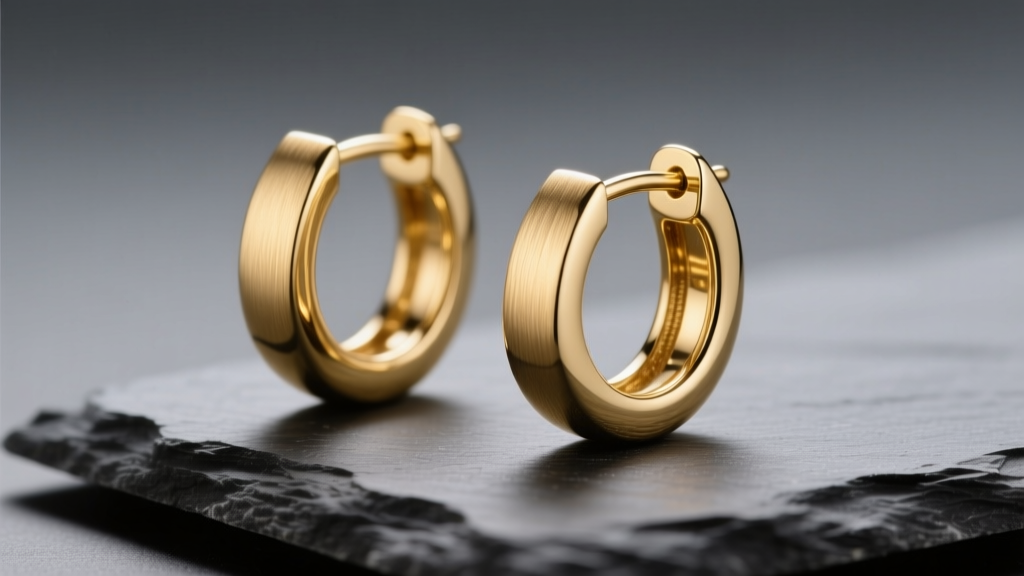
Huggies are small, thick hoops that "hug" the earlobe. Because they are small in diameter (usually 10mm to 15mm), they require significantly less gold than standard 30mm hoops. A pair of 14K solid gold huggies can often be found in the $120 to $150 range. For maximum elegance and durability, look for huggies crafted from 16-gauge or 14-gauge wire with a secure clicker clasp. Avoid hollow-tube huggies; while they are cheaper and lighter, they crush easily under pressure (like sleeping on them) and are virtually impossible for a jeweler to repair.
2. Minimalist Chain Threaders
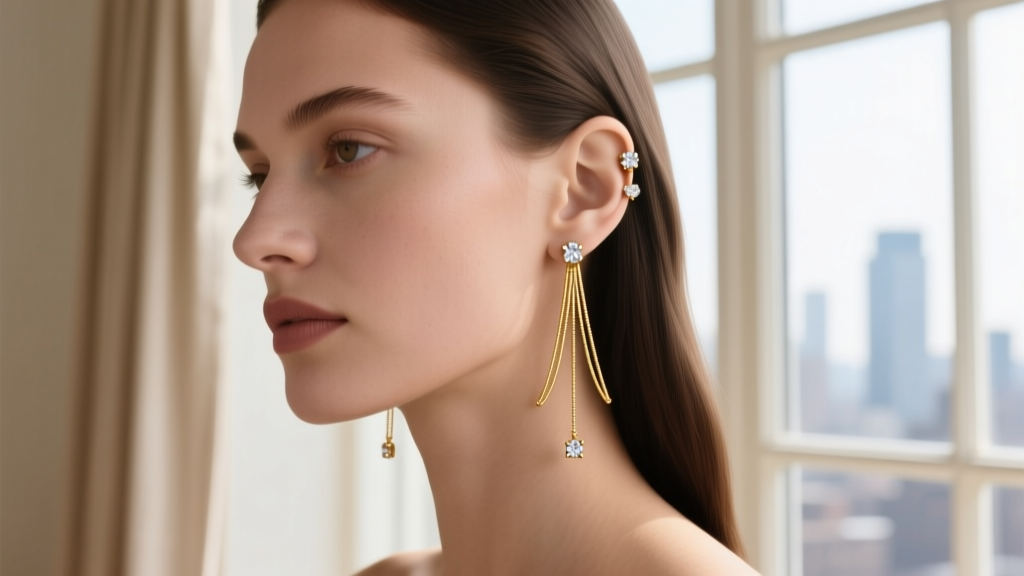
Threader earrings consist of a delicate chain that pulls through the piercing, often ending in a small geometric drop or pearl. Because the chain is incredibly fine (usually 20-gauge or 22-gauge), the total gold weight is minimal. This allows you to purchase solid 14K gold threaders for the price of vermeil studs (often under $80). They offer incredible movement, a modern elegant silhouette, and the hypoallergenic safety of solid gold.
3. Bezel-Set Solitaire Studs
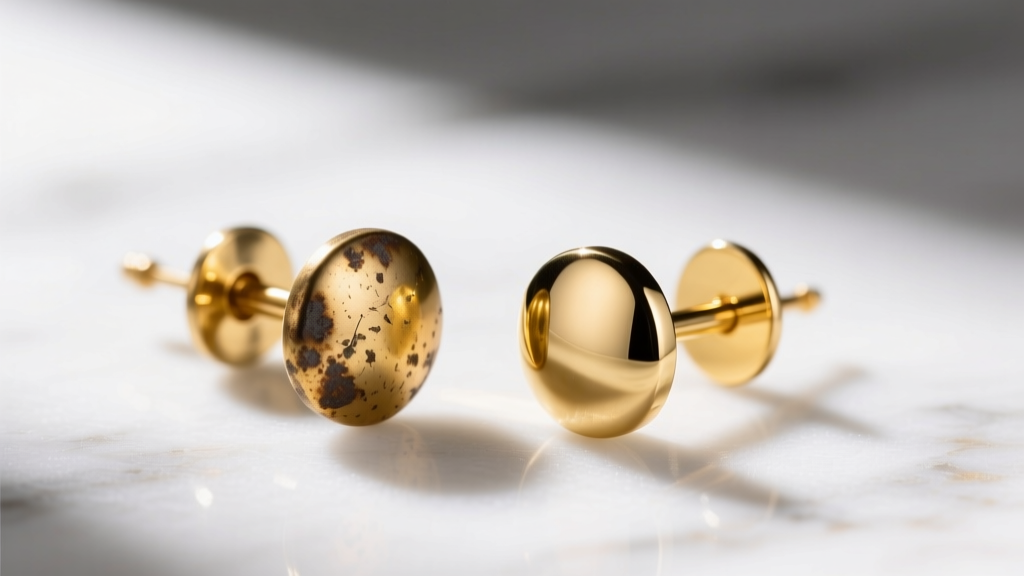
Prong settings require precise casting and hand-setting labor, which drives up the cost of budget earrings. Bezel settings, where a thin rim of gold surrounds a gemstone (like a 3mm lab-grown diamond or moissanite), are often machine-stamped or cast in a single piece. This reduces labor costs, allowing brands to offer elegant, sparkling studs in solid 10K or 14K gold at highly accessible price points.
Red Flags: Spotting Overpriced "Budget" Gold
Not all affordable gold earrings are a good value. When shopping for budget elegant gold earrings, immediately abandon your cart if you encounter the following deceptive practices:
The "Hypoallergenic Plating" Myth: Many brands market brass-core gold-plated earrings as hypoallergenic because the gold layer acts as a barrier. However, standard flash plating is microscopically porous. Within weeks, sweat and skin oils penetrate the plating, reacting with the brass or nickel core and triggering severe contact dermatitis. Always insist on a sterling silver core (vermeil) or a solid gold post.
- Unstamped Vermeil: If a brand claims an item is vermeil but the piece lacks a ".925" stamp alongside the maker's mark, it is likely standard gold plating over silver, which may not meet the 2.5-micron thickness requirement and will wear off rapidly.
- Hollow "Lightweight" Solid Gold: Some manufacturers use electroforming to create large, hollow 14K gold hoops. While technically solid gold, they are paper-thin. A single snag on a sweater can tear the metal, rendering the earring worthless.
- Friction-Back Posts on Heavy Earrings: Budget brands often pair heavy, elegant drop designs with thin, standard 20-gauge friction posts and cheap butterfly backs. This causes the earring to droop uncomfortably. Look for 18-gauge posts or secure screw-backs for drops over 5 grams.
Final Verdict: Allocating Your 2026 Jewelry Budget
Building an elegant ear curation on a budget is entirely possible if you strategically mix material types based on the earring's function. For your primary lobe piercings—jewelry you intend to wear 24/7, including in the shower and while sleeping—allocate the bulk of your budget to 14K solid gold studs or small huggies. The ROI on solid gold for permanent wear is unmatched, as it eliminates the recurring cost of replacing tarnished pieces.
For secondary cartilage piercings, ear cuffs, or statement drop earrings that are worn for a few hours at a time, gold vermeil and 14K gold-filled options provide immense value. They deliver the exact same visual warmth and luxury aesthetic as solid gold but at a fraction of the cost. By understanding these metallurgical distinctions, you can curate a timeless, elegant jewelry box that respects both your aesthetic standards and your financial boundaries.


