Top Hoop Earring Organizer Picks: 2026 Budget & Value
Discover the best hoop earring organizer for your budget in 2026. We compare acrylic, velvet, and metal stands for tangle-free, scratch-proof storage.

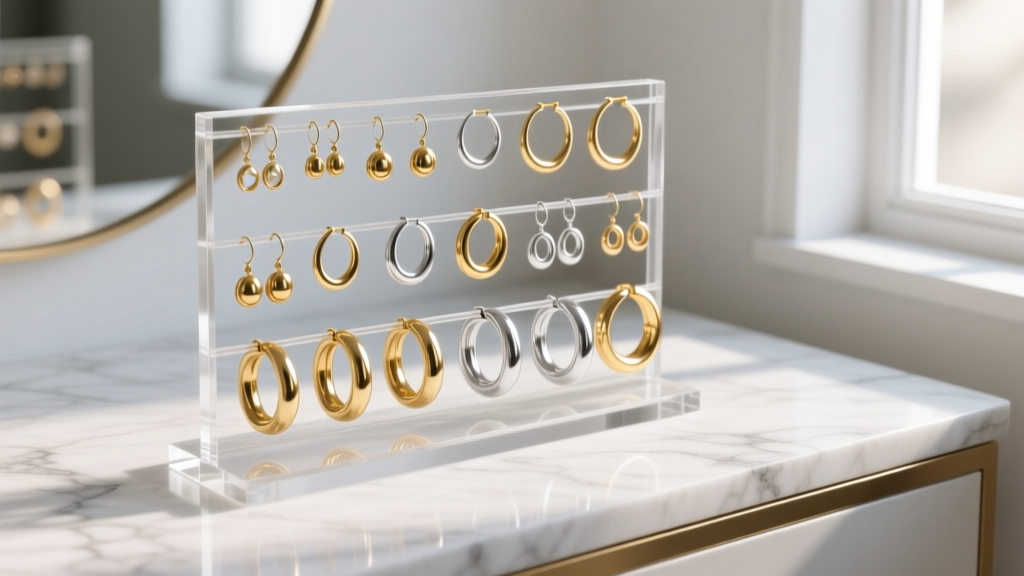
Storing hoop earrings presents a unique geometric challenge that standard jewelry boxes simply cannot solve. Unlike studs that sit flush in a velvet pad or dangles that hang freely from a single hook, hoops require specific spatial allowances to prevent tangling, clasp damage, and metal-on-metal scratching. Whether you are storing delicate 10mm gold huggies or bold 80mm statement hoops, finding the right hoop earring organizer is an exercise in balancing material science, spatial geometry, and budget. In this 2026 value assessment, we break down exactly what makes an organizer worth your money, examining the hidden costs of cheap materials and providing a definitive framework for maximizing your jewelry storage investment.
The Geometry of Hoop Storage: Why Standard Boxes Fail
Most commercial jewelry organizers are designed with a 'one-size-fits-all' approach, utilizing uniform punched holes or narrow velvet rolls. This is a fundamental design flaw for hoop collectors. Hoops possess a continuous circular geometry that requires either vertical hanging space or wide, flat, padded slots. When hoops are forced into standard compartments, several failure points emerge:
- Clasp Stress: Forcing a hinged clicker or French wire into a tight slot can bend the post or weaken the hinge mechanism over time.
- Tangle Cascades: Medium hoops (30mm-50mm) easily slip through the centers of larger hoops if stored flat in a shared drawer, creating a frustrating knot.
- Shape Distortion: Thin, large-diameter wire hoops (60mm+) can easily bend into ovals if subjected to lateral pressure in a crowded box.
To avoid these issues, a dedicated hoop earring organizer must offer tiered hanging rods with adequate clearance (at least 1.5 inches between tiers) or wide, individualized horizontal channels. According to organization experts at Good Housekeeping, giving each piece its own dedicated 'breathing room' is the first step in preventing costly jewelry damage.
Material Breakdown: What Actually Protects Your Hoops?
The material of your organizer dictates both the physical safety of your earrings and their chemical stability. Budget organizers often cut corners here, leading to long-term degradation of your jewelry.
Acrylic and Lucite Stands
Cast acrylic is an excellent, inert material that will not off-gas or react with precious metals. It provides high visibility, allowing you to quickly select your hoops for the day. However, injection-molded polystyrene (often mislabeled as acrylic in budget bins) can have microscopic rough edges that will scratch soft 18k gold vermeil or high-polish sterling silver. Always look for laser-cut, beveled cast acrylic.
Velvet and Faux Suede Trays
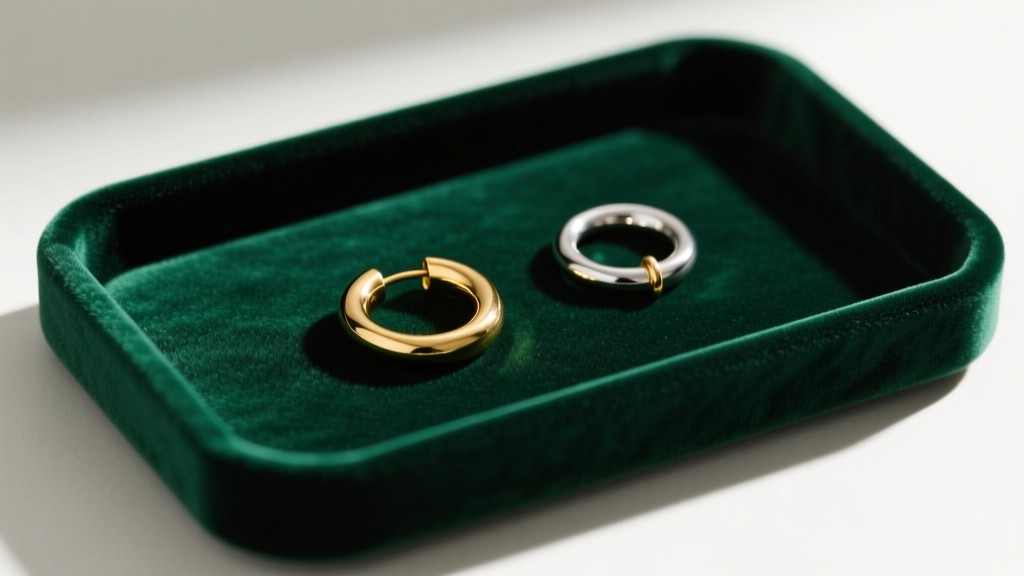
Velvet offers superior physical cushioning, but standard synthetic velvet is a notorious trap for humidity. If you live in a humid climate, storing sterling silver hoops in non-treated velvet will accelerate the formation of silver sulfide (tarnish). For true value, seek out organizers lined with anti-tarnish treated polyflannel or Pacific Silvercloth, which actively absorb sulfur compounds from the air. Standard EVA foam inserts, common in cheap travel cases, should be avoided as their acidic off-gassing can degrade pearl inlays or porous gemstones often set in hoop designs.
Powder-Coated Metal Trees
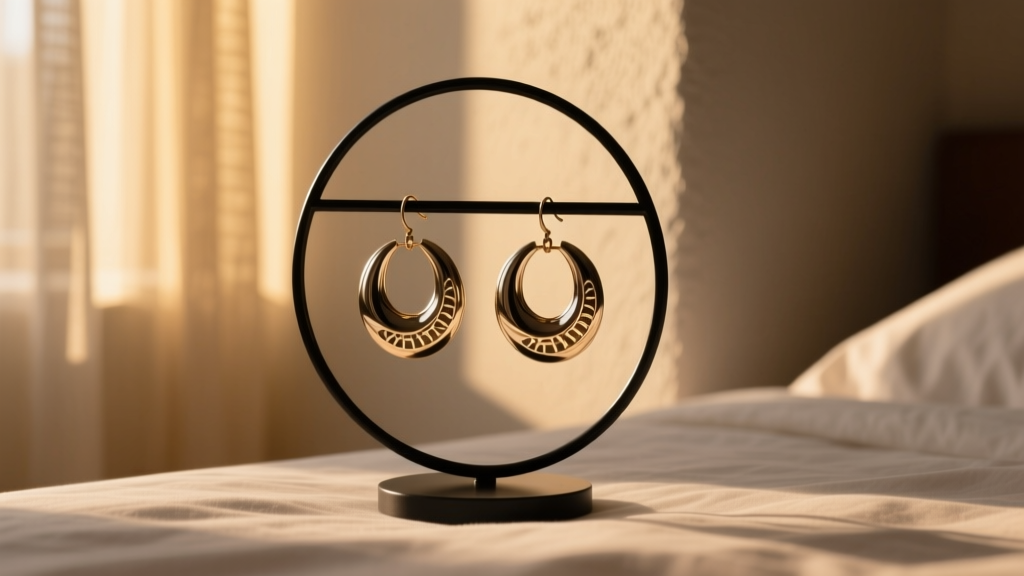
Wire trees are the most budget-friendly option and offer excellent vertical clearance for oversized hoops. The critical factor here is the finish. Bare iron or cheap nickel plating will eventually rust or flake, especially in bathroom environments. A high-quality powder-coated finish or a solid brass construction ensures the stand itself will not degrade and transfer corrosive compounds to your earrings.
2026 Value Matrix: Price vs. Longevity
To help you assess the true value of a hoop earring organizer, we have mapped the current market options against their long-term utility and risk factors.
| Organizer Type | Typical Price Range | Best Hoop Style | Tarnish Risk | Scratch Risk | Longevity Rating |
|---|---|---|---|---|---|
| Laser-Cut Acrylic Tree | $25 - $45 | All sizes, especially statement | Very Low | Low (if beveled) | 8/10 |
| Anti-Tarnish Velvet Tray | $40 - $80 | Huggies, Clickers, Sleepers | Very Low | Very Low | 9/10 |
| Powder-Coated Wire Stand | $12 - $25 | Large wire hoops, Boho styles | Low | Medium | 6/10 |
| Injection-Molded Plastic Box | $8 - $15 | None (Not Recommended) | Medium | High | 2/10 |
| Untreated Synthetic Velvet Roll | $15 - $30 | Travel storage only | High | Low | 4/10 |
Sizing Your Organizer: Gauge and Diameter Considerations
When evaluating the specifications of a hoop earring organizer, you must cross-reference your collection's dimensions. The thickness of the hanging rod or the width of the velvet slot is just as important as the overall footprint of the organizer.
Most standard ear piercings accommodate 18-gauge (1.0mm) or 20-gauge (0.8mm) wires. However, many modern 'clicker' hoops and huggies designed for cartilage or lobe use feature thicker 16-gauge (1.2mm) or even 14-gauge (1.6mm) hinge posts. If you purchase an acrylic hanging organizer with ultra-thin 1mm tier rods, you will find that your heavier, premium clicker hoops simply will not fit over the hanging bars, rendering the organizer useless for your most valuable pieces. Always verify that the hanging rods or slot widths accommodate at least a 2mm diameter to ensure universal compatibility with your collection.
Real-World Failure Modes to Avoid
Based on extensive testing and user feedback analyzed by home organization platforms like Apartment Therapy, budget organizers tend to fail in three specific ways:
- Joint Snapping in Acrylics: Cheap acrylic trees use solvent-welded joints that become brittle over time. When you pull a tightly clasped hoop off the tier, the sheer force can snap the tier clean off the main trunk. Look for organizers that use interlocking notched joints or metal screw-reinforcements at the tier connections.
- Adhesive Failure in Velvet Trays: In budget velvet trays, the fabric is simply glued to a cardboard or MDF base. Within six months, the adhesive dries out, and the velvet begins to peel, exposing the acidic glue and wood pulp underneath, which will rapidly tarnish any silver hoops resting against it.
- Base Tipping in Metal Trees: Wire trees are inherently top-heavy. If the base does not feature a weighted iron core or a wide enough footprint (at least 5 inches in diameter), hanging five or six heavy brass or silver hoops on one side will cause the entire stand to tip over, potentially scratching your vanity and denting the hoops.
Budget-Friendly Configurations for Different Collections
The Minimalist (Under $25)
If you own fewer than 15 pairs of hoops, primarily consisting of everyday huggies and medium sleepers, a multi-compartment acrylic drawer insert is your best value. These cost between $15 and $22 and allow you to lay hoops flat in individual, grid-partitioned slots. Ensure the acrylic is at least 3mm thick to prevent bowing.
The Statement Collector ($30 - $50)
For those with a mix of 50mm+ oversized hoops and delicate cartilage huggies, a two-tiered acrylic and wood hybrid stand offers the best ROI. The top tier features thin grooves for huggies, while the bottom tier offers a full 3-inch drop clearance for large hoops. The wooden base provides necessary weight to prevent tipping, usually retailing around $42.
The Archival Preservationist ($60+)
If your collection includes high-karat gold, antique silver, or hoops set with fragile gemstones like opals or emeralds, invest in a treated polyflannel jewelry roll or tray system. While expensive, the chemical protection against sulfur and humidity preserves the metallurgical integrity of your pieces, saving you hundreds of dollars in professional polishing and re-plating over the years.
Final Verdict: Maximizing Your Investment
The true cost of a hoop earring organizer is not just its retail price, but its impact on the longevity of your jewelry. A $12 wire tree might seem like a bargain until it tips over and bends your favorite $80 sterling silver hoops. By prioritizing inert materials like cast acrylic or anti-tarnish fabrics, and paying close attention to the physical dimensions of the hanging rods and slots, you can secure a storage solution that protects both the geometry and the chemistry of your collection. In 2026, smart jewelry storage is about making a one-time investment in material quality that pays dividends in tarnish-free, tangle-free readiness every single morning.


