Allergic to Fake Earrings? Budget-Friendly Safe Options
Allergic to fake earrings? Discover budget-friendly hypoallergenic metals, cost-per-wear analysis, and safe brands that won't break the bank or your lobes.

The Hidden Financial Cost of "Cheap" Earrings
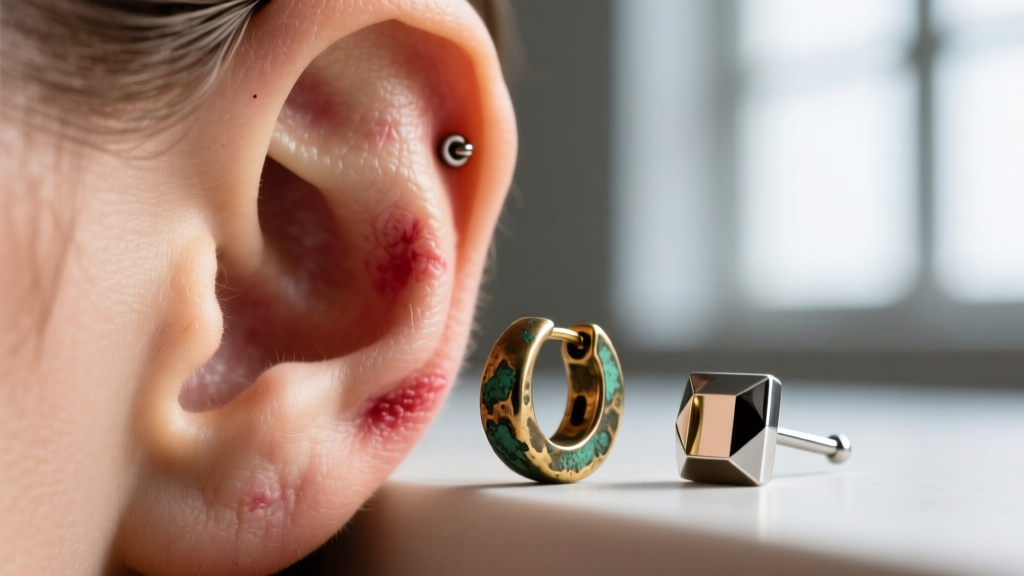
If you are constantly allergic to fake earrings, you already know the immediate physical toll: the itching, the swelling, the weeping earlobes, and the dreaded green skin stain. But as a jewelry value assessor, I look at the hidden financial toll of fast-fashion jewelry. When you buy a $6 pair of zinc-alloy hoops from a mall kiosk, you aren't just risking contact dermatitis; you are gambling with your long-term piercing health and your wallet.
Nickel contact dermatitis is not just a temporary annoyance. According to the American Academy of Dermatology, repeated exposure to nickel can cause chronic skin changes, hyperpigmentation, and in severe cases, permanent scarring of the fistula (the piercing hole). A single visit to a dermatologist for a severe allergic flare-up or a secondary staph infection can cost between $150 and $350 out-of-pocket. Suddenly, that $6 pair of earrings has a true cost of over $300. Assessing the value of hypoallergenic jewelry requires shifting our mindset from "upfront price" to "cost-per-wear" and medical risk mitigation.
Decoding Metal Grades: The Metallurgy of Safe Earrings
To stop wasting money on metals that trigger your immune system, you must understand what "hypoallergenic" actually means in the jewelry industry. The term is largely unregulated in the United States. A brand can slap a "hypoallergenic" sticker on surgical steel, even though it contains up to 10% nickel.
The 316L Surgical Steel Trap
Many budget brands use 316L stainless steel. While the nickel in 316L is tightly bound, the National Institutes of Health notes that sweat and skin acids can still leach trace amounts of nickel over time. If you have a severe allergy, 316L is a gamble. It is acceptable for healed piercings with mild sensitivities, but it is not a true "safe" metal for highly reactive ears.
The Gold Standard: ASTM F-136 Titanium
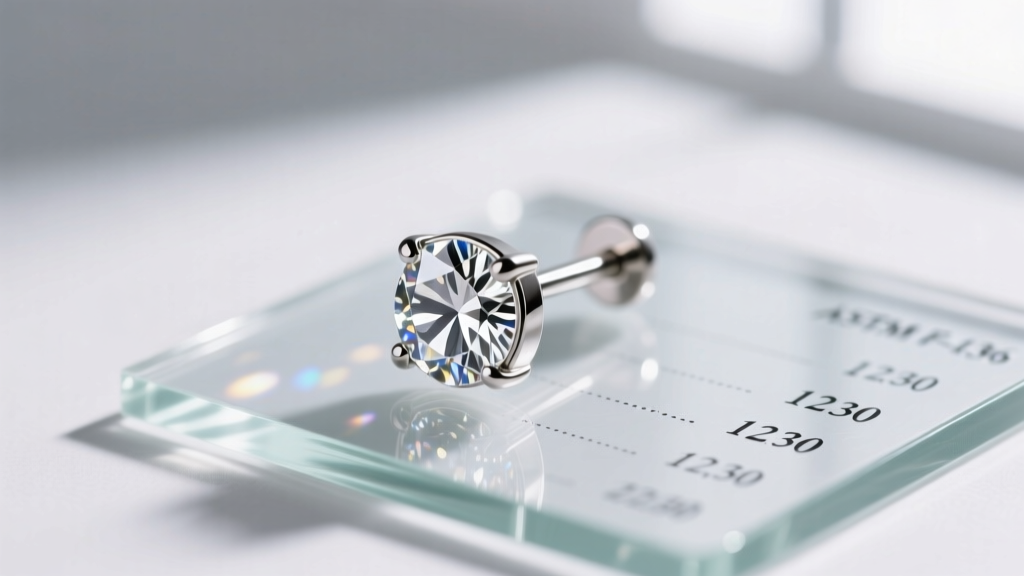
When you are highly allergic to fake earrings, your best budget investment is Implant-Grade Titanium, specifically ASTM F-136. This is the exact grade of titanium used in medical joint replacements. It contains zero nickel. While "commercially pure" titanium (ASTM B-348) is also nickel-free, F-136 has a superior surface polish that resists bacterial adhesion, making it the ultimate value proposition for sensitive, easily irritated lobes and cartilage.
Niobium: The Unsung Budget Hero
Niobium is a highly unreactive elemental metal. Unlike titanium, which is an alloy, niobium is pure. It is slightly softer and heavier, making it an excellent choice for budget-friendly huggies and seamless rings. It cannot be cast, so it is usually machined or stamped, keeping manufacturing costs low and retail prices between $15 and $30.
Budget vs. Value: Cost-Per-Wear Analysis
Let's break down the actual value of different metal categories. The "Cost-Per-Wear" (CPW) metric divides the initial cost by the number of times you can safely and comfortably wear the item before it degrades, tarnishes, or causes a reaction.
| Metal / Material | Avg. Upfront Cost | Nickel Risk | Lifespan & Tarnish | Est. Cost-Per-Wear |
|---|---|---|---|---|
| Fast Fashion Alloy (Zinc/Brass) | $5 - $12 | High (Unregulated) | 1-5 wears (Tarnishes/Rusts) | $2.00+ (High medical risk) |
| Sterling Silver (925) | $25 - $45 | Low (But contains Copper) | Months (Requires polishing) | $0.50 (Moderate irritation risk) |
| Gold Vermeil (Over Silver) | $40 - $80 | Low (Until plating wears) | 6-12 Months (Plating rubs off) | $1.20 (High long-term risk) |
| ASTM F-136 Titanium | $15 - $35 | Zero | Lifetime (Will not tarnish) | $0.01 (Safest investment) |
| Solid 14k Gold | $80 - $150 | Trace (Usually safe) | Lifetime (Can be polished) | $0.05 (Premium value) |
As the data illustrates, spending $20 on a pair of ASTM F-136 titanium studs is mathematically superior to spending $10 on three pairs of fashion earrings that will ultimately end up in the trash—or worse, send you to the pharmacy for hydrocortisone cream.
Top Budget-Friendly Brands for Sensitive Ears
You do not need to spend hundreds of dollars at high-end boutiques to secure safe metals. Here are the most reliable, budget-conscious brands that prioritize metallurgical transparency.
- Body4You / Inni Body: Specialists in ASTM F-136 titanium. You can find their flat-back labrets and basic bezel-set studs on Amazon or their direct sites for $12 to $18 a pair. They are the undisputed kings of budget implant-grade jewelry.
- Studs: While known for piercing services, their earring shop offers excellent 14k gold and titanium options starting around $28. Their value lies in their strict quality control and modern, trendy designs that don't look "medical."
- Mejuri: For those who want the look of fine jewelry without the traditional markup. Their solid 14k gold huggies and small hoops start around $58. While not "cheap," the cost-per-wear of solid gold over a lifetime makes it a high-value budget alternative to gold-plated brass that will inevitably trigger an allergy.
- Target (A New Day / Universal Thread): Surprisingly, Target has started labeling specific lines as "Nickel-Free" and using surgical steel or titanium posts. Always check the fine print on the back of the card, but you can often find safe basic studs for under $10.
Debunking the "Clear Nail Polish" Budget Hack
If you are allergic to fake earrings, you have likely been told to paint the earring posts with clear nail polish to create a barrier between the nickel and your skin. As a jewelry expert, I strongly advise against this.
Clear nail polish is not a medical-grade barrier. It contains toluene and formaldehyde, which are known contact allergens themselves. Furthermore, the friction of inserting the earring through the fistula microscopically chips the polish, trapping bacteria and sharp polymer flakes inside your healing tissue.
Instead of the nail polish hack, invest $15 in a bottle of Dimethylglyoxime (DMG) Nickel Test Solution. This is a chemical spot test used by metallurgists. You rub a cotton swab with the solution on your earring; if it turns pink, nickel is present. This allows you to audit your existing jewelry box, confidently keeping the safe pieces and throwing away the toxic ones, saving you money and guesswork.
How to Build a Safe Capsule Wardrobe on a Budget
If you are rebuilding your jewelry box after realizing you are allergic to fake earrings, do not try to replace everything at once. Use this phased, budget-friendly framework:
Phase 1: The Daily Drivers ($30 Budget)
Buy two pairs of high-quality ASTM F-136 titanium flat-back labrets or simple ball studs. These will serve as your "never take them out" baseline. Because titanium won't tarnish in the shower or pool, they offer maximum utility.
Phase 2: The Statement Hoops ($50 Budget)
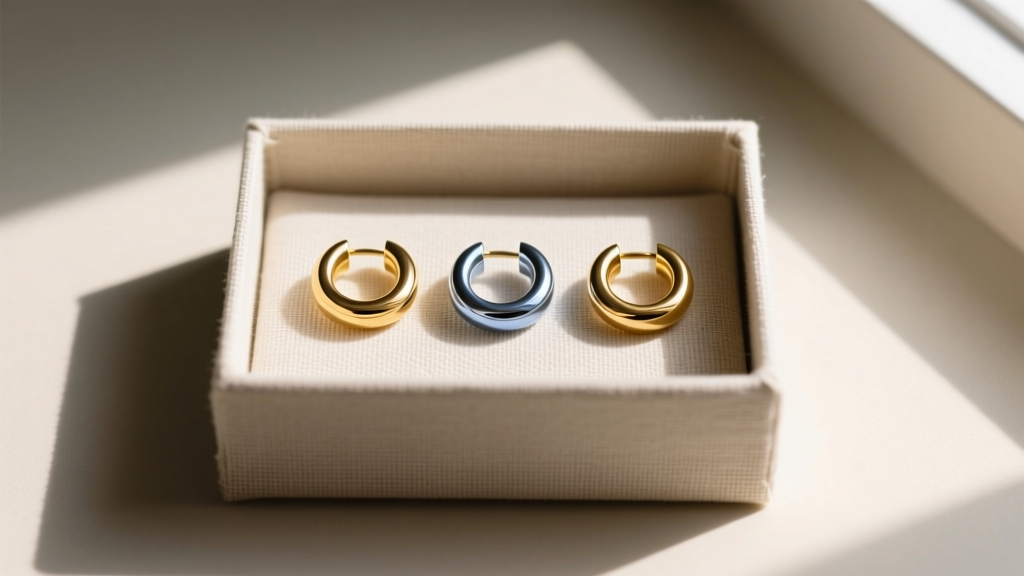
Invest in one pair of solid niobium or 14k gold seamless continuous hoops. Niobium can be anodized to create beautiful colors (like rose gold or deep purple) without using any reactive plating or dyes.
Phase 3: The Occasion Dangles ($40 Budget)
Dangle earrings put more weight and leverage on the fistula, which can exacerbate inflammation if the metal is even slightly reactive. Look for brands that use titanium ear wires with acrylic, glass, or resin decorative elements. Glass and resin are 100% hypoallergenic and incredibly cheap to produce, allowing you to get bold, artistic shapes without the heavy metal price tag.
Ultimately, being allergic to fake earrings is not a curse; it is a filter that forces you to become a smarter, more intentional consumer. By understanding metal grades, calculating cost-per-wear, and avoiding toxic budget hacks, you can build a stunning, safe earring collection that respects both your biology and your bank account.


