Best Budget Large Flower Earrings: 2026 Value Guide
Discover the best budget large flower earrings in 2026. We assess material value, weight limits, and pricing to find affordable, high-quality floral styles.

The True Cost of "Cheap" Large Floral Earrings
As maximalist botanical jewelry continues to dominate accessory trends in 2026, the demand for large flower earrings has skyrocketed. From oversized resin daisies to intricate enameled sunflowers, floral statement pieces are everywhere. However, when shopping on a budget, the line between an incredible bargain and a wasteful purchase is remarkably thin. Fast-fashion retailers often price these oversized botanical pieces between $8 and $15, but the hidden costs—ranging from allergic contact dermatitis to permanent earlobe stretching—can far outweigh the initial savings.
In this comprehensive value assessment, we break down the material science, weight distribution physics, and long-term durability of budget-friendly floral earrings. Whether you are sourcing pieces for a summer festival or building an affordable everyday maximalist wardrobe, understanding what you are actually paying for is critical. We will evaluate exact gauge requirements, material failure modes, and where your money is best spent this year.
Material Breakdown: What to Expect Under $50
When evaluating budget large flower earrings, the primary cost-cutting measure manufacturers use is substituting high-grade metals and stable polymers with cheap alloys and brittle plastics. Here is what you need to know about the materials touching your skin and weighing down your lobes.
Brass, Copper, and Zinc Alloys (The Tarnish Trap)
Most budget floral earrings use zinc alloy (often marketed as "Tibetan silver") or raw brass for the petal structures. While these materials allow for intricate, detailed casting at a fraction of the cost of sterling silver, they are highly reactive. When exposed to the natural pH of your skin and ambient humidity, unsealed brass and zinc will oxidize rapidly, leaving a green or black residue on your neck and earlobes. More importantly, cheap alloys frequently contain nickel as a hardening agent. According to the American Academy of Dermatology, nickel allergy is one of the most common causes of allergic contact dermatitis, leading to severe itching, redness, and blistering on the earlobe.
Surgical Steel vs. Titanium Posts
A common practice in mid-tier budget jewelry ($20-$40) is pairing a cheap alloy flower body with a "hypoallergenic" stainless steel post. While surgical steel (typically 316L) is an improvement over raw brass, it still contains trace amounts of nickel. For highly sensitive ears, implant-grade titanium (ASTM F-136) is the only truly safe bet. If a product description vaguely states "silver-plated post" without specifying the base metal or plating thickness, assume it is copper-plated brass that will wear through to the allergenic base metal within weeks of daily wear.
Enamel and Resin: Weight vs. Durability
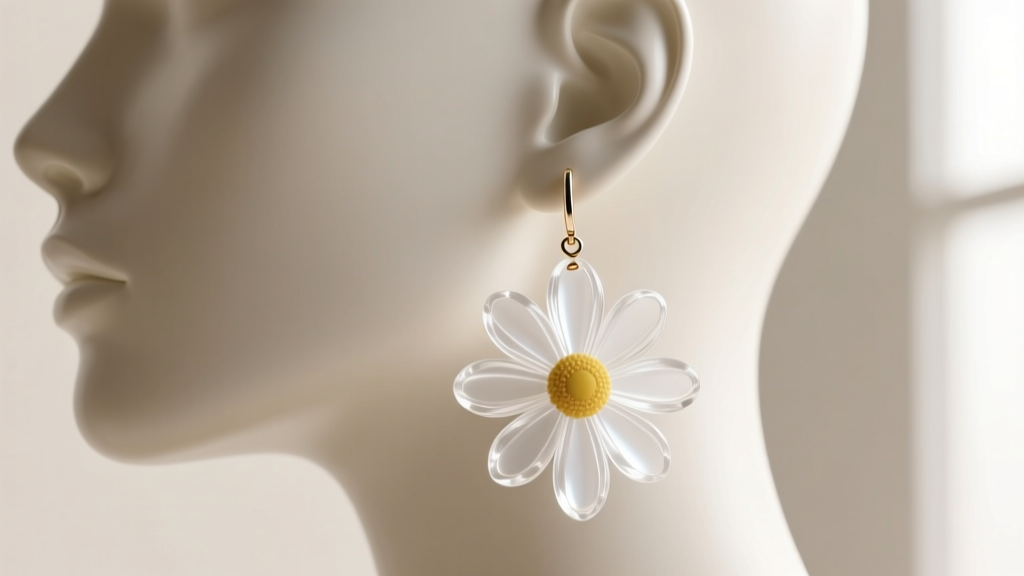
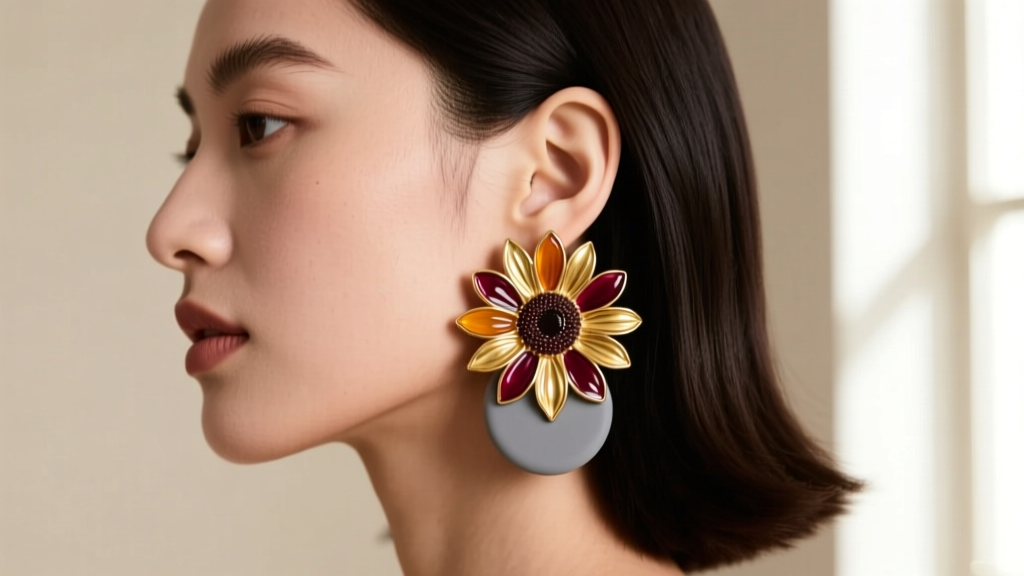
To achieve the massive scale of 2026's trending floral silhouettes without the earring weighing half a pound, designers turn to resin and enamel. UV-cured resin is incredibly lightweight and allows for translucent, glass-like petals, but it is notoriously brittle; a single drop onto a hardwood floor can shatter a $12 resin hibiscus. Two-part epoxy resin is more impact-resistant but slightly heavier. Cloisonné enamel (glass fused to metal) offers the most premium look and excellent scratch resistance, but the metal framework required to hold the enamel adds significant weight to the final piece.
The Physics of the Lobe: Gauge Sizes and Weight Limits
The most overlooked aspect of buying large flower earrings is the physics of how they interact with your earlobe piercing. A standard earlobe piercing is done at 20-gauge (0.81mm) or 18-gauge (1.0mm). When you hang a 50mm wide enameled peony that weighs 22 grams from a 20-gauge wire, you create a severe fulcrum effect.
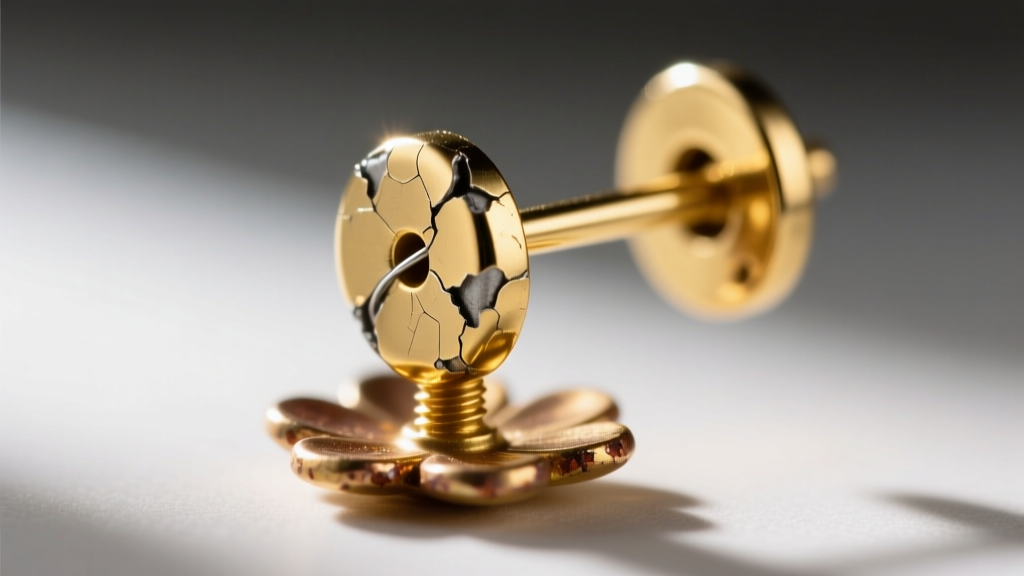
The Cheese-Cutter Effect: When a heavy earring rests on a thin wire, the downward force concentrates entirely on the bottom millimeter of the piercing hole. Over time, this constant pressure slices through the tissue, permanently stretching or tearing the earlobe—a phenomenon well-documented by the Association of Professional Piercers regarding improper jewelry weights and gauges.
To prevent this, any budget floral earring exceeding 15 grams must feature an 18-gauge (1.0mm) or ideally a 16-gauge (1.2mm) post or hook. Thicker wire distributes the weight across a wider surface area of the piercing channel. If you find a beautiful pair of heavy budget earrings with flimsy 22-gauge wire, you will need to factor in the cost of having a local jeweler solder on thicker, higher-quality findings.
Weight & Gauge Tolerance Chart
| Earring Material | Average Weight (Pair) | Minimum Safe Gauge | Max Comfort Time | Estimated Budget Price |
|---|---|---|---|---|
| UV Resin (Acrylic) | 6 - 10 grams | 20g (0.81mm) | 10+ Hours | $12 - $25 |
| Stamped Aluminum | 8 - 14 grams | 18g (1.0mm) | 8+ Hours | $18 - $35 |
| Cloisonné Enamel | 20 - 35 grams | 16g (1.2mm) | 3 - 4 Hours | $25 - $45 |
| Solid Brass Alloy | 30 - 50+ grams | 14g (1.6mm)* | 1 - 2 Hours | $10 - $20 |
*Note: Standard piercings are not 14g. Wearing 14g hooks in standard lobes will stretch the piercing intentionally.
2026 Value Tier List: Where to Spend Your Money
Not all budget categories are created equal. Based on our material testing and wearability assessments, here is how different market segments rank in terms of true value for large botanical styles.
- Tier S (Best Value): Artisan UV Resin on Etsy ($25-$40). Independent creators using high-grade UV resin and surgical steel or titanium posts. You pay a slight premium over fast fashion, but the weight is virtually zero, and the designs are unique and sealed against yellowing.
- Tier A (Good Value): Mid-Tier Stamped Aluminum ($20-$35). Brands utilizing anodized aluminum. Aluminum is inherently hypoallergenic, incredibly lightweight, and can be dyed in vibrant floral colors without the risk of chipping enamel. The only drawback is that aluminum can bend if sat on.
- Tier C (Poor Value): Fast-Fashion Zinc Alloy ($8-$15). Heavy, prone to tarnishing, and almost guaranteed to cause contact dermatitis in sensitive wearers. The solder joints connecting the post to the heavy metal flower body frequently snap under their own weight within a month of wear.
Maintenance Hacks to Extend Budget Florals
If you have already invested in budget-friendly large flower earrings made from reactive metals or delicate enamels, you can artificially extend their lifespan and wearability with a few expert maintenance hacks.
Seal Reactive Metals
Do not rely on the outdated "clear nail polish" trick to seal brass or copper earrings; nail polish chips easily, yellows, and creates a sticky residue that traps bacteria against the skin. Instead, invest in a specialized jewelry sealant like Everbrite ProtectaClear. A single $15 bottle will last for years and creates a microscopic, skin-safe polymer barrier that completely prevents oxidation and nickel leaching on alloy floral bases.
Utilize Silicone Support Discs
For heavy enameled or brass florals that cause the "cheese-cutter" effect, purchase bulk packs of 10mm silicone earring support discs (often sold as "lobe lifters"). These slide onto the post behind the earlobe and distribute the downward weight across a 10-millimeter surface area on the back of your ear. This simple $3 fix transforms an unwearable, heavy $15 statement piece into something you can comfortably wear for an entire evening event.
Proper Storage for Resin and Enamel
UV resin is susceptible to photodegradation; leaving your translucent floral earrings on a sunlit vanity will cause them to yellow and become brittle within a single season. Store budget resin and enamel pieces in a dark, velvet-lined box with silica gel packets to control ambient humidity and prevent the metal findings from tarnishing while in storage.
Final Verdict
When hunting for the best budget large flower earrings in 2026, the smartest consumers look past the initial price tag and evaluate the cost-per-wear based on weight, material safety, and structural integrity. By prioritizing lightweight resins, anodized aluminum, and proper gauge thicknesses, you can achieve high-end maximalist aesthetics without sacrificing the health of your earlobes or your wallet. Always check the post material, weigh the piece in your hand before buying, and never compromise on hypoallergenic standards for the metal that actually pierces your skin.


